Key Takeaway
Can you take Ipamorelin and GLP-1 medications together? Learn about combining growth hormone peptides with GLP-1 receptor agonists for weight loss.
Yes, Ipamorelin and GLP-1 receptor agonist medications can be taken together. These compounds work through entirely different biological pathways, and no direct drug interactions have been identified between them. Many physicians now prescribe Ipamorelin alongside GLP-1 medications like semaglutide, tirzepatide, and liraglutide as part of a thorough weight management and body composition strategy .
How Ipamorelin
Ipamorelin is a growth hormone releasing peptide, or GHRP, that belongs to a class of compounds known as growth hormone secretagogues. When injected, it binds to ghrelin receptors on the pituitary gland and triggers the release of growth hormone into the bloodstream .
What sets Ipamorelin apart from earlier GH secretagogues is its selectivity. It produces a clean pulse of growth hormone without meaningfully raising cortisol, prolactin, or aldosterone. This makes it one of the best-tolerated peptides in its class and suitable for extended use under physician supervision.
The growth hormone released by Ipamorelin supports many metabolic functions, including fat burning, muscle protein synthesis, collagen production, cellular repair, and deep sleep quality.
How GLP-1 Medications
GLP-1 receptor agonists are a class of medications that mimic the action of glucagon-like peptide-1, a natural incretin hormone produced in the gut after eating. GLP-1 signals the brain to reduce appetite, slows gastric emptying to promote fullness, and helps regulate blood sugar through improved insulin release .
View data table
| Category | Clinical Interest Score | Detail |
|---|---|---|
| BPC-157 | 88 | Tissue repair and gut healing |
| TB-500 | 82 | Injury recovery |
| Sermorelin | 78 | Growth hormone support |
| Ipamorelin | 75 | Anti-aging and recovery |
| GHK-Cu | 70 | Skin and tissue repair |

The GLP-1 class includes several medications, each with distinct features:
- Semaglutide (Ozempic, Wegovy): Weekly injection, GLP-1 only, FDA-approved for weight management $1,300-$1,400/mo (brand)
- Tirzepatide (Mounjaro, Zepbound): Weekly injection, dual GLP-1/GIP agonist, strongest weight loss data $1,000-$1,200/mo (brand)
- Liraglutide (Saxenda): Daily injection, GLP-1 only, FDA-approved for weight management Contact provider for current pricing
Regardless of which GLP-1 medication you're using, the pairing with Ipamorelin follows the same fundamental logic.
Why There Is No Interaction Concern
The absence of interaction between Ipamorelin and GLP-1 medications comes down to their completely separate mechanisms:
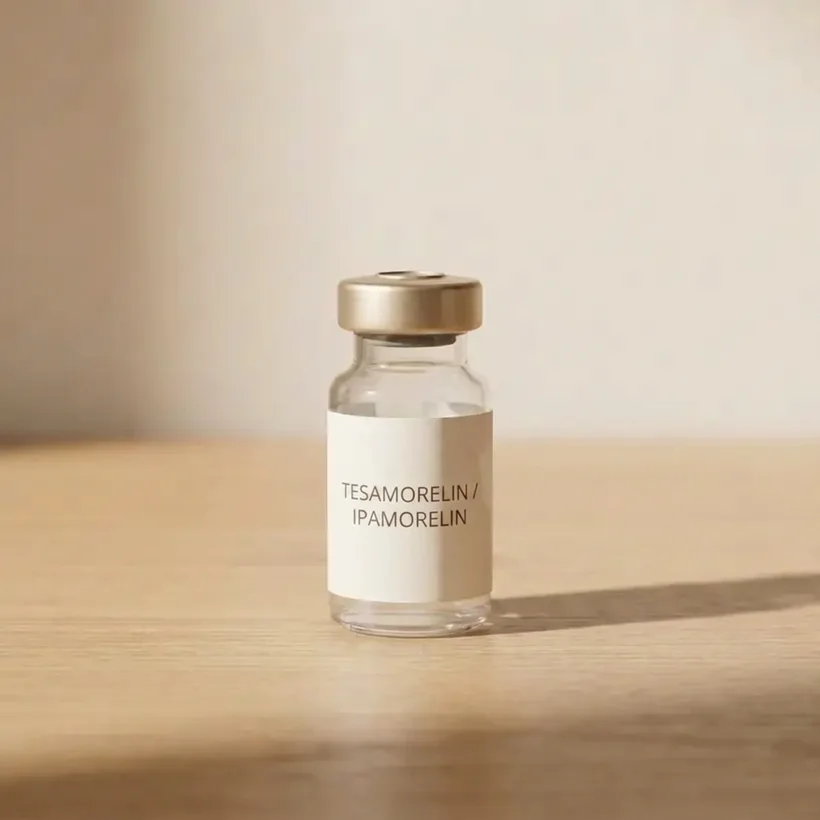
From the FormBlends catalog
Tesamorelin / Ipamorelin Blend
Growth-hormone pathway support in one blend · From $299/mo · compounded by a licensed 503A pharmacy, dispensed only after provider review.
View Tesamorelin / Ipamorelin Blend →- Different receptors: Ipamorelin targets ghrelin receptors (GHS-R) on the pituitary gland. GLP-1 medications target GLP-1 receptors in the hypothalamus, pancreas, and gastrointestinal tract. There's no receptor overlap.
- Different metabolic pathways: Ipamorelin is broken down through standard peptide proteolysis. GLP-1 medications are metabolized through various mechanisms depending on the specific drug but don't share degradation pathways with Ipamorelin.
- Different physiological effects: Ipamorelin stimulates GH release. GLP-1 medications suppress appetite and improve insulin function. These are complementary, not competing, actions.
The Rationale for Combining Them
GLP-1 medications are among the most effective weight loss tools available. But weight loss through caloric restriction doesn't only come from fat stores. A meaningful portion of weight lost during any significant caloric deficit comes from lean muscle mass .
This is the gap that Ipamorelin fills. By maintaining healthy growth hormone levels during active weight loss, Ipamorelin helps your body prioritize fat burning over muscle breakdown. The combination gives you:
- More effective fat loss with better muscle retention
- Improved body composition (lower body fat percentage at any given weight)
- Better sleep, which supports appetite regulation and recovery
- Enhanced skin quality during rapid weight changes
- Improved exercise recovery and physical performance
Body recomposition
How to Combine Ipamorelin with Your GLP-1 Medication
The practical logistics of combining these two treatments are straightforward:
- GLP-1 medication: Continue on your current dosing schedule (weekly for semaglutide or tirzepatide, daily for liraglutide)
- Ipamorelin: Add 100 to 300 mcg daily, injected subcutaneously at bedtime on an empty stomach
- Injection sites: Use different sites for each medication (for example, GLP-1 in the abdomen, Ipamorelin in the thigh)
- Fasting window: Avoid eating for 90 minutes before and 30 minutes after your Ipamorelin injection
We generally recommend establishing your GLP-1 medication first and being stable on it for at least two to four weeks before adding Ipamorelin. This staggered start helps identify the source of any side effects .
Who Should Consider Adding Ipamorelin to Their GLP-1 Protocol?
Adding Ipamorelin makes the most sense for patients who:
- Are already on a GLP-1 medication and losing weight but concerned about muscle loss
- Want to improve body composition, not just reduce scale weight
- Are over 35 and experiencing age-related declines in growth hormone
- Exercise regularly and want better recovery and performance
- Are losing significant weight (30 pounds or more) and want to support skin health
- Value sleep quality and overall vitality alongside their weight loss program
Who Should Not Combine These Treatments?
This combination isn't appropriate for patients with:
- Active cancer or a history of cancer where GH stimulation is contraindicated
- A personal or family history of medullary thyroid carcinoma or MEN 2 (contraindication for GLP-1 medications)
- Active or recent pancreatitis
- Pregnancy or breastfeeding
- Uncontrolled diabetes with frequent severe hypoglycemia
Frequently Asked Questions
Does it matter which GLP-1 medication I am on?
No. The rationale and safety profile for combining Ipamorelin with a GLP-1 medication is the same regardless of whether you're taking semaglutide, tirzepatide, or liraglutide. The choice of GLP-1 agent should be based on your physician's recommendation for your specific health profile and weight loss goals choosing your GLP-1 medication.
Will Ipamorelin make me hungry while on a GLP-1?
Ipamorelin binds to ghrelin receptors, but its primary effect is GH release, not appetite stimulation. The vast majority of patients don't report increased hunger from Ipamorelin, and any minor effect would be dominated by the powerful appetite suppression from your GLP-1 medication.
How long should I use Ipamorelin alongside my GLP-1?
Many patients use the combination for 12 to 24 weeks during the active weight loss phase. Some continue longer with physician oversight. Ipamorelin can be cycled periodically to maintain pituitary sensitivity. Your physician will advise on optimal duration based on your progress and lab results .
Do I need additional lab work when adding Ipamorelin?
Yes. We recommend checking IGF-1 levels at baseline and periodically (every 6 to 8 weeks initially) to ensure your GH stimulation is within a healthy range. Standard metabolic labs should also be monitored.
Explore Ipamorelin with Your GLP-1 Protocol
If you're already on a GLP-1 medication and want to improve your results, our medical team at FormBlends can evaluate whether adding Ipamorelin is right for you. We provide thorough telehealth consultations, lab management, and ongoing support. schedule consultation
Ready when you are
Tesamorelin / Ipamorelin Blend
Growth-hormone pathway support in one blend · From $299/mo · compounded by a licensed 503A pharmacy, dispensed only after provider review.
View Tesamorelin / Ipamorelin Blend →