All GLP-1 medications from licensed 503A compounding pharmacies Browse Products

MOTS-c for Tendon Repair: Evidence

What does the research say about MOTS-c and tendon repair? We review the evidence on this mitochondrial peptide's potential role in tendon healing and...

By Dr. James Walker, MD, MPH|Reviewed by Dr. David Kim, MD, FACE||

Medically Reviewed

Written by Dr. James Walker, MD, MPH · Reviewed by Dr. David Kim, MD, FACE

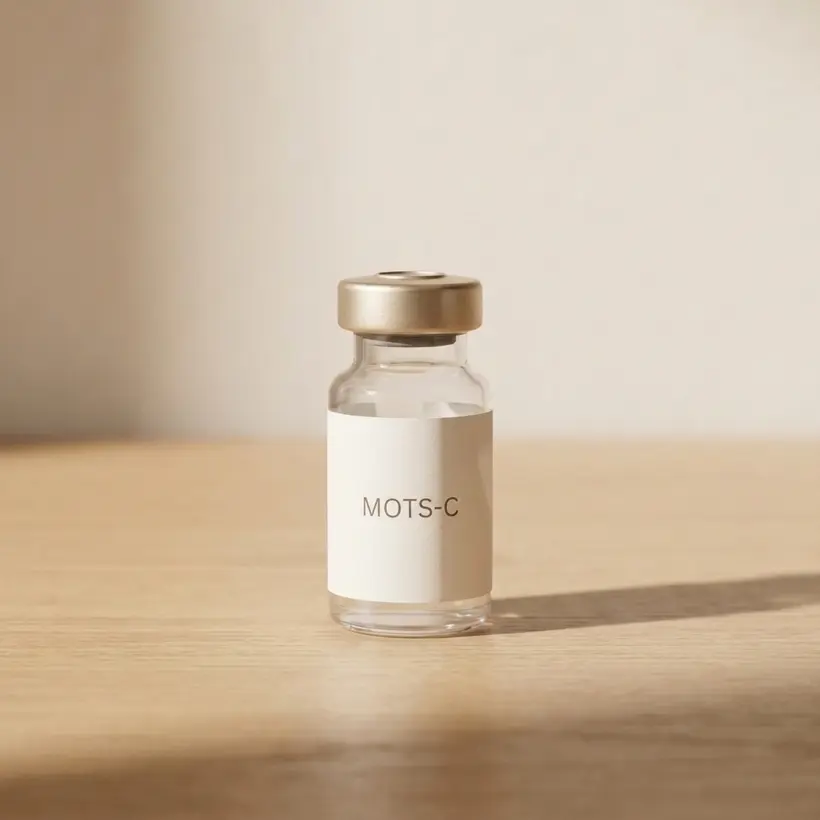
MOTS-c for Tendon Repair: Evidence custom 2026 header image for Peptide Therapy
Custom header image for MOTS-c for Tendon Repair: Evidence, Peptide Therapy, and better treatment decision-making.
In This Article

This article is part of our Peptide Therapy collection. See also: GLP-1 Guides | Provider Comparisons

Search and AI answer brief

Practical answer: MOTS-c for Tendon Repair: Evidence

What does the research say about MOTS-c and tendon repair? We review the evidence on this mitochondrial peptide's potential role in tendon healing and...

Short answer

What does the research say about MOTS-c and tendon repair? We review the evidence on this mitochondrial peptide's potential role in tendon healing and...

Search intent

This page answers a specific Peptide Therapy question rather than a generic overview.

What to verify

peptide evidence quality

How to use it

Use this information to prepare sharper questions for a licensed provider.

Key Takeaway

What does the research say about MOTS-c and tendon repair? We review the evidence on this mitochondrial peptide's potential role in tendon healing and recovery.

MOTS-c for tendon repair has limited direct evidence. No published studies have specifically examined this mitochondrial peptide's effects on damaged tendons. But MOTS-c's broader metabolic and anti-inflammatory properties are relevant to the tendon healing process, and understanding those connections helps set appropriate expectations for what this peptide can and can't do for tendon injuries .

Why Tendon Healing Is Challenging

Tendons are notoriously slow to heal compared to other tissues. Several factors explain this:

  • Low blood supply: Tendons have relatively poor vascularity, which limits the delivery of nutrients, oxygen, and immune cells needed for repair
  • High collagen density: Tendons are composed primarily of type I collagen arranged in highly organized parallel fibers. Replicating this precise architecture during repair is difficult, which is why healed tendons are often weaker than original tissue
  • Low cellular density: Tenocytes (tendon cells) are relatively sparse, meaning fewer cells are available to drive the repair process
  • Metabolic demands: Tendon repair requires substantial cellular energy for collagen synthesis, matrix remodeling, and inflammation resolution

How MOTS-c Could Theoretically Help

Cellular Energy for Repair

Tenocytes need energy to produce collagen and remodel damaged tissue. MOTS-c enhances mitochondrial function and cellular energy production through AMPK activation. In theory, better-functioning mitochondria in tenocytes could support more efficient collagen synthesis and tissue rebuilding.

Popular Therapeutic Peptides by Use Case Clinical Interest Score 0 22 44 66 88 88 82 78 75 70 BPC-157 TB-500 Sermorelin Ipamorelin GHK-Cu Based on published peptide research literature
Popular Therapeutic Peptides by Use Case. Based on published peptide research literature.
View data table
Bar chart showing popular therapeutic peptides by use case: BPC-157 (88), TB-500 (82), Sermorelin (78), Ipamorelin (75), GHK-Cu (70)
CategoryClinical Interest ScoreDetail
BPC-15788Tissue repair and gut healing
TB-50082Injury recovery
Sermorelin78Growth hormone support
Ipamorelin75Anti-aging and recovery
GHK-Cu70Skin and tissue repair
Illustration for MOTS-c for Tendon Repair: Evidence

Inflammation Regulation

Tendon healing involves an initial inflammatory phase followed by proliferative and remodeling phases. Excessive or prolonged inflammation can impair healing and lead to chronic tendinopathy. MOTS-c's ability to reduce pro-inflammatory cytokines (TNF-alpha, IL-6) could help manage the inflammatory phase and support a timely transition to repair .

Metabolic Support

Systemic metabolic health influences tendon healing. Conditions like diabetes and insulin resistance are associated with poorer tendon healing outcomes. By improving insulin sensitivity and overall metabolic function, MOTS-c may create a more favorable systemic environment for tendon repair.

The Honest Assessment

We believe in being straightforward about evidence levels:
Check your GLP-1 eligibility

Use our free BMI Calculator to see if you may qualify for provider-reviewed GLP-1 therapy.

Try the BMI Calculator →
  • Direct tendon repair studies with MOTS-c: None published
  • Mechanistic relevance: Moderate. MOTS-c's effects on mitochondrial function, inflammation, and metabolism are relevant to tendon healing, but relevance isn't proof
  • Clinical experience: We aren't aware of widespread clinical protocols using MOTS-c as a primary tendon repair peptide
  • Better-studied alternatives: BPC-157 has dozens of preclinical studies specifically on tendon healing, including Achilles tendon, rotator cuff, and other models BPC-157 benefits

Better Options for Tendon Repair

BPC-157

BPC-157 is the most studied peptide for tendon healing. In animal models, it has consistently accelerated tendon-to-bone healing, increased collagen production, improved tensile strength of repaired tendons, and promoted angiogenesis (new blood vessel formation) at injury sites . If tendon repair is your priority, BPC-157 should be at the top of your list.

TB-500 (Thymosin Beta-4)

TB-500 promotes cell migration and differentiation, both of which are important for tendon repair. It has shown positive effects on tendon healing in equine and rodent models.

MOTS-c as a Complement

Rather than using MOTS-c as a standalone tendon treatment, consider it as a metabolic support peptide alongside a dedicated repair peptide like BPC-157. MOTS-c provides the cellular energy and anti-inflammatory environment, while BPC-157 directly stimulates tissue repair pathways.

Medical References

  1. Goldstein AL, Hannappel E, Sosne G, Kleinman HK. Thymosin beta4: a multi-functional regenerative peptide. Basic properties and clinical applications. Expert Opin Biol Ther. 2012;12(1):37-51. [PubMed | DOI]

Frequently Asked Questions

Can MOTS-c repair tendons?

MOTS-c hasn't been studied for tendon repair specifically. While its anti-inflammatory and metabolic effects are theoretically relevant to the healing process, peptides like BPC-157 and TB-500 have far stronger evidence for direct tendon repair. MOTS-c is better suited as a complementary metabolic support alongside dedicated repair peptides.

Should I use MOTS-c or BPC-157 for a tendon injury?

For a tendon injury, BPC-157 is the stronger choice based on available evidence. Many practitioners use both together: BPC-157 for direct tissue repair and MOTS-c for metabolic and anti-inflammatory support. Discuss the best combination with your physician.

Can MOTS-c prevent tendon injuries?

There's no direct evidence that MOTS-c prevents tendon injuries. But improved metabolic health, reduced systemic inflammation, and better cellular energy production could theoretically support tendon resilience. Proper training, adequate recovery, and good nutrition remain the primary prevention strategies.

How would MOTS-c be used alongside BPC-157 for tendon repair?

A common approach is to inject BPC-157 locally (near the injured tendon) while administering MOTS-c subcutaneously at a separate site for systemic metabolic support. Your physician can design a protocol with appropriate doses and timing for both peptides peptide stacking guide.

FormBlends physicians can create targeted recovery protocols using the right peptide combinations for your injury. Start your consultation to discuss your options.

Evidence standard

How this page was source-checked

Editorial policy

FormBlends does not claim an individual clinician byline unless a named reviewer is available. For this page, the editorial team checks medical and regulatory claims against primary sources, clinical trials, public datasets, and regulator guidance.

PubMed evidence trail

Research sources used to frame this page

For MOTS-c for Tendon Repair: Evidence, FormBlends checks the page topic against primary trials, systematic reviews, guidelines, and current PubMed-indexed literature where available. These citations are context, not medical advice, proof of eligibility, or a claim that every study applies to every patient.

Peptide decision path

Move from research interest to supervised review

Direct answer

MOTS-c for Tendon Repair: Evidence should be evaluated through research status, legal access, source quality, safety context, and clinician oversight rather than a shortcut purchase decision.

Evidence check

Useful peptide pages should separate human data, animal research, mechanistic evidence, and marketing claims.

Safety check

Peptides can vary by legal status, compounding pathway, purity testing, patient history, and interaction risk.

Next step

If the topic still fits your goal after reading, the get-started flow should collect the clinical context needed for provider review.

FormBlends Editorial Context

Reviewed May 14, 2026

What does the research say about MOTS-c and tendon repair? We review the evidence on this mitochondrial peptide's potential role in tendon healing and recovery. The practical reason to read "MOTS-c for Tendon Repair: Evidence" is to separate useful context from easy claims about the main claim, safety boundary, and next practical step. It sits in a peptide therapy guide where research status, sourcing, compounding quality, dosing, and clinician oversight all need extra scrutiny and should help with patient education and clinical context. Because this article has 5 major sections, scan the headings first and then use the FAQ or summary sections to pressure-test the answer. Use the page to sharpen your next question, especially if your health history or medications change the risk profile.

  • Confirm whether the page is discussing an FDA-approved use, a compounded option, or research-only context.
  • Ask a licensed clinician how the evidence applies to your health history, medications, labs, and side-effect risk.
  • Check the latest label, trial update, pharmacy policy, or state rule when the article touches medication access.

Original tools and data

Use the FormBlends research stack

These assets are built to be useful beyond a single article: shareable data pages, calculators, provider comparisons, and safety checks that give Google and readers something original to crawl.

Editorial refresh

Practical 2026 note for MOTS

For this peptide therapy page, the 2026 refresh focuses on BPC-157, mots, tendon, repair, evidence so the article stays close to the question behind "MOTS".

The useful details are the practical ones: what to verify, what changes risk or cost, and which details separate MOTS from nearby GLP-1, peptide, hormone, or provider-comparison searches.

Readers can use the added context to bring sharper questions to a licensed provider before making a treatment, cost, or care decision.

MOTS custom 2026 image for peptide therapy on FormBlends

Custom 2026 image for MOTS, peptide therapy, and better treatment decision-making.

Image description: Unique image for this page covering MOTS, peptide therapy, safety, cost, provider selection, and patient decision-making.

Download the Peptide Quick Reference Card

A printable 2-page reference covering popular peptides, dosing ranges, stacking protocols, and storage.

Free download. We'll also send helpful GLP-1 guides to your inbox. Unsubscribe anytime.

Medical Disclaimer: This content is for informational purposes only and does not constitute medical advice. Always consult a qualified healthcare provider before starting, stopping, or changing any medication or treatment. FormBlends articles are source-checked against medical and regulatory references, but they are not a substitute for a personal medical consultation.

Written by Dr. James Walker, MD, MPH

Internal Medicine. This article was researched against primary regulatory, trial, prescribing, and manufacturer sources where available. Reviewed by Dr. David Kim, MD, FACE for medical accuracy, sourcing, and patient-safety framing.

Ready to get started?

Provider-reviewed GLP-1 and peptide therapy, delivered to your door.

Start Your Consultation

Ready to Start Your Weight Loss Journey?

Get a free medical consultation with a licensed provider. Compounded GLP-1 medications starting at $99/month with free shipping.

Next Best Reads

Free Tools

Provider-informed calculators to support your weight loss journey.