Key Takeaway
NAD+ may support hair growth by fueling follicle stem cell energy, reducing oxidative damage, and activating sirtuins that regulate hair cycle genes. Full guide.
·.
NAD+ (nicotinamide adenine dinucleotide) may support hair growth by fueling the mitochondrial energy production that hair follicle stem cells require to divide and produce new hair, activating sirtuin enzymes that regulate hair cycle gene expression, and reducing the oxidative stress that damages follicles and accelerates hair thinning. As NAD+ levels decline with age, hair follicle function declines in parallel. This guide explains the science connecting NAD+ to hair health, what the research shows, and how NAD+ therapy works in practice.
How Hair Growth Works
Hair growth occurs in cycles with three main phases:
- Anagen (growth phase): Lasts 2 to 7 years. Hair follicle stem cells actively divide and produce the hair shaft. This phase requires significant cellular energy.
- Catagen (transition phase): Lasts 2 to 3 weeks. The follicle shrinks and the hair detaches from its blood supply.
- Telogen (resting phase): Lasts about 3 months. The old hair eventually sheds and the follicle prepares to re-enter anagen.
Hair thinning and loss occur when the anagen phase shortens, the telogen phase lengthens, or follicle stem cells lose their ability to regenerate. Multiple factors drive these changes, including genetics, hormones (particularly DHT), inflammation, oxidative stress, and cellular energy depletion.
What Is NAD+?
NAD+ is a coenzyme found in every living cell. It plays a central role in cellular energy production (via the mitochondrial electron transport chain), DNA repair, gene expression regulation, and cell signaling. Without adequate NAD+, cells can't produce ATP efficiently, repair DNA damage, or maintain healthy function.
NAD+ levels decline substantially with age. By middle age, NAD+ levels can drop to roughly half of what they were in youth. This decline is now recognized as a contributing factor in many aspects of aging, including changes in hair health.
How NAD+ May Support Hair Growth
Fueling Hair Follicle Stem Cells
Hair follicle stem cells are among the most metabolically active cells in the body during the anagen phase. They require large amounts of ATP to divide rapidly and produce keratin (the protein that makes up hair). NAD+ is important for mitochondrial ATP production. When NAD+ levels decline, stem cell energy output drops, and the anagen phase may shorten.
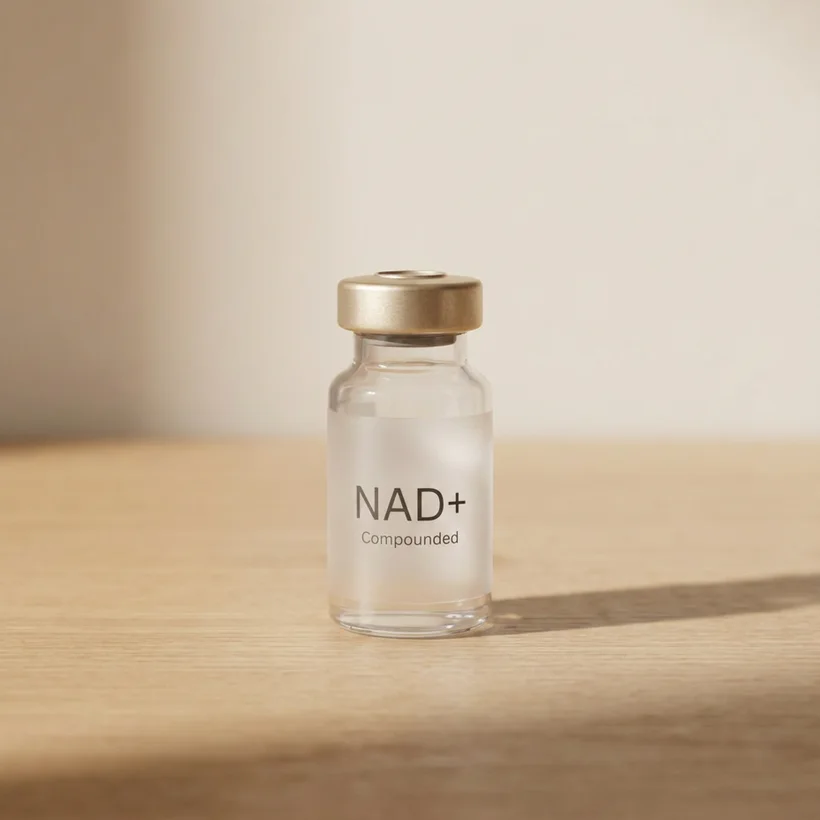
From the FormBlends catalog
NAD+ Peptide Complex
Restore cellular energy and DNA repair capacity · From $179/mo · compounded by a licensed 503A pharmacy, dispensed only after provider review.
View NAD+ Peptide Complex →Restoring NAD+ levels may help maintain the energy supply that follicle stem cells need for prolonged, productive growth phases.
Sirtuin Activation
Sirtuins are a family of NAD+-dependent enzymes that regulate gene expression, DNA repair, and cellular stress responses. NAD+ is required for sirtuin activity. without it, sirtuins can't function.
SIRT1, in particular, has been linked to hair follicle cycling and stem cell maintenance. Research suggests that SIRT1 activation supports the transition from telogen to anagen, promoting the initiation of new hair growth. SIRT3 and SIRT7 also play roles in mitochondrial function and stress response in skin and hair tissue.
Reducing Oxidative Stress
Oxidative stress is a significant contributor to hair follicle aging and damage. Reactive oxygen species (ROS) damage follicular DNA, proteins, and lipids, impairing growth and potentially triggering premature entry into the catagen phase.
NAD+ supports antioxidant defense through multiple pathways: it fuels the production of NADPH (which regenerates glutathione, a key antioxidant), and it activates sirtuins that upregulate antioxidant gene expression.
DNA Repair in Follicle Cells
Hair follicle cells undergo rapid division, which generates DNA damage. NAD+ is consumed by PARP enzymes (poly ADP-ribose polymerases) during DNA repair. Adequate NAD+ levels ensure that DNA damage in follicle cells is repaired efficiently, maintaining the genomic integrity needed for healthy cell division and hair production.
Reducing Inflammation
Chronic scalp inflammation contributes to hair loss in conditions like alopecia areata and androgenetic alopecia. NAD+ supports anti-inflammatory pathways through sirtuin activation, particularly SIRT1, which inhibits NF-kB signaling. Reducing follicular inflammation may help preserve hair growth capacity.
Supporting Melanocyte Function
NAD+ also plays a role in melanocyte function, the cells responsible for hair pigmentation. Declining NAD+ levels may contribute to premature graying alongside hair thinning. While the primary focus is on growth rather than color, supporting melanocyte energy may have cosmetic benefits.
Research Evidence
- Stem cell studies: Research shows that NAD+ depletion impairs stem cell self-renewal, including in hair follicle stem cell models. Restoring NAD+ reverses some of these effects.
- Sirtuin and hair cycling: SIRT1 knockout models show impaired hair follicle cycling, while SIRT1 activation promotes anagen entry.
- NMN/NR studies: NAD+ precursors (NMN, nicotinamide riboside) have been shown to boost NAD+ levels and improve stem cell function in aging animal models.
- Oxidative stress and hair: Studies confirm that oxidative stress accelerates hair follicle aging and that antioxidant support can slow the process.
- Clinical observations: Patients receiving NAD+ therapy for anti-aging and wellness purposes have reported improvements in hair thickness and growth as secondary benefits.
Direct, large-scale clinical trials testing NAD+ specifically for hair growth in humans haven't been published. The evidence is primarily mechanistic, preclinical, and observational.
NAD+ Administration for Hair Health
NAD+ can be delivered through several routes:
- IV infusion: Delivers NAD+ directly into the bloodstream for maximum bioavailability. Typically administered in a clinical setting over 1 to 4 hours.
- Subcutaneous injection: A more convenient option that can be self-administered at home. Provides good systemic bioavailability.
- Oral precursors (NMN, NR): Nicotinamide mononucleotide (NMN) and nicotinamide riboside (NR) are converted to NAD+ in the body. Available as oral supplements, though bioavailability is lower than IV or injection.
- Topical NAD+ precursors: Some hair care products contain nicotinamide or other NAD+ pathway ingredients for direct scalp application.
For systemic benefits that support hair follicle health from the inside, IV or subcutaneous NAD+ is preferred. Contact provider for current pricing
At FormBlends, NAD+ therapy is physician-supervised and tailored to individual health goals.
Combining NAD+ With Other Hair Growth Strategies
- GHK-Cu: Stimulates collagen and tissue repair in the scalp. Topical GHK-Cu applied to the scalp may work together effectively with systemic NAD+ therapy.
- Minoxidil: FDA-approved topical treatment for hair loss that promotes blood flow to follicles. May complement NAD+'s cellular energy effects.
- Finasteride/dutasteride: For androgenetic alopecia, these DHT blockers address the hormonal component while NAD+ addresses the cellular energy and oxidative stress components.
- Platelet-rich plasma (PRP): PRP delivers growth factors directly to the scalp. NAD+ may enhance the cellular response to those growth factors by ensuring follicle cells have the energy to respond.
- Biotin and nutritional support: Adequate protein, iron, biotin, and zinc provide the building blocks for hair while NAD+ provides the cellular energy for assembly.
What to Expect: Timeline
Hair growth is inherently slow. Even with effective interventions, visible changes take time:
- Months 1-2: Internal cellular changes (improved follicle energy, reduced oxidative stress) begin but aren't yet visible.
- Months 2-4: Some individuals notice reduced shedding or early signs of new growth.
- Months 4-6: More noticeable improvements in hair thickness, density, or texture may emerge.
- Months 6-12: Full assessment of results, as new hair needs time to grow to visible length.
Patience and consistency are important. NAD+ isn't a rapid hair growth solution. It works by supporting the biological foundations of healthy hair cycling over time.
Frequently Asked Questions
Can NAD+ reverse hair loss?
NAD+ may help slow hair loss and support regrowth by addressing cellular energy, oxidative stress, and stem cell function. But it's unlikely to fully reverse advanced hair loss caused by permanent follicle damage. Results are best when treatment begins early.
Does NAD+ work for all types of hair loss?
NAD+'s mechanisms (energy, antioxidant, anti-inflammatory) are relevant across multiple types of hair loss. But conditions like androgenetic alopecia have a strong hormonal component that NAD+ doesn't directly address. A thorough approach addressing all contributing factors produces the best results.
Is oral NMN or NR effective for hair growth?
Oral NAD+ precursors may provide benefit, but their bioavailability is lower than IV or injectable NAD+. They're a reasonable option for individuals who prefer oral supplementation, though the evidence specifically for hair growth with oral precursors is limited.
Can I apply NAD+ directly to my scalp?
Some products contain nicotinamide or NAD+ precursors for topical scalp application. While direct follicle delivery has theoretical appeal, most NAD+ hair research focuses on systemic levels. Topical approaches may complement systemic therapy.
How does NAD+ compare to PRP for hair growth?
PRP delivers concentrated growth factors directly to the scalp. NAD+ works at the cellular energy and gene regulation level throughout the body. They work through different mechanisms and may be complementary.
Are there side effects of NAD+ therapy?
NAD+ IV infusions can cause flushing, warmth, nausea, or mild discomfort during administration. Subcutaneous injections may cause injection site reactions. These side effects are generally mild and transient. See our NAD+ side effects guide for complete details.
Conclusion
NAD+ addresses several root causes of hair thinning and loss at the cellular level: energy depletion in follicle stem cells, oxidative damage, impaired sirtuin function, and DNA repair deficits. While it isn't a standalone hair loss treatment, it provides the metabolic foundation that hair follicles need to function optimally. Combined with targeted hair growth therapies, NAD+ may help produce better, more sustained results.
Schedule a consultation with the FormBlends medical team to explore how NAD+ therapy can support your hair health goals.
Ready when you are
NAD+ Peptide Complex
Restore cellular energy and DNA repair capacity · From $179/mo · compounded by a licensed 503A pharmacy, dispensed only after provider review.
View NAD+ Peptide Complex →