Key Takeaway
Can Pentosan Polysulfate help hair growth? Understanding PPS's limited role and better hair growth alternatives.
Quick Answer: Pentosan Polysulfate for hair growth has no established mechanism or evidence. PPS is a joint cartilage protectant with no known effects on hair follicle stem cells, hair cycle regulation, or scalp blood flow. Ironically, hair thinning is a documented side effect of PPS in some patients. For hair growth, Thymosin Beta-4 for hair growth (which activates follicular stem cells) and minoxidil (which improves follicle blood supply) are evidence-based options .
PPS and Hair: The Opposite Effect
Rather than promoting hair growth, PPS can actually cause hair thinning as a side effect in approximately 5-10% of patients. This effect is typically reversible after stopping the medication. The mechanism isn't fully understood but may relate to PPS's effects on growth factor signaling.
Better Hair Growth Options
| Treatment | Mechanism | Evidence |
|---|---|---|
| TB-4 | Follicle stem cell activation | Published in PNAS |
| Minoxidil | Vasodilation, follicle blood supply | FDA-approved |
| Finasteride | DHT blocker | FDA-approved |
| GHK-Cu | Copper peptide, follicle health | Preclinical + clinical |
Frequently Asked Questions
Should I use PPS for hair loss?
No. PPS isn't a hair growth treatment and may actually cause hair thinning as a side effect. Choose TB-4, minoxidil, or finasteride for hair growth.
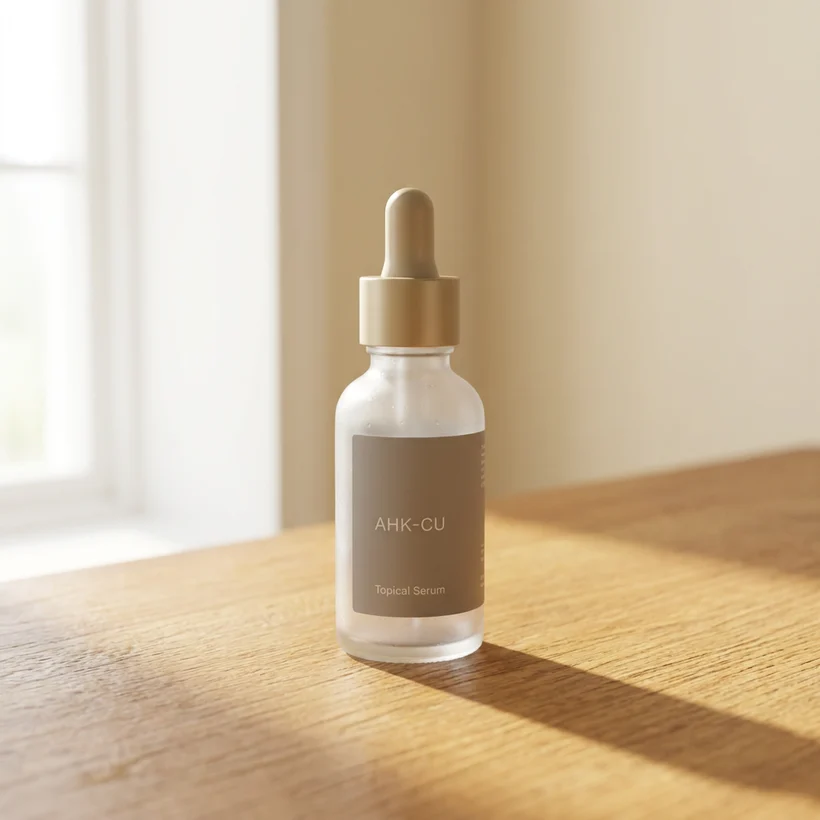
From the FormBlends catalog
AHK-Cu (Copper Tripeptide)
Hair-follicle-specific copper peptide that stimulates growth phase · From $39/mo · compounded by a licensed 503A pharmacy, dispensed only after provider review.
Learn about AHK-Cu (Copper Tripeptide) →
Will PPS cause me to lose hair?
Hair thinning occurs in about 5-10% of PPS users. It's typically mild and reversible after stopping treatment. If you notice hair changes, inform your physician.
Medical References
- Goldstein AL, Hannappel E, Sosne G, Kleinman HK. Thymosin beta4: a multi-functional regenerative peptide. Basic properties and clinical applications. Expert Opin Biol Ther. 2012;12(1):37-51. [PubMed | DOI]
Address Your Hair Loss
At FormBlends, our physicians recommend the most effective interventions for your specific needs.
Disclaimer: This article is for informational purposes only and doesn't constitute medical advice. Always consult with a licensed healthcare provider. Individual results may vary.
Ready when you are
AHK-Cu (Copper Tripeptide)
Hair-follicle-specific copper peptide that stimulates growth phase · From $39/mo · compounded by a licensed 503A pharmacy, dispensed only after provider review.
Learn about AHK-Cu (Copper Tripeptide) →