Key Takeaway
Pentosan Polysulfate oral vs injection comparison. Bioavailability, effectiveness, and which route works best for joints and bladder.
Quick Answer: Pentosan Polysulfate oral vs injection comes down to bioavailability and target condition. Oral PPS (brand name Elmiron) has only about 3% bioavailability, meaning 97% of the dose never reaches systemic circulation. Injectable PPS delivers nearly 100% of the dose to the bloodstream and joint tissues. For joint health and osteoarthritis, injectable PPS is strongly preferred. Oral PPS is FDA-approved specifically for interstitial cystitis, where its low absorption may actually benefit the bladder lining directly .
Head-to-Head Comparison
| Factor | Oral PPS (Elmiron) | Injectable PPS |
|---|---|---|
| Bioavailability | ~3% | ~100% |
| FDA approval | Yes (interstitial cystitis) | No (off-label use) |
| Primary use | Bladder pain/IC | Joint health/osteoarthritis |
| Dose | 100 mg 3x daily | 2-3 mg/kg once weekly |
| Duration | Months to years | 4-6 week courses |
| GI side effects | Common (nausea, diarrhea) | Minimal |
| Convenience | Easy (capsule) | Requires injection |
| Cost | Higher (daily dosing, brand drug) | Lower per course |
| Eye concerns | Maculopathy risk with long-term use | Lower risk (shorter courses) |
Why Bioavailability Matters
The 3% oral bioavailability of PPS isn't a flaw for bladder conditions. When you swallow Elmiron, the small amount absorbed reaches the bladder wall through urine, where it coats and restores the protective GAG layer. The low systemic absorption is actually appropriate for this localized application.
View data table
| Category | Clinical Interest Score | Detail |
|---|---|---|
| BPC-157 | 88 | Tissue repair and gut healing |
| TB-500 | 82 | Injury recovery |
| Sermorelin | 78 | Growth hormone support |
| Ipamorelin | 75 | Anti-aging and recovery |
| GHK-Cu | 70 | Skin and tissue repair |
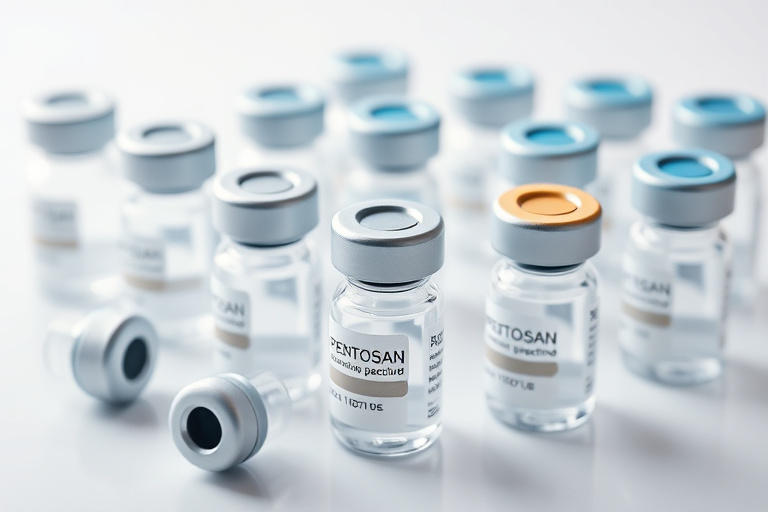
For joints, however, PPS needs to reach cartilage, synovial fluid, and subchondral bone through the bloodstream. At 3% absorption, oral PPS delivers very little compound to joint tissues. Injectable PPS bypasses the GI tract entirely, delivering therapeutic concentrations to where they're needed .
Safety Considerations by Route
Oral PPS (Elmiron)
- GI side effects: nausea, diarrhea, abdominal discomfort in 10-15% of users
- Maculopathy: long-term use (3+ years) linked to a unique pigmentary retinal condition
- Requires consistent daily dosing for months
Injectable PPS
- Injection site reactions (mild, temporary)
- Mild anticoagulant effect at higher doses
- Shorter treatment courses reduce cumulative exposure
- Lower maculopathy risk due to less total drug exposure
Frequently Asked Questions
Can I take oral PPS for my joints instead of injecting?
You can, but the evidence strongly favors injectable PPS for joint conditions. At 3% bioavailability, you would need extremely high oral doses to approach the joint tissue concentrations achieved by a single injection. Most joint health protocols use injectable PPS for this reason.
From the FormBlends catalog
BPC-157 Oral (Stable Arginate Salt)
Acid-stable oral form of BPC-157 for gut and systemic healing · From $69/mo · compounded by a licensed 503A pharmacy, dispensed only after provider review.
Learn about BPC-157 Oral (Stable Arginate Salt) →Is Elmiron the same compound as injectable PPS?
Yes. Both are pentosan polysulfate sodium. The difference is the delivery route and the formulation. Elmiron is a 100 mg oral capsule. Injectable PPS is a liquid solution for subcutaneous administration.
Can I switch from oral to injectable?
Yes, under physician guidance. If you have been taking Elmiron for IC and want to add joint protection, your physician can prescribe injectable PPS alongside or instead of oral, depending on your needs.
Find Your Best PPS Route
At FormBlends, our physicians help you choose the right PPS delivery method for your specific health goals.
Disclaimer: This article is for informational purposes only and doesn't constitute medical advice. Always consult with a licensed healthcare provider. Individual results may vary.
Ready when you are
BPC-157 Oral (Stable Arginate Salt)
Acid-stable oral form of BPC-157 for gut and systemic healing · From $69/mo · compounded by a licensed 503A pharmacy, dispensed only after provider review.
Learn about BPC-157 Oral (Stable Arginate Salt) →