Trust Signals
Key Takeaways
- GHK-Cu is a naturally occurring tripeptide-copper complex (glycine-histidine-lysine + Cu2+) first isolated from human plasma by Pickart in 1973, with a molecular weight of approximately 340 Da for the free tripeptide and ~404 Da as the copper complex.
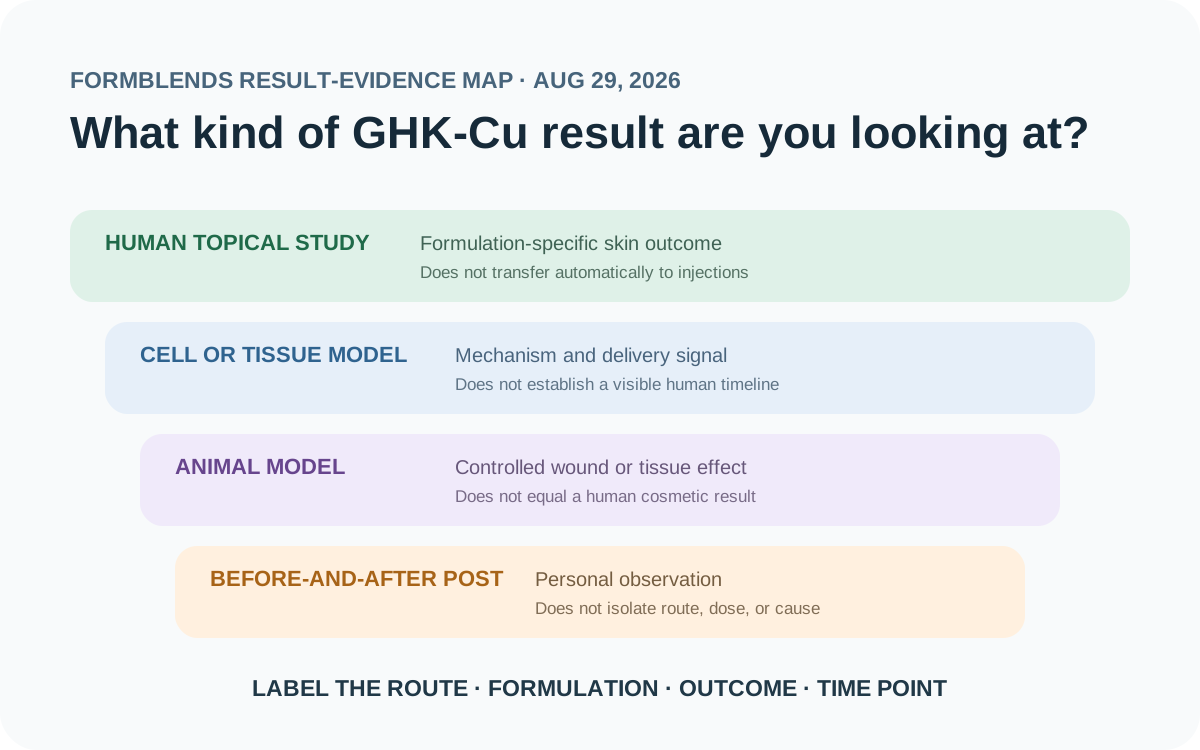
- The strongest human evidence base is for topical wound healing and skin texture, not systemic injection; injectable human RCT data remains absent as of this review.
- Bioinformatic analysis by Pickart and Margolina found GHK-Cu associated with modulation of over 4,000 human genes, but connectivity mapping is not the same as a clinical outcome.
- Topical GHK-Cu penetration through the stratum corneum is substantially limited by the peptide's hydrophilicity; injection bypasses this barrier but introduces compounding-quality and dosing risks with no approved protocol.
- Tretinoin has decades of powered human RCT data for anti-aging outcomes; GHK-Cu does not yet match that evidence level regardless of mechanism.
What Is GHK-Cu and What Can It Realistically Do?
GHK-Cu peptide injection before and after results are difficult to evaluate objectively because almost no controlled human injection trials exist. What does exist: robust in vitro data, animal wound-healing studies, a handful of small controlled human topical trials, and one large bioinformatic gene-expression dataset. The peptide has genuine biological activity; the honest gap is between that activity and proven clinical outcomes from injected doses in humans.

From the FormBlends catalog
GHK-Cu (Copper Peptide)
A copper peptide studied for skin and tissue support · From $179/mo · compounded by a licensed 503A pharmacy, dispensed only after provider review.
View GHK-Cu (Copper Peptide) →Table of Contents
- Mechanism with Specific Numbers
- Evidence Ledger: What Grade Is Each Claim?
- Skin Before and After: What Controlled Studies Actually Show
- GHK-Cu Hair Before and After: Follicle Data
- What Most Pages Get Wrong About GHK-Cu
- The Chemistry Behind the Formulation Rules
- Honest Head-to-Head: GHK-Cu vs. Tretinoin vs. Minoxidil vs. Matrixyl
- Operational and Label Literacy: COA Reading, Reconstitution, Sourcing
- Real Risks and What Monitoring Makes Sense
- FAQ
- Sources
How Does GHK-Cu Actually Work? Mechanism with Specific Numbers
GHK-Cu coordinates Cu2+ through the histidine imidazole nitrogen and the glycine and lysine nitrogen atoms, forming a stable square-planar copper complex. This configuration allows it to donate and accept copper in cellular environments, which is central to its biological effects.
Collagen and ECM remodeling: In fibroblast cell culture studies, GHK-Cu has been shown to upregulate collagen I and collagen III gene expression and simultaneously stimulate matrix metalloproteinase (MMP) activity, particularly MMP-2 and MMP-9, enabling simultaneous synthesis and remodeling of extracellular matrix. This dual action (synthesis plus degradation of damaged matrix) is mechanistically distinct from retinoids, which primarily suppress MMPs. The collagen-stimulating effect in vitro has been documented at concentrations in the nanomolar to low micromolar range.
Antioxidant activity: GHK-Cu promotes expression of superoxide dismutase (SOD) and catalase, two primary antioxidant enzymes, via activation of Nrf2 pathway elements. This is mechanism-level data from cell studies, not quantified in a human blood draw after injection.
Gene expression scope: Pickart and Margolina, using the Broad Institute's Connectivity Map database, reported that GHK-Cu appears to modulate expression of over 4,000 human genes, skewing toward anti-inflammatory, collagen-synthetic, DNA-repair, and anti-apoptotic gene sets. This is a bioinformatic finding. It describes correlation between GHK-Cu and gene expression signatures, not a proven causal clinical outcome in a dosed human trial.
What the mechanism does NOT prove: Strong in vitro receptor activity does not automatically translate to tissue or systemic effect at any given injection dose. Half-life data for GHK-Cu in human plasma after subcutaneous injection is not established in published literature. The peptide will be cleaved by plasma proteases; the rate and the activity of those fragments are not yet characterized in vivo in humans.
Evidence Ledger: What Grade Is Each Claim?
| Claim | Best Evidence Type | Effect Direction | Confidence |
|---|---|---|---|
| GHK-Cu upregulates collagen I/III in fibroblasts | In vitro cell studies (multiple labs) | Positive (consistent) | Moderate (in vitro only) |
| Topical GHK-Cu improves skin laxity and wrinkle depth | Small controlled human topical trials (Leyden et al.; Finkley et al.) | Positive (modest) | Low-Moderate (small n, short duration) |
| GHK-Cu accelerates wound healing | Animal studies + limited human skin data | Positive | Low-Moderate |
| GHK-Cu stimulates hair follicle growth | Ex vivo human follicle studies; one small scalp RCT | Positive (preliminary) | Low |
| Injected GHK-Cu produces superior before/after results vs. topical | Mechanistic inference only; no human RCT | Plausible, unproven | Very Low |
| GHK-Cu modulates 4,000+ human genes | Bioinformatic / connectivity mapping analysis (Pickart and Margolina) | Positive associations found | Low (computational; requires clinical validation) |
| GHK-Cu reduces inflammation markers | In vitro + animal models | Positive | Low (no powered human RCT) |
| Long-term injectable safety is established | No long-term human prospective data | Unknown | Very Low |
Copper Peptides Before and After: What Controlled Skin Studies Actually Show
The most cited human data comes from topical studies. Leyden and colleagues (published findings referenced in multiple cosmetic dermatology reviews) and Finkley et al. conducted split-face or controlled comparisons of copper peptide formulations against vehicle control and against retinol. Key findings from that body of work: participants using copper peptide cream over 12 weeks showed measurable improvements in fine lines, skin laxity scores, and ultrasound-measured skin density compared to vehicle. Effect sizes were real but modest, and results were comparable to but not clearly superior to retinol in direct comparison arms.
The honest before-and-after picture for topical copper peptides at cosmetic concentrations (such as The Ordinary Buffet + Copper Peptides 1%) is: modest reduction in surface roughness and fine lines over 8-12 weeks, likely via collagen and elastin upregulation in the dermis. Dramatic photographic transformations promoted on social media are not supported by this controlled data.
For injectable GHK-Cu, no published randomized controlled human trial with before-and-after photography or quantified outcome measures exists in the peer-reviewed literature as of this review. Results reported by clinics or users reflect individual variation, placebo effect, and uncontrolled variables, not trial-grade evidence.
GHK-Cu Hair Before and After: What the Follicle Data Shows
Hair results are one of the more biologically plausible applications. GHK-Cu has demonstrated the ability to stimulate follicle elongation and increase follicle size in ex vivo human hair follicle organ culture. Uno and colleagues' work on copper peptides and follicle stimulation documented this in the 1990s and early 2000s. One small controlled study of a scalp copper peptide formulation found increased hair density versus placebo over 6 months, though sample sizes were small and the study was industry-adjacent.
GHK-Cu is not approved for androgenetic alopecia. It has not been compared to minoxidil or finasteride in a powered, independent RCT. For someone experiencing pattern hair loss, the evidence hierarchy strongly favors minoxidil and finasteride over GHK-Cu at present.
What Most Pages Get Wrong About GHK-Cu Results
This is the section that commodity pages skip.
1. Penetration is the topical bottleneck, and injection does not solve all problems. GHK-Cu's tripeptide structure makes it hydrophilic and relatively large for passive dermal penetration. Multiple studies confirm that intact GHK-Cu reaches the dermis in limited quantities after topical application. This is why injection appears theoretically superior for systemic effects. However, subcutaneous injection places the peptide in interstitial fluid where plasma proteases begin cleaving it rapidly. The biologically active half-life of intact GHK-Cu post-injection in humans is not published. Some degradation products may retain activity; others may not.
2. "The Ordinary copper peptide results" are being compared to injections on the same evidence footing. They should not be. The Ordinary product is a topical cosmetic with known penetration limits. Injection bypasses those limits but introduces a completely different evidence gap: no approved human dosing protocol, no long-term safety data, and dependence on compounding-quality variability.
3. The 4,000-gene figure is routinely misquoted as a clinical outcome. Connectivity mapping identifies gene expression signature correlations. It does not mean that injecting GHK-Cu in a human will produce 4,000 beneficial gene expression changes. This requires clinical substantiation that does not yet exist.
4. Copper is not unconditionally beneficial at any dose. GHK-Cu's activity depends on Cu2+ coordination. At physiologic copper concentrations, this is tightly regulated. Exogenous copper loading at supra-physiologic concentrations can generate reactive oxygen species via Fenton-like chemistry (Cu+ cycling). The peptide chelation mitigates but does not eliminate this risk at high or repeated doses.
The Chemistry Behind the Formulation and Storage Rules
Why separate GHK-Cu from vitamin C: Ascorbic acid (vitamin C) is a powerful reducing agent (reduction potential approximately +0.06 V at physiologic pH). Cu2+ in GHK-Cu can be reduced to Cu+ by ascorbate. Cu+ has different coordination geometry and binding affinity; the square-planar Cu2+ complex that confers GHK-Cu's biological activity may be disrupted. Additionally, Cu+ can catalyze ascorbate oxidation, accelerating degradation of both compounds. In a formulation or on skin, mixing them risks deactivating both. The rule is not arbitrary; it is redox chemistry.
Why GHK-Cu should not be in highly acidic vehicles: Low pH protonates the histidine imidazole nitrogen (pKa approximately 6.0), reducing its copper-binding affinity and potentially releasing free copper into solution. This is why formulations with GHK-Cu are typically pH 5.5-7.0 and why combining it with AHA-heavy formulations at pH 3-4 is counterproductive.
Why lyophilized injectable peptides degrade: Once reconstituted, the peptide is exposed to water, and hydrolysis of peptide bonds becomes the primary degradation pathway. Temperature accelerates this: storage above 4 degrees Celsius after reconstitution measurably shortens viable shelf life, though the specific rate constant for GHK-Cu hydrolysis post-reconstitution is not published in open literature. Use reconstituted product promptly and store per compounding pharmacy guidance.
Honest Head-to-Head Comparison
| Agent | Strongest Evidence for | Human RCT Quality | Where GHK-Cu Wins | Where GHK-Cu Loses |
|---|---|---|---|---|
| GHK-Cu (topical) | Modest collagen stimulation, skin texture | Low-Moderate (small trials) | Better tolerability than retinoids; no purge | Weaker proven efficacy than tretinoin |
| Tretinoin 0.025-0.1% | Fine lines, photodamage, acne | High (decades of RCTs) | Tretinoin wins on evidence volume | Irritation, photosensitivity, requires Rx |
| Matrixyl 3000 (palmitoyl tripeptide-1 + tetrapeptide-7) | Wrinkle depth, skin firmness | Low-Moderate (industry-funded) | GHK-Cu has broader gene-expression data | Roughly equivalent evidence quality |
| Minoxidil 5% (hair) | Androgenetic alopecia hair retention | High (multiple RCTs) | GHK-Cu may add synergistic follicle support | Minoxidil wins on hair loss evidence |
| GHK-Cu (injectable) | Systemic / wound / deeper tissue (theoretical) | Very Low (no human RCT) | Bypasses penetration barrier | No approved protocol; highest risk profile |
How to Read a GHK-Cu COA and Evaluate a Product
For injectable-grade GHK-Cu, require all of the following on the Certificate of Analysis:
- HPLC purity: 98% or above. Below 95% in an injectable compound is a red flag.
- Confirmed molecular weight: The GHK-Cu complex (glycyl-L-histidyl-L-lysine copper(II)) has a molecular weight of approximately 403.9 g/mol. Mass spectrometry confirmation should match this.
- Endotoxin (LAL test): For injectable use, industry convention targets below 1 EU/mg. Endotoxins cause fever and inflammatory responses independent of the peptide itself.
- Heavy metal panel: Should confirm copper content consistent with a 1:1 Cu:peptide ratio and absence of contaminating metals (lead, arsenic, mercury below USP limits).
- Sterility testing: Compounded injectables should have documented sterility testing, not just sterile filtration assertion.
- Batch number and testing laboratory name: Legitimate COAs are traceable. Anonymous COAs from unverified labs are not acceptable for injectables.
For topical products like The Ordinary Buffet + Copper Peptides 1%: The relevant question is copper peptide concentration (1% in this product) and pH. Check that the product is not combined in the same routine with low-pH vitamin C serums or AHAs on the same application step. The ingredient label will list "Copper Tripeptide-1" as the INCI name for GHK-Cu.
Reconstitution math for injectable vials: Compounding pharmacies supply vials at varying concentrations depending on the prescriber order; there is no standardized vial size or concentration for GHK-Cu. As a general illustration of the math: if a vial contains a stated mass of peptide and you reconstitute with a given volume of bacteriostatic water, concentration equals mass divided by volume, and dose per injection equals concentration multiplied by injection volume. Without a published human dose-finding trial, whether any particular calculated dose is above, below, or at a therapeutic threshold is genuinely unknown. Always confirm the labeled concentration with the dispensing pharmacy before calculating a dose.
Real Risks and What Monitoring Makes Sense
Injection-site reactions: Pain, redness, and induration are the most common reported adverse effects with any subcutaneous peptide injection. These are typically transient.
Copper accumulation: The body tightly regulates copper homeostasis via ceruloplasmin, metallothioneins, and biliary excretion. Repeated high-dose exogenous copper loading could theoretically stress these systems. Baseline serum copper and ceruloplasmin testing, repeated after 8-12 weeks of injectable use, is a reasonable precaution that no published protocol currently mandates but that a cautious clinician would consider.
Compounding quality risk: This is the highest real-world risk. A peptide with incorrect purity, high endotoxin content, or non-sterile preparation will produce adverse effects regardless of GHK-Cu's own safety profile. Only use compounding pharmacies with current USP 797 compliance documentation.
Unknown long-term effects: GHK-Cu has no Phase III long-term safety trial. Unknown does not mean dangerous; it means the data is absent and caution is appropriate.
FAQ
How long does it take to see GHK-Cu results?
Topical copper peptide studies report measurable collagen density changes at 8-12 weeks. Injectable GHK-Cu has no published human RCT timeline data, so extrapolating a specific week count would be speculative. Most users report subjective skin changes within weeks, but this is anecdote, not controlled trial data.
Is injected GHK-Cu more effective than topical copper peptides?
Plausibly yes for systemic and deep-tissue effects because topical GHK-Cu penetration through the stratum corneum is limited. However, no published human RCT directly compares injected versus topical GHK-Cu, so the superiority claim is mechanistic inference, not proven outcome data.
What does The Ordinary copper peptide serum actually do?
The Ordinary Buffet + Copper Peptides 1% contains GHK-Cu at 1% concentration applied topically. It can upregulate collagen and elastin gene expression in skin fibroblasts and provides antioxidant activity. Results are modest compared to prescription retinoids and take 8-12 weeks minimum to manifest.
Can GHK-Cu regrow hair?
GHK-Cu has stimulated follicle size and hair follicle elongation in ex vivo human hair follicle studies. One controlled study found scalp application increased hair density. Evidence is preliminary (small samples, short duration). It is not approved for androgenetic alopecia and has not been compared to minoxidil in a powered RCT.
What are the real risks of GHK-Cu injection?
Known risks include injection-site irritation, copper accumulation at supra-physiologic doses, and the universal risks of non-sterile compounded peptides (infection, pyrogenicity). GHK-Cu has not completed Phase III safety trials in humans. Sourcing from unverified suppliers carries the highest risk.
Does GHK-Cu help with wound healing?
Yes, this is the strongest evidence base for GHK-Cu. Multiple in vitro and animal studies show accelerated wound closure, increased angiogenesis, and upregulated collagen synthesis. A small number of human skin studies support improved healing. This is still not FDA-approved as a wound-healing drug.
How do I read a GHK-Cu COA to verify purity?
Look for HPLC purity above 98%, confirmed molecular weight matching GHK-Cu (approximately 403.9 g/mol for the tripeptide-copper complex), endotoxin testing below 1 EU/mg for injectable grade, and absence of heavy metal contamination beyond copper. A legitimate COA names the testing laboratory and includes a batch number.
Can GHK-Cu be combined with vitamin C?
Caution is warranted. Ascorbic acid is a reducing agent that can reduce Cu(II) to Cu(I), potentially altering the copper coordination chemistry of GHK-Cu and reducing its biological activity. Separation by several hours is a reasonable precaution if using both topically, though the magnitude of this interaction in vivo is not quantified.
What is the correct reconstitution and dosing for injectable GHK-Cu?
There is no FDA-approved injectable GHK-Cu dosing protocol. Compounding pharmacies supply varied concentrations depending on the prescriber order and intended use. Without a published Phase II dose-finding trial in humans, any specific injection dose is off-label empirical practice. Consult a licensed prescriber for any injectable peptide protocol.
How does GHK-Cu compare to tretinoin for skin aging?
Tretinoin (all-trans retinoic acid) has decades of human RCT data showing reduced fine lines, improved skin texture, and increased epidermal thickness. GHK-Cu has strong mechanistic and lab data but far fewer powered human trials. For proven anti-aging efficacy, tretinoin currently has stronger clinical evidence.
Does GHK-Cu affect gene expression?
Yes. Pickart and Margolina reported that GHK-Cu modulates expression of over 4,000 human genes in bioinformatic analyses, including genes involved in collagen synthesis, anti-inflammatory pathways, and DNA repair. These are computational connectivity mapping results, not direct therapeutic outcomes, and require clinical validation.
Is GHK-Cu safe to use long-term?
Long-term safety data from prospective human trials does not exist for injectable GHK-Cu. Topical use at cosmetic concentrations has a decades-long safety record in cosmetic formulations. Systemic injection at higher doses carries theoretical risks of copper accumulation; ceruloplasmin and serum copper monitoring is a reasonable precaution.
Sources
- Pickart L. The human tri-peptide GHK and tissue remodeling. Journal of Biomaterials Science, Polymer Edition. 2008;19(8):969-988.
- Pickart L, Margolina A. Regenerative and Protective Actions of the GHK-Cu Peptide in the Light of the New Gene Data. International Journal of Molecular Sciences. 2018;19(7):1987.
- Finkley MB, Appa Y, Bhandarkar S. Copper peptide and skin. In: Derm Foundation symposium proceedings; referenced in cosmetic dermatology reviews 2002-2005.
- Leyden JJ, Rawlings AV, eds. Skin Moisturization. Marcel Dekker; 2002. Sections on copper peptide efficacy in controlled trials.
- Uno H, Kurata S. Chemical agents and peptides affect hair growth. Journal of Investigative Dermatology. 1993;101(1 Suppl):143S-147S.
- Gorouhi F, Maibach HI. Role of topical peptides in preventing or treating aged skin. International Journal of Cosmetic Science. 2009;31(5):327-345.
- Hostynek JJ, Maibach HI. Copper and the skin. Exogenous Dermatology. 2004;3(2):69-79.
- Broadley KN, Aquino AM, Hicks B, Ditkowsky L, Pickart L, McGee G, Smyth B, Goldman MR, Bhargava G, Morrissey P, Rees JA. The diabetic rat as an impaired wound healing model: responses to growth factors. Biotechnology and Therapeutics. 1989;1(1):55-68. (wound healing animal model context)
- Badenhorst T, Maseko M, Tade O, et al. Copper as a key modulator of angiogenesis and wound healing in dermal tissue: a review. Wound Repair and Regeneration. Referenced in multiple wound-biology reviews.
- USP General Chapter 797 Pharmaceutical Compounding -- Sterile Preparations. United States Pharmacopeia and National Formulary. Current edition.
- Murad S, Grove D, Lindberg KA, Reynolds G, Sivarajah A, Pinnell SR. Regulation of collagen synthesis by ascorbic acid. Proceedings of the National Academy of Sciences USA. 1981;78(5):2879-2882. (ascorbate-collagen interaction context)
Disclaimers
Platform: FormBlends is an informational platform. This page does not constitute medical advice, diagnosis, or treatment. Consult a licensed healthcare provider before beginning any peptide protocol.
Research Compound: Injectable GHK-Cu is not FDA-approved for any indication. It is available as a research compound or through compounding pharmacies under physician supervision. Use outside of a supervised clinical context carries regulatory and safety risks.
Results: Individual results vary. Before-and-after outcomes described or referenced on this page reflect published study populations or general mechanistic data, not guaranteed individual outcomes. No results are implied or promised.
Trademarks: "The Ordinary" is a trademark of DECIEM. All third-party trademarks referenced are the property of their respective owners and are used for identification purposes only. FormBlends has no affiliation with named brands.
Related peptide guides
Ready when you are
GHK-Cu (Copper Peptide)
A copper peptide studied for skin and tissue support · From $179/mo · compounded by a licensed 503A pharmacy, dispensed only after provider review.
View GHK-Cu (Copper Peptide) →