All GLP-1 medications from licensed 503A compounding pharmacies Browse Products

Tesamorelin Dosage: Clinical vs Research Protocols Explained | FormBlends

Tesamorelin dosage guide: FDA-approved 2mg/day for lipodystrophy, research protocols, mixing instructions, evidence ledger, and honest head-to-head vs...

Medically Reviewed

Written by FormBlends Medical Team, a group of pharmacologists and clinical science writers. · Reviewed by FormBlends Medical Content Team

Tesamorelin Dosage: Clinical vs Research Protocols Explained | FormBlends custom 2026 header image for Peptide Therapy
Custom header image for Tesamorelin Dosage: Clinical vs Research Protocols Explained | FormBlends, Peptide Therapy, and better treatment decision-making.
In This Article

This article is part of our Peptide Therapy collection. See also: GLP-1 Guides | Provider Comparisons

Search and AI answer brief

Practical answer: Tesamorelin Dosage: Clinical vs Research Protocols Explained | FormBlends

Tesamorelin dosage guide: FDA-approved 2mg/day for lipodystrophy, research protocols, mixing instructions, evidence ledger, and honest head-to-head vs...

Short answer

Tesamorelin dosage guide: FDA-approved 2mg/day for lipodystrophy, research protocols, mixing instructions, evidence ledger, and honest head-to-head vs...

Search intent

This page answers a specific Peptide Therapy question rather than a generic overview.

What to verify

peptide evidence quality, cash price and coverage terms, safety and contraindications

How to use it

Use this information to prepare sharper questions for a licensed provider.

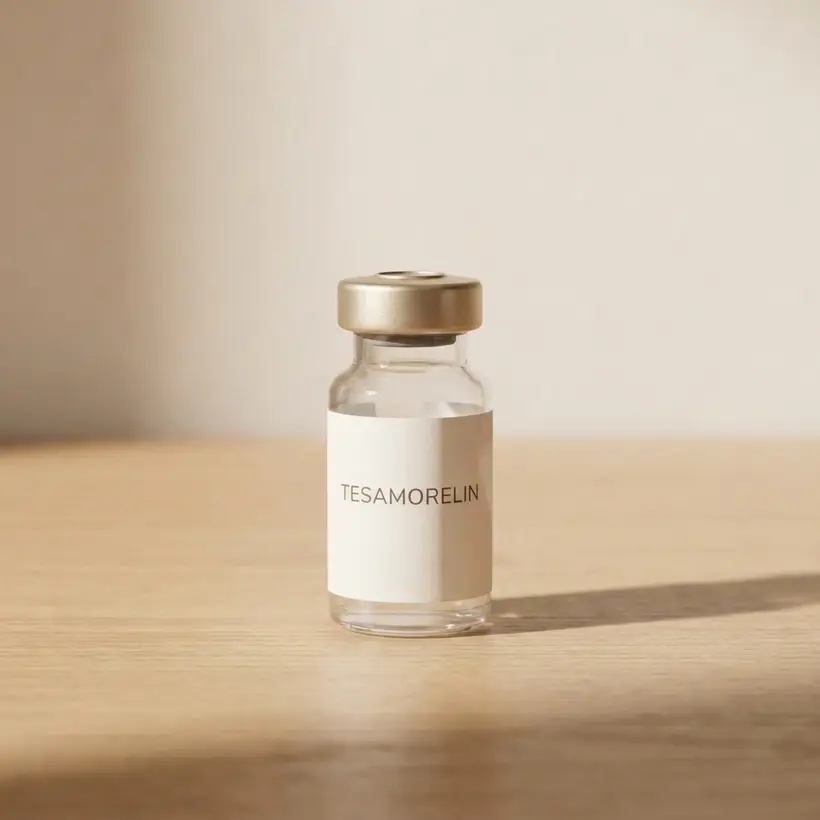
Abstract scientific illustration for peptides tesamorelin dosage

Trust signals

  • Written by FormBlends Medical Team, a group of pharmacologists and clinical science writers.
  • All dosing figures are sourced from FDA prescribing information or named peer-reviewed trials.
  • Speculative or off-label claims are labeled as such throughout.
  • No affiliate links to peptide vendors. No financial interest in any sourcing recommendation.
  • Last reviewed and updated: 29 May 2026.

Key Takeaways

  • The only evidence-backed tesamorelin dosage is 2 mg subcutaneously once daily, established by two phase III RCTs in HIV-associated lipodystrophy (Falutz et al., 2007 and 2010).
  • Tesamorelin's plasma half-life is approximately 26 minutes, meaningfully longer than sermorelin (~12 minutes) but far shorter than CJC-1295 with DAC (days), which changes pulsatility dynamics at equivalent doses.
  • Reconstituting a 2 mg vial with 2 mL sterile or bacteriostatic water yields 1 mg/mL; the full clinical dose is delivered in a 2 mL draw or two separate 1 mL injections.
  • Post-discontinuation, visceral adipose tissue returns toward baseline within weeks in trial data, confirming the effect is maintenance-dependent, not curative.
  • Research-grade vials (5 mg, 10 mg) are not FDA-regulated; a COA with HPLC purity above 98% and MS confirmation of the correct 5135.9 Da molecular weight is the minimum credible quality check.

Direct answer: What is the standard tesamorelin dosage?

The FDA-approved tesamorelin dosage is 2 mg injected subcutaneously once daily for HIV-associated lipodystrophy. This is the only dose tested in phase III human RCTs. Off-label and research protocols typically use the same 1-2 mg per day range, but no controlled evidence supports a different dose for any other outcome.

Check your GLP-1 eligibility

Use our free BMI Calculator to see if you may qualify for provider-reviewed GLP-1 therapy.

Try the BMI Calculator →

Evidence Ledger: What the Data Actually Shows

Every major claim about tesamorelin dosage sits at a different confidence level. This table is the foundation of the rest of the page.

Claim Best Evidence Type Sample / Detail Effect Direction Confidence
2 mg/day reduces visceral adipose tissue in HIV lipodystrophy Phase III RCT (two trials) Falutz et al. 2007 (n=412), 2010 (n=273 extension) Significant VAT reduction vs placebo at 26 weeks High
Effects reverse after discontinuation Phase III RCT follow-up data Falutz et al. 2010 extension arm VAT returns toward baseline High
Tesamorelin raises IGF-1 levels Phase III RCT biomarker data Falutz et al. 2007 IGF-1 increase vs placebo High
Plasma half-life ~26 minutes Pharmacokinetic study (healthy volunteers) Theratechnologies data, cited in FDA label Rapid clearance confirmed Moderate
2 mg/day improves cognitive function in older adults without HIV Phase II RCT Baker et al. 2012 (n=152, JAMA) Executive function improvement vs placebo at 20 weeks Moderate
1 mg/day achieves meaningful visceral fat reduction No RCT Extrapolated from lipodystrophy trials at 2 mg Unknown; dose-response not established Very Low
Tesamorelin improves muscle mass or body composition in healthy athletes No controlled trial Anecdotal only Unknown Very Low
Split dosing (1 mg AM + 1 mg PM) superior to single dose No trial in humans Theoretical, based on GH pulsatility physiology Unknown; untested Very Low

Mechanism with Numbers: How Tesamorelin Works at the Receptor Level

Tesamorelin is a synthetic analog of endogenous growth hormone-releasing hormone (GHRH), a 44-amino acid hypothalamic peptide. Tesamorelin adds a trans-3-hexenoic acid group to the N-terminus of the 44-amino acid native sequence. This modification does not change the receptor target but does confer greater resistance to dipeptidyl peptidase IV (DPP-IV) cleavage at the Tyr-Ala bond, extending activity compared to unmodified GHRH.

Receptor target: GHRH receptor (GHRHR), a G-protein-coupled receptor on anterior pituitary somatotroph cells. Binding activates adenylyl cyclase, raises intracellular cAMP, and triggers pulsatile GH secretion. Tesamorelin preserves the pulsatile pattern because it is cleared rapidly (half-life approximately 26 minutes in PK data cited in the Egrifta label), unlike long-acting analogs that suppress normal pulsatility through receptor downregulation.

What the mechanism does NOT prove: Greater pulsatility preservation does not automatically translate to superior safety or superior anabolic outcomes. The clinical trials measured visceral fat, not muscle mass or athletic performance. Extrapolating a mechanism to an untested outcome is a logical error that commodity pages commit routinely.

Tesamorelin Dosage Chart by Use Case

Important: Only the HIV-associated lipodystrophy indication has RCT support and FDA approval. All other entries in this table are research or off-label contexts. Tesamorelin is a prescription compound in the United States. Discuss any use with a licensed physician.
Use Context Dose Frequency Route Evidence Level Notes
HIV-associated lipodystrophy (FDA-approved) 2 mg Once daily Subcutaneous (abdomen) Phase III RCT Egrifta prescribing information; rotate injection sites
Mild cognitive impairment research (Baker et al. 2012) 2 mg Once daily Subcutaneous Phase II RCT Not approved; research setting only
Non-alcoholic fatty liver / metabolic research 2 mg Once daily Subcutaneous Small clinical trials Stanley et al. 2014 (n=39); preliminary only
Off-label / general body composition (unapproved) 1-2 mg Once daily Subcutaneous Anecdotal, no RCT Dose extrapolated from clinical trials; not validated
Research protocol: split dosing (unapproved) 1 mg + 1 mg Twice daily (AM/PM) Subcutaneous Theoretical only No comparative trial; purely speculative

Tesamorelin 2mg, 5mg, and 10mg Mixing: Step-by-Step Reconstitution Math

Lyophilized tesamorelin peptide must be reconstituted before injection. The solvent choice and volume determine the final concentration and shelf life of the solution.

Solvent choice rule: For single-use vials, use sterile water for injection (SWFI). For multi-dose vials intended to be used over several days, bacteriostatic water for injection (BWFI, containing 0.9% benzyl alcohol) is appropriate because benzyl alcohol inhibits microbial growth. The Egrifta label specifies SWFI and immediate use or refrigeration within 24 hours. Benzyl alcohol is not compatible with neonatal use.

Vial Size Reconstitution Volume Resulting Concentration Volume for 2 mg Clinical Dose Volume for 1 mg Dose Volume for 500 mcg Dose
2 mg (Egrifta format) 2.1 mL SWFI ~1 mg/mL 2.0 mL 1.0 mL 0.5 mL
2 mg (research vial, multi-dose) 2.0 mL BWFI 1 mg/mL 2.0 mL 1.0 mL 0.5 mL
5 mg (research vial) 5.0 mL BWFI 1 mg/mL 2.0 mL 1.0 mL 0.5 mL
10 mg (research vial) 10.0 mL BWFI 1 mg/mL 2.0 mL 1.0 mL 0.5 mL

Reconstitution technique: Inject solvent gently down the inside wall of the vial, not directly onto the lyophilized cake. Swirl slowly for 30 seconds. Do not vortex or shake; mechanical agitation promotes peptide aggregation and loss of potency. The reconstituted solution should be clear and colorless. Any cloudiness, particulates, or yellow tint indicates degradation; discard.

What Most Pages Get Wrong About Tesamorelin Dosage

This is the section that commodity medspa blogs and supplement stack sites consistently omit or distort.

1. Conflating the mechanism with proven outcomes in healthy populations. Every RCT on tesamorelin was conducted in people with HIV-associated metabolic disruption or older adults with documented cognitive decline. The hypothalamic-pituitary axis behaves differently in these populations than in healthy, trained individuals. Assuming that 2 mg will produce the same visceral fat reduction in a healthy 30-year-old is an extrapolation without evidence, not a clinical fact.

2. Ignoring the return-to-baseline reality. Most pages list tesamorelin's benefits as if they are permanent once achieved. Phase III extension data from Falutz et al. 2010 showed that visceral adipose tissue returned toward pre-treatment values after discontinuation. The compound requires ongoing use to maintain its effect, which has substantial implications for long-term cost, risk, and supply-chain considerations.

3. Overstating the difference between 1 mg and 2 mg. No dose-finding RCT has established the minimum effective tesamorelin dosage for any outcome. Pages that confidently recommend 1 mg as a "starter dose" or "low-and-slow" protocol are presenting convention as evidence. The dose-response curve for tesamorelin in humans is not published for most proposed off-label uses.

4. Treating research-grade vials as pharmacologically equivalent to Egrifta without verification. Research-grade peptides are not FDA-regulated. Independent testing by organizations such as Janoshik Analytical or Swiss Pharma testing labs has found peptide identity and concentration variances in research-grade products. This is not an argument never to use them; it is an argument to demand a COA and understand its limits.

5. Neglecting IGF-1 monitoring. Tesamorelin raises IGF-1, and supraphysiologic IGF-1 is associated in epidemiological data with increased cancer risk signals. This does not mean tesamorelin causes cancer at clinical doses, but it does mean that protocols lacking IGF-1 monitoring ignore an established biomarker of GH axis activity.

Why Storage and Formulation Rules Exist: The Chemistry

Lyophilized tesamorelin is stable for months at refrigerated temperatures (2-8 degrees Celsius) because the freeze-drying process removes water, dramatically slowing hydrolysis and oxidation. Once reconstituted, water re-enters the system and three degradation pathways become active:

  1. Hydrolysis: Peptide bonds, particularly adjacent to amino acids with bulky or charged side chains, are cleaved by water. Rate accelerates with temperature. At room temperature, meaningful hydrolysis can occur within hours to days; at 4 degrees Celsius, this is slowed substantially but not stopped.
  2. Oxidation: Tesamorelin contains a methionine residue. Methionine sulfur is oxidized to methionine sulfoxide on exposure to dissolved oxygen, degrading biological activity. Light accelerates this reaction via photosensitization. This is why vials should be stored away from light and in amber or foil-covered containers.
  3. Aggregation: At elevated temperatures or with mechanical agitation, tesamorelin molecules form non-covalent clusters (aggregates). Aggregated peptide loses receptor binding efficiency and can elicit immune responses if injected. This is why the instruction to swirl rather than shake is not arbitrary caution; it is based on the physical chemistry of peptide self-association.

Why you must not freeze reconstituted peptide: Ice crystal formation physically disrupts peptide secondary structure and, upon thawing, leaves a partly denatured and aggregated solution. The Egrifta label explicitly prohibits freezing of the reconstituted product. Lyophilized (dry) vials can be stored frozen; liquid cannot.

Honest Head-to-Head: Tesamorelin vs Sermorelin vs CJC-1295

Feature Tesamorelin Sermorelin CJC-1295 (no DAC) CJC-1295 with DAC
Mechanism GHRH analog GHRH analog (first 29 AA) GHRH analog (modified) GHRH analog + albumin binding
Half-life ~26 minutes ~12 minutes ~30 minutes ~6-8 days
Pulsatility preservation Yes (rapid clearance) Yes Yes No (blunts natural pulsatility)
Human RCT evidence for fat reduction Yes (phase III) No No No
FDA approval Yes (lipodystrophy) No (withdrawn) No No
Typical research dose 1-2 mg/day 200-500 mcg/day 100-300 mcg/day 1-2 mg/week
WADA status Prohibited (S2) Prohibited (S2) Prohibited (S2) Prohibited (S2)
Where tesamorelin LOSES Highest cost; requires daily injection; no advantage established in healthy cohorts Lower cost; easier reconstitution Lower injection frequency if blunting not a concern Weekly dosing convenience

The credibility of tesamorelin rests on its evidence base, not on a mechanistic claim of superiority. For a user who does not have HIV-associated lipodystrophy, there is currently no controlled evidence that tesamorelin outperforms any alternative GHRH analog for any outcome.

Label and COA Literacy: How to Judge What You Are Buying

If you are evaluating a research-grade tesamorelin product, the following checklist separates minimally acceptable quality documentation from what is insufficient.

Test Minimum Acceptable Result What Absence Means
HPLC purity Greater than 98% Unknown impurity profile; injection risk
Mass spectrometry (MW confirmation) 5135.9 Da (tesamorelin free base) Cannot confirm correct peptide identity
Endotoxin (LAL test) Below 1 EU/mg Pyrogen risk; fever and systemic inflammation on injection
Residual solvent testing Within ICH Q3C limits Unknown solvent contamination
Labeled vs actual quantity Within 10% of label claim Dosing math is unreliable; over- or under-dosing

Red flags on a COA: A COA issued by the same company selling the product is not independent verification. Look for COAs from third-party laboratories with accreditation (ISO 17025 or equivalent). A COA that shows only HPLC without mass spec cannot confirm you have tesamorelin rather than a structurally similar but cheaper peptide.

Safety Signals at Standard Doses

Data from the phase III trials (Falutz et al. 2007 and 2010) reported the following at the 2 mg/day dose compared to placebo:

  • Injection site reactions: Erythema, pruritus, and pain were more frequent in the tesamorelin group.
  • Fluid retention: Peripheral edema and arthralgia were observed at higher rates than placebo, consistent with GH axis activation and sodium retention.
  • IGF-1 elevation: Mean IGF-1 rose significantly versus placebo. Monitoring is recommended to avoid supraphysiologic levels.
  • Glucose metabolism: The Egrifta prescribing information includes a warning regarding glucose intolerance and new-onset diabetes. GH stimulation promotes insulin resistance; users with pre-existing glucose dysregulation require closer monitoring.
  • Antibody formation: Anti-tesamorelin antibodies developed in a subset of trial participants; clinical significance appeared low in trial follow-up but could theoretically affect long-term efficacy.

Absolute contraindications per Egrifta label: Active malignancy, pregnancy, pituitary tumor or disruption of the hypothalamic-pituitary axis, and hypersensitivity to tesamorelin or mannitol (excipient).

FAQ

What is the FDA-approved tesamorelin dosage?
The FDA-approved dose is 2 mg subcutaneously once daily for HIV-associated lipodystrophy (Egrifta). This is the only human dosage supported by phase III RCT data. No other indication has regulatory approval.

What tesamorelin dosage is used in bodybuilding or physique research protocols?
Unapproved research protocols typically mirror the clinical 1-2 mg per day range, sometimes described as two 1 mg injections. There are no RCTs supporting these uses. Evidence is anecdotal or extrapolated from lipodystrophy trials.

How do you mix tesamorelin 2mg vials?
Add approximately 2.0-2.1 mL of sterile water for injection (or bacteriostatic water for multi-dose use) to a 2 mg lyophilized vial, yielding approximately 1 mg/mL. Swirl gently; never shake. Draw 1.0 mL for a 1 mg dose or 2.0 mL for the full 2 mg clinical dose.

What does a tesamorelin 10mg vial contain and how is it dosed?
10 mg vials are a research-grade format not FDA-approved. Reconstituted with 10 mL bacteriostatic water yields 1 mg/mL. Each 1.0 mL draw equals 1 mg (1000 mcg). Verify purity via third-party COA before any use.

What is the tesamorelin dosage per day for visceral fat reduction?
Phase III trials (Falutz et al., 2010) used 2 mg once daily subcutaneously and demonstrated statistically significant visceral adipose tissue reduction versus placebo at 26 weeks. Lower doses have not been validated in RCTs for this outcome.

How does tesamorelin compare to CJC-1295 or sermorelin at equivalent doses?
Tesamorelin is the only GHRH analog with phase III human RCT data for a specific clinical outcome. CJC-1295 and sermorelin lack equivalent-quality evidence for fat reduction. Tesamorelin's half-life (~26 minutes) is longer than sermorelin (~12 minutes) but far shorter than CJC-1295 with DAC (days), which blunts natural GH pulsatility.

Is tesamorelin 5mg a standard dosing unit?
5 mg is a research-supply vial size, not an FDA-approved format. Reconstituting 5 mg in 5.0 mL bacteriostatic water gives 1 mg/mL. At the clinical daily dose of 2 mg, each vial provides approximately 2.5 days of dosing.

What happens to tesamorelin stability after reconstitution?
The Egrifta prescribing information states reconstituted solution should be used immediately or refrigerated and used within 24 hours. Bacteriostatic water extends usable window for research vials, but oxidation and aggregation accelerate above 4 degrees Celsius. Never freeze reconstituted peptide.

Does tesamorelin require cycling?
Clinical trial data used continuous daily dosing up to 52 weeks. No mandatory cycling protocol is established by evidence. Discontinuation in trials led to visceral fat returning toward baseline, suggesting effects are maintenance-dependent, not permanent.

What injection site and timing is recommended for tesamorelin?
Subcutaneous injection into the abdomen is the approved route. Morning administration before food is a common clinical convention aligned with natural GH pulsatility, but no head-to-head timing trial exists for tesamorelin specifically.

What are the main safety signals at standard tesamorelin doses?
Phase III data identified injection-site reactions, fluid retention (edema, arthralgia), and IGF-1 elevation as the most common adverse events. Glucose intolerance risk is a documented concern requiring monitoring, particularly in those with pre-diabetic metabolic status.

How do I read a tesamorelin COA for purity?
Look for HPLC purity above 98%, mass spectrometry confirmation of correct molecular weight (5135.9 Da for tesamorelin), and endotoxin testing below 1 EU/mg. A COA lacking MS confirmation or endotoxin data is insufficient for any injected use.

Sources

  1. Falutz J, Allas S, Blot K, et al. Metabolic effects of a growth hormone-releasing factor in patients with HIV. N Engl J Med. 2007;357(23):2359-2370.
  2. Falutz J, Potvin D, Mamputu JC, et al. Effects of tesamorelin, a growth hormone-releasing factor, in HIV-infected patients with abdominal fat accumulation: a randomized placebo-controlled trial with a safety extension. J Acquir Immune Defic Syndr. 2010;53(3):311-322.
  3. Baker LD, Barsness SM, Borson S, et al. Effects of growth hormone-releasing hormone on cognitive function in adults with mild cognitive impairment and healthy older adults. JAMA. 2012;308(1):47-57.

Evidence standard

How this page was source-checked

Editorial policy

FormBlends does not claim an individual clinician byline unless a named reviewer is available. For this page, the editorial team checks medical and regulatory claims against primary sources, clinical trials, public datasets, and regulator guidance.

PubMed evidence trail

Research sources used to frame this page

For Tesamorelin Dosage: Clinical vs Research Protocols Explained | FormBlends, FormBlends checks the page topic against primary trials, systematic reviews, guidelines, and current PubMed-indexed literature where available. These citations are context, not a claim that every study applies to every patient.

Comparison decision path

Use this comparison to narrow the provider review question

Direct answer

Tesamorelin Dosage: Clinical vs Research Protocols Explained should help you decide which option deserves a clinical review, not force a one-size answer.

Evidence check

A strong comparison should connect mechanism, evidence strength, safety, access, and cost instead of only naming a winner.

Safety check

The right choice can change based on history, medication interactions, side effects, budget, and availability.

Next step

After comparing, use the get-started flow to route your goals and health history into the right prescription review path.

Original tools and data

Use the FormBlends research stack

These assets are built to be useful beyond a single article: shareable data pages, calculators, provider comparisons, and safety checks that give Google and readers something original to crawl.

Editorial refresh

Practical 2026 note for Tesamorelin Dosage

For this peptide therapy page, the 2026 refresh focuses on cash-pay pricing, safety signals, peptides, tesamorelin, dosage so the article stays close to the question behind "Tesamorelin Dosage".

The useful details are the practical ones: what to verify, what changes risk or cost, and which details separate Tesamorelin Dosage from nearby GLP-1, peptide, hormone, or provider-comparison searches.

Readers can use the added context to bring sharper questions to a licensed provider before making a treatment, cost, or care decision.

Tesamorelin Dosage custom 2026 image for peptide therapy on FormBlends

Custom 2026 image for Tesamorelin Dosage, peptide therapy, and better treatment decision-making.

Image description: Unique image for this page covering Tesamorelin Dosage, peptide therapy, safety, cost, provider selection, and patient decision-making.

Download the Peptide Quick Reference Card

A printable 2-page reference covering popular peptides, dosing ranges, stacking protocols, and storage.

Free download. We'll also send helpful GLP-1 guides to your inbox. Unsubscribe anytime.

Medical Disclaimer: This content is for informational purposes only and does not constitute medical advice. Always consult a qualified healthcare provider before starting, stopping, or changing any medication or treatment. FormBlends articles are source-checked against medical and regulatory references, but they are not a substitute for a personal medical consultation.

Written by FormBlends Medical Team, a group of pharmacologists and clinical science writers.

Medical content team. This article was researched against primary regulatory, trial, prescribing, and manufacturer sources where available. Reviewed by FormBlends Medical Content Team for medical accuracy, sourcing, and patient-safety framing.

Ready to get started?

Provider-reviewed GLP-1 and peptide therapy, delivered to your door.

Start Your Consultation

Ready to Start Your Weight Loss Journey?

Get a free medical consultation with a licensed provider. Compounded GLP-1 medications starting at $299/month with free shipping.

Next Best Reads

Free Tools

Provider-informed calculators to support your weight loss journey.