Last October, a 34-year-old software engineer named David in Austin told his prescriber he'd tried methylphenidate, lisdexamfetamine, and atomoxetine over the previous six years. Each one worked for a while, then either the side effects became unmanageable or the efficacy plateaued. "I don't need to feel wired," he said during the consult. "I need to stay in a task for 90 minutes without my brain deciding the dishwasher is more interesting." His prescriber, after documenting the conventional treatment history, wrote him a compounded intranasal Semax script at 300 mcg twice daily. Four weeks later, David described the effect as "like someone turned the static down by 40 percent."
That anecdote is not proof. It's one person's experience, and it tracks with a broader pattern in the Semax attention literature: modest, real effects for some users, nothing dramatic for others, and a research base that is promising but genuinely incomplete.
Here's what we actually know, what we don't, and where the honest boundaries are.
The Neuroscience Case (And Why It's Interesting)
Three mechanisms make Semax theoretically relevant to attention. Each one has been studied independently, and together they paint a picture that is distinct from any existing ADHD pharmacotherapy.
The first, and most consistently replicated, is BDNF upregulation in the cortex and hippocampus. BDNF is essential for synaptic plasticity and for maintaining cholinergic neurons in the basal forebrain, both of which matter for attentional control. A 2005 study by Dolotov et al. in Neuroscience demonstrated that Semax administration produced dose-dependent increases in BDNF mRNA expression in the rat hippocampus, with effects persisting for up to 24 hours after a single intranasal dose. This is the least controversial claim in the Semax literature. What makes it specifically relevant to attention is that BDNF signaling in the prefrontal cortex supports the very working memory networks that falter in ADHD. When those circuits have adequate trophic support, they fire with more reliability. When they don't, the system defaults to stimulus-driven behavior, which is the subjective experience of distractibility.
The second is dopaminergic modulation. Research suggests Semax influences dopamine release patterns in cortex and striatum, with downstream effects on attentional and reward signaling. Eremin et al. (2005) measured changes in monoamine metabolites in rat brain structures following Semax administration and found alterations in dopamine turnover, particularly in prefrontal regions associated with executive function. The catch is that the exact magnitude and direction of this effect appears to be dose-dependent and context-dependent, which makes it hard to pin down. At lower doses, the modulation seems to enhance tonic dopamine signaling, which is the sustained baseline that supports focus. At higher doses, the picture gets muddier. This complexity is one reason translating animal dopamine data to human attentional experience remains genuinely difficult.
Third, enkephalinase inhibition produces a mild endogenous opioid effect that some researchers link to improved emotional regulation during demanding cognitive tasks. Think of it as neurochemical noise cancellation rather than stimulation. For people with ADHD, the frustration and emotional reactivity that accompany sustained cognitive effort are often as debilitating as the inattention itself. If Semax modestly buffers that frustration response, the downstream effect on task persistence could be real even if the primary attentional circuitry is not directly engaged. This is speculative, but it aligns with patient reports describing Semax's effect as "calming the background noise" rather than "sharpening the foreground."
Together, these mechanisms create a profile that is fundamentally different from stimulant medications. Semax doesn't crank the dopamine signal louder. It may, if the data holds, improve the signal-to-noise ratio. That distinction matters for understanding both who it helps and who it doesn't.
What Russian ADHD Trials Actually Found
The most direct evidence comes from a series of small Russian open-label studies in pediatric and adolescent populations diagnosed with attention deficit syndromes. Reported outcomes include reductions in inattention scores on standardized scales, improvements in task completion behavior, and parent-reported improvements in school performance. One study published in Zhurnal Nevrologii i Psikhiatrii examined children aged 7 to 12 with clinically diagnosed attention deficits and found that a 10-day intranasal Semax course (at 200 to 400 mcg daily depending on weight) produced statistically significant improvements on computerized continuous performance tests compared to baseline. Teacher-rated behavioral scales also shifted, with the largest improvements in the "difficulty sustaining attention in tasks or play activities" domain.
A separate body of research examined Semax in healthy adults under cognitive load, including operator-group studies in occupational settings. These measured sustained attention task performance, reaction time consistency, and resistance to cognitive fatigue over multi-hour task blocks. One study on military operators found that Semax reduced error rates during monotonous vigilance tasks by approximately 18% over a 6-hour monitoring period compared to the group's own pre-treatment baseline. Reported effect sizes across these studies are modest. The consistent pattern: Semax improves performance under load more than it improves baseline cognitive capability. It helps when the task is hard and boring, not when you're already performing well.
There is also a small body of EEG research worth mentioning. Kaplan et al. published data showing changes in cortical spectral power following Semax administration, specifically increased alpha-band activity in frontal regions during sustained attention tasks. Increased frontal alpha is generally associated with more efficient top-down attentional control. This isn't behavioral evidence of improved focus, but it does provide a neurophysiological signature consistent with the behavioral claims.
Both the behavioral and neurophysiological findings are interesting. Neither of them is conclusive.
The Honesty Section: Why This Evidence Is Insufficient
I think Semax is one of the more pharmacologically interesting peptides in the attention space. I also think anyone claiming strong evidence for its use in ADHD is overstating what exists. The limitations are specific and serious:
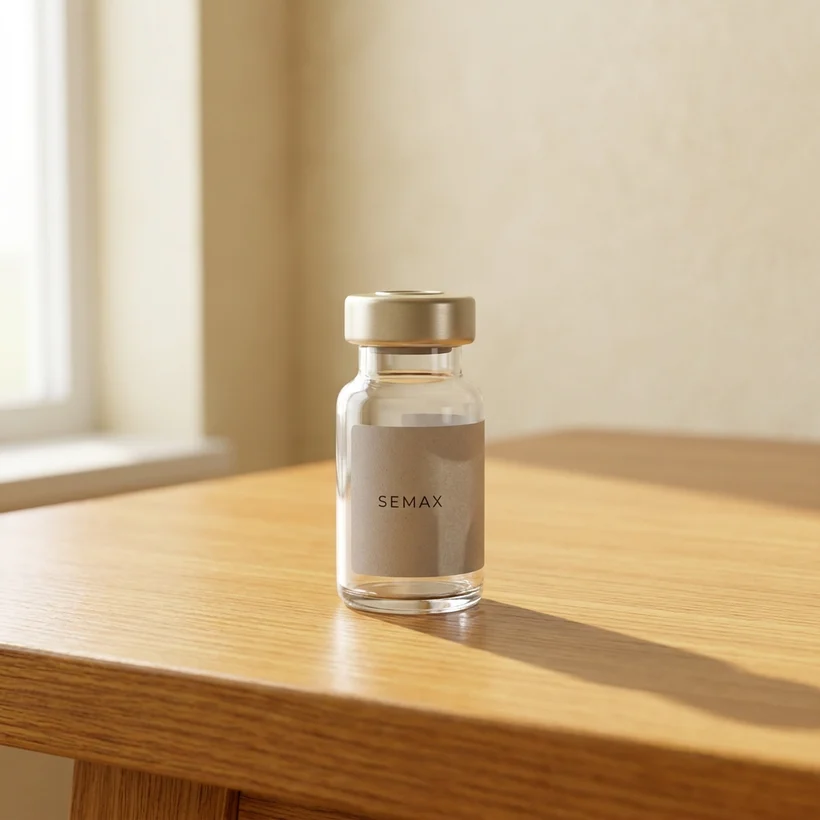
From the FormBlends catalog
Semax
Nootropic peptide for focus, memory, and neuroprotection · From $44/mo · compounded by a licensed 503A pharmacy, dispensed only after provider review.
Learn about Semax →The trial designs are predominantly open-label without blinded placebo controls. For a condition like ADHD, where placebo response rates can run 20 to 30%, this is a major problem. A child or adult who enrolls in an attention study, receives a nasal spray, and knows they are receiving an active treatment will frequently report improvement regardless of the drug's actual efficacy. Without a placebo control arm, we cannot separate pharmacological signal from expectation effects and regression to the mean.
Sample sizes are small, typically 20 to 50 participants per study, which reduces the precision of any effect size estimates and makes it difficult to detect subgroup effects or rare adverse events. Outcome measures vary across studies, making cross-study comparison difficult. And the entire literature originates from a single research environment (Russian academic institutions) without independent Western replication. This isn't a commentary on the quality of Russian neuroscience, which has a long tradition of rigorous peptide pharmacology. It's a commentary on the basic scientific principle that findings require independent confirmation before they carry strong weight.
There is a specific additional concern: the lack of standardized diagnostic criteria across studies. Russian classification systems historically used slightly different attention deficit categorizations than the DSM-5. This means the study populations may not map precisely onto the ADHD population as defined in Western clinical practice, introducing another layer of uncertainty when trying to apply these results to patients in a US clinical context.
This doesn't mean the research is wrong. It means we're working with a preliminary signal, not an established treatment. Those are genuinely different things.
Dosing Protocols in Research and Practice
Russian ADHD research protocols used Semax at 250 to 500 mcg per day, delivered as two intranasal administrations (morning and midday) for courses lasting 10 to 30 days. Pediatric protocols adjusted per-dose amounts for age and weight, generally staying at the lower end.
Adult protocols in the research peptide community typically follow a similar total daily dose of 250 to 500 mcg, split between morning and midday, with cycle structures of 4 to 8 weeks followed by an off period. Some prescribers working with compounded Semax begin at 200 mcg once daily for the first three to five days to assess individual tolerability before moving to the split-dose protocol. This is not based on trial data. It's a clinical caution pattern borrowed from standard dose-titration practices.
Variant choice matters for convenience but not total dose. N-Acetyl Semax Amidate (NASA) has a longer half-life that allows once-daily dosing. Base Semax requires the split dosing. The amidate modification and N-acetyl group increase the peptide's resistance to enzymatic degradation in nasal mucosa, which means more of the administered dose reaches the CNS and remains active for a longer window. The pharmacological target is the same; the pharmacokinetic profile is different.
Effect onset is gradual. Most reports describe meaningful changes developing over the first one to two weeks of consistent use, with peak effects in the third or fourth week. If you're expecting the acute "lights on" sensation of a stimulant, you will be disappointed. David, the engineer from the opening anecdote, described his first week as "honestly nothing." It wasn't until week two that he noticed he was reaching the end of deep-work sessions without the familiar itch to switch tasks.
A practical note on nasal administration technique: Semax is absorbed through the olfactory and respiratory mucosa. A congested nose or vigorous sniffing that pulls the liquid into the throat reduces absorption. Gentle administration with the head tilted slightly back, followed by a soft inhale, produces the most consistent delivery. This sounds minor, but inconsistent dosing from poor technique is a common reason peptide nasal sprays underperform in practice.
How This Stacks Up Against Conventional ADHD Treatment
Stimulant medications (methylphenidate, amphetamine derivatives) have decades of controlled trial data, established efficacy across age groups, and well-characterized risk profiles. The MTA Cooperative Group's landmark study, one of the largest ADHD treatment trials ever conducted, followed nearly 600 children and demonstrated clear short-term superiority of stimulant medication over behavioral treatment alone for core ADHD symptoms. Non-stimulant ADHD medications (atomoxetine, guanfacine, clonidine) have their own distinct evidence bases, with randomized controlled trials, long-term extension studies, and regulatory approval.
Semax has none of that. Not yet. The mechanistic profile is different, the evidence base is different, and the scale of clinical use is incomparably smaller. We are comparing a compound with a handful of small open-label studies to a pharmacological class with hundreds of controlled trials involving tens of thousands of participants.
Prescribers interested in Semax for attention contexts typically position it as an adjunct, or as an option for patients who've tried and failed conventional therapy, not as a first-line alternative. That framing strikes me as appropriately cautious given the current evidence. For someone like David, who had genuinely exhausted three conventional agents with documented side effects or efficacy failure, a trial of Semax as a compounded prescription represents a reasonable step. For someone newly diagnosed with ADHD who has never tried established treatments, jumping to Semax would be skipping steps that have far stronger supporting evidence.
Safety and Tolerability
The boring truth about Semax's side effect profile is that it's mostly boring. Russian use data across pediatric, adolescent, and adult ADHD-adjacent protocols characterize it as well tolerated. No appetite suppression. No sleep disruption. No cardiovascular effects. The most commonly reported issues are mild nasal irritation and occasional headache during the first days of use, both of which typically resolve within the first week without dose adjustment.
Ashmarin et al., in their comprehensive review of Semax pharmacological properties, noted the absence of allergic reactions, teratogenic effects, or mutagenic activity across the studied dose range. The peptide also showed no evidence of tolerance development in studies lasting up to 30 days, meaning the attentional effects did not diminish with continued use the way some patients experience with stimulant medications.
The absence of dependence or withdrawal in available data is a genuine practical advantage over stimulants for sustained attention use. Anyone who has managed ADHD patients through a stimulant discontinuation, with the rebound fatigue, irritability, and cognitive fog that can follow, understands why this matters clinically. The absence of long-term Western safety data over multi-year continuous exposure is a genuine gap. Most Russian studies examined courses of 10 to 30 days. What happens over 12 continuous months? Over 5 years? We simply do not know, and anyone claiming otherwise is speculating.
Frequently Asked Questions
Is Semax an ADHD medication?
Semax is not FDA-approved for ADHD. It has been studied in Russia in small adjunct trials and is researched as a cognitive enhancement compound. It is not a substitute for established ADHD treatments. The fact that it influences neurochemical systems relevant to attention does not make it an ADHD medication any more than caffeine's dopaminergic effects make coffee an ADHD treatment. Clinical designation requires a level of evidence Semax has not yet reached.
Does Semax work like Adderall?
No. The mechanism is different and the subjective experience is different. Semax does not produce acute alertness or appetite suppression. Its proposed attentional effects are gradual, developing over weeks of consistent use rather than within an hour of dosing. Adderall and other amphetamine-based medications increase synaptic dopamine and norepinephrine concentrations directly and immediately. Semax appears to influence trophic factors (BDNF), neuromodulatory tone, and enzymatic activity in ways that shift attentional capacity over a longer timeframe. Users who have tried both commonly describe Adderall as "louder focus" and Semax as "quieter focus," though that distinction is subjective and won't apply to everyone.
Can children take Semax?
Russian pediatric ADHD protocols have used Semax in small research contexts with children as young as age 7. Pediatric use in the United States would require pediatric prescriber oversight and is not standard practice. No US-based clinical guidelines exist for pediatric Semax use, and compounding pharmacies providing Semax do so based on individual prescriber judgment rather than established pediatric dosing standards.
How long should I try Semax before evaluating its effect?
Most reports describe full effect development over three to four weeks of consistent use. Evaluating after less than a full cycle of four weeks is premature. Some prescribers recommend keeping a simple daily log of task completion, focus duration, or self-rated attentional quality during the trial period. Retrospective assessment ("do I feel different?") is notoriously unreliable for subtle cognitive effects. A brief daily log provides more honest data for deciding whether to continue.
Can I combine Semax with stimulant ADHD medication?
This is strictly a prescriber decision. There is no formal research on the combination, and combining medications across categories requires clinical judgment and monitoring. Theoretical concerns are low, given that Semax does not appear to directly compete for the same receptor targets as stimulants, but "theoretically low risk" is not the same as "studied and confirmed safe." Some prescribers who use both will stagger introduction, starting Semax alone for several weeks before reintroducing a stimulant at a potentially lower dose, to isolate each compound's contribution.
What's the difference between base Semax and N-Acetyl Semax Amidate for focus?
Both target the same mechanisms. The amidate variant has a longer half-life, which means once-daily dosing is feasible. Total daily dose recommendations are similar. Some users report the amidate form produces a slightly more sustained effect, though this is anecdotal. The practical difference for most people comes down to dosing convenience. If splitting doses across morning and midday is easy for your schedule, base Semax works fine. If you prefer a single morning administration, the amidate variant is the better fit. Neither has been shown to be more effective than the other in any comparative study.
Where can I get Semax legally?
In the United States, Semax is available only through licensed compounding pharmacies with a valid prescription from a licensed prescriber. It is not available over the counter and is not FDA-approved for any indication. Research-grade Semax sold online without a prescription is not produced under pharmacy compounding standards, is not verified for purity or sterility, and carries risks that range from simple inefficacy (degraded peptide) to contamination. If you are considering Semax for attention, the starting point is a conversation with a prescriber who can evaluate your clinical history and write a prescription if appropriate.
Related Reading
- Semax Hub
- Semax Dosage Protocols
- Semax versus Selank
- Semax versus Modafinil for Focus
- N-Acetyl Semax Amidate versus Semax
Compliance Footer
Semax is not approved by the FDA for the prevention, mitigation, treatment, or cure of any disease, including ADHD. Compounded Semax is prepared by licensed compounding pharmacies for individual patients under a valid prescription from a licensed prescriber. Information on this page is educational and is not medical advice. Individual results vary.
Ready when you are
Semax
Nootropic peptide for focus, memory, and neuroprotection · From $44/mo · compounded by a licensed 503A pharmacy, dispensed only after provider review.
Learn about Semax →