Key Takeaway
What to know about Sermorelin, CJC-1295, and Ipamorelin dosage in a growth hormone stack. Learn why physician-guided dosing and blood work monitoring are important.
Quick Answer: There's no universally standardized dosage for the Sermorelin, CJC-1295, and Ipamorelin growth hormone stack. Dosing is individualized by a prescribing physician based on baseline hormonal levels (particularly IGF-1), age, body weight, health status, and treatment goals. Blood work monitoring is important for calibrating the protocol. Self-dosing is strongly discouraged. CJC-1295 and Ipamorelin aren't FDA-approved .
Stack Overview
Dosing a three-peptide growth hormone stack requires more clinical nuance than dosing a single compound. Each peptide in this stack has a different mechanism, half-life, and contribution to the overall GH response, and the way they interact at the receptor level means that dosing decisions for one peptide can influence the effectiveness of the others.
Sermorelin is a GHRH analog with a short half-life (approximately 10 to 20 minutes), producing rapid, acute GH pulses . CJC-1295 is a modified GHRH analog with a significantly longer duration of action, particularly the DAC variant . Ipamorelin is a selective ghrelin-receptor agonist that amplifies GH release through a separate pathway .
This article explains the factors that inform dosing decisions and why physician oversight with blood work is non-negotiable for this stack. We intentionally don't publish specific dose numbers, because appropriate dosing depends entirely on individual factors that only your physician can evaluate.
Why These Require Coordinated Dosing
The combined effect between GHRH-pathway and ghrelin-pathway stimulation is one of the key reasons this stack works. Published research has shown that combined GHRH and GHS receptor stimulation produces a combined GH response, meaning the combined effect exceeds what you would expect from adding each peptide's individual effect together .

This combined effect has a practical implication for dosing: because the peptides amplify each other's effects, the dose of each individual peptide in the stack may differ from what would be appropriate if that peptide were used alone. A physician must account for this interaction when designing the protocol.
The different half-lives create a layered pharmacokinetic profile:
- Sermorelin creates a sharp, brief GH pulse (minutes)
- CJC-1295 (no DAC) extends GHRH signaling for hours
- CJC-1295 (with DAC) maintains signaling for days
- Ipamorelin amplifies the GH response at each pulse point
Getting the timing, frequency, and amounts right across these different time scales is a clinical exercise, not a guessing game.
Factors That Determine Dosing
Baseline Hormonal Status
Before starting any GH secretagogue protocol, a qualified physician will assess your current hormonal status through blood work. The most important marker is IGF-1 (insulin-like growth factor 1), which serves as a stable indicator of GH activity because GH itself is released in pulses and difficult to measure directly .
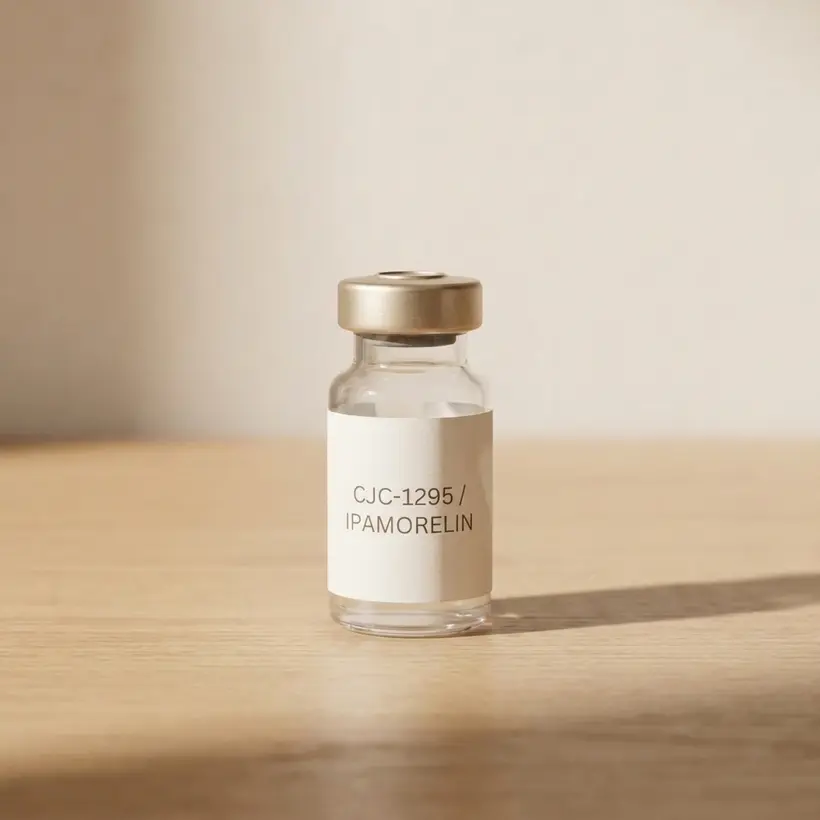
From the FormBlends catalog
CJC-1295 / Ipamorelin Blend
The gold standard growth hormone secretagogue stack · From $69/mo · compounded by a licensed 503A pharmacy, dispensed only after provider review.
Learn about CJC-1295 / Ipamorelin Blend →An individual with significantly low IGF-1 levels may need a different approach than someone whose levels are in the low-normal range. Baseline levels also establish the benchmark against which treatment response is measured.
Age
GH production declines with age, and pituitary responsiveness to secretagogues may also change. Older individuals may respond differently to a given stimulation level than younger individuals. Age factors into both the starting approach and the expected response trajectory.
Body Weight and Composition
Body weight influences peptide distribution, and body composition (particularly the ratio of lean mass to fat mass) can affect both GH dynamics and treatment goals. Higher body fat is associated with lower baseline GH and blunted GH responses to stimulation .
Treatment Goals
The intended outcome of therapy influences protocol design. Someone seeking improved sleep and general recovery may need a different approach than someone primarily focused on body composition changes or someone using the stack as part of a post-injury recovery plan. Goals influence not just dosing but also timing, duration, and monitoring intervals.
CJC-1295 Variant Selection
The choice between CJC-1295 with DAC and CJC-1295 without DAC is one of the most significant variables in protocol design.
- CJC-1295 with DAC: Half-life of approximately 6 to 8 days. Administered less frequently (often once or twice per week). Provides continuous, improved GHRH signaling. Some practitioners prefer it for convenience and sustained IGF-1 elevation .
- CJC-1295 without DAC (modified GRF 1-29): Shorter half-life (approximately 30 minutes). Administered daily alongside Sermorelin and Ipamorelin. Allows for more precise pulse control and may better preserve the natural pulsatile GH pattern .
The choice affects the dosing, frequency, and overall design of the protocol. Your physician will select the variant and design the corresponding protocol based on your individual needs.
Response to Treatment
Dosing isn't a set-and-forget decision. After initiating the protocol, your physician will reassess based on follow-up blood work (particularly IGF-1 levels) and your subjective response. Adjustments are common and expected as the provider calibrates the protocol to your individual biology.
What Clinical Research Shows About Dosing
Sermorelin
Sermorelin has the most extensive clinical dosing data in this stack. It was previously FDA-approved (as Geref) and used at defined doses for diagnostic testing and treatment of pediatric GH deficiency. Adult clinical studies used a range of doses and demonstrated dose-dependent GH responses . The clinical experience base with Sermorelin is measured in decades.
CJC-1295
Phase I and Phase II clinical trials established dose-response relationships for CJC-1295, demonstrating significant, sustained elevations in GH and IGF-1 . The DAC version showed particularly prolonged effects, with single administrations producing IGF-1 elevations lasting over a week.
Ipamorelin
Clinical studies established that Ipamorelin produces dose-dependent GH release with a clean side effect profile at therapeutic doses . The dose-response curve has been characterized, showing a range where GH stimulation is meaningful without significant cortisol or prolactin elevation.
Combination Dosing
While the combined effect principle between GHRH and GHS pathways is established, published clinical data on the specific three-way combination dosing is limited. Practitioners draw on the individual dosing literature, the combined effect research, and accumulated clinical experience to inform their combined dosing strategies.
Protocol Considerations
Timing of Administration
Most protocols call for evening administration to align with the body's largest natural GH pulse, which occurs during the first phase of deep sleep . Some protocols include a morning dose as well, depending on the specific formulation and goals.
Timing relative to food is critical. improved blood sugar and insulin blunt GH release. Peptides should be administered on an empty stomach, typically 60 to 90 minutes or more after eating, with no food for a period after injection . Ignoring this timing recommendation can significantly reduce the stack's effectiveness.
Frequency
Sermorelin and Ipamorelin are typically administered daily (or twice daily in some protocols). CJC-1295 frequency depends on the variant: daily for the no-DAC version, once or twice weekly for the DAC version. Consistency is important for maintaining the cumulative signaling effect.
Duration
GH improvement protocols are generally designed to run for several months, as the downstream benefits (body composition, skin, bone, recovery) develop gradually. Some practitioners use continuous protocols with periodic reassessment, while others incorporate cycling (treatment periods followed by breaks) to maintain pituitary sensitivity.
Blood Work Monitoring
Periodic blood work isn't optional for this stack. IGF-1 is the primary marker for assessing treatment response. Other markers your physician may monitor include fasting glucose, insulin, thyroid function (GH can influence T4 to T3 conversion), and general metabolic panels. Monitoring intervals typically align with protocol check-ins, often at 4 to 6 week intervals initially and less frequently once the protocol is stabilized.
Reconstitution and Storage
These peptides arrive as lyophilized powder and must be reconstituted with bacteriostatic water. Proper reconstitution calculator technique, sterile handling, and refrigerated storage after reconstitution are important for maintaining peptide integrity. Your pharmacy will provide specific instructions for each peptide.
Safety
The safety of this stack depends in large part on proper dosing and monitoring. Growth hormone secretagogues that are dosed appropriately and monitored with blood work carry a different risk profile from unsupervised, self-dosed protocols.
Risks of incorrect dosing include:
- Subtherapeutic levels: Insufficient stimulation that produces no meaningful benefit.
- Excessive GH/IGF-1 elevation: While unlikely with secretagogues (due to preserved feedback mechanisms), chronic supraphysiological IGF-1 levels are associated with potential health risks including insulin resistance and theoretical cancer risk .
- Side effects from over-stimulation: Water retention, joint stiffness, carpal tunnel-like symptoms, and other effects associated with excessive GH activity.
Blood work monitoring catches these issues before they become problems, which is why it's a non-negotiable component of responsible protocol design.
Frequently Asked Questions
Why don't you publish specific dose numbers?
Because appropriate dosing depends on individual factors including baseline hormonal status, age, body weight, health history, and treatment goals. Publishing specific numbers could encourage self-dosing without the medical evaluation and monitoring that are important for safe, effective use. Your physician will determine the right amounts for you based on blood work and clinical assessment.
How will my physician determine my starting dose?
Your physician will review baseline blood work (particularly IGF-1), your medical history, current medications, and treatment goals. Many providers start conservatively and adjust upward based on follow-up blood work and your response. This titration approach allows the provider to find the effective level for your individual biology while minimizing risk.
What if my IGF-1 levels get too high?
This is exactly why blood work monitoring matters. If IGF-1 levels rise above the target range, your physician will adjust the protocol (reducing amounts, changing frequency, or modifying the peptide combination) to bring levels back into the desired range. The preserved feedback mechanisms of secretagogue therapy make runaway GH/IGF-1 elevation less likely than with exogenous HGH, but monitoring remains important.
Can I take all three peptides in a single injection?
Some compounding pharmacies offer combination formulations that include multiple peptides in a single vial. Others provide each peptide separately. Whether the peptides can be combined in a single injection depends on the specific formulations and your pharmacy's preparation. Your physician and pharmacy will guide you on this.
Does the dose need to change over time?
Dosing adjustments are common and expected. Initial doses may be modified based on blood work results, side effect profile, and clinical response. Long-term protocols may involve periodic reassessment and adjustment as your body's needs and responsiveness evolve.
Get Personalized Dosing with Blood Work Support
Effective GH improvement starts with proper evaluation and continues with monitored, physician-guided dosing. FormBlends provides the clinical framework for safe, individualized peptide therapy, from baseline blood work through ongoing protocol management.
Disclaimer: This article is for informational purposes only and doesn't constitute medical advice. CJC-1295 and Ipamorelin aren't FDA-approved for any medical condition. No standardized human dosing protocol exists for this three-peptide combination. The information presented here is based on published research and clinical considerations and shouldn't be used to self-prescribe. Always consult with a licensed healthcare provider before beginning any peptide therapy. Individual results may vary. FormBlends doesn't claim that any peptide cures, treats, or prevents any disease.
Ready when you are
CJC-1295 / Ipamorelin Blend
The gold standard growth hormone secretagogue stack · From $69/mo · compounded by a licensed 503A pharmacy, dispensed only after provider review.
Learn about CJC-1295 / Ipamorelin Blend →