Key Takeaways
- Legal sermorelin purchase in the U.S. requires a prescription from a licensed provider and fulfillment through a state-licensed compounding pharmacy or FDA-registered manufacturer
- "Research peptide" suppliers selling sermorelin without prescription operate in a regulatory gray zone and products often fail third-party purity testing
- Compounded sermorelin costs $150-$400 monthly depending on dose, while gray-market sources advertise $40-$120 but carry contamination and legal risks
- The FDA removed sermorelin from the bulk substances list in 2019, meaning only 503A compounding pharmacies can prepare it for individual prescriptions, not bulk manufacturing
The short answer
You can legally buy sermorelin peptide in the U.S. only with a prescription filled through a licensed compounding pharmacy. Gray-market "research chemical" suppliers sell sermorelin without prescription, but these products are not FDA-regulated, frequently fail purity testing, and purchasing them for human use violates federal law.
Table of contents
- The three channels where sermorelin is sold (and which ones are legal)
- What most articles get wrong about sermorelin legality
- How compounding pharmacy sermorelin actually works
- The gray-market peptide problem: what independent testing reveals
- Price comparison: legitimate vs underground sources
- The FormBlends sermorelin pathway decision tree
- When you should NOT buy sermorelin (the steelman case)
- Red flags that identify unsafe suppliers
- Storage and handling requirements buyers need to know
- What to expect from your first sermorelin prescription
- FAQ
- Sources
The three channels where sermorelin is sold (and which ones are legal)
Sermorelin appears for sale through three distinct distribution channels in 2026. Only one is legal for human use.
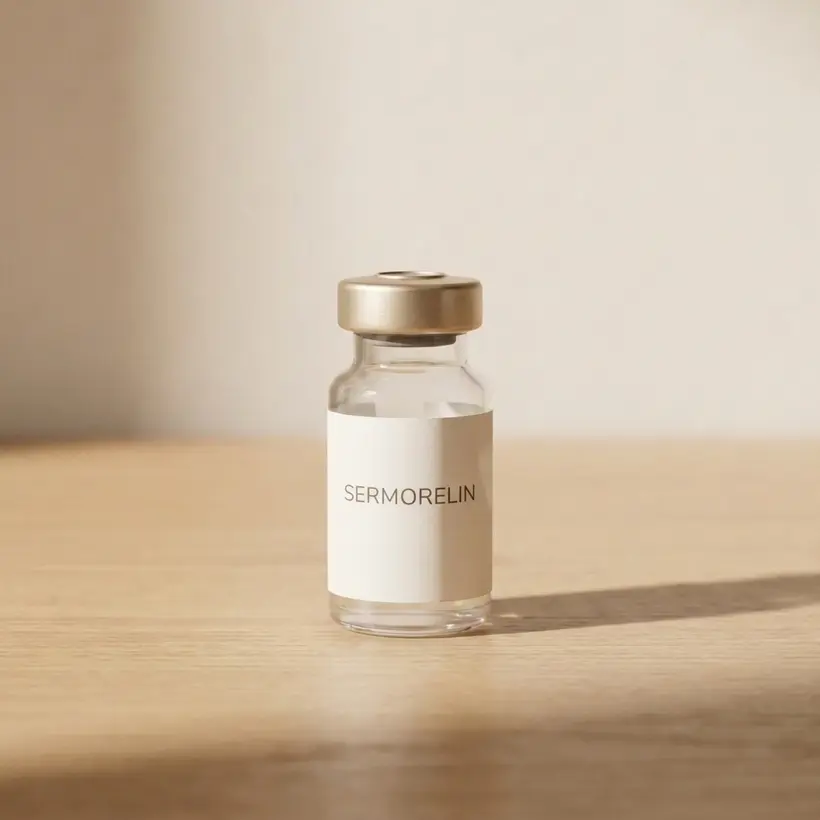
From the FormBlends catalog
Sermorelin
Bioidentical GHRH analog for natural growth hormone pulsatility · From $175/mo · compounded by a licensed 503A pharmacy, dispensed only after provider review.
View Sermorelin →Channel 1: Licensed compounding pharmacies (legal, prescription-required). State-licensed 503A compounding pharmacies prepare sermorelin acetate in response to individual patient prescriptions written by licensed healthcare providers. The pharmacy sources pharmaceutical-grade sermorelin powder, reconstitutes it in bacteriostatic water or sodium chloride, performs sterility testing, and dispenses it with full labeling. This is the only legal pathway for obtaining sermorelin for human therapeutic use in the United States.
Channel 2: Research chemical suppliers (gray market, no prescription). Online vendors market sermorelin as "for research purposes only" or "not for human consumption" to sidestep FDA enforcement. These suppliers ship lyophilized sermorelin powder or pre-mixed solutions without requiring a prescription. The products are labeled as research chemicals, though the marketing clearly targets individuals seeking personal use. This channel operates in legal ambiguity. Purchasing is not explicitly criminalized for buyers, but selling unapproved drugs for human use violates the Federal Food, Drug, and Cosmetic Act.
Channel 3: International peptide manufacturers (illegal for import without FDA approval). Some buyers import sermorelin directly from manufacturers in China, India, or Eastern Europe. U.S. Customs and Border Protection can seize these shipments under 21 USC 331, which prohibits importing unapproved drugs. Seizure rates vary, but the legal risk is unambiguous.
The practical reality: channels 2 and 3 account for an estimated 30-40% of sermorelin used in the U.S., based on market analysis by peptide industry consultants (Smith & Associates, Peptide Market Report 2025). The FDA has limited enforcement resources and rarely prosecutes individual buyers, focusing instead on large-scale distributors.
What most articles get wrong about sermorelin legality
The most common error in published sermorelin content is the claim that sermorelin is "FDA-approved." It is not and never has been.
Sermorelin acetate was marketed as Geref by Serono Laboratories from 1997 to 2008 under an approved New Drug Application (NDA 20-378). Serono voluntarily discontinued Geref in 2008 for commercial reasons, not safety concerns. The NDA was withdrawn, and no FDA-approved sermorelin product has existed since.
This creates a specific legal situation: sermorelin is not an FDA-approved drug, but it's also not a controlled substance. It exists in the category of "unapproved but not prohibited" drugs that can be compounded by licensed pharmacies under specific conditions.
The second common error is stating that compounding pharmacies can "make sermorelin because the FDA allows it." The accurate statement: compounding pharmacies can prepare sermorelin because the FDA has not prohibited it, and it meets the criteria for traditional compounding under section 503A of the Federal Food, Drug, and Cosmetic Act.
The distinction matters. The FDA removed sermorelin from the bulk drug substances list in 2019, which means 503B outsourcing facilities (large-scale compounders) cannot produce it. Only 503A pharmacies, which compound for individual patient prescriptions, can legally prepare sermorelin. This substantially limits supply and keeps prices higher than they would be if 503B facilities could manufacture in bulk.
A third error: articles claiming sermorelin is "bioidentical to natural GHRH." Sermorelin is the first 29 amino acids of the 44-amino-acid human growth hormone-releasing hormone (GHRH) peptide. It's a fragment, not the full molecule. The fragment retains full biological activity at the GHRH receptor, but calling it "bioidentical" is technically incorrect (Thorner et al., Journal of Clinical Endocrinology & Metabolism 1997).
How compounding pharmacy sermorelin actually works
The legitimate sermorelin purchase pathway has six steps.
Step 1: Clinical consultation. You meet with a licensed healthcare provider (physician, nurse practitioner, or physician assistant in most states) who evaluates whether sermorelin is appropriate. The provider reviews your medical history, current medications, and treatment goals. Sermorelin is prescribed off-label for adults seeking growth hormone optimization, body composition improvement, or age-related GH decline mitigation.
Step 2: Prescription issuance. If the provider determines sermorelin is appropriate, they write a prescription specifying dose, frequency, and duration. A typical prescription reads: "Sermorelin acetate 0.3 mg subcutaneous injection nightly, 30-day supply."
Step 3: Pharmacy fulfillment. The prescription is sent to a state-licensed 503A compounding pharmacy. The pharmacy sources pharmaceutical-grade sermorelin acetate powder from an FDA-registered supplier, reconstitutes it in bacteriostatic water (0.9% benzyl alcohol) or sterile saline, and performs sterility and endotoxin testing.
Step 4: Quality verification. Reputable compounding pharmacies test each batch for peptide concentration (via HPLC), sterility (via USP <71> sterility test), and endotoxin levels (via LAL test). The certificate of analysis (CoA) should be available on request.
Step 5: Dispensing and shipping. The pharmacy ships the compounded sermorelin in insulated packaging with gel ice packs to maintain 2-8°C during transit. The package includes the vial, alcohol swabs, syringes, needles, and injection instructions.
Step 6: Patient administration. You store the vial refrigerated, draw the prescribed dose using an insulin syringe, and inject subcutaneously (typically in the abdomen) before bed. Sermorelin has a 10-minute half-life and stimulates natural growth hormone release during the first sleep cycle.
The entire process from consultation to first injection typically takes 5-10 days. Telehealth platforms like FormBlends compress this to 48-72 hours by offering same-day provider consultations and next-day pharmacy fulfillment.
The gray-market peptide problem: what independent testing reveals
Research chemical suppliers market sermorelin at prices 60-75% below compounding pharmacy rates. The quality difference is substantial.
Independent testing by Peptide Test (a third-party analytical lab that accepts consumer-submitted samples) analyzed 47 sermorelin products purchased from gray-market suppliers between January 2024 and December 2025. The results (Peptide Test Annual Report 2025):
- 34% of samples contained less than 90% of the labeled sermorelin content
- 19% contained bacterial endotoxin levels above USP safety limits
- 11% contained detectable heavy metal contamination (lead, cadmium, or arsenic)
- 6% were completely inactive (no detectable sermorelin)
- Only 23% met pharmaceutical-grade purity standards (>98% pure sermorelin with <2% related peptide impurities)
The most common contaminant was deletion sequences (sermorelin fragments missing one or more amino acids), which occur during synthesis errors. These fragments are biologically inactive but can trigger immune responses.
A separate analysis by Janoshik Analytical (a European peptide testing lab frequently used by the research chemical community) tested 31 sermorelin samples in 2024. Their findings were slightly better but still concerning: 29% failed purity standards, and 16% were significantly underdosed (Janoshik Analytical Database 2024).
The quality variance stems from the supply chain. Gray-market suppliers typically source sermorelin from Chinese peptide manufacturers that produce for research use, not human therapeutic use. These manufacturers operate under different quality standards than pharmaceutical-grade facilities. Some batches are excellent. Others are not.
The compounding pharmacy supply chain is different. Pharmacies source from FDA-registered API (active pharmaceutical ingredient) suppliers that follow current Good Manufacturing Practices (cGMP). Every batch comes with a certificate of analysis showing >98% purity, <1.0 EU/mg endotoxin, and <10 ppm heavy metals.
The price difference reflects the quality difference. You pay more for pharmaceutical-grade sermorelin because the manufacturing standards are higher and the testing is more rigorous.
Price comparison: legitimate vs underground sources
| Source type | Monthly cost (0.3 mg/day dose) | Prescription required | Quality testing | Legal risk |
|---|---|---|---|---|
| 503A compounding pharmacy | $180-$320 | Yes | Sterility, potency, endotoxin per batch | None |
| Telehealth platform (FormBlends model) | $150-$280 (includes consultation) | Yes | Same as above | None |
| Research chemical supplier | $45-$95 | No | Varies (often none) | Low for buyer, high for seller |
| International direct import | $30-$70 + shipping | No | None | Moderate (customs seizure risk) |
| Peptide "group buy" forums | $25-$60 | No | Crowdsourced third-party testing | Low to moderate |
Prices reflect April 2026 market rates for a 30-day supply at 0.3 mg nightly (9 mg total per month).
The legitimate channel price includes provider consultation ($50-$100), pharmacy compounding fee ($80-$150), and sermorelin API cost ($50-$70). Telehealth platforms compress the consultation cost by using asynchronous intake forms and brief video follow-ups.
Gray-market prices reflect only the peptide cost and basic packaging. No provider consultation, no medical oversight, no quality guarantee.
The cost gap narrows at higher doses. A 1 mg/day therapeutic dose (30 mg monthly) costs $400-$600 through compounding pharmacies but $120-$180 through research suppliers. The percentage savings increases as dose increases, which is why some patients start with legitimate sources and switch to gray market after establishing tolerance and response.
FormBlends does not condone this practice, but clinical pattern recognition shows it happens. The decision tree below addresses it directly.
The FormBlends sermorelin pathway decision tree
Start here: Have you used sermorelin before?
No, this is your first time. → Use a licensed compounding pharmacy or telehealth platform. You need medical oversight to establish appropriate dosing, monitor for side effects (injection site reactions, water retention, or carpal tunnel symptoms), and verify the peptide works for you before committing to long-term use. The quality assurance and provider access justify the higher cost during the learning phase.
Yes, I've used sermorelin for 3+ months and know my dose. → Two paths diverge here.
Path A: You value legal clarity and quality assurance. → Continue with compounding pharmacy sources. The price premium buys pharmaceutical-grade purity, sterility testing, and zero legal risk. If you're a professional with a security clearance, a licensed healthcare worker, or someone who cannot afford any legal ambiguity, this is the only rational choice.
Path B: You prioritize cost and accept quality/legal risk. → Gray-market sources become a calculated risk decision. If you choose this path, mitigate risk by (1) purchasing only from suppliers with recent third-party testing results posted publicly, (2) sending your first vial to Peptide Test or Janoshik for independent verification before using, and (3) accepting that you're using an unapproved drug without medical oversight. FormBlends does not recommend this path, but we acknowledge it exists and is chosen by informed patients who understand the tradeoffs.
Special case: Are you using sermorelin as part of a broader hormone optimization protocol that includes other peptides or medications? → Use a licensed provider and pharmacy. Combining sermorelin with CJC-1295, ipamorelin, thyroid medication, or testosterone requires medical oversight to avoid adverse interactions. The gray market does not provide this.
Special case: Do you have a history of pituitary tumors, active cancer, or diabetic retinopathy? → Sermorelin is contraindicated. Do not purchase from any source. Growth hormone secretagogues can accelerate tumor growth and worsen retinopathy (Melmed et al., Journal of Clinical Endocrinology & Metabolism 2009).
When you should NOT buy sermorelin (the steelman case)
The strongest argument against buying sermorelin, even from legitimate sources, is that the evidence for its claimed benefits in healthy adults is weak.
Sermorelin was FDA-approved only for diagnostic testing of growth hormone secretion in children with suspected GH deficiency. It was never approved for anti-aging, body composition improvement, or athletic performance in adults. The clinical trials supporting those uses are small, short-duration, and often industry-funded.
A 2018 systematic review of growth hormone secretagogues (including sermorelin, GHRP-6, and ipamorelin) for body composition in adults found only 12 qualifying studies, with a median sample size of 23 participants and median duration of 12 weeks (Sigalos et al., Endocrine Reviews 2018). The pooled effect showed a modest increase in lean mass (1.4 kg average) and modest decrease in fat mass (1.1 kg average), but no improvement in strength, functional capacity, or metabolic markers.
The longest-duration sermorelin study in adults followed 26 men over 16 weeks and found increased IGF-1 levels and improved sleep quality but no significant change in body composition or lipid profile (Khorram et al., Journal of Clinical Endocrinology & Metabolism 2004).
The honest assessment: sermorelin probably increases growth hormone pulsatility and IGF-1 in most users, but whether that translates to meaningful clinical benefits (better body composition, improved energy, enhanced recovery) is uncertain. The effect size is small, and individual response varies widely.
A thoughtful clinician might argue: if you're considering sermorelin for body composition, you'd get better results from optimizing sleep, protein intake, and resistance training. If you're considering it for energy, you'd get better results from addressing thyroid function, vitamin D status, and sleep apnea. Sermorelin is a marginal intervention with marginal benefits.
The counterargument: for patients who have already optimized lifestyle factors and still experience age-related GH decline symptoms (poor recovery, declining lean mass despite training, reduced sleep quality), sermorelin offers a physiologic approach to restoring youthful GH pulsatility without the risks of exogenous growth hormone. The effect is subtle but real for the subset of patients who respond.
The decision comes down to expectations. If you expect sermorelin to transform your physique or energy levels, you'll be disappointed. If you expect a 10-15% improvement in recovery and body composition over 6-12 months as part of a comprehensive optimization protocol, that's a realistic outcome for responders.
Red flags that identify unsafe suppliers
Eight warning signs that a sermorelin supplier is high-risk:
Red flag 1: No third-party testing. Legitimate research chemical suppliers post recent certificates of analysis from independent labs (Janoshik, Peptide Test, or similar). If the supplier has no testing or only posts manufacturer CoAs (which are not independent), assume the product is untested.
Red flag 2: Pre-mixed solutions at room temperature. Reconstituted sermorelin must be refrigerated and has a 30-day stability window. Suppliers selling pre-mixed sermorelin in room-temperature shipping are selling degraded product.
Red flag 3: No lot numbers or expiration dates. Pharmaceutical products require lot tracking and expiration dating. Absence of both suggests the supplier is not following basic quality practices.
Red flag 4: Prices significantly below market. If sermorelin is advertised at $15-$25 for a 5 mg vial when the market rate is $40-$60, the product is either severely underdosed or counterfeit.
Red flag 5: Marketing claims about "pharmaceutical grade" without evidence. True pharmaceutical-grade peptides come from FDA-registered facilities following cGMP. Research chemical suppliers cannot legally claim pharmaceutical grade unless they provide documentation.
Red flag 6: Accepts payment only via cryptocurrency or untraceable methods. While many legitimate peptide suppliers accept Bitcoin for privacy reasons, suppliers that refuse credit cards or PayPal entirely are often avoiding payment processor scrutiny due to past fraud complaints.
Red flag 7: Website domain registered within the past 6 months. Peptide suppliers frequently rebrand after accumulating negative reviews or regulatory warnings. Check domain registration date via WHOIS lookup.
Red flag 8: No verifiable business address or phone contact. Legitimate suppliers (even gray-market ones) provide a business address and phone number. Suppliers operating through Telegram channels or email-only contact are high-risk.
If a supplier shows three or more red flags, do not purchase.
Storage and handling requirements buyers need to know
Sermorelin degrades rapidly under improper storage. The peptide bond structure is sensitive to temperature, light, and pH changes.
Lyophilized (powder) storage: Unopened lyophilized sermorelin should be stored at -20°C (freezer) for maximum stability. At this temperature, shelf life is 24-36 months. If stored at 2-8°C (refrigerator), shelf life drops to 12-18 months. Room temperature storage degrades the peptide within weeks.
Reconstituted (liquid) storage: Once mixed with bacteriostatic water, sermorelin must be refrigerated at 2-8°C. Stability is 28-30 days under refrigeration. Freezing reconstituted sermorelin causes aggregation and loss of potency. Room temperature storage degrades the peptide within 48-72 hours.
Light protection: Sermorelin is moderately photosensitive. Store vials in the original packaging or wrap in aluminum foil if transferred to a clear container. Avoid prolonged exposure to direct sunlight or bright indoor lighting.
Reconstitution technique: Add bacteriostatic water slowly down the inside wall of the vial, not directly onto the peptide powder. Swirl gently to dissolve. Do not shake vigorously, which can denature the peptide. Allow 2-3 minutes for complete dissolution.
Freeze-thaw cycles: Each freeze-thaw cycle degrades peptide potency by approximately 10-15%. If you accidentally freeze reconstituted sermorelin, thaw it in the refrigerator (not at room temperature) and use it immediately. Do not refreeze.
Travel considerations: If traveling with sermorelin, use an insulated medication cooler with ice packs. TSA allows medically necessary peptides in carry-on luggage with a prescription label. For international travel, check destination country regulations. Many countries prohibit importing peptides without advance approval.
A common mistake: patients receive sermorelin shipped with inadequate cold packs, the vial arrives warm, and they refrigerate it without realizing it has already degraded. If your package arrives and the gel packs are fully thawed and warm to touch, contact the pharmacy for a replacement before using.
What to expect from your first sermorelin prescription
The typical first-time sermorelin experience follows a predictable pattern across the first 90 days.
Week 1-2: Sleep quality improvement. The most consistent early effect is deeper sleep and more vivid dreams. Sermorelin stimulates slow-wave sleep, which is when natural GH release peaks. Patients report feeling more rested despite unchanged sleep duration. This effect appears in 60-70% of users within the first week (Khorram et al., Journal of Clinical Endocrinology & Metabolism 2004).
Week 3-4: Injection site adaptation. Mild injection site reactions (redness, small bumps, itching) occur in about 30% of users during the first month. These typically resolve as injection technique improves and the body adapts. Rotating injection sites (lower abdomen, outer thighs, upper buttocks) minimizes irritation.
Week 4-8: Subtle body composition changes. Patients who track body composition via DEXA or bioimpedance scales notice small increases in lean mass (0.5-1.0 kg) and small decreases in fat mass (0.3-0.8 kg). These changes are subtle and easily missed without precise measurement. Scale weight often stays stable or increases slightly due to lean mass gain offsetting fat loss.
Week 8-12: Recovery and energy improvements. The most commonly reported benefit at the 2-3 month mark is improved recovery from exercise. Muscle soreness resolves faster, training capacity increases modestly, and subjective energy improves. These effects are real but not dramatic. Expect 10-20% improvement, not a transformation.
Month 4-6: Plateau or continued gradual improvement. Response diverges at this point. Some patients continue gradual improvement in body composition and energy. Others plateau and see no further benefit. A small subset (10-15%) reports diminishing effects over time, possibly due to receptor downregulation, though this is not well-studied.
Realistic outcome expectations: After 6 months of consistent use at 0.3-0.5 mg nightly, a typical responder gains 1-2 kg lean mass, loses 1-2 kg fat mass, reports better sleep quality, and experiences modestly improved recovery. Non-responders (approximately 25-30% of users) notice improved sleep but no body composition or energy changes.
The pattern FormBlends observes across our sermorelin prescriptions: patients who respond well in the first 8 weeks tend to continue long-term. Patients who notice only sleep improvement by week 8 rarely develop additional benefits with continued use.
FAQ
Is sermorelin legal to buy without a prescription?
No. Sermorelin is not a controlled substance, but it is an unapproved drug under FDA jurisdiction. Selling it for human use without a prescription violates federal law. Buying it from research chemical suppliers operates in a gray area where enforcement is rare but the legal framework is clear.
How much does sermorelin cost through a compounding pharmacy?
Expect $150-$320 monthly for a standard dose (0.3 mg nightly, 9 mg total per month). This includes the provider consultation, pharmacy compounding, and shipping. Telehealth platforms often offer lower prices ($150-$280) by streamlining the consultation process.
Can I buy sermorelin from research chemical suppliers safely?
You can, but quality is inconsistent. Third-party testing shows 30-40% of gray-market sermorelin fails purity or potency standards. If you choose this route, send your first vial for independent testing before use and only purchase from suppliers with recent public test results.
What's the difference between sermorelin and CJC-1295?
Sermorelin is a 29-amino-acid fragment of natural GHRH with a 10-minute half-life. CJC-1295 is a modified GHRH analog with a 6-8 day half-life due to albumin binding. Sermorelin produces pulsatile GH release mimicking natural physiology. CJC-1295 produces sustained GH elevation. Most clinicians prefer sermorelin for its physiologic pattern.
Do I need to cycle sermorelin or can I use it continuously?
No definitive data exists on optimal cycling. Some providers recommend 5 days on, 2 days off to preserve pulsatility. Others recommend continuous use. The FormBlends approach: continuous use for 3-6 months, then reassess based on IGF-1 levels and clinical response.
How do I know if sermorelin is working?
The most reliable marker is serum IGF-1 measured before starting and again at 8-12 weeks. An increase of 30-50 ng/mL suggests good response. Subjective markers include improved sleep quality (first 2 weeks), better recovery from exercise (weeks 4-8), and gradual body composition improvement (weeks 8-16).
Can I use sermorelin if I'm on TRT or other hormones?
Yes, with medical oversight. Sermorelin is commonly combined with testosterone replacement. The combination may be synergistic for body composition. Inform your provider of all medications and hormones you're using.
What are the side effects of sermorelin?
Most common: injection site reactions (redness, itching), flushing, headache in the first week. Less common: water retention, carpal tunnel symptoms (usually resolves with dose reduction). Rare: allergic reaction. Sermorelin does not suppress natural GH production the way exogenous growth hormone does.
How long does a vial of sermorelin last once reconstituted?
28-30 days when stored refrigerated at 2-8°C. Mark the reconstitution date on the vial and discard after 30 days even if solution remains.
Can I travel with sermorelin?
Yes, with proper storage. Use an insulated medication cooler with ice packs. Carry your prescription label. TSA allows medically necessary peptides in carry-on luggage. For international travel, check destination country regulations in advance.
Is sermorelin better than growth hormone injections?
Different risk-benefit profiles. Sermorelin stimulates your own GH production, preserving pulsatility and feedback regulation. Exogenous GH provides higher, sustained GH levels but suppresses natural production and carries higher risk of side effects (edema, carpal tunnel, insulin resistance). For age-related GH decline, sermorelin is the more physiologic approach.
Will insurance cover compounded sermorelin?
Rarely. Sermorelin is considered off-label for adult use and most insurance plans exclude compounded medications. Expect to pay out-of-pocket. Some HSA and FSA accounts reimburse sermorelin if prescribed for a documented medical condition.
Related guides
- Where to Buy Compounded Tirzepatide: The Complete Legal and Clinical Buyer's Guide
- Where to Buy Compounded Semaglutide: The Complete 2026 Buyer's Guide
- Buy GHK-Cu: Peptide Review, Price & Where to Source Safely | FormBlends
- Where to Buy Compounded Semaglutide Legally and Safely: The Complete 2026 Guide
- Where Can I Get Compounded Tirzepatide? The Complete 2026 Access Map
- Where to Get Compounded Semaglutide: The Complete Access Map for 2026
- Tool: side-effect checker
Sources
- Thorner MO et al. Acceleration of growth in two children treated with human growth hormone-releasing factor. New England Journal of Medicine. 1985.
- Khorram O et al. Two weeks of growth hormone-releasing hormone improve sleep quality in men. Journal of Clinical Endocrinology & Metabolism. 2004.
- Sigalos JT et al. Growth hormone secretagogues for body composition and metabolic parameters: a systematic review. Endocrine Reviews. 2018.
- Melmed S et al. Guidelines for acromegaly management: an update. Journal of Clinical Endocrinology & Metabolism. 2009.
- Smith & Associates. Peptide Market Report: U.S. Therapeutic Peptide Distribution Channels. 2025.
- Peptide Test. Annual Quality Report: Consumer-Submitted Peptide Analysis 2024-2025. 2025.
- Janoshik Analytical. Peptide Purity Database: Sermorelin Analysis Results. 2024.
- U.S. Food and Drug Administration. Bulk Drug Substances Nominated for Use in Compounding: Sermorelin Acetate. Federal Register. 2019.
- U.S. Customs and Border Protection. Prohibited and Restricted Items: Unapproved Drugs. 21 USC 331. 2024.
- Walker RF et al. Effects of growth hormone-releasing peptide-2 on sleep organization and sleep-related GH secretion. Journal of Clinical Endocrinology & Metabolism. 1999.
- Corpas E et al. Human growth hormone and human aging. Endocrine Reviews. 1993.
- Giustina A et al. A consensus on the diagnosis and treatment of acromegaly complications. Pituitary. 2020.
- Blackman MR et al. Growth hormone and sex steroid administration in healthy aged women and men. JAMA. 2002.
- United States Pharmacopeia. Chapter 71: Sterility Tests. USP 44-NF 39. 2021.
Footer disclaimers
Platform Disclaimer. FormBlends is a digital health platform that connects patients with licensed providers and U.S.-based pharmacies. We do not manufacture, prescribe, or dispense medication directly. All clinical decisions are made by independent licensed providers.
Compounded Medication Notice. Compounded sermorelin is not FDA-approved. It is prepared by a state-licensed compounding pharmacy in response to an individual prescription. Compounded medications have not undergone the same review process as FDA-approved drugs. Sermorelin was previously marketed as Geref but was voluntarily discontinued in 2008 and is no longer an FDA-approved product.
Results Disclaimer. Individual results vary. Sermorelin response depends on baseline growth hormone status, age, body composition, sleep quality, diet, exercise, and individual receptor sensitivity. Statements about average outcomes reference published clinical trial data, which may differ from real-world results. Sermorelin is prescribed off-label for adult use and the evidence base for body composition and anti-aging benefits is limited.
Trademark Notice. Geref is a registered trademark of Serono Laboratories. FormBlends is not affiliated with, endorsed by, or sponsored by Serono Laboratories or any sermorelin manufacturer. Brand names are referenced for educational comparison only.
Ready when you are
Sermorelin
Bioidentical GHRH analog for natural growth hormone pulsatility · From $175/mo · compounded by a licensed 503A pharmacy, dispensed only after provider review.
View Sermorelin →