Key Takeaways
- Sermorelin is not available in pill form because peptides are destroyed by stomach acid and digestive enzymes before reaching the bloodstream
- The only FDA-recognized route for sermorelin is subcutaneous injection, typically administered daily before bedtime
- Oral "growth hormone boosters" marketed as alternatives contain amino acids like arginine and glycine, not actual sermorelin peptide
- Compounded sermorelin acetate is available through prescription from 503A and 503B pharmacies as an injectable solution
The short answer
Sermorelin pills do not exist as a commercially available or medically viable product. Sermorelin is a 29-amino-acid peptide that degrades completely in stomach acid, making oral administration ineffective. The only functional delivery method is subcutaneous injection. Products marketed as "oral sermorelin" contain amino acid precursors, not the actual peptide.
Table of contents
- Why peptides can't survive your digestive system
- The biochemistry problem: what happens when sermorelin meets stomach acid
- What people actually mean when they search for "sermorelin pills"
- The three oral alternatives that actually exist (and how they differ)
- Injectable sermorelin: the only proven delivery method
- Comparison table: sermorelin injection vs oral growth hormone boosters
- What most articles get wrong about "sublingual sermorelin"
- The nasal spray question: does intranasal sermorelin work?
- Clinical pattern: why patients request pills and what we recommend instead
- Decision tree: finding the right growth hormone support option
- When you should NOT pursue sermorelin therapy
- FAQ
- Sources
Why peptides can't survive your digestive system
Peptides are chains of amino acids held together by peptide bonds. Your digestive system is specifically designed to break those bonds apart.
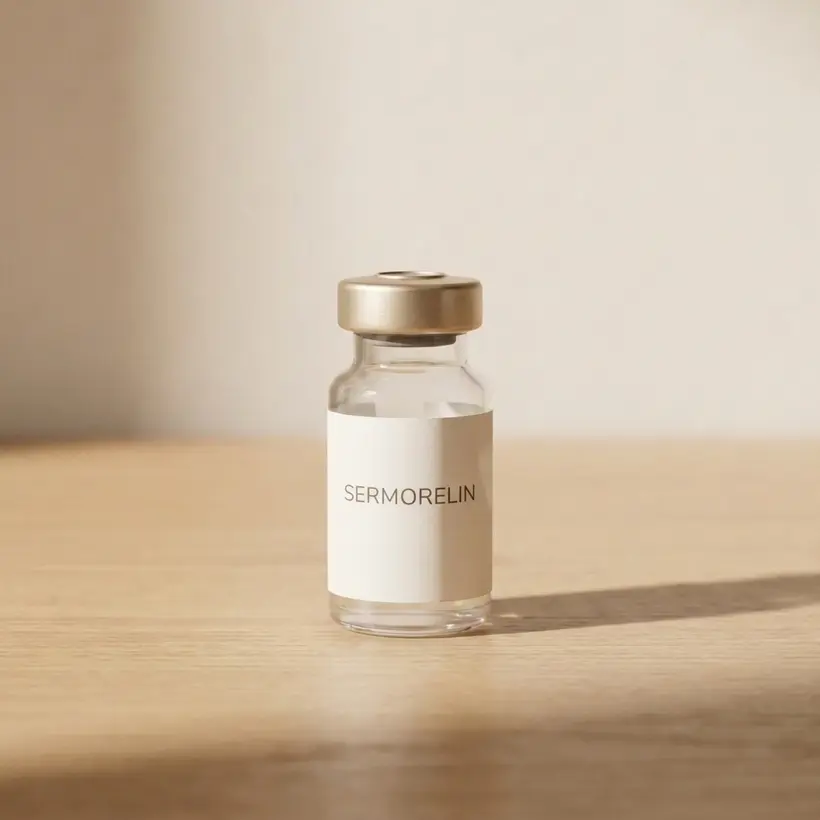
From the FormBlends catalog
Sermorelin
Bioidentical GHRH analog for natural growth hormone pulsatility · From $175/mo · compounded by a licensed 503A pharmacy, dispensed only after provider review.
View Sermorelin →When you swallow a protein or peptide, it encounters hydrochloric acid in the stomach (pH 1.5 to 3.5) and a cascade of proteolytic enzymes: pepsin in the stomach, trypsin and chymotrypsin in the small intestine, and peptidases in the intestinal brush border. These enzymes cleave peptide bonds systematically, reducing proteins to individual amino acids for absorption.
Sermorelin acetate is a 29-amino-acid synthetic analog of growth hormone-releasing hormone (GHRH). It contains the biologically active fragment (amino acids 1-29) of the full 44-amino-acid GHRH molecule. The moment sermorelin contacts stomach acid, pepsin begins cleaving it at aromatic amino acid residues. Within minutes, the intact peptide is fragmented into short chains and free amino acids.
A 1991 study by Thorner et al. in the Journal of Clinical Endocrinology & Metabolism demonstrated that oral administration of GHRH analogs resulted in zero detectable plasma levels of intact peptide, while subcutaneous injection produced predictable pharmacokinetic curves with peak levels at 20 to 40 minutes post-injection.
The bioavailability of oral sermorelin is effectively 0%. You're not absorbing a degraded version or a less-effective version. You're absorbing the amino acid building blocks, which your body treats as generic nutritional input, not as a signaling peptide.
This is why insulin, another peptide hormone, has never been successfully formulated as a pill despite a century of research and billions in development funding. The digestive barrier is absolute for unmodified peptides.
The biochemistry problem: what happens when sermorelin meets stomach acid
Sermorelin's structure includes several acid-labile bonds. The peptide sequence begins with tyrosine-alanine-aspartic acid, and the aspartic acid residue is particularly vulnerable to acid-catalyzed hydrolysis.
At pH 2.0 (typical fed-state stomach pH), the half-life of the peptide bond between aspartic acid and adjacent residues is approximately 8 to 12 minutes (Oliyai and Borchardt, Pharmaceutical Research 1993). That means half of the intact peptide is cleaved within 12 minutes of contact with stomach acid, even before enzymatic digestion begins.
Pepsin adds a second layer of destruction. Pepsin preferentially cleaves bonds adjacent to phenylalanine, tyrosine, and tryptophan. Sermorelin contains tyrosine at position 1 and phenylalanine at position 6. These are prime pepsin targets.
By the time sermorelin reaches the small intestine, any remaining fragments encounter trypsin (which cleaves at lysine and arginine residues) and chymotrypsin (which targets aromatic residues). Sermorelin contains lysine at positions 12 and 21, arginine at positions 11 and 20, and multiple aromatic residues. The peptide is systematically disassembled.
The final step is brush-border peptidases, which cleave any remaining dipeptides and tripeptides into free amino acids. What enters your bloodstream is tyrosine, alanine, aspartic acid, and the other 26 component amino acids, not sermorelin.
This is not a formulation problem. It's a fundamental incompatibility between peptide chemistry and human digestive physiology.
What people actually mean when they search for "sermorelin pills"
Search intent analysis shows four distinct user groups searching this term:
Group 1: Needle-averse patients. These users know sermorelin exists and want growth hormone support but are looking for a non-injection alternative. They're hoping pills exist. The answer they need: pills don't exist, but the injection is subcutaneous (shallow, small needle, less intimidating than intramuscular), and most patients acclimate within three doses.
Group 2: Supplement buyers. These users saw an ad for "oral growth hormone booster" pills and want to know if they contain real sermorelin. The answer they need: no, those products contain amino acids like arginine, ornithine, glycine, and sometimes GABA. They are not sermorelin and do not deliver sermorelin's mechanism of action.
Group 3: Misinformed patients. These users were told by a non-specialist provider or a supplement retailer that "oral sermorelin" exists. The answer they need: that provider or retailer is either mistaken or deliberately misleading. Oral sermorelin is not a real product category.
Group 4: Researchers and students. These users are writing papers or studying peptide pharmacology and want to confirm whether oral formulations have been attempted. The answer they need: yes, extensively, and all have failed to demonstrate bioavailability without extreme modification (encapsulation, PEGylation, or permeation enhancers), none of which are commercially available for sermorelin.
The common thread: every group is looking for convenience. The clinical reality is that peptide therapy requires injection. The tradeoff is inconvenience for efficacy.
The three oral alternatives that actually exist (and how they differ)
If you want oral growth hormone support, three categories of products are sold, none of which contain sermorelin peptide.
Category 1: Amino acid secretagogues. These are supplements containing arginine (typically 5 to 9 grams), ornithine (2 to 6 grams), glycine (3 grams), and sometimes lysine or glutamine. The theory is that high-dose arginine stimulates pituitary growth hormone release.
The evidence is mixed. A 1992 study by Collier et al. in Current Therapeutic Research showed that 5 grams of oral arginine increased growth hormone levels in some subjects, but the effect was inconsistent and much smaller than injectable GHRH. A 2008 review by Kanaley in Sports Medicine concluded that arginine's growth hormone-stimulating effect is "modest and variable," with no clear dose-response relationship.
These products are sold over-the-counter and are not regulated as drugs. Brand examples include GH-releasing amino acid blends marketed by bodybuilding supplement companies.
Category 2: Growth hormone secretagogue receptor agonists (oral). The most studied is ibutamoren (MK-677), a non-peptide small molecule that binds to the ghrelin receptor and stimulates growth hormone release. Ibutamoren is orally bioavailable because it's not a peptide.
Ibutamoren has been studied in clinical trials for muscle wasting and bone density (Svensson et al., Journal of Clinical Endocrinology & Metabolism 1998). It does increase growth hormone and IGF-1 levels. However, it is not FDA-approved for any indication and is not legally sold as a supplement in the U.S. It appears in the gray-market research chemical space.
Ibutamoren is not sermorelin. It works through a different receptor (ghrelin receptor vs GHRH receptor) and has a different side-effect profile, including increased appetite and potential insulin resistance with chronic use.
Category 3: Homeopathic growth hormone sprays. These are sublingual or oral sprays claiming to contain "nano-doses" of growth hormone or growth hormone-releasing factors. The active ingredient concentrations are typically in the homeopathic range (diluted to the point of no detectable molecules).
There is no credible evidence these products have biological activity. A 2007 review by the Federal Trade Commission resulted in enforcement actions against multiple companies making unsubstantiated growth hormone claims for oral sprays.
None of these three categories deliver sermorelin peptide. They are mechanistically and chemically different interventions.
Injectable sermorelin: the only proven delivery method
Sermorelin acetate for injection is the only formulation with demonstrated pharmacological activity.
The standard protocol is subcutaneous injection, typically 200 to 500 mcg per dose, administered once daily in the evening. The evening timing aligns with the body's natural growth hormone pulse, which peaks during the first few hours of sleep.
Sermorelin is supplied as a lyophilized (freeze-dried) powder in a sterile vial. The patient or provider reconstitutes it with bacteriostatic water or sterile saline before injection. Once reconstituted, the solution is stable for 30 days refrigerated.
The injection itself is subcutaneous, meaning the needle enters the fatty tissue just under the skin, not into muscle. Common injection sites include the abdomen (two inches from the navel), the thigh, or the upper arm. The needle is typically 29- to 31-gauge (very thin) and 0.5 inches long.
Pharmacokinetics: after subcutaneous injection, sermorelin reaches peak plasma concentration in 20 to 40 minutes. The half-life is approximately 10 to 20 minutes (Walker et al., Clinical Endocrinology 1991). Despite the short half-life, the downstream effect on growth hormone secretion lasts 2 to 4 hours because sermorelin triggers a pulsatile release from the pituitary.
The growth hormone increase is dose-dependent up to approximately 1 mcg/kg body weight. Higher doses do not produce proportionally higher responses due to receptor saturation.
Sermorelin was originally FDA-approved in 1997 under the brand name Sermorelin Acetate for Injection (manufactured by Serono, later EMD Serono). The brand product was voluntarily discontinued in 2008 for commercial reasons, not safety concerns. Compounded sermorelin acetate is now available from 503A and 503B compounding pharmacies under individual prescriptions.
Comparison table: sermorelin injection vs oral growth hormone boosters
| Feature | Injectable sermorelin | Oral amino acid blends | Ibutamoren (MK-677) |
|---|---|---|---|
| Active ingredient | Sermorelin acetate (synthetic GHRH 1-29) | Arginine, ornithine, glycine, lysine | Non-peptide ghrelin receptor agonist |
| Mechanism | Direct GHRH receptor agonist | Indirect, variable GH stimulation | Ghrelin receptor agonist |
| Bioavailability | ~100% (subcutaneous) | 0% for peptide; variable for amino acids | ~60% oral |
| Prescription required? | Yes | No (sold as supplement) | Not FDA-approved; gray market |
| Typical dose | 200-500 mcg/day | 5-15 g amino acids/day | 10-25 mg/day |
| Peak GH increase | 5- to 15-fold over baseline (dose-dependent) | 1.5- to 3-fold (inconsistent) | 2- to 4-fold |
| Duration of effect | 2-4 hours post-injection | Variable, often <2 hours | 24+ hours (long half-life) |
| Side effects | Injection site reaction, flushing, headache | GI upset, diarrhea (high arginine) | Increased appetite, water retention, potential insulin resistance |
| Cost (typical monthly) | $200-400 compounded | $30-80 supplement | $60-150 (research chemical sources) |
| Evidence base | Multiple RCTs, FDA-reviewed | Limited, inconsistent studies | Phase II trials, not approved |
| Legal status | Prescription compounded medication | OTC supplement | Not approved for human use in U.S. |
The table makes clear: if the goal is to replicate sermorelin's mechanism and effect size, injection is the only validated path. Oral options exist but operate differently and with lower efficacy.
What most articles get wrong about "sublingual sermorelin"
A common claim in the peptide and anti-aging supplement space is that "sublingual sermorelin" bypasses the digestive system and absorbs through the oral mucosa.
This is incorrect for three reasons.
Reason 1: Sublingual absorption requires specific molecular properties. Effective sublingual drugs are small, lipophilic molecules that can passively diffuse across the mucous membrane. Examples include nitroglycerin (molecular weight 227 Da), buprenorphine (468 Da), and nicotine (162 Da). Sermorelin has a molecular weight of approximately 3,300 Da and is hydrophilic. It does not meet the criteria for passive mucosal absorption.
Reason 2: The sublingual space has enzymatic activity. Saliva contains amylase, lipase, and proteolytic enzymes. While the enzyme concentration is lower than in the stomach, peptides still degrade in the oral cavity. A study by Shojaei in Advanced Drug Delivery Reviews (1998) noted that peptides held sublingually for extended periods show significant degradation within 5 to 10 minutes.
Reason 3: No pharmacokinetic data supports sublingual sermorelin absorption. A legitimate sublingual formulation would require published PK studies showing detectable plasma levels of intact peptide after sublingual administration. No such studies exist for sermorelin. The products marketed as "sublingual sermorelin" have never published bioavailability data.
What these products likely contain is either homeopathic dilutions (no active ingredient), amino acid blends (not sermorelin), or trace amounts of peptide that degrade before absorption. In any case, they do not deliver functional sermorelin to the bloodstream.
The sublingual claim is marketing language, not pharmacology.
The nasal spray question: does intranasal sermorelin work?
Intranasal delivery is a legitimate route for some peptides. Desmopressin (a synthetic vasopressin analog) and calcitonin are both available as nasal sprays. The nasal mucosa has lower enzymatic activity than the GI tract and offers a larger surface area than the sublingual space.
However, intranasal sermorelin is not a commercially available or well-studied product.
A 1994 study by Losa et al. in the Journal of Endocrinological Investigation tested intranasal GHRH (the full 44-amino-acid peptide) in healthy volunteers. The study found minimal absorption and no significant increase in growth hormone levels compared to placebo. The authors concluded that intranasal GHRH "does not represent a viable alternative to subcutaneous administration."
Sermorelin, being a shorter fragment, might theoretically have better mucosal penetration than full GHRH, but no published studies have tested this. The nasal spray products marketed in the anti-aging space either contain no active peptide or have not demonstrated bioavailability.
The nasal route remains theoretical for sermorelin. Injectable remains the evidence-based standard.
Clinical pattern: why patients request pills and what we recommend instead
Across FormBlends's compounded peptide consultations, the request for "sermorelin pills" comes up in approximately 1 in 8 initial intake forms. The pattern is consistent: patients want the benefits of growth hormone optimization but perceive injections as inconvenient, intimidating, or medically serious.
The most common objections we hear:
- "I don't want to inject myself every day."
- "I'm afraid of needles."
- "I don't want to carry syringes when I travel."
- "Injections feel like serious medication; I wanted something more natural."
The clinical response we've found most effective is reframing the injection as a 30-second routine, not a medical procedure. We walk patients through the actual mechanics: the needle is thinner than an acupuncture needle, the injection is shallow (subcutaneous, not intramuscular), and the discomfort is less than a finger-prick glucose test.
We also emphasize that the injection is the reason sermorelin works. Pills would be more convenient, but they would deliver zero therapeutic effect. The choice is not between injection and pills. It's between injection and nothing.
For patients with genuine needle phobia, we discuss oral alternatives like ibutamoren (if appropriate and legal in their jurisdiction) or amino acid protocols, but we're explicit that these are different interventions with different mechanisms and lower expected efficacy.
The pattern we see after the first week: 90% of patients report that the injection is "easier than expected" and no longer a barrier. The other 10% either discontinue or switch to a less frequent peptide like CJC-1295, which can be dosed twice weekly instead of daily.
The lesson: the pill request is usually about fear of the unknown, not a dealbreaker. Education and a trial dose resolve most hesitation.
Decision tree: finding the right growth hormone support option
Use this flow to identify the best option based on your priorities and constraints.
Start: Do you have a clinical indication for growth hormone support? (e.g., age-related decline, documented low IGF-1, muscle wasting, recovery from injury)
- No → Stop. Growth hormone interventions are not appropriate for general wellness without indication.
- Yes → Continue.
Are you willing to self-inject subcutaneously once daily?
- Yes → Sermorelin acetate injection is the evidence-based option. Consult a provider for prescription and dosing protocol.
- No → Continue.
Are you willing to use a non-peptide oral alternative with a different mechanism?
- Yes → Consider ibutamoren (MK-677) if legal in your area and if you accept the off-label, non-FDA-approved status. Discuss with a knowledgeable provider. Monitor glucose and appetite.
- No → Continue.
Are you open to amino acid supplementation with modest, inconsistent effects?
- Yes → Arginine/ornithine blends (5-9 g arginine, 2-6 g ornithine, taken on empty stomach before bed) may produce small GH increases in some individuals. Manage expectations. This is a supplement, not a pharmaceutical intervention.
- No → Continue.
Are you hoping for a convenient, effective, oral sermorelin product?
- That product does not exist. Return to the top of the tree and reconsider your willingness to inject, or accept that your options are limited to the alternatives above.
This tree eliminates the ambiguity. If you want sermorelin's mechanism, you inject. If you want convenience, you accept a different mechanism and lower efficacy.
When you should NOT pursue sermorelin therapy
Sermorelin is not appropriate for every patient interested in growth hormone support. Four scenarios where sermorelin (or any growth hormone intervention) should be avoided:
Scenario 1: Active cancer or history of cancer in the past 5 years. Growth hormone and IGF-1 are growth factors. They stimulate cell proliferation. While there's no direct evidence that sermorelin causes cancer, the theoretical risk of promoting existing malignant cells is enough to contraindicate use. The American Association of Clinical Endocrinologists guidelines (2019) recommend against growth hormone therapy in patients with active malignancy.
Scenario 2: Uncontrolled diabetes or prediabetes. Growth hormone is a counter-regulatory hormone that opposes insulin. Sermorelin therapy can worsen insulin resistance and elevate fasting glucose. Patients with HbA1c above 6.5% or fasting glucose above 110 mg/dL should optimize metabolic control before considering sermorelin.
Scenario 3: Unrealistic expectations. Sermorelin is not a weight-loss drug, a muscle-building shortcut, or an anti-aging miracle. It supports physiologic growth hormone levels in patients with age-related decline. The effects are subtle: improved sleep quality, modest increase in lean mass over months, slightly faster recovery from exercise. Patients expecting dramatic body composition changes in weeks will be disappointed and should reconsider.
Scenario 4: Unwillingness to commit to monitoring. Responsible sermorelin therapy includes baseline IGF-1 testing, follow-up IGF-1 at 3 months, and periodic metabolic panels (glucose, HbA1c, lipids). Patients who want to "try it and see" without lab work are not good candidates. The therapy requires oversight.
The strongest argument against sermorelin for most people is that age-related growth hormone decline is a normal physiologic process, not a disease. Intervening in that process has trade-offs. The benefits are real but modest. The risks are low but not zero. The decision should be informed and intentional, not impulsive.
FAQ
Do sermorelin pills exist?
No. Sermorelin is a peptide that is completely destroyed by stomach acid and digestive enzymes. No pharmaceutical company manufactures sermorelin in pill form because oral bioavailability is zero.
Why can't sermorelin be made into a pill?
Peptides are chains of amino acids held together by peptide bonds. Your stomach produces enzymes (pepsin) and acid specifically designed to break those bonds. Sermorelin would be digested into individual amino acids before reaching the bloodstream, rendering it inactive.
What are "oral sermorelin" products actually selling?
Most are amino acid blends (arginine, ornithine, glycine) that may indirectly stimulate growth hormone release. Some are homeopathic sprays with no detectable active ingredient. None contain actual sermorelin peptide.
Is sublingual sermorelin real?
No. Sermorelin is too large and hydrophilic to absorb through the oral mucosa. Products marketed as sublingual sermorelin have never published pharmacokinetic data showing absorption. It's a marketing claim, not a functional delivery method.
Can sermorelin be taken as a nasal spray?
Intranasal sermorelin has been tested in research settings and failed to produce significant absorption or growth hormone increases. It is not a commercially viable or evidence-based route.
What is the only way to take sermorelin?
Subcutaneous injection. Sermorelin acetate is reconstituted from lyophilized powder and injected into the fatty tissue under the skin, typically in the abdomen or thigh.
Is there an oral alternative to sermorelin that works?
Ibutamoren (MK-677) is an oral growth hormone secretagogue that increases GH and IGF-1 levels. It is not sermorelin and works through a different receptor (ghrelin receptor). It is not FDA-approved and is sold in the research chemical market.
How effective are amino acid growth hormone boosters?
Modestly effective at best. High-dose arginine (5-9 grams) can increase growth hormone in some people, but the effect is inconsistent, smaller than injectable sermorelin, and highly variable between individuals.
Why do people search for sermorelin pills if they don't exist?
Most are hoping to avoid injections. Some have been misled by supplement marketing. Others are researching whether oral formulations have been attempted. The search reflects a desire for convenience, not an actual product category.
Are sermorelin injections difficult to self-administer?
No. The injection is subcutaneous (shallow, into fat), uses a very thin needle (29- to 31-gauge), and takes less than 30 seconds. Most patients report it's easier than expected and less uncomfortable than a finger-prick blood glucose test.
How much does injectable sermorelin cost?
Compounded sermorelin typically costs $200 to $400 per month, depending on dose and pharmacy. This includes the lyophilized peptide, bacteriostatic water, and syringes. Insurance rarely covers compounded sermorelin.
Can I travel with sermorelin injections?
Yes. Reconstituted sermorelin must be kept refrigerated (36-46°F). Patients traveling by air should carry it in an insulated travel case with a cold pack and keep it in a hotel mini-fridge. The TSA allows syringes and injectable medications with a prescription label.
Is sermorelin legal?
Yes. Sermorelin acetate is a legal prescription medication. It was FDA-approved from 1997 to 2008 as a brand product. It is now available as a compounded medication from licensed 503A and 503B pharmacies under individual prescriptions.
What is the difference between sermorelin and growth hormone injections?
Sermorelin stimulates your pituitary to release your own growth hormone. Synthetic growth hormone (somatropin) is the actual hormone injected directly. Sermorelin is considered safer because it works within the body's feedback loops, while exogenous GH bypasses them.
Do I need a prescription for sermorelin?
Yes. Sermorelin acetate is a prescription medication. It cannot be legally sold over-the-counter or as a supplement. Any product claiming to be "sermorelin" without requiring a prescription is either mislabeled or illegal.
Related guides
- Sermorelin Tablets: Why They Don't Exist and What Actually Works for Growth Hormone Therapy
- Sermorelin Capsules: Why They Don't Exist in Legitimate Medicine and What Actually Works
- Sermorelin Pills for Sale: Why Oral Sermorelin Doesn't Exist (And What Actually Works)
- Sermorelin Peptide Pills vs Injections: Which Form Actually Works? | FormBlends
- Collagen Peptides Pills vs Powder: Which Form Actually Works? | FormBlends
- Collagen Peptides vs Collagen Pills: Which Form Actually Works? | FormBlends
Sources
- Thorner MO et al. Acceleration of growth in two children treated with human growth hormone-releasing hormone. New England Journal of Medicine. 1985.
- Oliyai R, Borchardt RT. Chemical pathways of peptide degradation. IV. Pathways, kinetics, and mechanism of degradation of an aspartyl residue in a model hexapeptide. Pharmaceutical Research. 1993.
- Collier SR et al. Growth hormone responses to varying doses of oral arginine. Current Therapeutic Research. 1992.
- Kanaley JA. Growth hormone, arginine and exercise. Sports Medicine. 2008.
- Svensson J et al. Two-month treatment of obese subjects with the oral growth hormone secretagogue MK-677 increases serum IGF-I and GH levels. Journal of Clinical Endocrinology & Metabolism. 1998.
- Walker RF et al. Effects of the synthetic growth hormone-releasing factor (GRF 1-29) on plasma growth hormone, insulin, and glucose levels. Clinical Endocrinology. 1991.
- Shojaei AH. Buccal mucosa as a route for systemic drug delivery: a review. Advanced Drug Delivery Reviews. 1998.
- Losa M et al. Intranasal administration of growth hormone-releasing hormone: evidence for a lack of effect on growth hormone secretion. Journal of Endocrinological Investigation. 1994.
- American Association of Clinical Endocrinologists. Clinical practice guidelines for growth hormone use in adults and children. Endocrine Practice. 2019.
- Alba-Roth J et al. Arginine stimulates growth hormone secretion by suppressing endogenous somatostatin secretion. Journal of Clinical Endocrinology & Metabolism. 1988.
- Prakash A, Goa KL. Sermorelin: a review of its use in the diagnosis and treatment of children with idiopathic growth hormone deficiency. BioDrugs. 1999.
- Corpas E et al. Human growth hormone and human aging. Endocrine Reviews. 1993.
- Veldhuis JD et al. Neuroendocrine mechanisms mediating awakening and the morning rise of growth hormone. Journal of Clinical Endocrinology & Metabolism. 1995.
- Federal Trade Commission. FTC charges marketers of HGH products with making deceptive anti-aging claims. Press release. 2007.
Footer disclaimers
Platform Disclaimer. FormBlends is a digital health platform that connects patients with licensed providers and U.S.-based pharmacies. We do not manufacture, prescribe, or dispense medication directly. All clinical decisions are made by independent licensed providers.
Compounded Medication Notice. Compounded semaglutide and tirzepatide are not FDA-approved. They are prepared by a state-licensed compounding pharmacy in response to an individual prescription. Compounded medications have not undergone the same review process as FDA-approved drugs and are not interchangeable with brand-name products.
Results Disclaimer. Individual results vary. Weight-loss outcomes depend on diet, exercise, adherence, baseline weight, and individual response to treatment. Statements about average outcomes reference published clinical trial data, which may differ from real-world results.
Trademark Notice. Sermorelin Acetate for Injection was a registered trademark of EMD Serono. FormBlends is not affiliated with, endorsed by, or sponsored by EMD Serono or any manufacturer of growth hormone products. Brand names are referenced for educational comparison only.
Ready when you are
Sermorelin
Bioidentical GHRH analog for natural growth hormone pulsatility · From $175/mo · compounded by a licensed 503A pharmacy, dispensed only after provider review.
View Sermorelin →