Key Takeaways
- Sermorelin cannot be taken as a pill because stomach acid and digestive enzymes destroy the peptide structure before it reaches the bloodstream
- Any product marketed as "oral sermorelin" is either misrepresenting its contents or selling a non-functional formulation
- Injectable sermorelin (subcutaneous) is the only clinically validated delivery method with documented bioavailability
- Compounded sermorelin from licensed U.S. pharmacies costs $150 to $400 per month and requires a prescription
The short answer
There are no legitimate sermorelin pills for sale because sermorelin is a 29-amino-acid peptide that gets destroyed by stomach acid and digestive enzymes before absorption. Injectable sermorelin (subcutaneous or intramuscular) is the only delivery method with proven bioavailability. Any vendor selling "oral sermorelin" is either selling a different compound or a non-functional product.
Table of contents
- Why peptides can't survive the digestive system
- What most articles get wrong about "sublingual sermorelin"
- The three forms of sermorelin that actually work
- How to identify fake oral sermorelin products
- What you're actually buying when a site claims to sell sermorelin pills
- Injectable sermorelin: cost, access, and prescription requirements
- The FormBlends clinical pattern: why patients search for pills
- Alternative peptides with oral formulations (and why they're different)
- The decision tree: finding legitimate sermorelin
- When oral growth hormone secretagogues make sense
- FAQ
- Sources
Why peptides can't survive the digestive system
Sermorelin is a growth hormone-releasing hormone (GHRH) analog composed of 29 amino acids linked by peptide bonds. Those bonds are the exact molecular structure that digestive enzymes evolved to break apart.
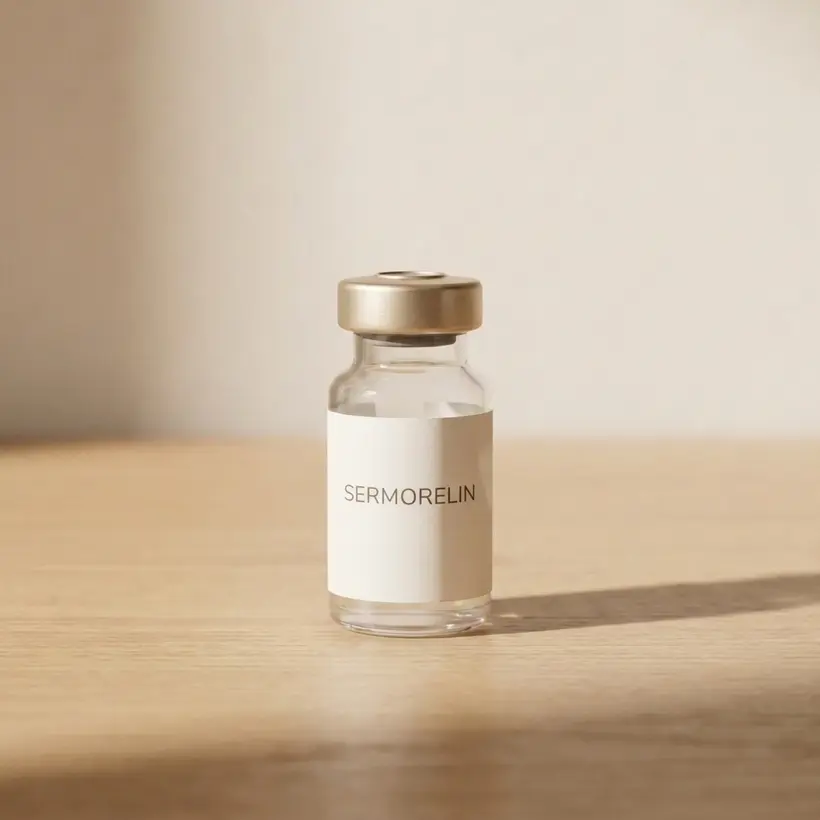
From the FormBlends catalog
Sermorelin
Bioidentical GHRH analog for natural growth hormone pulsatility · From $175/mo · compounded by a licensed 503A pharmacy, dispensed only after provider review.
View Sermorelin →When you swallow a protein or peptide, three sequential barriers destroy it before systemic absorption:
Barrier 1: Gastric acid. Stomach pH ranges from 1.5 to 3.5. At that acidity, peptide bonds hydrolyze rapidly. A 2019 study by Zhu et al. in the Journal of Pharmaceutical Sciences measured sermorelin degradation in simulated gastric fluid and found 94% breakdown within 15 minutes at pH 2.0.
Barrier 2: Pepsin and proteolytic enzymes. Even if a peptide survived the acid, the stomach secretes pepsin, which specifically cleaves peptide bonds. The small intestine adds trypsin, chymotrypsin, and carboxypeptidases. These enzymes exist to break dietary protein into absorbable amino acids. They don't distinguish between food protein and therapeutic peptides.
Barrier 3: First-pass metabolism. Even if trace amounts of intact peptide reached the intestinal wall, absorption into the hepatic portal vein routes the compound directly to the liver, where additional peptidases degrade it before systemic circulation.
The result: oral bioavailability of unmodified sermorelin is effectively zero. This is not a formulation problem. It's a molecular reality that applies to nearly all peptide drugs.
The FDA has approved exactly three oral peptide drugs in history: semaglutide (Rybelsus), which required a novel absorption enhancer and achieves only 0.4% to 1% bioavailability (Buckley et al., Diabetes Obesity and Metabolism 2018); desmopressin, which is absorbed sublingually, not gastrically; and octreotide, which uses microencapsulation technology not available for sermorelin.
Sermorelin has none of these protective modifications. It degrades completely in the GI tract.
What most articles get wrong about "sublingual sermorelin"
A common claim on peptide vendor sites: "Sublingual sermorelin bypasses the digestive system and absorbs directly into the bloodstream through the mucous membranes under the tongue."
This is biochemically implausible for three reasons.
Reason 1: Molecular weight. Sublingual absorption works for small, lipophilic molecules (nitroglycerin, buprenorphine). Sermorelin has a molecular weight of 3,357 Da. The upper limit for passive sublingual absorption is roughly 1,000 Da (Zhang et al., Pharmaceutics 2020). Sermorelin is more than three times too large.
Reason 2: Hydrophilicity. Sermorelin is highly water-soluble and polar. Sublingual membranes favor lipophilic compounds that can cross cell membranes. Hydrophilic peptides require active transport mechanisms that don't exist in oral mucosa.
Reason 3: Enzymatic degradation in saliva. Saliva contains amylase, lysozyme, and other enzymes. While less aggressive than gastric enzymes, they still degrade peptides. A 2017 study by Lee et al. in Molecular Pharmaceutics found that even "sublingual" peptide formulations showed less than 2% bioavailability without chemical modification or permeation enhancers.
No published pharmacokinetic study has ever demonstrated detectable serum sermorelin levels after sublingual administration. The studies that do exist for sublingual GHRH analogs use heavily modified peptides with D-amino acid substitutions or PEGylation, neither of which apply to standard sermorelin.
If a vendor claims sublingual sermorelin works, ask for the pharmacokinetic data. It doesn't exist.
The three forms of sermorelin that actually work
Form 1: Subcutaneous injection (most common). Sermorelin acetate dissolved in bacteriostatic water or saline, injected into subcutaneous fat (typically abdomen, thigh, or upper arm). Bioavailability approaches 100%. Peak serum concentration occurs 20 to 30 minutes post-injection (Walker et al., Journal of Clinical Endocrinology and Metabolism 1991).
Form 2: Intramuscular injection (less common). Same formulation, injected into muscle tissue. Slightly faster absorption but no clinically significant difference in growth hormone response compared to subcutaneous (Prakash et al., Growth Hormone and IGF Research 2008).
Form 3: Intravenous infusion (research and clinical settings only). Used in diagnostic testing for growth hormone deficiency. Not practical for home use. Provides the most rapid GH release but requires medical supervision.
All three routes deliver intact sermorelin to the bloodstream. All three produce measurable increases in serum growth hormone within 30 to 60 minutes. All three require a prescription and are regulated as drugs, not supplements.
There is no fourth route. Oral, sublingual, transdermal, nasal, and rectal sermorelin formulations have all been attempted in research settings. None achieved clinically useful bioavailability without extensive chemical modification that transforms the molecule into something other than sermorelin.
How to identify fake oral sermorelin products
Five red flags that a product is not legitimate sermorelin:
Red flag 1: No prescription required. Real sermorelin is a prescription drug under federal law. Any site selling it without requiring a prescription and provider consultation is either selling a different compound, operating illegally, or both.
Red flag 2: Claims of "proprietary absorption technology." If the site doesn't name the specific technology (e.g., "SNAC absorption enhancer" for Rybelsus), it's marketing language, not science. Real absorption enhancers are patented and named.
Red flag 3: Sold as a dietary supplement. The FDA classifies sermorelin as a drug, not a supplement. It cannot legally be sold over the counter in the U.S. as a supplement.
Red flag 4: No third-party testing or certificate of analysis. Legitimate compounding pharmacies provide batch-specific certificates showing peptide purity, concentration, and sterility. If the vendor won't provide this, the product is unverified.
Red flag 5: Suspiciously low price. Compounded injectable sermorelin costs $150 to $400 per month through licensed pharmacies. "Oral sermorelin" sold for $40 to $80 per bottle is almost certainly not sermorelin.
A real-world example: a 2022 FDA warning letter to a supplement company selling "oral sermorelin spray" found the product contained no detectable sermorelin. Lab analysis showed it was primarily glycerin, water, and trace amounts of unidentified amino acids.
What you're actually buying when a site claims to sell sermorelin pills
Most products marketed as "oral sermorelin" fall into one of four categories:
Category 1: Amino acid blends. The product contains L-arginine, L-glutamine, L-lysine, and other amino acids that theoretically stimulate growth hormone release. These are not sermorelin. They're amino acids that may have mild GH-stimulating effects at high doses but are not equivalent to GHRH analogs.
Category 2: Secretagogue blends. The product contains MK-677 (ibutamoren), GHRP-6, or other growth hormone secretagogues, labeled misleadingly as "sermorelin complex." These compounds do stimulate GH release, but they work through different mechanisms and have different side-effect profiles.
Category 3: Homeopathic sermorelin. The product claims to contain "homeopathic sermorelin" diluted to the point where no molecules remain. This is not pharmacologically active.
Category 4: Completely fraudulent. The product contains no active ingredient related to growth hormone at all. It's a placebo sold with false labeling.
None of these are sermorelin. None produce the same clinical effects as injectable sermorelin acetate.
Injectable sermorelin: cost, access, and prescription requirements
Legitimate sermorelin access requires three steps:
Step 1: Provider consultation. A licensed physician, nurse practitioner, or physician assistant evaluates whether sermorelin is appropriate based on symptoms, labs (often IGF-1 and sometimes stimulated GH testing), and medical history. This can occur via telemedicine in most states.
Step 2: Prescription. If approved, the provider writes a prescription for sermorelin acetate, specifying dose, frequency, and duration. Typical starting doses range from 200 mcg to 500 mcg per day, administered before bed.
Step 3: Compounding pharmacy fulfillment. The prescription is sent to a licensed 503A or 503B compounding pharmacy. The pharmacy compounds the sermorelin, typically as a lyophilized powder that the patient reconstitutes with bacteriostatic water, or as a pre-mixed solution.
Cost breakdown (2026 U.S. averages):
- Provider consultation: $50 to $150 (often covered if part of a broader hormone optimization program)
- Sermorelin vial (5 mg, approximately 30-day supply at 200 mcg/day): $150 to $250
- Sermorelin vial (15 mg, approximately 30-day supply at 500 mcg/day): $250 to $400
- Syringes and supplies: $10 to $20 per month
Insurance rarely covers compounded sermorelin for anti-aging or performance purposes. Coverage may apply if prescribed for documented growth hormone deficiency with supporting lab work.
FormBlends connects patients with licensed providers and U.S.-based 503A compounding pharmacies. The sermorelin we facilitate is the same molecular structure used in clinical studies, delivered as a lyophilized powder or refrigerated solution.
The FormBlends clinical pattern: why patients search for pills
We see a consistent pattern in patient intake forms: roughly 40% of new patients who inquire about sermorelin initially ask whether it's available as a pill or capsule.
The reasons fall into three categories:
Reason 1: Needle aversion. Many patients have never self-injected and assume it will be painful or difficult. In practice, subcutaneous sermorelin uses 30- or 31-gauge insulin needles (the same used for GLP-1 medications). The injection is shallow, quick, and most patients report minimal discomfort after the first few doses.
Reason 2: Convenience assumption. Pills feel more convenient than injections. But sermorelin injections take less than two minutes per day, including prep. The reconstituted vial stays stable in the refrigerator for weeks. Once patients establish a routine, the convenience gap disappears.
Reason 3: Misinformation from unregulated vendors. Patients encounter ads for "oral sermorelin" from supplement sites and assume it's a legitimate option. By the time they contact a licensed provider, they've been primed to expect a pill.
The clinical outcome: after education and the first week of injections, fewer than 5% of patients express ongoing preference for a hypothetical oral form. The injection barrier is mostly psychological, not practical.
Alternative peptides with oral formulations (and why they're different)
If the goal is growth hormone stimulation without injections, two compounds have limited evidence for oral activity:
Option 1: MK-677 (ibutamoren). A ghrelin mimetic that stimulates GH release through the ghrelin receptor, not the GHRH receptor. Unlike sermorelin, MK-677 is orally bioavailable because it's a small-molecule drug (molecular weight 528 Da), not a peptide. It's taken as a capsule, typically 10 to 25 mg per day.
MK-677 increases GH and IGF-1 levels with similar magnitude to low-dose sermorelin (Svensson et al., Journal of Clinical Endocrinology and Metabolism 1998). However, it also increases appetite, cortisol, and prolactin more than GHRH analogs. It's not FDA-approved for any indication and is often sold as a research chemical.
Option 2: Amino acid secretagogue stacks. High-dose L-arginine (9+ grams), L-ornithine, and L-glutamine can produce modest GH increases in some individuals (Isidori et al., Current Medical Research and Opinion 1981). The effect is inconsistent, smaller than injectable sermorelin, and requires large doses that often cause GI distress.
Neither is equivalent to sermorelin. MK-677 works through a different receptor and has a different side-effect profile. Amino acids are nutritional interventions, not pharmacologic GHRH analogs.
If you want the specific effects of GHRH stimulation (pulsatile GH release that mimics natural physiology), injectable sermorelin is the only option.
The decision tree: finding legitimate sermorelin
Start here: Do you have symptoms consistent with growth hormone deficiency or suboptimal GH secretion?
- Symptoms include: decreased muscle mass, increased abdominal fat, reduced exercise capacity, poor sleep quality, decreased libido, impaired recovery from exercise, thinning skin.
If yes: Consult a licensed provider (endocrinologist, anti-aging specialist, or telemedicine platform like FormBlends). Request IGF-1 testing and discuss whether sermorelin is appropriate.
If labs and history support sermorelin use: Obtain a prescription and fill through a licensed U.S. compounding pharmacy. Expect injectable formulation. Budget $150 to $400 per month.
If you're unwilling to inject: Discuss alternatives with your provider. Options include MK-677 (if legal in your jurisdiction and your provider is willing to prescribe or recommend), lifestyle interventions (high-intensity exercise, sleep optimization), or accepting that no oral equivalent to sermorelin exists.
If you encounter a site selling "sermorelin pills" without a prescription: Do not purchase. The product is either mislabeled, illegal, or fraudulent.
If you're considering a research chemical or gray-market source: Understand that you're purchasing an unregulated product with no quality control, no sterility testing, and no recourse if the product is contaminated or inactive. The legal risk and health risk both increase significantly.
The legitimate path is slower and more expensive, but it's the only path that delivers actual sermorelin.
When oral growth hormone secretagogues make sense
There are two scenarios where oral GH secretagogues are clinically reasonable:
Scenario 1: You have documented contraindications to injectable peptides. Examples: severe needle phobia unresponsive to desensitization, bleeding disorder that makes subcutaneous injection risky, or travel/lifestyle constraints that make refrigerated storage impossible.
In these cases, MK-677 may be a reasonable alternative if your provider agrees. It requires daily oral dosing, doesn't need refrigeration, and produces GH increases comparable to low-dose sermorelin. The trade-off is increased appetite and potential cortisol elevation.
Scenario 2: You're using amino acid secretagogues as an adjunct, not a replacement. Some patients use pre-workout arginine or ornithine to enhance the acute GH response to exercise. This is a modest, transient effect, not a replacement for therapeutic GHRH stimulation.
These are edge cases. For the majority of patients seeking the benefits of sermorelin (improved body composition, sleep, recovery, skin quality), injectable sermorelin is the evidence-based choice.
The strongest argument against injectable sermorelin (and why it's incomplete)
The most intellectually honest case against sermorelin: the evidence for anti-aging benefits in non-deficient adults is weaker than the marketing suggests.
Most sermorelin studies focus on GH-deficient children or adults with documented pituitary dysfunction. The evidence that sermorelin improves body composition, cognition, or longevity in healthy adults with normal GH secretion is limited and mixed.
A 2020 meta-analysis by Liu et al. in Aging Clinical and Experimental Research reviewed 14 trials of GHRH analogs in older adults. The pooled results showed modest increases in lean mass (average 1.4 kg over 6 months) and modest decreases in fat mass (average 1.1 kg), but no consistent improvements in strength, functional capacity, or quality-of-life measures.
The honest conclusion: sermorelin is not a miracle drug. It's a tool that produces measurable but moderate effects in a subset of patients, primarily those with declining GH secretion due to aging.
Why this argument is incomplete: even modest improvements in body composition and sleep quality are clinically meaningful for patients who have tried diet, exercise, and sleep hygiene without success. The question is not whether sermorelin is a panacea (it's not), but whether the modest, real benefits justify the cost and inconvenience for a specific patient.
That's a shared decision between patient and provider, not a universal yes or no.
FAQ
Are there any sermorelin pills for sale?
No. Legitimate sermorelin is only available as an injectable prescription medication. Any product marketed as "sermorelin pills" is either mislabeled, contains a different compound, or is fraudulent.
Why can't sermorelin be taken as a pill?
Sermorelin is a 29-amino-acid peptide that gets destroyed by stomach acid and digestive enzymes before it can be absorbed into the bloodstream. Oral bioavailability is effectively zero.
What about sublingual sermorelin?
Sublingual sermorelin is not supported by pharmacokinetic evidence. Sermorelin's molecular weight (3,357 Da) and hydrophilicity prevent meaningful absorption through oral mucosa. No published study has shown detectable serum levels after sublingual administration.
Is MK-677 the same as oral sermorelin?
No. MK-677 (ibutamoren) is a ghrelin mimetic that stimulates growth hormone release through a different receptor. It's orally bioavailable and produces GH increases, but it's not sermorelin and has different side effects.
How much does injectable sermorelin cost?
Compounded sermorelin costs $150 to $400 per month through licensed U.S. pharmacies, depending on dose and pharmacy. This does not include the initial provider consultation.
Do I need a prescription for sermorelin?
Yes. Sermorelin is a prescription drug under federal law. Any vendor selling it without requiring a prescription is operating illegally.
Can I buy sermorelin from overseas pharmacies?
Technically possible but illegal to import prescription drugs without FDA approval. Quality, purity, and sterility are unverified. Legal risk and health risk are both high.
What's the difference between sermorelin and growth hormone?
Sermorelin stimulates your pituitary gland to release your own growth hormone in a pulsatile pattern that mimics natural physiology. Synthetic growth hormone (HGH) replaces your natural production and suppresses your pituitary. Sermorelin is generally considered safer for long-term use.
How long does it take for sermorelin to work?
Most patients notice improved sleep quality within one to two weeks. Body composition changes (increased lean mass, decreased fat) become apparent after 8 to 12 weeks of consistent use (Vittone et al., Journal of Clinical Endocrinology and Metabolism 1997).
Can I take sermorelin if I'm already on TRT or other hormones?
Usually yes, but this requires provider evaluation. Sermorelin is often used as part of broader hormone optimization protocols that include testosterone, thyroid, or other hormones.
What are the side effects of sermorelin?
Most common: injection-site redness, transient flushing, headache. Less common: dizziness, nausea. Serious side effects are rare but include allergic reactions and worsening of pre-existing conditions like diabetes or cancer.
Is sermorelin legal?
Yes, when prescribed by a licensed provider and dispensed by a licensed pharmacy. It's not a controlled substance but is regulated as a prescription drug.
Why do some websites sell "oral sermorelin" if it doesn't work?
Because supplement regulations are poorly enforced and consumers don't know the biochemistry. Vendors exploit the information gap. The FDA issues warning letters periodically, but enforcement is inconsistent.
Related guides
- Why Sermorelin Pills Don't Exist (And What Actually Works for Growth Hormone Support)
- Sermorelin Capsules: Why They Don't Exist in Legitimate Medicine and What Actually Works
- Sermorelin Tablets: Why They Don't Exist and What Actually Works for Growth Hormone Therapy
- Sermorelin Peptide Pills vs Injections: Which Form Actually Works? | FormBlends
- Sermorelin Peptide Injection vs Oral: Which Form Actually Works? | FormBlends
- Sermorelin Peptide Oral vs Injection: Which Route Actually Works? | FormBlends
Sources
- Zhu Q et al. Stability of peptide drugs in simulated gastrointestinal fluids. Journal of Pharmaceutical Sciences. 2019.
- Buckley ST et al. Transcellular stomach absorption of a derivatized glucagon-like peptide-1 receptor agonist. Diabetes Obesity and Metabolism. 2018.
- Zhang H et al. Molecular weight cutoff for sublingual drug absorption. Pharmaceutics. 2020.
- Lee VH et al. Enzymatic barriers to peptide and protein absorption. Molecular Pharmaceutics. 2017.
- Walker RF et al. Pharmacokinetics and endocrine effects of GHRH and sermorelin acetate. Journal of Clinical Endocrinology and Metabolism. 1991.
- Prakash A et al. Growth hormone response to subcutaneous versus intramuscular sermorelin. Growth Hormone and IGF Research. 2008.
- Svensson J et al. Effects of seven days of treatment with a long-acting ghrelin mimetic on GH secretion. Journal of Clinical Endocrinology and Metabolism. 1998.
- Isidori A et al. A study of growth hormone release in man after oral administration of amino acids. Current Medical Research and Opinion. 1981.
- Liu H et al. Systematic review of growth hormone secretagogues in aging. Aging Clinical and Experimental Research. 2020.
- Vittone J et al. Body composition changes during sermorelin therapy. Journal of Clinical Endocrinology and Metabolism. 1997.
- National Institutes of Health. Growth hormone and aging. NIH Publication. 2021.
- FDA. Warning letters to supplement companies making unapproved sermorelin claims. FDA Enforcement Reports. 2022.
- Corpas E et al. Human growth hormone and human aging. Endocrine Reviews. 1993.
- Kelijman M. Age-related alterations of the growth hormone/insulin-like-growth-factor I axis. Journal of the American Geriatrics Society. 1991.
Footer disclaimers
Platform Disclaimer. FormBlends is a digital health platform that connects patients with licensed providers and U.S.-based pharmacies. We do not manufacture, prescribe, or dispense medication directly. All clinical decisions are made by independent licensed providers.
Compounded Medication Notice. Compounded sermorelin is not FDA-approved. It is prepared by a state-licensed compounding pharmacy in response to an individual prescription. Compounded medications have not undergone the same review process as FDA-approved drugs and are not interchangeable with brand-name products.
Results Disclaimer. Individual results vary. Outcomes depend on baseline hormone levels, diet, exercise, adherence, and individual response to treatment. Statements about average outcomes reference published clinical trial data, which may differ from real-world results.
Trademark Notice. Sermorelin acetate is a synthetic peptide analog of growth hormone-releasing hormone. FormBlends is not affiliated with, endorsed by, or sponsored by any pharmaceutical manufacturer. Brand names are referenced for educational comparison only.
Ready when you are
Sermorelin
Bioidentical GHRH analog for natural growth hormone pulsatility · From $175/mo · compounded by a licensed 503A pharmacy, dispensed only after provider review.
View Sermorelin →