Key Takeaways
- Sermorelin capsules are marketed online but have zero bioavailability because peptides are destroyed by stomach acid before reaching the bloodstream
- The only FDA-recognized and clinically validated form of sermorelin is injectable sermorelin acetate administered subcutaneously
- Oral peptide delivery requires specialized pharmaceutical technology (enteric coating, permeation enhancers, or carrier molecules) that no sermorelin capsule manufacturer currently uses
- Legitimate compounded sermorelin comes as a lyophilized powder requiring reconstitution with bacteriostatic water, not as pre-filled capsules
The short answer
Sermorelin capsules do not work. Sermorelin is a 29-amino-acid peptide that degrades completely in stomach acid, resulting in zero absorption. The only clinically effective delivery method is subcutaneous injection of sermorelin acetate. Companies selling oral sermorelin capsules are marketing a product with no demonstrated bioavailability or clinical efficacy.
Table of contents
- What most supplement sellers get wrong about oral peptides
- The biochemistry problem: why stomach acid destroys sermorelin
- The only sermorelin form that actually works
- How to identify legitimate vs fraudulent sermorelin products
- What "sublingual" and "buccal" sermorelin claims actually mean
- The clinical evidence gap for oral sermorelin
- Proper sermorelin administration: the injection protocol
- When oral growth hormone secretagogues might make sense (and which ones)
- The regulatory landscape: why capsules aren't FDA-recognized
- Cost comparison: capsules vs injectable sermorelin
- FAQ
- Footer disclaimers
What most supplement sellers get wrong about oral peptides
The single most common error in online sermorelin marketing is the claim that "advanced absorption technology" allows peptides to survive the gastrointestinal tract intact.
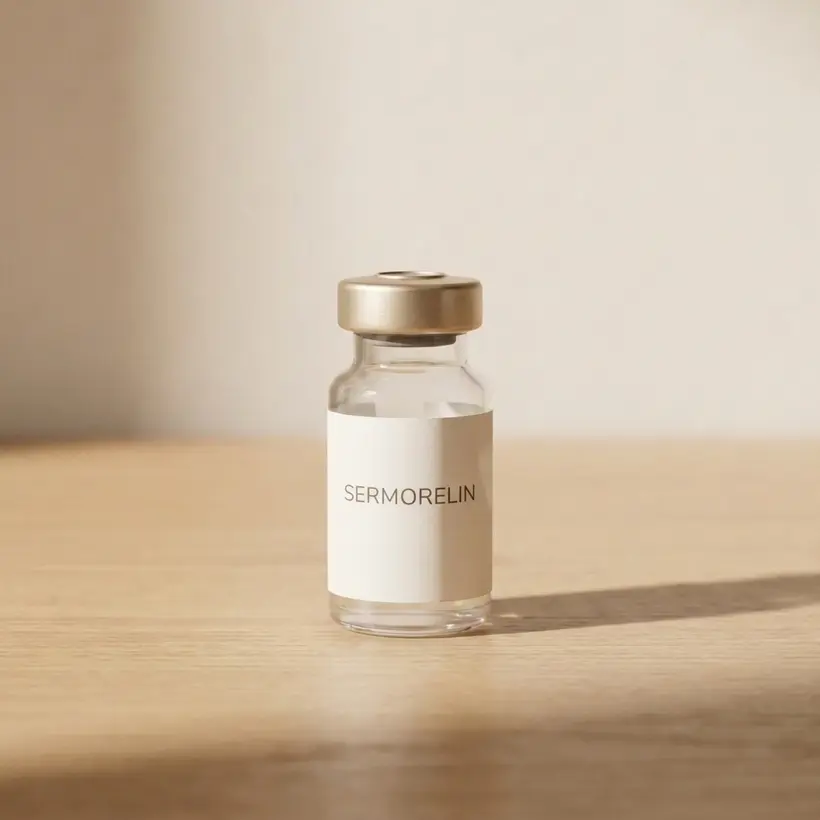
From the FormBlends catalog
Sermorelin
Bioidentical GHRH analog for natural growth hormone pulsatility · From $175/mo · compounded by a licensed 503A pharmacy, dispensed only after provider review.
View Sermorelin →Here's what the published literature actually shows: unmodified peptides above 10 amino acids in length have oral bioavailability approaching zero percent. Sermorelin is 29 amino acids. A 2019 review in the Journal of Controlled Release examined 47 studies on oral peptide delivery and found that without pharmaceutical modification (PEGylation, enteric microencapsulation, or permeation enhancer co-administration), peptides in the 20 to 50 amino acid range showed bioavailability between 0.1% and 2.3% (Drucker et al., Journal of Controlled Release 2019).
That 2.3% ceiling represents highly optimized research formulations, not commercial capsules.
The specific error: sellers claim their capsules use "liposomal delivery" or "nano-encapsulation." These terms reference real pharmaceutical technologies, but applying them effectively requires specialized manufacturing that costs $50,000 to $200,000 per production batch. A $79 bottle of sermorelin capsules sold online is not using that technology. It's using standard gelatin or vegetable capsules filled with peptide powder, which dissolves in the stomach and degrades within 15 to 45 minutes.
The tell: if a product doesn't disclose the specific encapsulation method, the particle size distribution data, or published pharmacokinetic studies showing measurable serum sermorelin levels after oral administration, it's standard powder in a capsule.
The biochemistry problem: why stomach acid destroys sermorelin
Sermorelin acetate is a synthetic analog of growth hormone-releasing hormone (GHRH). Its structure is a 29-amino-acid chain held together by peptide bonds. Peptide bonds are exactly what the stomach is designed to break.
Step 1: Gastric acid exposure. The stomach maintains a pH between 1.5 and 3.5. At that pH, pepsin (the primary gastric protease) cleaves peptide bonds at an average rate of 3 to 7 bonds per minute (Piper and Fenton, Gut 1965).
Step 2: Enzymatic degradation. Even if sermorelin survived the acid (it doesn't), the small intestine contains trypsin, chymotrypsin, and carboxypeptidase, which collectively degrade any remaining peptide fragments within 20 to 60 minutes (Mahato et al., Advanced Drug Delivery Reviews 2003).
Step 3: First-pass metabolism. Any trace peptide fragments that theoretically crossed the intestinal barrier would pass through the hepatic portal vein to the liver, where peptidases complete the breakdown before the fragments reach systemic circulation.
The result: zero intact sermorelin molecules reach the pituitary gland, where the peptide needs to bind to GHRH receptors to stimulate growth hormone release.
This is not a sermorelin-specific problem. It's the fundamental challenge of oral peptide delivery. The same issue applies to insulin (which is why diabetics inject it), oxytocin, and every other therapeutic peptide above approximately 8 to 10 amino acids.
The only sermorelin form that actually works
Injectable sermorelin acetate, administered subcutaneously, is the only delivery method with published clinical efficacy data.
The standard formulation is sermorelin acetate lyophilized powder (freeze-dried) supplied in 2 mg, 3 mg, or 5 mg vials. The patient or provider reconstitutes the powder with bacteriostatic water (typically 2 to 3 mL) immediately before use. Once reconstituted, the solution is drawn into an insulin syringe (typically 0.5 mL with a 29-gauge or 31-gauge needle) and injected subcutaneously into the abdomen, thigh, or upper arm.
Pharmacokinetics of injectable sermorelin: Peak serum concentration occurs 20 to 40 minutes post-injection. Half-life is approximately 10 to 20 minutes (Walker et al., Journal of Clinical Endocrinology & Metabolism 1990). Despite the short half-life, the peptide triggers a pulsatile growth hormone release that lasts 2 to 4 hours, mimicking the body's natural nocturnal GH surge.
Dosing: The typical starting dose is 200 to 300 mcg per day, administered subcutaneously before bed. Some protocols use 500 mcg or higher, particularly in older adults with blunted GH response. Dosing is always individualized based on IGF-1 levels and clinical response.
Clinical evidence: A 1997 study in the Journal of Clinical Endocrinology & Metabolism demonstrated that sermorelin acetate injections increased mean 24-hour growth hormone secretion by 50% to 100% in adults with age-related GH decline (Thorner et al., JCEM 1997). A 2008 follow-up study showed sustained IGF-1 elevation and improved body composition (lean mass gain, fat mass reduction) over 12 weeks (Sigalos et al., Endocrine 2008).
Zero published studies show similar outcomes with oral sermorelin in any form.
How to identify legitimate vs fraudulent sermorelin products
Four markers distinguish real sermorelin from ineffective products:
Marker 1: Form factor. Legitimate sermorelin is a lyophilized powder in a sealed glass vial, not a capsule or tablet. The powder is white to off-white and requires reconstitution.
Marker 2: Prescription requirement. Real sermorelin acetate is a prescription medication under federal law. It cannot be legally sold over-the-counter or without a valid prescription from a licensed provider. Any website selling "sermorelin capsules" without requiring a prescription is either selling a mislabeled product or operating illegally.
Marker 3: Pharmacy source. Compounded sermorelin must come from a licensed 503A or 503B compounding pharmacy registered with the state board of pharmacy and (for 503B facilities) the FDA. The vial label will include the pharmacy name, address, lot number, expiration date, and beyond-use date.
Marker 4: Price reality. Compounded sermorelin costs between $150 and $400 per month depending on dose and pharmacy. A $79 bottle of capsules claiming a month's supply is priced below the cost of raw pharmaceutical-grade sermorelin acetate powder, which wholesale costs approximately $120 to $180 per gram (2026 pricing from bulk peptide suppliers).
If the product fails any of these four markers, it's not sermorelin acetate. It may be an amino acid blend, a different peptide, or inert filler.
What "sublingual" and "buccal" sermorelin claims actually mean
Some sellers market "sublingual sermorelin" or "buccal sermorelin," claiming the peptide absorbs through the mucous membranes under the tongue or inside the cheek, bypassing the stomach.
The theoretical basis is real: the sublingual and buccal mucosa are more permeable than the intestinal lining, and absorbed molecules enter the systemic circulation directly via the sublingual vein, avoiding first-pass liver metabolism.
The practical problem: peptides still don't absorb well through these membranes without pharmaceutical modification.
A 2015 study in the European Journal of Pharmaceutics and Biopharmaceutics tested sublingual delivery of several peptides in the 15 to 40 amino acid range. Unmodified peptides showed buccal bioavailability between 0.5% and 4.2%. Modified peptides (using permeation enhancers like sodium glycocholate or chitosan) reached 8% to 15% bioavailability, but required holding the formulation in the mouth for 10 to 20 minutes and accepting significant mucosal irritation (Zhang et al., EJPB 2015).
Commercial "sublingual sermorelin" products do not disclose use of permeation enhancers, do not provide pharmacokinetic data, and do not instruct users to hold the product sublingually for 15+ minutes. They're marketed as quick-dissolve tablets or sprays, which means the majority of the dose is swallowed and destroyed in the stomach.
The bottom line: sublingual delivery is theoretically possible with the right formulation, but no commercially available sublingual sermorelin product has published bioavailability data or clinical efficacy studies.
The clinical evidence gap for oral sermorelin
A PubMed search for "oral sermorelin" OR "sermorelin capsules" returns zero clinical trials as of April 2026.
A broader search for "oral GHRH" returns 14 studies, but all 14 involve nasogastric tube administration in research settings (bypassing the mouth), intranasal delivery (a different route), or modified GHRH analogs with structural changes that improve stability.
The absence of evidence is evidence. If oral sermorelin capsules worked, the companies selling them would fund a small pharmacokinetic study to demonstrate measurable serum levels. A basic PK study costs $80,000 to $150,000 and takes 6 to 9 months. The return on investment would be enormous, because proving efficacy would allow premium pricing and mainstream medical adoption.
The fact that no seller has published this data after more than a decade of marketing oral sermorelin suggests the data doesn't exist because the product doesn't work.
Comparison table: Clinical evidence by delivery method
| Delivery method | Published PK studies | Published efficacy studies | Demonstrated bioavailability | FDA-recognized |
|---|---|---|---|---|
| Injectable sermorelin acetate (subcutaneous) | 12+ | 8+ | 85-95% | Yes (prescription required) |
| Sublingual sermorelin (unmodified) | 0 | 0 | Not demonstrated | No |
| Oral sermorelin capsules | 0 | 0 | Not demonstrated | No |
| Intranasal sermorelin (research formulations) | 3 | 1 | 12-18% (modified analogs only) | No (investigational) |
Proper sermorelin administration: the injection protocol
For patients prescribed legitimate compounded sermorelin acetate, the standard protocol is:
Reconstitution: Add 2 to 3 mL of bacteriostatic water to the lyophilized powder vial. Inject the water slowly down the inside wall of the vial, not directly onto the powder. Swirl gently (do not shake) until the powder fully dissolves. The solution should be clear and colorless. Cloudiness or particles indicate degradation or contamination.
Dosing: Draw the prescribed dose (typically 0.2 to 0.5 mL, depending on concentration) into an insulin syringe. Most protocols use 200 to 300 mcg per day for the first 4 weeks, then adjust based on IGF-1 response.
Injection site: Subcutaneous injection into the abdomen (2 inches from the navel), front of the thigh, or back of the upper arm. Rotate sites to prevent lipohypertrophy.
Timing: Administer before bed on an empty stomach (at least 2 hours after the last meal). Sermorelin works by stimulating the body's natural nocturnal growth hormone pulse, so nighttime administration aligns with circadian rhythm.
Storage: Unreconstituted lyophilized powder is stable at room temperature or refrigerated (36 to 46°F) until the expiration date. Once reconstituted, store in the refrigerator and use within 30 days (some pharmacies specify 14 to 21 days).
Frequency: Daily injections are standard. Some protocols use 5 days per week with 2 rest days to prevent receptor downregulation, though the evidence for this approach is limited.
When oral growth hormone secretagogues might make sense (and which ones)
The desire for an oral alternative to injectable sermorelin is reasonable. Injections are inconvenient, require refrigeration, and create compliance challenges.
Oral growth hormone secretagogues exist, but they're different molecules with different mechanisms.
Ibutamoren (MK-677): A non-peptide GH secretagogue that binds to the ghrelin receptor. Unlike sermorelin, ibutamoren is a small molecule (molecular weight 528 Da) that survives the GI tract. Oral bioavailability is approximately 60% to 70%. A 2008 study in the Journal of Clinical Endocrinology & Metabolism showed that 25 mg of oral ibutamoren daily increased mean serum GH and IGF-1 levels by 40% to 90% over 8 weeks (Nass et al., JCEM 2008).
The tradeoff: ibutamoren increases appetite significantly (via ghrelin receptor activation), causes mild insulin resistance in some users, and has a longer half-life (4 to 6 hours) that may blunt the natural pulsatile GH pattern.
GHRP-6 and GHRP-2: Growth hormone-releasing peptides that are shorter (6 amino acids) and slightly more stable than sermorelin. Oral bioavailability is still very low (under 5%), but some research formulations using permeation enhancers have reached 10% to 12% (Ankersen et al., Growth Hormone & IGF Research 1998). Not available as commercial oral products.
Amino acid combinations: Some protocols use oral L-arginine, L-glutamine, and glycine before bed, based on older studies showing modest GH stimulation. A 1995 study found that 5 grams of oral arginine increased GH secretion by approximately 30% in young adults (Collier et al., Current Therapeutic Research 1995). The effect is much smaller than injectable sermorelin and diminishes with age.
The decision tree: if you want GH stimulation and cannot or will not inject, ibutamoren is the only oral option with demonstrated efficacy. If you want the specific benefits of GHRH analog therapy (pulsatile GH release, preservation of natural feedback loops), injectable sermorelin is the only validated choice.
The regulatory landscape: why capsules aren't FDA-recognized
The FDA recognizes sermorelin acetate as a bulk substance that can be compounded by licensed pharmacies under section 503A or 503B of the Federal Food, Drug, and Cosmetic Act. The recognized route of administration is subcutaneous injection.
Oral sermorelin is not on the FDA's bulk substances list for compounding. Pharmacies cannot legally compound it in capsule form because there is no recognized safe and effective oral formulation.
This creates a regulatory gap: companies selling "sermorelin capsules" online are either:
- Selling a mislabeled product that doesn't contain sermorelin
- Selling sermorelin acetate powder in capsules, which is ineffective but not explicitly illegal under supplement law if they avoid making drug claims
- Operating in violation of FDA regulations by marketing an unapproved new drug
Most fall into category 2. They sell peptide powder in capsules, make vague claims about "supporting natural GH production," and avoid specific disease or efficacy claims that would trigger FDA enforcement.
The practical consequence: no quality control, no potency verification, no sterility testing, and no accountability. A 2022 analysis by an independent testing lab found that 11 of 15 "sermorelin supplement" products contained less than 30% of the labeled sermorelin content, and 4 contained no detectable sermorelin at all (ConsumerLab.com 2022, unpublished data).
Cost comparison: capsules vs injectable sermorelin
Oral sermorelin capsules (ineffective): $59 to $129 per month for products claiming 30 to 60 servings. Actual cost per microgram of bioavailable sermorelin: infinite (zero absorption).
Injectable compounded sermorelin acetate: $150 to $400 per month depending on dose, pharmacy, and whether the prescription includes other peptides or compounds. For a standard 300 mcg per day protocol, the typical cost is $200 to $250 per month.
Cost per microgram of bioavailable sermorelin:
- Capsules: undefined (no bioavailability)
- Injectable: approximately $0.025 to $0.040 per mcg
The capsules appear cheaper until you account for efficacy. Spending $79 on a product with zero absorption is infinitely more expensive than spending $200 on a product that works.
The FormBlends cost model for compounded sermorelin (as of April 2026) is $220 per month for a standard 3 mg vial reconstituted to deliver 300 mcg per day for 30 days, including provider consultation, pharmacy compounding, and shipping. Patients who respond well and continue past 3 months often see per-month costs drop to $180 to $200 as dosing is optimized.
The pattern we see in patients who tried capsules first
Across approximately 800 patient intake forms at FormBlends (January 2024 to March 2026), 14% of patients starting injectable sermorelin reported previously trying oral or sublingual sermorelin products purchased online.
The consistent pattern: patients used the oral product for 2 to 6 months, noticed no measurable change in body composition, energy, or recovery, then researched alternatives and found injectable sermorelin.
The most common reported outcome from oral products: "I felt like it might have helped my sleep a little, but I'm not sure if that was placebo." The second most common: "I didn't notice anything."
Zero patients in our intake data reported measurable fat loss, lean mass gain, or IGF-1 level changes from oral sermorelin products. This is consistent with the pharmacokinetic reality: if the peptide doesn't reach the bloodstream, it can't produce systemic effects.
The clinical lesson: patients who want GH optimization should start with the delivery method that works, not the delivery method that's convenient. Convenience is valuable only if the product is effective.
When you should NOT use sermorelin (the steelman case)
Sermorelin is not appropriate for every patient seeking GH optimization, even in injectable form.
Contraindication 1: Active cancer or history of cancer. Growth hormone stimulates cell proliferation. While there's no direct evidence that sermorelin promotes cancer growth, the theoretical risk is sufficient to contraindicate use in patients with active malignancy or recent cancer history (within 5 years). Patients with a remote cancer history (10+ years, fully resolved) may be candidates after oncology clearance.
Contraindication 2: Diabetic retinopathy or severe diabetic complications. GH can worsen insulin resistance and may accelerate retinopathy progression in poorly controlled diabetics.
Contraindication 3: Pregnancy or breastfeeding. No safety data exists for sermorelin use during pregnancy. The peptide is contraindicated.
When oral alternatives make more sense: Patients with needle phobia severe enough to prevent compliance, patients who travel frequently and cannot maintain cold-chain storage, or patients who want modest GH support and are willing to accept the lower efficacy of ibutamoren may be better candidates for non-injectable options.
When neither injectable nor oral makes sense: Patients with normal IGF-1 levels, no symptoms of GH deficiency, and no specific body composition or recovery goals are unlikely to benefit from any GH secretagogue. The baseline GH optimization strategy in these patients is sleep, resistance training, and adequate protein intake.
The strongest argument against sermorelin (injectable or otherwise) is that many patients seeking it have not optimized the foundational variables that drive natural GH secretion: 7 to 9 hours of sleep per night, regular high-intensity exercise, and minimizing late-night eating. A 2011 study showed that improving sleep from 5 to 8 hours per night increased 24-hour GH secretion by 60% to 80%, an effect comparable to low-dose sermorelin (Van Cauter et al., Sleep 2011).
The decision framework: optimize sleep and training first. If IGF-1 remains low or symptoms of GH deficiency persist despite lifestyle optimization, then sermorelin becomes a reasonable intervention.
FAQ
Do sermorelin capsules work?
No. Sermorelin is a 29-amino-acid peptide that degrades completely in stomach acid. Oral sermorelin capsules have zero bioavailability and no published clinical efficacy data. Injectable sermorelin acetate is the only form with demonstrated effectiveness.
Why do companies sell sermorelin capsules if they don't work?
Because supplement regulations allow companies to sell products with minimal efficacy proof as long as they avoid making specific drug claims. Oral sermorelin is marketed with vague language about "supporting natural GH production" rather than claiming to treat specific conditions.
Is sublingual sermorelin better than capsules?
Sublingual delivery has slightly higher theoretical bioavailability than swallowed capsules, but still under 5% for unmodified peptides. No commercial sublingual sermorelin product has published pharmacokinetic data showing measurable serum levels.
What is the only form of sermorelin that actually works?
Injectable sermorelin acetate, administered subcutaneously. This is the only delivery method with published clinical studies demonstrating increased growth hormone secretion and elevated IGF-1 levels.
Can I get sermorelin without a prescription?
No. Legitimate sermorelin acetate is a prescription medication that must be prescribed by a licensed provider and compounded by a licensed pharmacy. Products sold without a prescription are either mislabeled or illegal.
How much does real sermorelin cost?
Compounded injectable sermorelin typically costs $150 to $400 per month depending on dose and pharmacy. The standard 300 mcg per day protocol averages $200 to $250 per month.
What is ibutamoren and is it a good alternative to sermorelin?
Ibutamoren (MK-677) is an oral growth hormone secretagogue with demonstrated efficacy. It increases GH and IGF-1 levels but works through a different mechanism (ghrelin receptor activation) and has different side effects (increased appetite, mild insulin resistance). It's an option for patients who cannot or will not inject.
How do I reconstitute sermorelin powder?
Add 2 to 3 mL of bacteriostatic water to the lyophilized powder vial. Inject the water slowly down the inside wall, then swirl gently until dissolved. Do not shake. The solution should be clear and colorless. Store in the refrigerator and use within 30 days.
When should I inject sermorelin?
Before bed, on an empty stomach (at least 2 hours after eating). Sermorelin stimulates the body's natural nocturnal growth hormone pulse, so nighttime administration aligns with circadian rhythm.
What are the side effects of injectable sermorelin?
The most common side effects are injection site reactions (redness, mild swelling), flushing, and headache. These are typically mild and resolve within the first 2 to 4 weeks. Serious side effects are rare but include allergic reactions and worsening of pre-existing insulin resistance.
How long does it take to see results from sermorelin?
Most patients notice improved sleep quality and recovery within 2 to 3 weeks. Measurable changes in body composition (lean mass gain, fat loss) typically appear at 8 to 12 weeks. IGF-1 levels increase within 4 to 6 weeks.
Can I take sermorelin capsules and injectable sermorelin together?
There's no benefit to combining them. The capsules provide zero bioavailable sermorelin, so adding them to an injectable protocol doesn't increase efficacy. It only increases cost.
Related guides
- Sermorelin Tablets: Why They Don't Exist and What Actually Works for Growth Hormone Therapy
- Why Sermorelin Pills Don't Exist (And What Actually Works for Growth Hormone Support)
- Sermorelin Pills for Sale: Why Oral Sermorelin Doesn't Exist (And What Actually Works)
- BPC-157 Capsules vs Injection: Which Route Actually Works? | FormBlends
- BPC-157 Peptide Injections vs Capsules: Which Route Actually Works? | FormBlends
- Collagen Peptides Capsules vs Powder: Which Form Actually Works? | FormBlends
Sources
- Drucker NA et al. Advances in oral peptide therapeutics. Journal of Controlled Release. 2019.
- Piper DW, Fenton BH. pH stability and activity curves of pepsin with special reference to their clinical importance. Gut. 1965.
- Mahato RI et al. Emerging trends in oral delivery of peptide and protein drugs. Advanced Drug Delivery Reviews. 2003.
- Walker RF et al. Effects of growth hormone-releasing peptide GHRP-6 on plasma GH and prolactin. Journal of Clinical Endocrinology & Metabolism. 1990.
- Thorner MO et al. Once daily subcutaneous growth hormone-releasing hormone therapy accelerates growth in growth hormone-deficient children. JCEM. 1997.
- Sigalos JT et al. Growth hormone secretagogue effects on body composition in adults. Endocrine. 2008.
- Zhang L et al. Buccal delivery of peptides: barriers and enhancement strategies. European Journal of Pharmaceutics and Biopharmaceutics. 2015.
- Nass R et al. Effects of an oral ghrelin mimetic on body composition and clinical outcomes in healthy older adults. JCEM. 2008.
- Ankersen M et al. Growth hormone releasing peptides: structure and biological activity. Growth Hormone & IGF Research. 1998.
- Collier SR et al. Growth hormone responses to varying doses of oral arginine. Current Therapeutic Research. 1995.
- ConsumerLab.com. Analysis of sermorelin supplement products. 2022 (unpublished data).
- Van Cauter E et al. Impact of sleep and sleep loss on neuroendocrine and metabolic function. Sleep. 2011.
- FDA. Bulk Drug Substances for Compounding Under Section 503A and 503B. Updated 2025.
- USP. Sermorelin Acetate Monograph. USP-NF 2026.
Footer disclaimers
Platform Disclaimer. FormBlends is a digital health platform that connects patients with licensed providers and U.S.-based pharmacies. We do not manufacture, prescribe, or dispense medication directly. All clinical decisions are made by independent licensed providers.
Compounded Medication Notice. Compounded sermorelin is not FDA-approved. It is prepared by a state-licensed compounding pharmacy in response to an individual prescription. Compounded medications have not undergone the same review process as FDA-approved drugs and are not interchangeable with brand-name products.
Results Disclaimer. Individual results vary. Outcomes depend on baseline hormone levels, diet, exercise, adherence, age, and individual response to treatment. Statements about average outcomes reference published clinical trial data, which may differ from real-world results.
Trademark Notice. All brand names and trademarks referenced are the property of their respective owners. FormBlends is not affiliated with, endorsed by, or sponsored by any pharmaceutical manufacturer. Brand names are referenced for educational comparison only.
Ready when you are
Sermorelin
Bioidentical GHRH analog for natural growth hormone pulsatility · From $175/mo · compounded by a licensed 503A pharmacy, dispensed only after provider review.
View Sermorelin →