Marcus, a 41-year-old general contractor in Scottsdale, had been working around a partial supraspinatus tear for nine months. Physical therapy helped. Cortisone bought him a couple good weeks. But he kept waking up at 3 a.m. when he rolled onto his right shoulder, and overhead work was off the table. His orthopedist said surgery was "borderline indicated," which is doctor-speak for "it could go either way." When Marcus's prescriber started him on TB-500 at 2.5 mg twice weekly, he told me the pitch was honest: "This isn't magic. The animal data is strong, the human data is still catching up, and we're going to re-evaluate at six weeks." By week three, Marcus was sleeping through the night. By week five, he was back to framing. "I'm not saying it fixed me," he told me over the phone. "I'm saying something shifted, and it shifted faster than anything else I tried."
That's roughly the story you hear over and over in compounding-pharmacy circles when TB-500 comes up. The peptide has a real biological rationale, a solid preclinical evidence base, and a growing body of clinical experience. What it doesn't have is a stack of large human randomized controlled trials for the musculoskeletal uses that account for most prescriptions. Keeping both of those facts in your head at the same time is the only honest way to talk about it.
Here's what TB-500 actually is, what the research shows, how it's dosed, what the side effects look like, and how it compares to BPC-157.
The Molecule: From Thymus Extract to Synthetic Fragment
Thymosin beta-4 is a naturally occurring 44-amino-acid peptide first isolated from thymus tissue in the 1980s. It's present in nearly every cell in the body and found at especially high concentrations in platelets and wound fluid, which is a hint about its job description. Its primary cellular role is binding to G-actin (the monomer form of actin), regulating cytoskeletal dynamics, cell motility, and tissue repair.
TB-500 is a synthetic peptide that reproduces the central biologically active region of thymosin beta-4, including that actin-binding domain. You'll sometimes see it called the "active fragment" of thymosin beta-4, and the precise relationship between the synthetic fragment and the parent molecule gets described differently depending on the source. For clinical purposes, the working understanding is straightforward: TB-500 reproduces the key healing-relevant activity of the full-length molecule.
Administration is subcutaneous injection. The pharmacokinetics support twice-weekly dosing during the loading phase, which is a real practical advantage. Plenty of peptides require daily injections. TB-500 doesn't.
How It Works (Five Mechanisms That Matter)
TB-500 isn't a single-trick molecule. The research literature describes several characterized mechanisms, and this is part of why clinicians reach for it when they're dealing with injuries that aren't responding to conventional approaches.
Actin sequestration is the primary cellular role. By binding G-actin, TB-500 regulates the assembly and disassembly of actin filaments. That sounds abstract until you realize actin dynamics are central to cell motility, wound closure, and inflammatory cell trafficking. Think of it as the peptide's operating system.
Angiogenesis is probably the mechanism that matters most clinically. Thymosin beta-4 promotes the formation of new blood vessels in injured tissue. Here's the thing: healing in tendons, ligaments, and cartilage is rate-limited by blood supply. These tissues have lousy vascularity to begin with. Improving blood vessel formation in poorly vascularized tissue is the primary clinical justification for TB-500 use in tendon and ligament injuries.
Cell migration. TB-500 promotes the migration of endothelial cells, keratinocytes, and stem cells into injury sites. If angiogenesis is building the roads, cell migration is the traffic.
Anti-inflammatory effects. Reduced expression of pro-inflammatory cytokines in injury models. Not the primary draw, but it contributes.
Cardioprotection. Animal studies, particularly from the Goldstein and Crockford labs, have shown reduced infarct size after experimental myocardial infarction. RegeneRx and partner companies have pursued clinical translation to human cardiac indications historically, though this isn't yet a widely available use case.
There's also some research evidence on follicle stem cell migration and hair growth, but that's a minor footnote compared to the musculoskeletal and cardiac work.
What the Research Actually Shows (and Where It Stops)
I think TB-500 is one of the better-supported peptides in the compounding space, and I also think it's important to be specific about what "better-supported" means here.
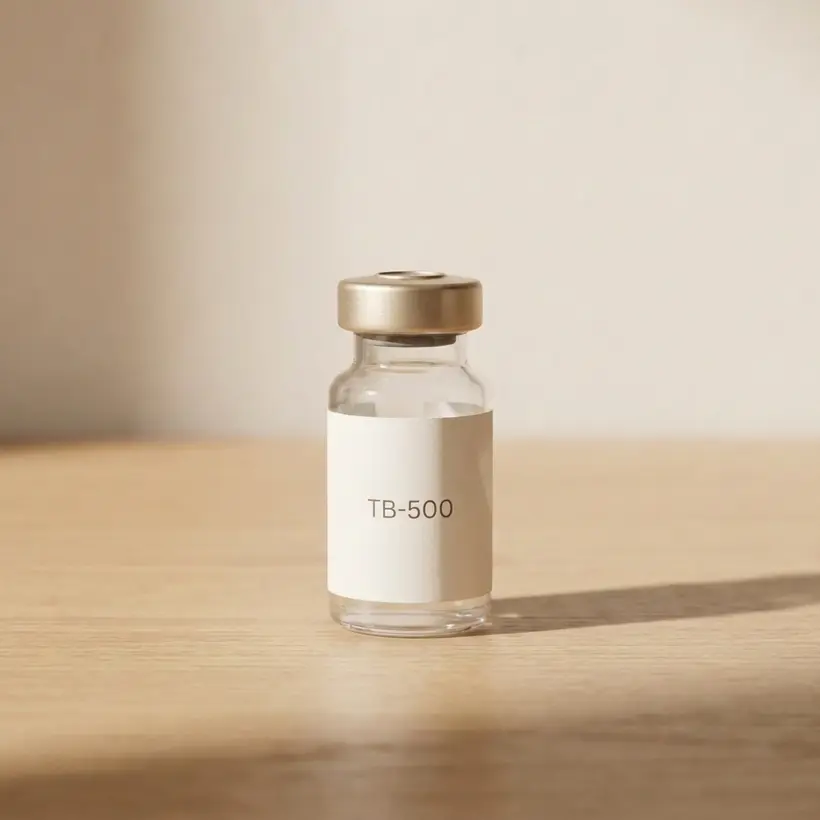
From the FormBlends catalog
TB-500 (Thymosin Beta-4)
Universal repair peptide for tissue regeneration · From $49/mo · compounded by a licensed 503A pharmacy, dispensed only after provider review.
Learn about TB-500 (Thymosin Beta-4) →Tendon and ligament repair. Animal models of tendon injury show accelerated healing with thymosin beta-4 administration, driven by improved angiogenesis and cell migration in poorly vascularized tissue. In clinical compounding practice, this translates to prescriptions for chronic tendinopathies, partial tendon tears, and ligament injuries, particularly in active patients with non-surgical injuries.
Muscle injury. Animal models of muscle crush and laceration injury show accelerated recovery. Clinical use centers on muscle strains and tears, especially during the subacute recovery window (not the acute inflammatory phase, not the late remodeling phase, but the window in between where cellular activity determines outcome).
Cardioprotection. Multiple animal studies demonstrate reduced infarct size and improved cardiac function post-MI. Human clinical translation is still in early stages.
Wound healing. Animal and limited human studies of topical and systemic thymosin beta-4 show accelerated wound closure, with the most interesting data in difficult wounds: diabetic ulcers and corneal injuries.
Ophthalmic applications. Topical thymosin beta-4 has been investigated for dry eye and corneal injury, with some historical clinical trial activity.
Where this falls apart, or at least gets uncomfortable, is the gap between preclinical evidence and human outcome data. Large-scale RCTs for the musculoskeletal applications that drive most compounding prescriptions don't exist yet. The clinical use rests on the combined weight of preclinical literature, the parent molecule's broader research, and accumulated experience in compounding-pharmacy practice. That's a reasonable basis for a prescriber's clinical judgment. It's not the same as Phase III trial data.
Dosing: Loading, Maintenance, and When to Stop
Loading phase (the standard starting protocol):
- 2 to 2.5 mg subcutaneous, twice weekly
- Duration: 4 to 6 weeks
- Total loading dose: 16 to 30 mg over the period
Maintenance phase (used selectively, not universally):
- 2 to 2.5 mg subcutaneous, once every 1 to 2 weeks
- Applied when an ongoing systemic healing effect is the goal
- Often discontinued after the loading phase if the injury has resolved
Injection site. Subcutaneous abdominal fat is most common. Anterior thigh and upper outer arm are alternatives. Some protocols include occasional local subcutaneous injection near a specific injury site in addition to systemic dosing, but this isn't required for systemic effect. Rotate sites.
The BPC-157 stack. The most common combination protocol is TB-500 (2 to 2.5 mg twice weekly) plus BPC-157 (250 to 500 mcg daily) for 4 to 6 weeks. The logic: combine TB-500's systemic distribution and angiogenic effect with BPC-157's tendon-fibroblast and local healing properties. This is the protocol Marcus was eventually moved to after his initial TB-500-only loading phase, and it's the protocol I see prescribed most often for significant injuries.
Cycling. TB-500 is not a "take it forever" peptide. The standard pattern is a discrete loading phase for a specific injury or recovery goal, followed by tapering or discontinuation. Indefinite continuous use is not supported by long-term safety data and is not the typical protocol.
Read the TB-500 loading and maintenance protocol guide.
Your specific protocol is determined by your prescriber based on your clinical situation.
Side Effects: What's Real, What's Overblown, What's Theoretical
The boring truth about TB-500 side effects is that most people tolerate it well. But "most people" isn't "everyone."
Common and mild:
- Injection-site reactions: brief redness, warmth, occasional minor wheal. Par for the course with subcutaneous peptides.
- Mild fatigue or a "tired feeling" in the first few days after the initial dose. This gets called the "TB-500 flu" in online discussions. It's usually mild and self-limiting, typically resolving after the first or second injection. The mechanism is unclear, but the pattern is well-recognized in clinical compounding practice.
- Mild headache.
- Brief lightheadedness.
Less common:
- Persistent fatigue beyond the first week.
- Mood changes.
- Allergic reactions.
Rare:
- Significant allergic reaction.
- Persistent injection-site reactions.
- Joint pain (somewhat ironic for a healing peptide, but occasionally reported).
The cancer concern. This is the one worth taking seriously. Angiogenesis is precisely what you want when you're healing a torn tendon. It is precisely what you don't want if you have an active malignancy, because tumors rely on new blood vessel formation to grow. TB-500 is not recommended in patients with active cancer. If you have an active or recent cancer history, this needs to be a conversation with your oncology team before a prescriber writes the script.
Long-term safety data beyond several months of continuous use is not established in published human studies. This is one more reason the standard protocol is a discrete loading phase, not indefinite use.
TB-500 vs. BPC-157: The Decision Framework
This is the question that comes up in every consult. Both are healing peptides. Both have strong preclinical evidence. The differences are real and clinically meaningful.
TB-500 is systemically distributed, dosed twice weekly, and has its strongest signal in large-tissue injuries, multi-site injuries, and contexts where angiogenesis is the rate-limiting factor (tendons, ligaments, cardiac tissue). The preclinical cardioprotection data is unique to TB-500.
BPC-157 is a pentadecapeptide derived from gastric juice protein with excellent evidence for tendon and GI healing, requires daily injection, and often produces faster perceived onset. Local injection near an injury site is a common protocol element.
The stack combines both and is the most common approach for significant or multi-site injuries. BPC-157 daily plus TB-500 twice weekly, for 4 to 6 weeks, then taper or discontinue.
Simple decision logic:
- Isolated tendinopathy, single-site issue, or GI focus: BPC-157 alone is often sufficient.
- Multi-site injury, larger tissue damage, or systemic recovery: TB-500 alone or the stack.
- Significant or chronic injury and you're willing to do both daily and twice-weekly injections: the stack.
If the choice between these two peptides were a restaurant decision, BPC-157 is the reliable neighborhood spot you go to for a Tuesday dinner. TB-500 is what you call when the situation is more serious and you need something with broader reach.
Read the full TB-500 vs BPC-157 comparison.
Cost and Access Through FormBlends
Typical FormBlends cash pricing:
- TB-500 5 mg vial (approximately 2 to 2.5 weeks at standard loading dose): $80 to $120
- TB-500 10 mg vial (approximately 4 to 5 weeks at standard loading dose): $140 to $190
- TB-500 monthly supply at loading dose: $150 to $250
- BPC-157 / TB-500 combination stack monthly supply: $200 to $320
Insurance does not typically cover compounded TB-500. HSA and FSA card payment is generally accepted.
The process:
- Complete the digital intake form, including detailed injury history.
- Book the telehealth consult.
- Discuss the specific injury, timeline, and recovery goals with the prescriber.
- Prescriber recommends TB-500 alone, BPC-157 + TB-500 stack, or another protocol.
- If clinically appropriate, the prescription is written.
- The compounded preparation ships from a licensed 503A compounding pharmacy.
- Follow-up at 4 weeks (loading-phase check) and 6 to 8 weeks (post-loading evaluation).
See TB-500 compounded preparation pricing and order.
See the BPC-157 / TB-500 combination stack.
Back to peptide therapy overview.
Frequently Asked Questions
Is TB-500 the same as thymosin beta-4? TB-500 is a synthetic peptide that reproduces the active fragment of thymosin beta-4. The two are closely related but not identical molecules. The clinical effects are similar.
How long until I notice effects? For musculoskeletal injuries, most patients report noticing change within 2 to 4 weeks of starting the loading phase. Significant improvement is typical by 4 to 6 weeks. Individual timelines vary depending on the injury, its chronicity, and other factors.
Do I have to inject twice a week, or is once a week enough? The standard loading protocol is twice weekly. Once-weekly dosing is sometimes used for maintenance after a loading phase, but the loading protocol is twice weekly for full effect.
Should I inject near my injury or in my abdomen? Subcutaneous abdominal injection produces systemic effects sufficient for most uses. Local injection near an injury site is occasionally used in certain protocols but is not required.
Can I stack TB-500 with BPC-157? Yes. The stack is the most common protocol for significant or multi-site injuries. BPC-157 daily plus TB-500 twice weekly for 4 to 6 weeks is the standard approach.
Is TB-500 a steroid? No. It is a peptide (a chain of amino acids). It is not anabolic in the way anabolic-androgenic steroids are.
Will TB-500 show up on a drug test? Yes. TB-500 and other peptide growth factors are on the WADA Prohibited List under category S2. Competitive athletes subject to anti-doping testing should not use TB-500.
How long do I stay on TB-500? A typical loading phase is 4 to 6 weeks. Most patients discontinue after loading if the injury has resolved. Some continue at maintenance dosing. Indefinite continuous use is not the standard protocol.
Does TB-500 help with hair? Some research evidence exists on follicle stem cell migration, but the strongest indications for TB-500 are musculoskeletal and cardiac. For hair specifically, GHK-Cu has a more direct evidence base.
What is the "TB-500 flu"? Some patients report mild fatigue, slight body aches, or a tired feeling in the first few days after the first or second TB-500 dose. Usually mild, usually self-limiting. The mechanism is unclear, but the pattern is well-recognized in clinical practice. If symptoms are significant or persistent, contact your prescriber.
Can I take TB-500 if I have cancer? TB-500 is not recommended in active malignancy. The angiogenic mechanism is a relative contraindication. Discuss with your oncology team before considering TB-500 if you have an active or recent cancer history.
Is TB-500 safe long-term? Long-term safety data in human populations is limited. Most clinical use is structured as discrete loading phases, not indefinite continuous use, and that's the approach supported by current evidence.
---
Disclaimer: Compounded TB-500 is not an FDA-approved drug. It is a prescription medication prepared by a licensed 503A compounding pharmacy for an individual patient based on a prescriber's clinical judgment. Most published research is in animal models; human RCT data for the musculoskeletal applications driving most clinical use is limited. Research suggests potential benefits for tissue repair, angiogenesis, and recovery; individual results vary. TB-500 is contraindicated in pregnancy, breastfeeding, and active malignancy. Side effects can occur. Information on this page is for educational purposes and is not medical advice. Do not self-administer peptides obtained from unregulated sources.
---
Not FDA-approved. Compounded peptides are prepared by licensed 503A pharmacies for individual patients based on a prescriber's clinical judgment. FormBlends is not a medical practice. Individual results vary. Consult a licensed clinician before starting any peptide therapy.
Ready when you are
TB-500 (Thymosin Beta-4)
Universal repair peptide for tissue regeneration · From $49/mo · compounded by a licensed 503A pharmacy, dispensed only after provider review.
Learn about TB-500 (Thymosin Beta-4) →