All GLP-1 medications from licensed 503A compounding pharmacies Browse Products

TB-500 and Alcohol

Can you drink alcohol while taking TB-500? Learn how alcohol may affect your peptide therapy results and what our physicians recommend.

By Emily Rodriguez, RDN, CSSD|Source reviewed by FormBlends Medical Team||

Source Reviewed

Written by Emily Rodriguez, RDN, CSSD · Checked against primary sources by FormBlends Medical Team

TB-500 and Alcohol custom 2026 header image for Peptide Therapy
Custom header image for TB-500 and Alcohol, Peptide Therapy, and better treatment decision-making.
In This Article

This article is part of our Peptide Therapy collection. See also: GLP-1 Guides | Provider Comparisons

Search and AI answer brief

Practical answer: TB-500 and Alcohol

Can you drink alcohol while taking TB-500? Learn how alcohol may affect your peptide therapy results and what our physicians recommend.

Short answer

Can you drink alcohol while taking TB-500? Learn how alcohol may affect your peptide therapy results and what our physicians recommend.

Search intent

This page answers a specific Peptide Therapy question rather than a generic overview.

What to verify

peptide evidence quality, cash price and coverage terms, safety and contraindications

How to use it

Use this information to prepare sharper questions for a licensed provider.

Key Takeaway

Can you drink alcohol while taking TB-500? Learn how alcohol may affect your peptide therapy results and what our physicians recommend.

There's no known dangerous interaction between TB-500 and alcohol, but drinking while on TB-500 therapy can work against your treatment goals by increasing inflammation, impairing tissue repair, and slowing recovery. If you're using TB-500 to heal an injury or support physical recovery, alcohol can undermine the very processes the peptide is designed to enhance. At FormBlends, our physicians generally recommend limiting alcohol consumption during active peptide therapy to get the best possible results.

Does Alcohol Directly Interfere With TB-500?

No formal studies have examined a direct pharmacological interaction between TB-500 and alcohol. TB-500 is a synthetic peptide that works through tissue repair and anti-inflammatory pathways, while alcohol is metabolized primarily by the liver through a completely separate set of enzymes . From a pure drug interaction standpoint, there's no established mechanism by which alcohol would neutralize or chemically alter TB-500 in your body.

But the absence of a direct interaction doesn't mean alcohol is harmless during your TB-500 cycle. The real concern is that alcohol's effects on your body work in the opposite direction of what TB-500 is trying to accomplish.

How Does Alcohol Affect Tissue Repair?

One of the primary reasons people use TB-500 is to accelerate tissue healing. Alcohol impairs several key components of the healing process:
Popular Therapeutic Peptides by Use Case Clinical Interest Score 0 22 44 66 88 88 82 78 75 70 BPC-157 TB-500 Sermorelin Ipamorelin GHK-Cu Based on published peptide research literature
Popular Therapeutic Peptides by Use Case. Based on published peptide research literature.
View data table
Bar chart showing popular therapeutic peptides by use case: BPC-157 (88), TB-500 (82), Sermorelin (78), Ipamorelin (75), GHK-Cu (70)
CategoryClinical Interest ScoreDetail
BPC-15788Tissue repair and gut healing
TB-50082Injury recovery
Sermorelin78Growth hormone support
Ipamorelin75Anti-aging and recovery
GHK-Cu70Skin and tissue repair
Illustration for TB-500 and Alcohol
  • Increased inflammation: While TB-500 reduces inflammatory cytokines at injury sites, alcohol consumption triggers a systemic inflammatory response. Research has shown that even moderate drinking improves levels of C-reactive protein and other inflammatory markers
  • Impaired immune function: Alcohol suppresses immune cell activity, including the macrophages and neutrophils that are important for clearing damaged tissue and fighting infection at wound sites
  • Reduced protein synthesis: Muscle and tissue repair require efficient protein synthesis. Alcohol has been shown to reduce muscle protein synthesis rates by as much as 20 to 30 percent after consumption
  • Dehydration: Alcohol is a diuretic, meaning it increases fluid loss. Proper hydration is important for peptide absorption and distribution, as well as for overall tissue health

In short, alcohol creates an internal environment that's hostile to healing, which is the exact opposite of what TB-500 therapy is designed to create.

Can You Have an Occasional Drink on TB-500?

An occasional drink is unlikely to completely derail your TB-500 results. The concern is more about patterns than single events. Having a glass of wine at dinner once a week is very different from heavy drinking on weekends. Here is a general framework:
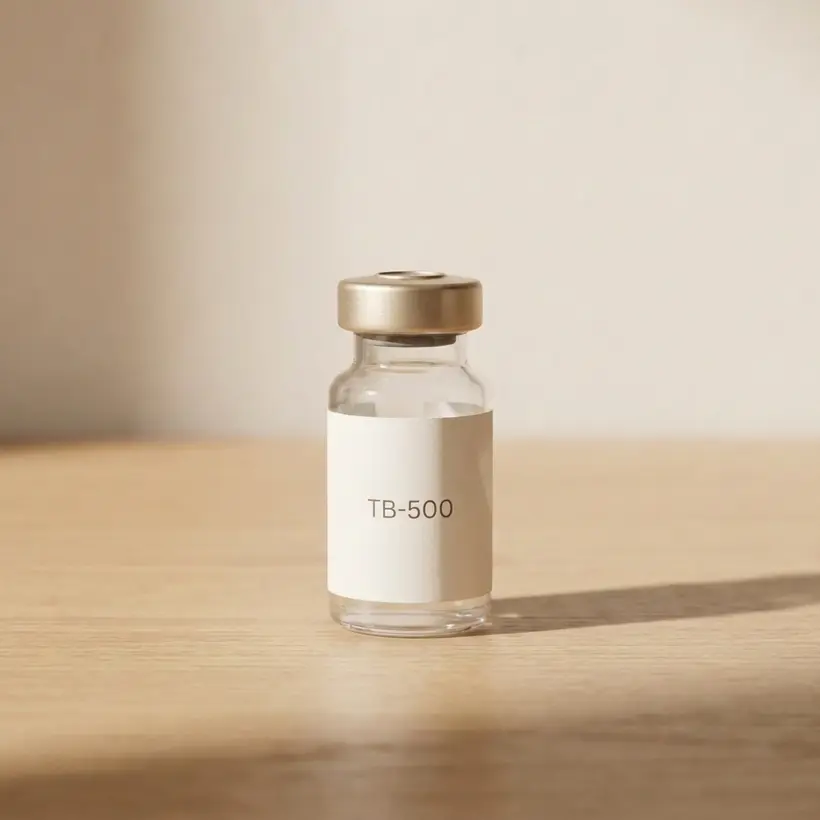
TB-500 (Thymosin Beta-4)

From the FormBlends catalog

TB-500 (Thymosin Beta-4)

Universal repair peptide for tissue regeneration · From $49/mo · compounded by a licensed 503A pharmacy, dispensed only after provider review.

Learn about TB-500 (Thymosin Beta-4) →
  • Light, occasional drinking (one to two drinks, once or twice a week): Unlikely to cause significant problems for most patients, though it may slightly slow your progress
  • Moderate drinking (three to four drinks, multiple times per week): Could meaningfully reduce the effectiveness of your TB-500 therapy
  • Heavy drinking (five or more drinks at a time, or daily consumption): Strongly discouraged during any medical treatment, including peptide therapy

If you're investing time and money in peptide therapy, it makes sense to give the treatment the best chance of working by keeping alcohol intake to a minimum.

Does Alcohol Affect TB-500 Absorption?

There's no direct evidence that alcohol impairs the absorption of subcutaneously injected TB-500. Once the peptide is injected under the skin, it enters the bloodstream through local capillaries, a process that isn't significantly affected by alcohol in your system.

But if you're dehydrated from drinking, your circulatory dynamics may be slightly altered, which could theoretically affect absorption rates. Staying hydrated is always good practice when using injectable peptides, and alcohol works against that goal.

Should You Avoid Alcohol on Injection Days?

Our physicians at FormBlends recommend avoiding alcohol on the day you administer your TB-500 injection, and ideally for 24 hours afterward. This isn't because of a dangerous interaction, but because:

  1. Alcohol can increase bruising and bleeding at the injection site due to its blood-thinning effects
  2. Both TB-500 and alcohol can cause lightheadedness in some people, and combining them may amplify this effect
  3. Nausea, a potential side effect of TB-500, may be worsened by alcohol consumption
  4. Giving your body a clean window around each injection supports optimal absorption and tissue response

Planning your injection days on the evenings or mornings when you know you won't be drinking is a simple way to work around this.

Does Alcohol Affect Sleep Quality During TB-500 Therapy?

Sleep is when your body does the majority of its repair work. Growth hormone release peaks during deep sleep, and tissue repair processes are most active during rest . Alcohol is well documented to disrupt sleep architecture, reducing the amount of time you spend in deep, restorative sleep stages.

If you're using TB-500 to recover from an injury, poor sleep directly undermines your recovery. Many patients find that their TB-500 results improve when they prioritize sleep hygiene, and cutting back on alcohol is one of the easiest ways to improve sleep quality.

What Do Our Physicians Recommend?

The key point from our clinical team is straightforward: you don't need to abstain completely from alcohol during TB-500 therapy, but less is better. If you can keep your intake to one or two drinks per week and avoid drinking on injection days, you're unlikely to see a significant impact on your results.

If you're using TB-500 for a specific injury or a time-sensitive recovery goal, consider cutting alcohol out entirely for the duration of your TB-500 cycle. A few weeks of reduced drinking is a small price to pay for better outcomes from your therapy.

Have questions about how your lifestyle fits with your peptide protocol? Our team at FormBlends is always available to provide personalized guidance based on your health goals and habits.

TB-500 (Thymosin Beta-4)

Ready when you are

TB-500 (Thymosin Beta-4)

Universal repair peptide for tissue regeneration · From $49/mo · compounded by a licensed 503A pharmacy, dispensed only after provider review.

Learn about TB-500 (Thymosin Beta-4) →
Browse the full catalog →

Evidence standard

How this page was source-checked

Editorial policy

FormBlends does not claim an individual clinician byline unless a named reviewer is available. For this page, the editorial team checks medical and regulatory claims against primary sources, clinical trials, public datasets, and regulator guidance.

PubMed evidence trail

Research sources used to frame this page

For TB-500 and Alcohol, FormBlends checks the page topic against primary trials, systematic reviews, guidelines, and current PubMed-indexed literature where available. These citations are context, not medical advice, proof of eligibility, or a claim that every study applies to every patient.

Peptide decision path

Move from research interest to supervised review

Direct answer

TB-500 and Alcohol should be evaluated through research status, legal access, source quality, safety context, and clinician oversight rather than a shortcut purchase decision.

Evidence check

Useful peptide pages should separate human data, animal research, mechanistic evidence, and marketing claims.

Safety check

Peptides can vary by legal status, compounding pathway, purity testing, patient history, and interaction risk.

Next step

If the topic still fits your goal after reading, the get-started flow should collect the clinical context needed for provider review.

FormBlends Editorial Context

Reviewed May 14, 2026

Can you drink alcohol while taking TB-500? Learn how alcohol may affect your peptide therapy results and what our physicians recommend. Before you use "TB-500 and Alcohol" to make a real decision, separate the headline answer from the details that could change it. The page connects patient education and clinical context with TB-500, inside a peptide therapy guide where research status, sourcing, compounding quality, dosing, and clinician oversight all need extra scrutiny. Because this article has 7 major sections, scan the headings first and then use the FAQ or summary sections to pressure-test the answer. Bring anything that changes dosing, pharmacy choice, cost, or safety to a licensed clinician.

  • Confirm whether the page is discussing an FDA-approved use, a compounded option, or research-only context.
  • Ask a licensed clinician how the evidence applies to your health history, medications, labs, and side-effect risk.
  • Check the latest label, trial update, pharmacy policy, or state rule when the article touches medication access.

Original tools and data

Use the FormBlends research stack

These assets are built to be useful beyond a single article: shareable data pages, calculators, provider comparisons, and safety checks that give Google and readers something original to crawl.

Editorial refresh

Practical 2026 note for TB

TB now carries extra 2026 context around BPC-157, safety signals, 500, alcohol, because those are the subtopics readers tend to compare before they trust a medical or wellness recommendation.

Instead of adding filler, this page keeps the named treatment terms, practical verification points, and next-step questions close to tb 500 and alcohol.

Readers should use the section to check current eligibility, pharmacy or provider policies, and safety questions with a licensed professional before acting.

TB custom 2026 image for peptide therapy on FormBlends

Custom 2026 image for TB, peptide therapy, and better treatment decision-making.

Image description: Unique image for this page covering TB, peptide therapy, safety, cost, provider selection, and patient decision-making.

Download the Peptide Quick Reference Card

A printable 2-page reference covering popular peptides, dosing ranges, stacking protocols, and storage.

Free download. We'll also send helpful GLP-1 guides to your inbox. Unsubscribe anytime.

Medical Disclaimer: This content is for informational purposes only and does not constitute medical advice. Always consult a qualified healthcare provider before starting, stopping, or changing any medication or treatment. FormBlends articles are source-checked against medical and regulatory references, but they are not a substitute for a personal medical consultation.

Written by Emily Rodriguez, RDN, CSSD

Registered Dietitian. This article was researched against primary regulatory, trial, prescribing, and manufacturer sources where available. Reviewed by FormBlends Medical Team for medical accuracy, sourcing, and patient-safety framing.

Ready to get started?

Provider-reviewed GLP-1 and peptide therapy, delivered to your door.

Start Your Consultation

Ready to Start Your Weight Loss Journey?

Get a free medical consultation with a licensed provider. Compounded GLP-1 medications starting at $99/month with free shipping.

Next Best Reads

Free Tools

Provider-informed calculators to support your weight loss journey.