Key Takeaway
Should you run TB-500 continuously, or should you cycle on and off? This is one of the most common questions people ask when starting peptide therapy.
Should you run TB-500 continuously, or should you cycle on and off? This is one of the most common questions people ask when starting peptide therapy. Understanding TB-500 cycling) the practice of taking planned breaks between protocol periods (helps you work with your provider to build a sustainable, long-term recovery strategy.
Key Takeaways: - Discover why cycling matters for peptide protocols - Common TB-500 Cycling Structures - Understand what to do during your off period - When to Start Another TB-500 Cycle
Most peptide protocols are designed with defined start and end points. TB-500 is no exception. Here's what current clinical practice and the available evidence suggest about structuring your protocol timeline.
Why Cycling Matters for Peptide Protocols
The concept of cycling isn't unique to peptides. Many medications and supplements work best when used in defined periods rather than continuously. There are several reasons why cycling makes sense for TB-500.
Receptor sensitivity. Your body's receptors can become less responsive to a stimulus over time) a phenomenon known as desensitization or downregulation. While this hasn't been extensively studied specifically for TB-500 receptors, the principle is well-established in pharmacology. Taking breaks may help maintain your body's responsiveness to the peptide.
Allowing natural processes to catch up. TB-500 supports repair by promoting cell migration, blood vessel formation, and inflammation modulation. But the actual tissue remodeling (rebuilding collagen, strengthening new connections, maturing new blood vessels) takes time. A break period allows your body to consolidate the gains made during active dosing.
Cost management. Peptide therapy is an investment. Cycling allows you to use TB-500 strategically during periods of highest need (post-injury, heavy training blocks, post-surgery) and take breaks during lower-demand periods. This makes long-term use more financially sustainable.
"What makes tirzepatide particularly interesting is the dual GIP/GLP-1 mechanism. We're seeing that GIP receptor activation appears to amplify the metabolic effects in ways we didn't fully anticipate from the preclinical data.", Dr. Ania Jastreboff, MD, PhD, Yale School of Medicine, lead author of SURMOUNT-1[1]
Safety considerations. While TB-500's safety profile is generally favorable, long-term continuous use of any peptide has limited data. Cycling provides a conservative approach that reduces total exposure while still delivering therapeutic benefit during active periods.
Your provider will determine whether cycling is appropriate for your situation and design the schedule accordingly.
Common TB-500 Cycling Structures
There's no single "correct" cycling schedule for TB-500. Providers tailor the approach based on individual factors. But several common structures have emerged from clinical practice.

The standard 12-week cycle. This is the most common approach. It includes a 4-6 week loading phase (higher doses, typically twice weekly), followed by a 4-6 week maintenance phase (lower doses, typically once weekly), then a 4-8 week off period before considering another cycle.
The injury-specific cycle. Some providers prescribe TB-500 specifically for the duration of an injury recovery timeline, then discontinue once healing goals are met. For example, a provider might prescribe a 10-week protocol aligned with a tendon injury rehabilitation program, with no immediate plan to cycle back on.
Free Download: Peptide Protocol Planner (12-Week) Map your entire cycle (loading phase, maintenance phase, and off periods) with built-in tracking for recovery metrics. Get yours free (we'll email it to you instantly. [Download Your Free Protocol Planner]
The training-aligned cycle. Athletes sometimes align TB-500 cycles with their training periodization. They run TB-500 during heavy training blocks when recovery demand is highest, then take breaks during deload periods or off-seasons. This strategic timing maximizes the peptide's utility.
The stacking cycle. When TB-500 is combined with in a , cycling becomes more nuanced. Some providers run both peptides simultaneously and cycle them together. Others stagger them) running TB-500 first, then BPC-157, then taking a break from both. Your provider will design the cycle based on your specific needs.
The key takeaway is that cycling should be intentional and provider-guided, not arbitrary. Random on-off patterns without clinical rationale may reduce effectiveness.
What to Do During Your Off Period
The break between TB-500 cycles isn't dead time. It's an opportunity to support your recovery through other means.
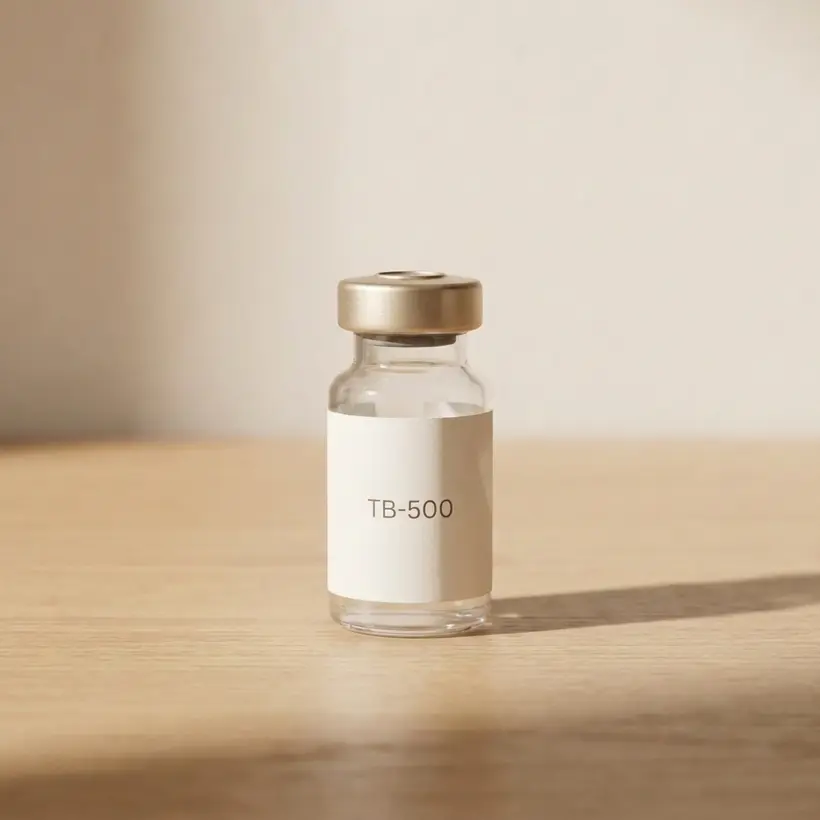
From the FormBlends catalog
TB-500 (Thymosin Beta-4)
Universal repair peptide for tissue regeneration · From $49/mo · compounded by a licensed 503A pharmacy, dispensed only after provider review.
Learn about TB-500 (Thymosin Beta-4) →Maintain your rehabilitation program. If you started physical therapy or exercise rehabilitation during your TB-500 cycle, continue it during the off period. The tissue adaptations from exercise don't stop when the peptide does. In fact, this is when your body consolidates the structural improvements.
Focus on nutrition. Your body needs building materials to continue the repair processes initiated during your TB-500 cycle. Prioritize protein intake (aim for 0.7 to 1 gram per pound of body weight), vitamin C for collagen synthesis, and anti-inflammatory foods. Our offers practical strategies.
Track your progress. The off period is a valuable time to assess how much your body has improved. Are your pain levels lower than before the cycle? Is your range of motion better? Can you do more physically? Use the to log these metrics. If improvements plateau or regress during the off period, this data helps your provider decide whether another cycle is warranted.
Sleep and stress management remain important. Growth hormone (critical for tissue repair) is released primarily during deep sleep. Chronic stress improves cortisol, which can impair healing. These fundamentals matter year-round, not just during active peptide use.
Communicate with your provider. If you notice that symptoms return or worsen during the off period, reach out. This information helps your provider fine-tune the timing and duration of future cycles.
When to Start Another TB-500 Cycle
The decision to begin a new cycle should be based on clinical need, not just a calendar schedule. Here are factors your provider will consider.
Symptom return. If the improvements you gained during your first cycle start fading during the off period, this may indicate that another cycle could help consolidate those gains. Document when and how symptoms return so your provider has clear data.
New injury or increased demand. A new injury, upcoming surgery, or a major ramp-up in training intensity are all legitimate reasons to consider another TB-500 cycle. The peptide is most useful when your recovery demands exceed what your body can handle on its own.
Lab work and health check. Some providers request blood work or other assessments before starting a new cycle. This helps ensure there are no emerging health concerns and that your body is ready for another protocol period.
Adequate off-period duration. Most providers recommend at least 4 weeks off between cycles, with some preferring 6-8 weeks. Shorter breaks may not allow sufficient time for receptor re-sensitization and natural healing consolidation.
Your goals have evolved. Maybe your first cycle focused on a shoulder injury, but now you want to address knee concerns. Your provider may design the next cycle differently (adjusting doses, frequency, or combining with other peptides) based on your current priorities.
Never self-prescribe additional cycles. Your provider's input ensures each cycle is purposeful and safe. Use the when preparing for a new cycle to ensure accurate dosing.
Frequently Asked Questions
How long should I cycle off TB-500?
Most providers recommend 4 to 8 weeks between TB-500 cycles. The exact duration depends on your individual response, the length of your previous cycle, and your current recovery needs. Your provider will determine the appropriate off-period for your situation.
Can I use TB-500 indefinitely without breaks?
Continuous long-term use is generally not recommended. While TB-500 has a favorable safety profile, cycling provides potential benefits including maintained receptor sensitivity, cost management, and reduced total exposure. Work with your provider to design a cycling schedule that meets your needs.
Will my progress reverse when I stop TB-500?
The tissue repair and remodeling that occurred during your TB-500 cycle doesn't simply vanish when you stop. But if the underlying cause of your injury is still present (like repetitive overuse or biomechanical issues) symptoms may gradually return. Address root causes through rehabilitation, lifestyle changes, and provider guidance during and between cycles.
How many TB-500 cycles can I do?
There's no fixed maximum number of cycles. The decision depends on clinical need, your response to previous cycles, and your provider's assessment. Some people achieve their recovery goals in one or two cycles. Others with chronic conditions may benefit from periodic cycles over a longer timeframe. Each cycle should be justified by clinical need.
Should I cycle TB-500 and BPC-157 at the same time?
This depends on your provider's protocol design. Some providers cycle both peptides together (running them simultaneously during the active period and stopping both during the off period. Others stagger them for extended coverage. There's no universal "best" approach) it depends on your specific recovery goals and health profile.
Start your goals Today
Every transformation starts with a single step. Talk to a licensed FormBlends provider about whether this approach is right for you, consultations are free and confidential.
Medical References
- Jastreboff AM, Aronne LJ, Ahmad NN, et al. Tirzepatide Once Weekly for the Treatment of Obesity. N Engl J Med. 2022;387(3):205-216. [PubMed | ClinicalTrials.gov | DOI]
Sources &. References
- Bock-Marquette I, Saxena A, White MD, et al. Thymosin beta4 activates integrin-linked kinase and promotes cardiac cell migration, survival and cardiac repair. Nature. 2004;432(7016):466-472. Doi:10.1038/nature03000
- Malinda KM, Sidhu GS, Mani H, et al. Thymosin beta4 accelerates wound healing. J Invest Dermatol. 1999;113(3):364-368. Doi:10.1046/j.1523-1747.1999.00708.x
This article is for educational purposes only and doesn't constitute medical advice. Always consult with a licensed healthcare provider before starting, changing, or stopping any medication or supplement. FormBlends connects you with licensed providers who can evaluate your individual health needs.
Last updated: 2026-03-24
Ready when you are
TB-500 (Thymosin Beta-4)
Universal repair peptide for tissue regeneration · From $49/mo · compounded by a licensed 503A pharmacy, dispensed only after provider review.
Learn about TB-500 (Thymosin Beta-4) →