Key Takeaway
Tendons and ligaments are notoriously slow healers. Unlike muscles, which have rich blood supplies and can recover in days or weeks, tendons and ligaments have limited blood flow. This means fewer repair cells, less oxygen, and longer recovery timelines.
Tendons and ligaments are notoriously slow healers. Unlike muscles, which have rich blood supplies and can recover in days or weeks, tendons and ligaments have limited blood flow. This means fewer repair cells, less oxygen, and longer recovery timelines. If you're dealing with a tendon or ligament issue, you know the frustration of slow progress. That's why TB-500 tendon healing has become such a hot topic in the recovery community.
Key Takeaways: - Discover why tendons and ligaments heal so slowly - Learn how tb-500 may support connective tissue recovery - Common Tendon and Ligament Conditions and TB-500 - Rehabilitation and TB-500: A Combined Approach
TB-500 is a synthetic form of Thymosin Beta-4, a peptide your body naturally produces. Its role in cell migration, blood vessel formation, and inflammation control may make it particularly relevant for connective tissue injuries. Here's what you should know.
Why Tendons and Ligaments Heal So Slowly
Knowing why these tissues struggle to heal helps explain why TB-500 may be relevant.
Tendons connect muscles to bones. Ligaments connect bones to bones. Both are made primarily of collagen) specifically type I collagen arranged in dense, parallel fibers. This structure gives them tremendous tensile strength but comes at a cost: limited cellularity and blood supply.
Low blood flow is the primary bottleneck. Muscles are packed with blood vessels. Tendons have far fewer. Some areas (like the mid-portion of the Achilles tendon or the supraspinatus tendon in the shoulder) are particularly poorly vascularized. This means repair cells, oxygen, and nutrients reach injured tendons at a fraction of the rate they reach injured muscles.
"The key to successful GLP-1 therapy is setting realistic expectations and supporting patients through the titration phase. The side effects are manageable for most people, but they need to know what to expect.", Dr. Caroline Apovian, MD, Harvard Medical School
Collagen turnover is inherently slow. Tendon collagen has a half-life measured in months to years, not days. When a tendon is damaged, rebuilding the collagen matrix takes time. The initial repair tissue is often weaker and more disorganized than the original structure.
Inflammation can become chronic. Because healing is slow, the inflammatory response in tendons can persist far longer than in other tissues. Chronic inflammation in tendons (sometimes called tendinopathy) can actually impair healing rather than promote it.
This is where TB-500's mechanisms become interesting. Its ability to promote angiogenesis (new blood vessel formation), enhance cell migration, and modulate inflammation addresses several of the exact bottlenecks that make tendon healing so difficult.
How TB-500 May Support Connective Tissue Recovery
The biological mechanisms of Thymosin Beta-4 have direct relevance to tendon and ligament healing.
View data table
| Category | Clinical Interest Score | Detail |
|---|---|---|
| BPC-157 | 88 | Tissue repair and gut healing |
| TB-500 | 82 | Injury recovery |
| Sermorelin | 78 | Growth hormone support |
| Ipamorelin | 75 | Anti-aging and recovery |
| GHK-Cu | 70 | Skin and tissue repair |
Angiogenesis (building new blood supply. Preclinical research has demonstrated that TB4 promotes the formation of new blood vessels. For tendons with limited vascular supply, this could be significant. More blood vessels mean more repair resources reaching the injury site. Published studies in the Annals of the New York Academy of Sciences have documented this angiogenic effect across multiple tissue types.
Cell migration) getting repair cells where they're needed. TB-500 upregulates actin, a protein important for cell movement. Tendon repair depends on fibroblasts (the cells responsible for producing new collagen) migrating to the injury site. Faster cell migration may translate to faster initiation of the repair process.
Free Download: Peptide Protocol Planner (12-Week) Track your tendon recovery milestones, log pain levels, and map your TB-500 protocol week by week. Get yours free (we'll email it to you instantly. [Download Your Free Protocol Planner]
Anti-fibrotic effects) better quality repair. One of the challenges with tendon healing is that the repair tissue can be disorganized and weaker than the original. Research on TB4 suggests it may promote organized tissue remodeling rather than excessive scar formation. This could mean better functional outcomes after tendon injuries.
Inflammation modulation (breaking the chronic cycle. For tendinopathies where chronic inflammation is part of the problem, TB-500's ability to modulate inflammatory cytokines may help shift the tissue environment from a state of ongoing damage to one of active repair.
Has been specifically studied for tendon healing as well. Some providers prescribe both peptides together) a combination known as the , to take advantage of complementary mechanisms for connective tissue recovery.
Common Tendon and Ligament Conditions and TB-500
Different connective tissue injuries have different characteristics. Here's how providers think about TB-500 in the context of specific conditions.
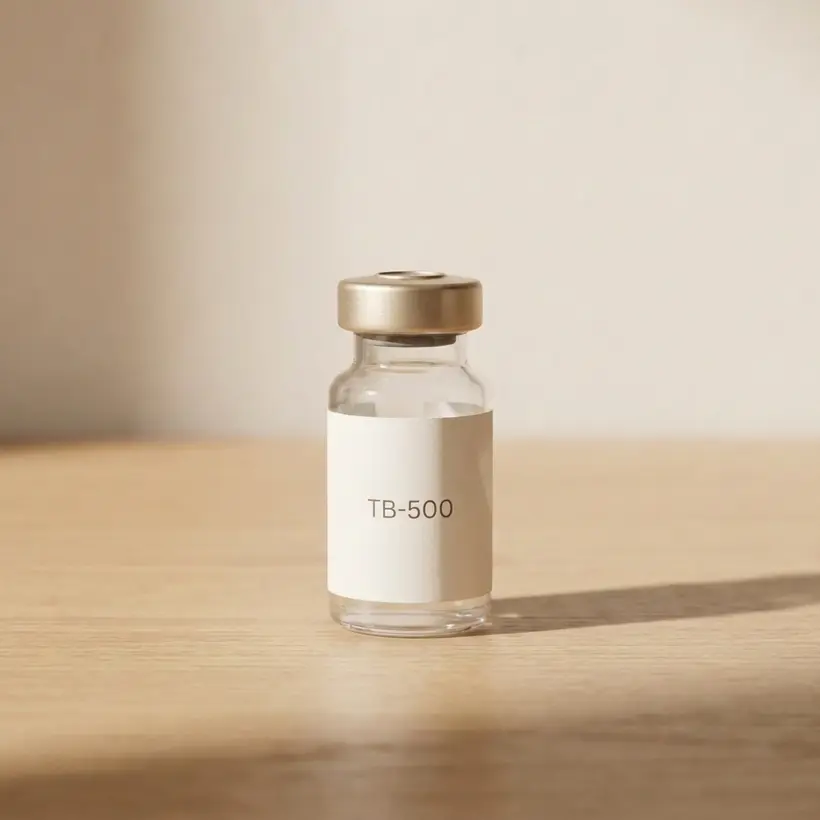
From the FormBlends catalog
TB-500 (Thymosin Beta-4)
Universal repair peptide for tissue regeneration · From $49/mo · compounded by a licensed 503A pharmacy, dispensed only after provider review.
Learn about TB-500 (Thymosin Beta-4) →Achilles tendinopathy. The Achilles is the body's largest tendon and one of the most commonly injured. Its mid-portion is notoriously avascular. TB-500's angiogenic properties may be particularly relevant here, as improving blood supply to this region addresses a fundamental healing limitation.
Rotator cuff tendinopathy. Shoulder tendons (particularly the supraspinatus) degenerate with age and are prone to chronic overuse injury. Some providers include TB-500 in rotator cuff recovery protocols, especially for patients who want to explore options before considering surgical intervention.
Tennis elbow and golfer's elbow. These conditions involve chronic inflammation and degeneration of the forearm tendons at the elbow. Because they're overuse injuries driven by repetitive stress, TB-500's anti-inflammatory and tissue-remodeling properties may support the recovery process alongside activity modification and rehabilitation.
Plantar fasciitis. While technically involving the plantar fascia rather than a true tendon, this common foot condition shares many biological features with tendinopathy. Chronic inflammation, poor blood supply to the fascia, and slow healing are hallmarks that align with TB-500's mechanisms.
Ligament sprains. Ankle sprains, knee ligament injuries, and other ligament damage involve similar biological challenges (limited blood supply and slow collagen repair. Some providers include TB-500 in post-sprain recovery protocols, particularly for grade I and grade II sprains managed conservatively.
For any of these conditions, proper diagnosis comes first. Imaging (ultrasound or MRI) may be necessary to understand the extent of damage. Your provider will factor this into their treatment recommendations.
Rehabilitation and TB-500: A Combined Approach
TB-500 alone won't heal a damaged tendon. Rehabilitation is important, and the two approaches may work together.
Eccentric loading exercises are the gold standard for tendinopathy rehabilitation. These exercises stress the tendon in a controlled way that promotes collagen remodeling. TB-500 may support this process by providing the biological environment) cell migration, blood supply, inflammation control (that makes rehabilitation more effective.
Progressive loading matters. Your physical therapist or provider will guide you through a gradual increase in stress on the healing tissue. Too much too soon causes re-injury. Too little doesn't stimulate adequate repair. The can help you track both your exercise progression and your peptide protocol side by side.
Nutrition for collagen synthesis shouldn't be overlooked. Vitamin C, proline, glycine, and adequate protein are building blocks for collagen production. Your body needs these raw materials to convert the repair stimulus from TB-500 and exercise into actual tissue. Our covers dietary strategies that support recovery.
Patience is non-negotiable. Even with optimal rehabilitation and peptide support, tendon healing takes weeks to months. Set realistic expectations. Measure progress in trends, not daily snapshots. Track range of motion, pain levels, and functional capacity over time to see the bigger picture.
Frequently Asked Questions
Can TB-500 heal a torn tendon?
TB-500 may support the healing process for partial tendon tears by promoting cell migration, blood vessel formation, and tissue remodeling. But complete tendon ruptures often require surgical repair. TB-500 is a supportive tool, not a replacement for surgical intervention when it's medically indicated. Your provider will determine the appropriate approach based on imaging and clinical evaluation.
How long does TB-500 take to help tendon injuries?
Tendon healing is inherently slow, and TB-500 doesn't change this fundamental biology. Most people report gradual improvements over 4 to 8 weeks, with continued progress through a full 12-week protocol. Complete resolution of tendon issues may take several months, even with peptide support.
Should I use TB-500 or BPC-157 for tendon healing?
Both peptides have mechanisms relevant to tendon healing. BPC-157 has more preclinical research specifically on tendon repair, while TB-500 offers broader systemic support. Many providers prescribe both together for thorough connective tissue recovery. Your provider can recommend the best approach for your specific injury.
Can I exercise with a tendon injury while taking TB-500?
Appropriate exercise is actually beneficial for tendon healing) it stimulates collagen remodeling and strengthens the repair tissue. But the type and intensity of exercise matters enormously. Work with your provider or physical therapist to design a rehabilitation program that progresses safely alongside your TB-500 protocol.
Is TB-500 effective for chronic tendinopathy?
Chronic tendinopathy involves long-standing tissue degeneration and failed healing responses. TB-500's mechanisms (angiogenesis, inflammation modulation, and cell migration) address several factors that contribute to chronicity. But chronic conditions are inherently harder to treat than acute injuries. Set realistic expectations and work closely with your provider.
What's Your Next Move?
You have the information. Now let a licensed provider help you put it into action. FormBlends makes it simple, answer a few questions and get a personalized recommendation.
Medical References
- Goldstein AL, Hannappel E, Sosne G, Kleinman HK. Thymosin beta4: a multi-functional regenerative peptide. Basic properties and clinical applications. Expert Opin Biol Ther. 2012;12(1):37-51. [PubMed | DOI]
Sources &. References
- Bock-Marquette I, Saxena A, White MD, et al. Thymosin beta4 activates integrin-linked kinase and promotes cardiac cell migration, survival and cardiac repair. Nature. 2004;432(7016):466-472. Doi:10.1038/nature03000
- Malinda KM, Sidhu GS, Mani H, et al. Thymosin beta4 accelerates wound healing. J Invest Dermatol. 1999;113(3):364-368. Doi:10.1046/j.1523-1747.1999.00708.x
This article is for educational purposes only and doesn't constitute medical advice. Always consult with a licensed healthcare provider before starting, changing, or stopping any medication or supplement. FormBlends connects you with licensed providers who can evaluate your individual health needs.
Last updated: 2026-03-24
Ready when you are
TB-500 (Thymosin Beta-4)
Universal repair peptide for tissue regeneration · From $49/mo · compounded by a licensed 503A pharmacy, dispensed only after provider review.
Learn about TB-500 (Thymosin Beta-4) →