Key Takeaway
TB-500 vs CJC-1295 compared head to head. Discover which peptide is better for healing, growth hormone release, or recovery goals.
&bull. FormBlends
TB-500 is better for direct tissue healing, wound repair, and injury recovery, while CJC-1295 is better for sustained growth hormone elevation, body composition, and anti-aging. TB-500 works at the cellular level to promote cell migration and tissue remodeling. CJC-1295 is a modified growth hormone-releasing hormone (GHRH) analog designed to provide long-lasting stimulation of natural growth hormone production from the pituitary gland.
What Is TB-500?
TB-500 is a synthetic peptide derived from the active region of thymosin beta-4 (TB4), a 43-amino acid protein involved in cell migration, wound healing, and tissue repair. TB-500 upregulates actin, a cell-building protein that allows cells to move to damaged areas more quickly. It also promotes angiogenesis and reduces inflammatory markers.
Originally used extensively in equine veterinary medicine, TB-500 has gained attention in the peptide research community for its broad healing capabilities across tendons, muscles, ligaments, and cardiac tissue.
What Is CJC-1295?
CJC-1295 is a synthetic GHRH analog consisting of 30 amino acids. It exists in two forms: CJC-1295 with DAC (Drug Affinity Complex) and CJC-1295 without DAC (also called Modified GRF 1-29). The DAC version binds to albumin in the blood, extending its half-life to approximately 6 to 8 days. The no-DAC version has a shorter half-life of about 30 minutes.
View data table
| Category | Clinical Interest Score | Detail |
|---|---|---|
| BPC-157 | 88 | Tissue repair and gut healing |
| TB-500 | 82 | Injury recovery |
| Sermorelin | 78 | Growth hormone support |
| Ipamorelin | 75 | Anti-aging and recovery |
| GHK-Cu | 70 | Skin and tissue repair |

CJC-1295 stimulates the pituitary gland to release growth hormone in a sustained manner. It's frequently paired with growth hormone-releasing peptides (GHRPs) like Ipamorelin for combined effects.
TB-500 vs CJC-1295: Head-to-Head Comparison
| Feature | TB-500 | CJC-1295 |
|---|---|---|
| Primary Function | Tissue healing and repair | Sustained growth hormone release |
| Peptide Class | Thymosin derivative | GHRH analog |
| Key Mechanism | Actin upregulation, cell migration | Pituitary GH stimulation |
| Best For | Injury recovery, inflammation | GH improvement, muscle growth, fat loss |
| Administration | Subcutaneous injection | Subcutaneous injection |
| Typical Dosage | 2-5 mg twice weekly Contact provider for current pricing | 1-2 mg weekly (with DAC) or 100 mcg 2-3x daily (no DAC) Contact provider for current pricing |
| Half-Life | Moderate | 6-8 days (with DAC), ~30 min (without DAC) |
| Often Stacked With | BPC-157 | Ipamorelin |
| Research Level | Preclinical and veterinary | Human clinical trials |
| FDA Status | Not FDA-approved | Not FDA-approved |
Benefits of TB-500
- Direct tissue repair: Promotes cell migration to injury sites for faster healing of muscles, tendons, and ligaments.
- Inflammation reduction: Decreases inflammatory markers at injury sites and systemically.
- Improved joint mobility: Reduces stiffness and supports range of motion in damaged joints.
- Cardiac tissue support: Research suggests potential for heart tissue repair after damage.
- Versatile healing: Effective across multiple tissue types including skin, muscle, tendon, and nerve.
Benefits of CJC-1295
- Sustained GH elevation: The DAC version provides consistent growth hormone elevation for days, mimicking a more natural pattern.
- Improved body composition: improved GH supports fat loss and lean muscle development.
- Enhanced recovery: Higher GH levels accelerate recovery from exercise and physical stress.
- Better sleep: GH stimulation timed at night can improve sleep depth and quality.
- combined effect with GHRPs: CJC-1295 is highly effective when combined with Ipamorelin, producing amplified GH release.
When to Choose TB-500
TB-500 is the right choice when direct tissue repair is the priority:
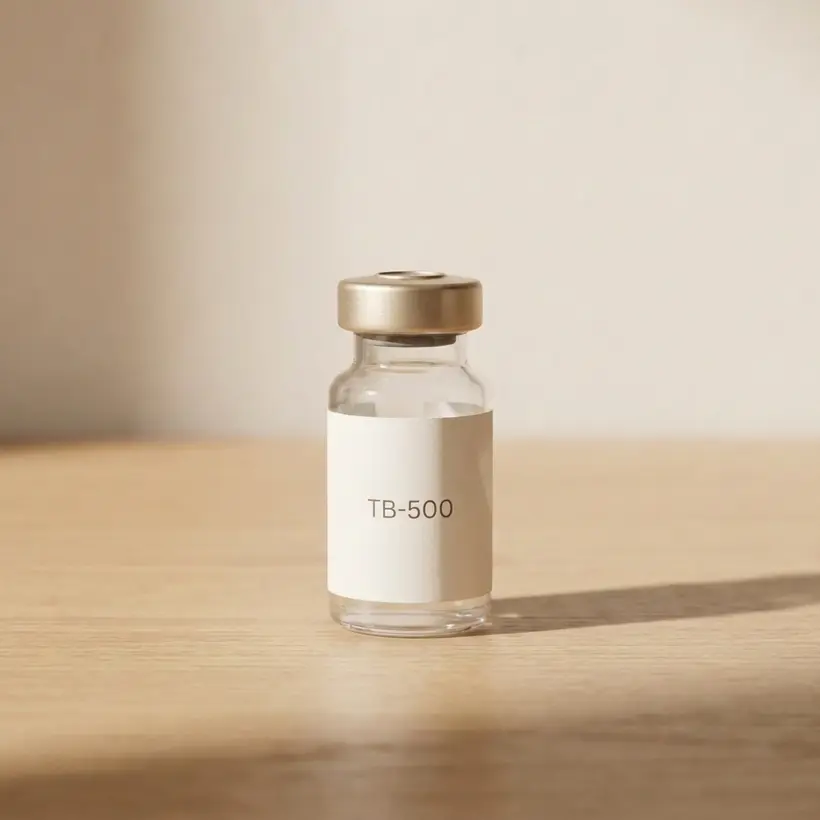
From the FormBlends catalog
TB-500 (Thymosin Beta-4)
Universal repair peptide for tissue regeneration · From $49/mo · compounded by a licensed 503A pharmacy, dispensed only after provider review.
Learn about TB-500 (Thymosin Beta-4) →- Acute sports injuries or chronic overuse injuries
- Slow-healing wounds or post-surgical recovery
- Joint stiffness and flexibility issues
- Chronic inflammation from tissue damage
TB-500 benefits
When to Choose CJC-1295
CJC-1295 is the right choice when growth hormone improvement is the goal:
- Age-related GH decline
- Fat loss and body recomposition
- General recovery and physical performance
- Anti-aging protocols
CJC-1295 benefits
Can You Stack TB-500 and CJC-1295?
Yes, TB-500 and CJC-1295 target different pathways and can be complementary. TB-500 provides direct tissue repair while CJC-1295 improves growth hormone to support overall recovery and regeneration. This combination is popular among athletes and individuals recovering from significant injuries. As with any peptide stack, medical supervision is strongly recommended.
Side Effects and Safety
TB-500 side effects: Generally well-tolerated. Reported effects include injection site irritation, temporary lethargy, and lightheadedness. Theoretical concerns about tumor promotion exist but haven't been confirmed in research.
CJC-1295 side effects: Common side effects include water retention, flushing, tingling or numbness, and injection site reactions. The DAC version may cause prolonged GH elevation that could lead to side effects associated with excess GH if not dosed properly.
Frequently Asked Questions
What is the difference between CJC-1295 with DAC and without DAC?
CJC-1295 with DAC (Drug Affinity Complex) has a much longer half-life of 6 to 8 days because the DAC binds to albumin in the blood. CJC-1295 without DAC (Modified GRF 1-29) has a half-life of about 30 minutes and produces shorter, more pulsatile GH releases. The no-DAC version is often preferred for more natural GH pulsatility.
Is TB-500 or CJC-1295 better for athletes?
It depends on the athlete's needs. TB-500 is better for recovering from specific injuries. CJC-1295 is better for general performance enhancement, body composition, and overall recovery capacity. Many athletes use both for thorough support.
Does CJC-1295 help with injury healing?
Indirectly, yes. Growth hormone supports tissue repair and regeneration. But CJC-1295 doesn't target specific injury sites the way TB-500 does. For focused healing, TB-500 is the more effective choice.
How quickly does TB-500 work compared to CJC-1295?
TB-500 can produce noticeable healing effects within 1 to 3 weeks. CJC-1295 typically requires 4 to 12 weeks for body composition changes to become visible, though improvements in sleep and recovery may be noticed sooner.
Are TB-500 and CJC-1295 banned in sports?
Both TB-500 and CJC-1295 are prohibited by the World Anti-Doping Agency (WADA). TB-500 falls under the category of prohibited growth factors, and CJC-1295 is classified as a prohibited GH secretagogue. Competitive athletes should be aware of testing implications.
Medical References
- Goldstein AL, Hannappel E, Sosne G, Kleinman HK. Thymosin beta4: a multi-functional regenerative peptide. Basic properties and clinical applications. Expert Opin Biol Ther. 2012;12(1):37-51. [PubMed | DOI]
Key Points
TB-500 and CJC-1295 serve different primary purposes. TB-500 excels at direct tissue repair and injury healing. CJC-1295 excels at sustained growth hormone elevation for body composition, recovery, and anti-aging. They can work well together as part of a thorough protocol, but the choice between them depends on whether your immediate need is healing a specific injury or improving growth hormone levels. Consult a healthcare provider before starting either peptide.
Peptide comparison guide
Ready when you are
TB-500 (Thymosin Beta-4)
Universal repair peptide for tissue regeneration · From $49/mo · compounded by a licensed 503A pharmacy, dispensed only after provider review.
Learn about TB-500 (Thymosin Beta-4) →