Key Takeaway
TB-500 vs Ipamorelin compared side by side. Learn which peptide is better for healing, growth hormone stimulation, or recovery.
&bull. FormBlends
TB-500 is better for direct tissue healing and injury recovery, while Ipamorelin is better for selective growth hormone stimulation with minimal side effects. TB-500 repairs damaged tissue by promoting cell migration and reducing inflammation. Ipamorelin is a growth hormone-releasing peptide (GHRP) that selectively triggers growth hormone release from the pituitary without significantly raising cortisol or prolactin, making it one of the cleanest GH secretagogues available.
What Is TB-500?
TB-500 is a synthetic peptide based on the active healing region of thymosin beta-4, a naturally occurring protein involved in cell migration, tissue repair, and wound healing. It works by upregulating actin, enabling cells to move to injury sites faster, and by promoting angiogenesis and reducing inflammation.
TB-500 has been used extensively in equine medicine and has a strong track record in veterinary applications for healing injuries in racehorses. Its broad tissue-repair capabilities have made it popular in the peptide research community.
What Is Ipamorelin?
Ipamorelin is a pentapeptide (five amino acids) that acts as a selective growth hormone secretagogue. It binds to the ghrelin receptor (GHS-R) on the pituitary gland to stimulate growth hormone release. What sets Ipamorelin apart from other GHRPs like GHRP-6 or GHRP-2 is its selectivity: it stimulates GH release without significantly increasing cortisol, prolactin, or appetite.
View data table
| Category | Clinical Interest Score | Detail |
|---|---|---|
| BPC-157 | 88 | Tissue repair and gut healing |
| TB-500 | 82 | Injury recovery |
| Sermorelin | 78 | Growth hormone support |
| Ipamorelin | 75 | Anti-aging and recovery |
| GHK-Cu | 70 | Skin and tissue repair |
This clean side effect profile has made Ipamorelin one of the most popular growth hormone-releasing peptides for both clinical and research applications. It's frequently combined with CJC-1295 (without DAC) for combined GH release.
TB-500 vs Ipamorelin: Head-to-Head Comparison
| Feature | TB-500 | Ipamorelin |
|---|---|---|
| Primary Function | Tissue healing and repair | Selective growth hormone release |
| Peptide Class | Thymosin derivative | Growth hormone secretagogue (GHRP) |
| Key Mechanism | Actin upregulation, cell migration | Ghrelin receptor activation on pituitary |
| Best For | Injury recovery, inflammation | GH improvement with minimal side effects |
| Cortisol Impact | Reduces inflammation markers | Minimal cortisol increase |
| Administration | Subcutaneous injection | Subcutaneous injection |
| Typical Dosage | 2-5 mg twice weekly Contact provider for current pricing | 200-300 mcg 2-3x daily Contact provider for current pricing |
| Appetite Increase | No | Minimal (unlike GHRP-6) |
| Often Stacked With | BPC-157 | CJC-1295 (no DAC) |
| Research Level | Preclinical and veterinary | Human clinical studies |
Benefits of TB-500
- Targeted tissue repair: Promotes cell migration and healing at specific injury sites across muscles, tendons, and ligaments.
- Anti-inflammatory: Reduces inflammation systemically and locally at injury sites.
- Improved flexibility: Helps restore range of motion in damaged or stiff joints.
- Cardiac tissue support: Animal research shows potential benefits for heart tissue repair.
- Systemic healing: Unlike localized treatments, TB-500 can reach and support healing throughout the body.
Benefits of Ipamorelin
- Clean GH stimulation: Ipamorelin releases GH without spiking cortisol, prolactin, or aldosterone.
- Improved body composition: GH elevation supports fat loss and lean mass gains.
- Better sleep: GH release timed at night enhances deep sleep quality.
- Enhanced recovery: improved GH accelerates recovery from training and physical stress.
- Anti-aging support: Addresses the natural decline in GH that begins in the 30s.
- Minimal appetite stimulation: Unlike GHRP-6, Ipamorelin doesn't cause significant hunger increases.
When to Choose TB-500
TB-500 is the right choice for direct healing needs:
From the FormBlends catalog
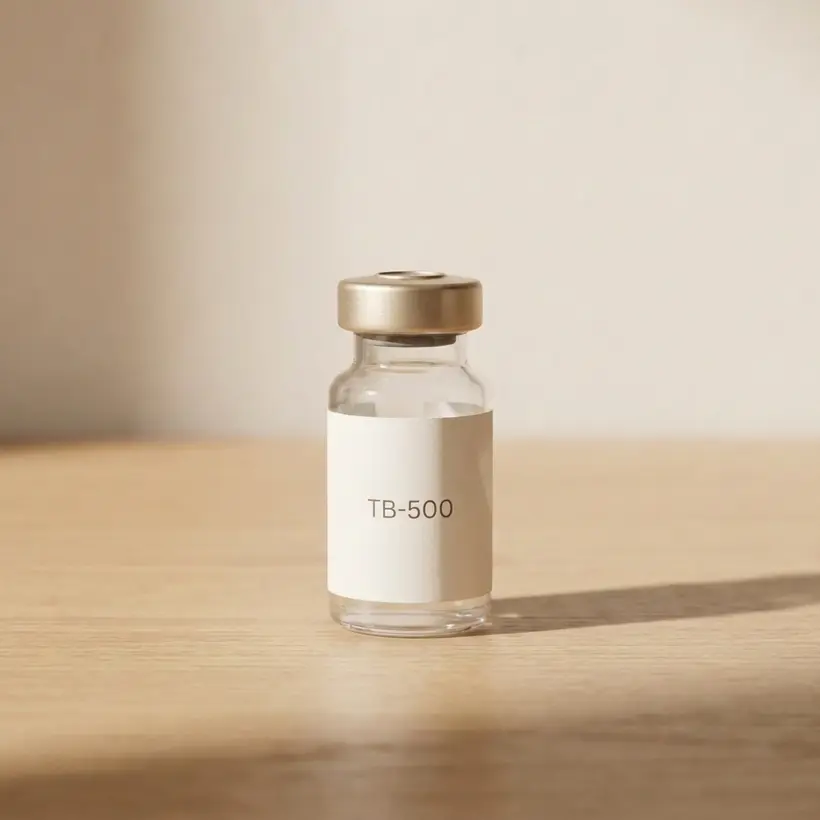
TB-500 (Thymosin Beta-4)
Universal repair peptide for tissue regeneration · From $49/mo · compounded by a licensed 503A pharmacy, dispensed only after provider review.
Learn about TB-500 (Thymosin Beta-4) →- Active injuries to muscles, tendons, or ligaments
- Chronic injuries not responding to conventional treatments
- Post-surgical healing support
- Reduced joint mobility from tissue damage
TB-500 benefits
When to Choose Ipamorelin
Ipamorelin is the right choice for growth hormone improvement with a clean side effect profile:
- Age-related growth hormone decline
- Body recomposition (fat loss and muscle gain)
- Improved sleep and recovery
- First-time GH peptide users wanting minimal side effects
Ipamorelin benefits
Can You Stack TB-500 and Ipamorelin?
TB-500 and Ipamorelin complement each other well. TB-500 handles direct tissue repair while Ipamorelin improves growth hormone to support overall recovery and regeneration. This combination is popular among those recovering from injuries who also want the body composition and recovery benefits of improved GH. Medical supervision is recommended for any stacking protocol.
Side Effects and Safety
TB-500 side effects: Generally well-tolerated. Reported effects include injection site irritation, temporary fatigue, and lightheadedness. No confirmed link to tumor growth despite theoretical concerns.
Ipamorelin side effects: One of the best-tolerated GHRPs. Possible side effects include water retention, mild headaches, and injection site reactions. Its selectivity means it avoids the cortisol and prolactin elevations seen with other GHRPs.
Frequently Asked Questions
Why is Ipamorelin considered the safest GHRP?
Ipamorelin is considered the safest GHRP because it selectively stimulates growth hormone release without significantly affecting cortisol, prolactin, or aldosterone levels. Other GHRPs like GHRP-6 and GHRP-2 can raise these hormones, leading to unwanted side effects like increased appetite, water retention, and stress hormone elevation.
Can Ipamorelin heal injuries like TB-500?
Ipamorelin supports general healing through improved growth hormone levels, but it doesn't directly target injury sites the way TB-500 does. For focused injury repair, TB-500 is significantly more effective. Ipamorelin is better suited for overall recovery enhancement.
When is the best time to take Ipamorelin?
Ipamorelin is most commonly taken before bed on an empty stomach to complement the body's natural nighttime GH pulse. Some protocols include additional doses in the morning or post-workout. Timing on an empty stomach is important because food, particularly fats and carbohydrates, can blunt the GH response.
How long can you use TB-500?
TB-500 is typically used in a loading phase of 4 to 6 weeks with twice-weekly injections, followed by a maintenance phase at reduced frequency. Most users stop once healing is complete. Extended protocols should be discussed with a healthcare provider.
Does Ipamorelin cause water retention?
Mild water retention is possible with Ipamorelin, as with any peptide that improves growth hormone. But the degree of water retention is typically less than what is seen with direct GH injection or other GHRPs. It usually resolves after the body adjusts or when dosing is improved.
Medical References
- Goldstein AL, Hannappel E, Sosne G, Kleinman HK. Thymosin beta4: a multi-functional regenerative peptide. Basic properties and clinical applications. Expert Opin Biol Ther. 2012;12(1):37-51. [PubMed | DOI]
Key Points
TB-500 and Ipamorelin fill different roles in peptide therapy. TB-500 is the clear winner for targeted tissue healing and injury recovery. Ipamorelin is the clear winner for clean, selective growth hormone stimulation with a favorable side effect profile. For individuals wanting both injury healing and GH improvement, combining the two under medical guidance is a well-supported approach.
Peptide comparison guide
Ready when you are
TB-500 (Thymosin Beta-4)
Universal repair peptide for tissue regeneration · From $49/mo · compounded by a licensed 503A pharmacy, dispensed only after provider review.
Learn about TB-500 (Thymosin Beta-4) →