Key Takeaway
Can you take TB-500 with GLP-1 medications? Learn about the compatibility, safety profile, and clinical rationale for combining these compounds under physician supervision.
Yes, TB-500 and GLP-1 medications can be taken together under physician supervision. There's no known pharmacological interaction between these compounds. TB-500 is a tissue repair peptide that works through thymosin beta-4 pathways involving actin regulation and cell migration. GLP-1 receptor agonists like semaglutide, tirzepatide, and liraglutide work through incretin hormone signaling to suppress appetite and regulate metabolism. These pathways are completely independent.
How TB-500 and GLP-1 Medications Work
TB-500: Cell Migration and Tissue Repair
TB-500 is a synthetic version of the active region of thymosin beta-4, one of the most abundant proteins in the human body. Thymosin beta-4 is released at sites of tissue damage and initiates a cascade of repair processes. It sequesters actin monomers, allowing cells to reorganize their internal scaffolding and migrate toward injury sites. This cell migration is the foundation of wound healing, tissue remodeling, and structural repair.
TB-500 also promotes angiogenesis, which brings blood supply and nutrients to healing tissue, and reduces inflammation by modulating pro-inflammatory cytokine expression. It's administered via subcutaneous injection and cleared through standard peptide hydrolysis.
GLP-1 Medications: Appetite and Metabolic Control
GLP-1 receptor agonists are a class of medications that mimic the incretin hormone glucagon-like peptide-1. The class includes semaglutide (Ozempic, Wegovy), tirzepatide (Mounjaro, Zepbound), and liraglutide (Saxenda). They bind to GLP-1 receptors in the brain, pancreas, and gastrointestinal tract, producing appetite suppression, enhanced insulin secretion, reduced glucagon output, and slowed gastric emptying.
GLP-1 medications are metabolized through proteolytic degradation, not through CYP450 liver enzymes. They target an entirely different set of receptors and biological systems than TB-500.
Can You Combine Them? Safety and Compatibility
The compatibility of TB-500 and GLP-1 medications is grounded in clear pharmacological separation.

No receptor overlap: TB-500 doesn't bind to GLP-1 receptors, GIP receptors, insulin receptors, or glucagon receptors. GLP-1 medications don't interact with actin dynamics, cell migration pathways, or tissue repair signaling.
No metabolic competition: Both compounds are cleared through proteolysis. Neither is a CYP450 substrate. There's no enzymatic pathway where one compound would slow the processing of the other.
No pharmacokinetic interference: TB-500 is injected subcutaneously and enters the bloodstream directly. GLP-1 medications' effect on gastric motility is irrelevant to injected compounds.
No randomized controlled trial has specifically studied TB-500 combined with any GLP-1 medication in humans. The compatibility assessment is based on the pharmacological reasoning above and accumulating clinical experience. Physician supervision is important.
Potential Benefits of Taking TB-500 with GLP-1 Medications
Recovery Support During Active Weight Loss
GLP-1 patients who incorporate exercise into their program need their bodies to recover efficiently. TB-500's documented tissue repair properties in preclinical models make it relevant for patients who are placing new physical demands on connective tissues, muscles, and joints as they increase activity alongside their weight management medication.
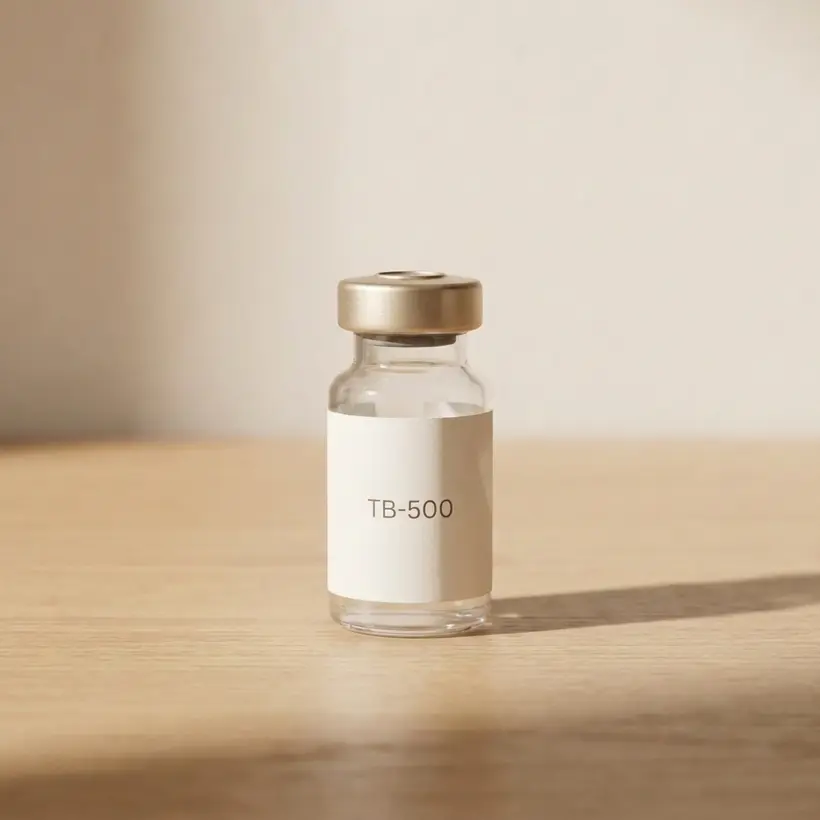
From the FormBlends catalog
TB-500 (Thymosin Beta-4)
Universal repair peptide for tissue regeneration · From $49/mo · compounded by a licensed 503A pharmacy, dispensed only after provider review.
Learn about TB-500 (Thymosin Beta-4) →Joint and Connective Tissue Protection
Years of excess weight can cause cumulative damage to joints and connective structures. As GLP-1 medications help patients shed that weight, these compromised tissues have an opportunity to heal. TB-500's ability to promote cell migration to damaged areas and stimulate new blood vessel growth provides biological support for this healing process.
Anti-Inflammatory Benefits
GLP-1 medications reduce systemic metabolic inflammation through weight loss and metabolic improvement. TB-500 provides direct tissue-level anti-inflammatory activity. The two compounds address inflammation from different angles, potentially offering more thorough inflammatory management than either one alone.
Tissue Quality During Body Recomposition
Patients losing significant weight on GLP-1 medications experience remodeling of skin, connective tissue, and vasculature. TB-500's angiogenic and repair properties may support better tissue quality during this transformation, though this remains a clinically observed benefit rather than one confirmed through controlled trials.
Protocol Considerations
Your physician determines the specific protocol. General principles used in clinical practice include the following.
GLP-1 medications follow their standard titration schedules without modification. Semaglutide starts at 0.25 mg weekly. Tirzepatide starts at 2.5 mg weekly. Liraglutide starts at 0.6 mg daily. These schedules aren't adjusted because of TB-500 co-administration.
TB-500 is introduced after 2 to 4 weeks of GLP-1 therapy alone. It follows a loading phase (5 to 10 mg weekly for 4 to 6 weeks) and maintenance phase (2.5 to 5 mg weekly for 4 to 10 weeks). TB-500 is cycled, with breaks between cycles. Contact provider for current pricing
Use separate injection sites for each compound. Rotate sites regularly. Never mix the two compounds in the same syringe.
Who Should Consider Taking TB-500 with a GLP-1
- GLP-1 patients who exercise regularly and want musculoskeletal recovery support.
- Patients with joint or tendon issues who are starting or continuing GLP-1 therapy.
- Patients experiencing significant weight loss who want tissue remodeling support.
- Patients interested in anti-inflammatory support alongside their weight management program.
- Current TB-500 users who are adding a GLP-1 medication and want to confirm the compounds are compatible.
This combination isn't appropriate for patients who are pregnant or nursing, under 18, have active cancer, or have contraindications to GLP-1 medications.
Frequently Asked Questions
Does this apply to all GLP-1 medications?
Yes. TB-500 is compatible with the entire GLP-1 receptor agonist class, including semaglutide, tirzepatide, and liraglutide. TB-500 doesn't interact with GLP-1 receptors or GIP receptors. Whether your GLP-1 medication activates one receptor (semaglutide, liraglutide) or two (tirzepatide), the compatibility with TB-500 is the same.
Can I inject both compounds on the same day?
Yes. Use different injection sites. Many patients inject their GLP-1 medication on one day each week and TB-500 on separate days, but there's no safety reason preventing same-day administration at different sites.
Will TB-500 slow down my weight loss from the GLP-1?
No. TB-500 doesn't interact with appetite signaling, insulin pathways, or any of the mechanisms that produce weight loss from GLP-1 medications. The two compounds work through entirely independent systems. Your weight loss trajectory from the GLP-1 medication shouldn't be affected by TB-500.
Is the combination FDA-approved?
GLP-1 medications are FDA-approved for their labeled indications. TB-500 isn't FDA-approved for any indication. The combination is used in clinical practice under physician supervision based on mechanistic compatibility and clinical experience. This is an important distinction that should be part of your informed consent discussion with your physician.
Medical References
- Goldstein AL, Hannappel E, Sosne G, Kleinman HK. Thymosin beta4: a multi-functional regenerative peptide. Basic properties and clinical applications. Expert Opin Biol Ther. 2012;12(1):37-51. [PubMed | DOI]
Physician-Supervised Care at FormBlends
Taking TB-500 with GLP-1 medications is pharmacologically compatible and clinically practical for patients who want tissue recovery support alongside their weight management program. At FormBlends, our physicians evaluate your health history, design individualized protocols, provide pharmaceutical-grade compounds, and monitor your progress to ensure safe, effective treatment.
Start your consultation at FormBlends.com
Ready when you are
TB-500 (Thymosin Beta-4)
Universal repair peptide for tissue regeneration · From $49/mo · compounded by a licensed 503A pharmacy, dispensed only after provider review.
Learn about TB-500 (Thymosin Beta-4) →