Key Takeaway
Can you take TB-500 with semaglutide? Learn about compatibility, mechanisms of action, safety considerations, and physician supervision guidelines for this combination.
Yes, TB-500 and semaglutide can be taken together under physician supervision. These two compounds work through entirely distinct biological mechanisms with no known pharmacological interaction. TB-500 is a synthetic fragment of thymosin beta-4, a naturally occurring peptide involved in tissue repair and inflammation modulation. Semaglutide is a GLP-1 receptor agonist used for weight management and glycemic control. Their pathways don't overlap, and the combination is used in clinical practice for patients who want recovery and tissue support alongside their weight loss program.
How TB-500 and Semaglutide Work: Independent Mechanisms
Understanding whether two compounds can safely coexist in a treatment regimen requires examining their individual mechanisms and identifying any potential points of conflict. TB-500 and semaglutide act on fundamentally different systems.
Semaglutide: GLP-1 Receptor Activation
Semaglutide is a synthetic analog of human glucagon-like peptide-1 (GLP-1). It binds to GLP-1 receptors in the pancreas, central nervous system, and gastrointestinal tract. Its therapeutic actions include stimulating glucose-dependent insulin secretion, suppressing glucagon release, slowing gastric emptying, and acting on hypothalamic appetite centers to reduce hunger. FDA-approved for type 2 diabetes (Ozempic) and chronic weight management (Wegovy), semaglutide has one of the most thorough clinical trial databases of any medication in its class.
Semaglutide has a half-life of approximately seven days, allowing once-weekly dosing. It's metabolized through proteolytic degradation and fatty acid beta-oxidation, not through hepatic CYP450 enzymes. This metabolic pathway is relevant because CYP450 interactions are the most common source of drug-drug conflicts.
TB-500: Thymosin Beta-4 Fragment Activity
TB-500 is the synthetic version of the active region of thymosin beta-4 (T-beta-4), a 43-amino-acid peptide that's naturally present in nearly all human cells. Thymosin beta-4 plays a central role in actin regulation, cell migration, angiogenesis, and wound healing. TB-500 replicates many of these functions as a smaller, more targeted molecule.
In preclinical research, TB-500 has demonstrated the ability to promote tissue repair across multiple systems: cardiac tissue, skin, corneal tissue, muscle, and connective tissue. Its mechanism involves upregulation of actin, promotion of cell migration to injury sites, reduction of inflammatory cytokines, and stimulation of new blood vessel formation. TB-500 also appears to modulate inflammatory responses, reducing excessive inflammation without suppressing the immune system's ability to respond to genuine threats.
TB-500 is metabolized through standard peptide hydrolysis. It doesn't interact with GLP-1 receptors, insulin receptors, or any component of glucose metabolism.
Why There Is No Pharmacological Conflict
TB-500 doesn't bind to GLP-1 receptors. Semaglutide doesn't interfere with actin regulation, cell migration pathways, or thymosin beta-4 signaling. Neither compound is metabolized through shared enzymatic routes. There's no established mechanism by which one would block, enhance, or destabilize the activity of the other. From a pharmacological standpoint, these compounds operate in entirely separate biological domains.
Why Patients Combine TB-500 with Semaglutide
The rationale for combining these compounds reflects the practical reality that patients on semaglutide for weight management often have concurrent needs that TB-500 can address. For a complete cost breakdown, see our cheapest semaglutide options.

Recovery Support During Increased Physical Activity
Many patients starting semaglutide for weight loss also begin or intensify an exercise program. As they become more active, the demands on muscle, tendons, and connective tissue increase. TB-500's documented effects on tissue repair, cell migration, and inflammation modulation make it a compound of interest for patients who want recovery support alongside their weight management program.
Inflammation Management
Obesity is associated with chronic low-grade systemic inflammation. While semaglutide reduces inflammatory markers through both direct anti-inflammatory effects and weight loss itself, TB-500 addresses inflammation through a different pathway: modulation of inflammatory cytokines and promotion of resolution rather than suppression. The combination may offer a more thorough approach to inflammatory balance during the metabolic transition of weight loss.
Cardiovascular and Tissue Health
TB-500's effects on cardiac tissue repair and vascular health, demonstrated in preclinical models, complement semaglutide's established cardiovascular benefits. For patients with obesity-related cardiovascular risk factors, the combination addresses heart and vascular health from multiple biological angles.
Safety Considerations
While there's no known pharmacological interaction between TB-500 and semaglutide, responsible use requires careful attention to several factors.
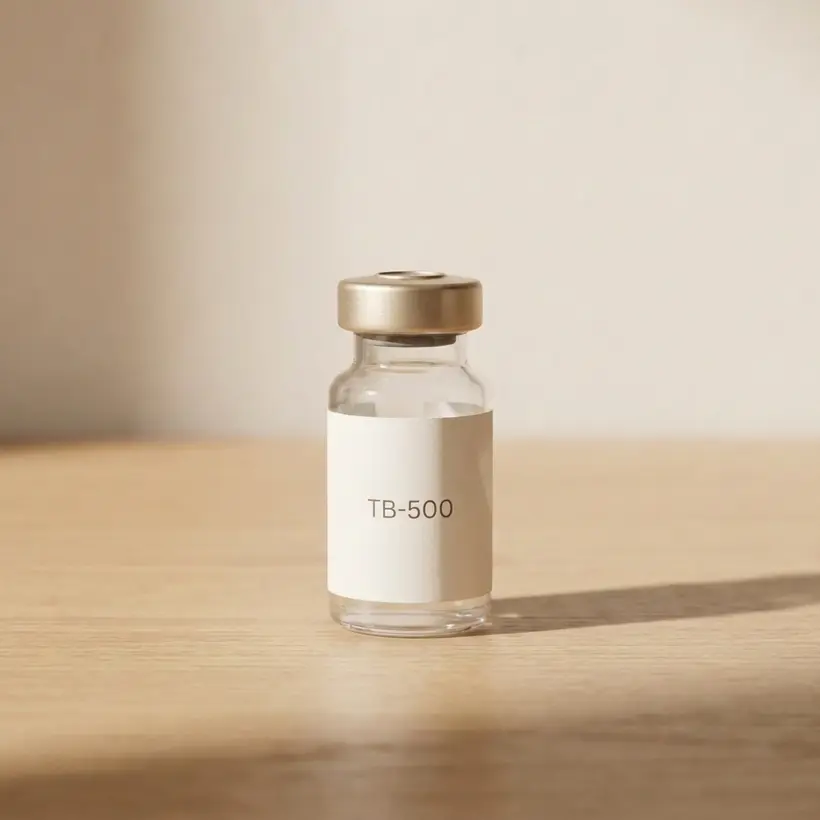
From the FormBlends catalog
TB-500 (Thymosin Beta-4)
Universal repair peptide for tissue regeneration · From $49/mo · compounded by a licensed 503A pharmacy, dispensed only after provider review.
Learn about TB-500 (Thymosin Beta-4) →No Formal Combination Studies
No published clinical trial has specifically studied TB-500 and semaglutide together in human subjects. The safety assessment relies on the independent profiles of each compound, their non-overlapping mechanisms, and clinical observation. This is an important caveat that patients and physicians should acknowledge openly.
Evidence Base Differences
Semaglutide is extensively studied through FDA trials. TB-500's safety data comes primarily from preclinical research and growing clinical use. Thymosin beta-4 itself has been studied in human trials for wound healing (dermal and corneal), providing some human safety data for the parent molecule, though TB-500 specifically has a smaller human evidence base.
Immune and Inflammatory Modulation
TB-500 modulates inflammatory responses and may influence immune cell behavior. While this is generally beneficial, patients with autoimmune conditions, active infections, or compromised immune function should discuss TB-500 use carefully with their physician. Semaglutide doesn't significantly affect immune function, so the consideration is specific to TB-500.
Angiogenesis
Like BPC-157, TB-500 promotes angiogenesis as part of its tissue repair mechanism. Patients with active malignancies, proliferative diabetic retinopathy, or other conditions where new blood vessel growth could be harmful shouldn't use TB-500 without careful physician evaluation. This caution exists independently of semaglutide use.
Standard Contraindications
Semaglutide contraindications remain in full effect: personal or family history of medullary thyroid carcinoma, MEN2 syndrome, history of pancreatitis, pregnancy, and known hypersensitivity. TB-500 shouldn't be used by patients with active cancer, those who are pregnant or nursing, or individuals under 18.
Source and Purity
TB-500 isn't FDA-approved. Product quality varies by source. Pharmaceutical-grade peptides from licensed compounding pharmacies are important. Unregulated sources may contain impurities, incorrect concentrations, or degradation products that introduce safety variables unrelated to TB-500's pharmacology.
General Protocol Notes
Specific dosing is determined by the supervising physician, but general principles apply to this combination.
Semaglutide follows its standard titration schedule regardless of TB-500 co-administration. The titration exists for safety reasons that don't change when another compound is added. TB-500 is typically administered via subcutaneous injection on a schedule separate from semaglutide. Common protocols involve TB-500 dosing two to three times per week during a loading phase, transitioning to less frequent maintenance dosing.
Sequential introduction is recommended. Start one compound, establish tolerability, then add the other. This allows clear attribution of any effects or side effects. Most physicians either start semaglutide first and add TB-500 once the patient is stable on an initial dose, or introduce TB-500 first for patients with existing recovery needs.
Use different injection sites for each compound. Regular physician check-ins with blood work and symptom tracking ensure the protocol remains appropriate over time.
Who Benefits from This Combination
- Active patients on semaglutide who are increasing exercise intensity and want recovery support for muscles, tendons, and connective tissue.
- Patients with chronic inflammatory conditions (non-autoimmune, non-malignant) who want additional inflammatory balance alongside their weight management program.
- Patients recovering from injuries who are simultaneously managing their weight with semaglutide and want to support tissue healing.
- Patients with cardiovascular risk factors who are interested in supporting heart and vascular health through complementary mechanisms.
- Current TB-500 users who are starting semaglutide and want to confirm compatibility.
Patients who are pregnant, nursing, under 18, have active malignancies, or have active autoimmune conditions shouldn't use this combination without thorough physician evaluation.
Frequently Asked Questions
Is TB-500 the same as thymosin beta-4?
TB-500 is a synthetic peptide that replicates the active region of thymosin beta-4. It isn't identical to the full 43-amino-acid thymosin beta-4 molecule but contains the key sequence responsible for its biological activity, particularly actin binding, cell migration, and tissue repair signaling.
Will TB-500 reduce the effectiveness of semaglutide for weight loss?
There's no known mechanism by which TB-500 would diminish semaglutide's weight loss effects. TB-500 doesn't interact with GLP-1 receptors, doesn't alter insulin signaling, and doesn't counteract appetite suppression. The two compounds operate through independent biological systems.
Can I inject TB-500 and semaglutide on the same day?
Yes, they can be administered on the same day using different injection sites. Many patients take semaglutide once weekly and TB-500 on a separate schedule. Timing doesn't need to be coordinated beyond using separate injection sites.
How long does it take to notice the effects of TB-500 alongside semaglutide?
Semaglutide's appetite-suppressing effects are typically noticeable within the first few weeks, with significant weight loss accumulating over months. TB-500's tissue repair and recovery effects may be noticed within two to four weeks depending on the indication. The benefits of each compound unfold on their own timelines.
Is the combination of TB-500 and semaglutide FDA-approved?
No. Semaglutide is FDA-approved for type 2 diabetes and chronic weight management. TB-500 isn't FDA-approved for any indication. The combination is used under physician supervision based on mechanistic reasoning, preclinical evidence, and clinical experience. Your prescribing physician should discuss the evidence basis with you as part of the informed consent process.
Medical References
- Goldstein AL, Hannappel E, Sosne G, Kleinman HK. Thymosin beta4: a multi-functional regenerative peptide. Basic properties and clinical applications. Expert Opin Biol Ther. 2012;12(1):37-51. [PubMed | DOI]
Physician-Supervised Peptide and GLP-1 Therapy
Combining TB-500 with semaglutide reflects an approach to wellness that addresses weight management and tissue health simultaneously. At FormBlends, every protocol is designed and monitored by licensed physicians who understand both GLP-1 pharmacology and peptide therapy. If you're currently on semaglutide and interested in TB-500 for recovery support, or if you want to explore both compounds as part of a thorough plan, our medical team can evaluate your needs and build a personalized protocol.
Start your consultation at FormBlends.com
Ready when you are
TB-500 (Thymosin Beta-4)
Universal repair peptide for tissue regeneration · From $49/mo · compounded by a licensed 503A pharmacy, dispensed only after provider review.
Learn about TB-500 (Thymosin Beta-4) →