All GLP-1 medications from licensed 503A compounding pharmacies Browse Products

Thymosin Beta-4 Research Review: Complete Guide

Comprehensive review of Thymosin Beta-4 research. Published studies on wound healing, cardiac repair, neurological protection, and hair growth evidence.

By FormBlends Editorial Research|Source reviewed by FormBlends Medical Team||

Source Reviewed

Written by FormBlends Editorial Research · Checked against primary sources by FormBlends Medical Team

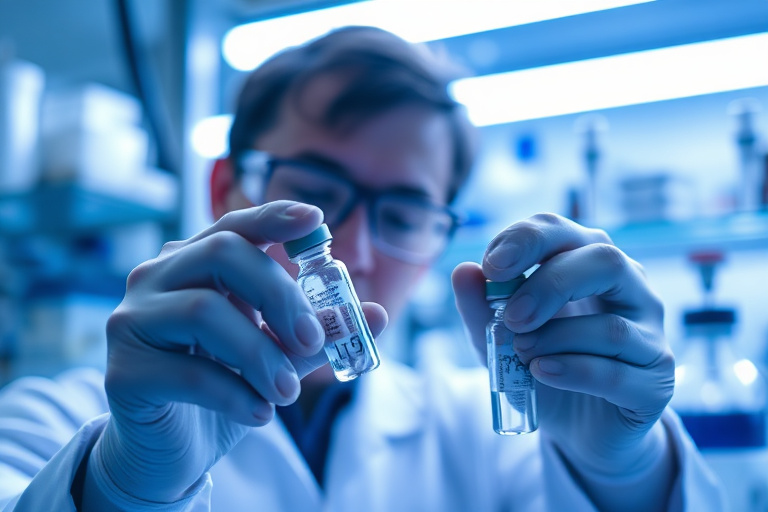
Thymosin Beta-4 Research Review: Complete Guide custom 2026 header image for Peptide Therapy
Custom header image for Thymosin Beta-4 Research Review: Complete Guide, Peptide Therapy, and better treatment decision-making.
In This Article

This article is part of our Peptide Therapy collection. See also: GLP-1 Guides | Provider Comparisons

Search and AI answer brief

Practical answer: Thymosin Beta-4 Research Review: Complete Guide

Comprehensive review of Thymosin Beta-4 research. Published studies on wound healing, cardiac repair, neurological protection, and hair growth evidence.

Short answer

Comprehensive review of Thymosin Beta-4 research. Published studies on wound healing, cardiac repair, neurological protection, and hair growth evidence.

Search intent

This page answers a specific Peptide Therapy question rather than a generic overview.

What to verify

peptide evidence quality, safety and contraindications

How to use it

Use this information to prepare sharper questions for a licensed provider.

Key Takeaway

full review of Thymosin Beta-4 research. Published studies on wound healing, cardiac repair, neurological protection, and hair growth evidence.

Quick Answer: Thymosin Beta-4 research review shows a substantial preclinical evidence base with emerging clinical data. TB-4 has been studied in wound healing, corneal repair, cardiac regeneration, neurological recovery, and hair growth across hundreds of published studies. The most advanced clinical development is in corneal wound healing (RegeneRx Biopharmaceuticals' RGN-259), which has completed Phase II trials. Veterinary use in equine tendon repair provides additional real-world evidence .

Wound Healing Research

TB-4's wound healing properties represent the most extensive body of research:

  • Malinda et al. (1999): Published in the Journal of Investigative Dermatology, this study demonstrated that TB-4 accelerated dermal wound healing in aged mice, establishing the foundational evidence for TB-4's wound repair properties
  • Philp et al. (2004): Showed TB-4 promoted corneal wound healing through increased cell migration and reduced inflammation, leading to the clinical development program for RGN-259
  • Sosne et al. (2015): Phase II clinical trial of topical TB-4 (RGN-259) for dry eye and corneal wound healing showed statistically significant improvement in corneal healing endpoints

Cardiac Research

TB-4's cardioprotective properties have been studied extensively:

Popular Therapeutic Peptides by Use Case Clinical Interest Score 0 22 44 66 88 88 82 78 75 70 BPC-157 TB-500 Sermorelin Ipamorelin GHK-Cu Based on published peptide research literature
Popular Therapeutic Peptides by Use Case. Based on published peptide research literature.
View data table
Bar chart showing popular therapeutic peptides by use case: BPC-157 (88), TB-500 (82), Sermorelin (78), Ipamorelin (75), GHK-Cu (70)
CategoryClinical Interest ScoreDetail
BPC-15788Tissue repair and gut healing
TB-50082Injury recovery
Sermorelin78Growth hormone support
Ipamorelin75Anti-aging and recovery
GHK-Cu70Skin and tissue repair
Illustration for Thymosin Beta-4 Research Review: Complete Guide
  • Bock-Marquette et al. (2004): Published in Nature, this landmark study showed TB-4 promoted cardiac cell survival and reduced scar size after myocardial infarction in mice
  • Smart et al. (2007): Research at King's College London demonstrated TB-4 activated epicardial progenitor cells, cells that can differentiate into new heart cells, offering a pathway to cardiac regeneration
  • NIHR-funded research: Ongoing research continues to explore TB-4's potential for cardiac repair after heart attack and in heart failure

Neurological Research

  • Xiong et al. (2012): Demonstrated TB-4 improved functional recovery after traumatic brain injury in rats by promoting neural stem cell proliferation and reducing neuroinflammation
  • Morris et al. (2010): Showed TB-4 promoted remyelination in multiple sclerosis models by supporting oligodendrocyte differentiation

Hair Growth Research

  • Philp et al. (2004): Published in PNAS, showed TB-4 promoted hair growth in mice through stem cell activation in hair follicles. This remains the foundational study for TB-4 hair growth applications

Equine/Veterinary Evidence

TB-4 (marketed as TB-500 in veterinary contexts) has been used extensively in equine sports medicine for tendon and ligament injuries. While formal controlled trials are limited, veterinary practitioners consistently report improved tendon healing quality, reduced re-injury rates, and faster return to competition in horses treated with TB-4 .
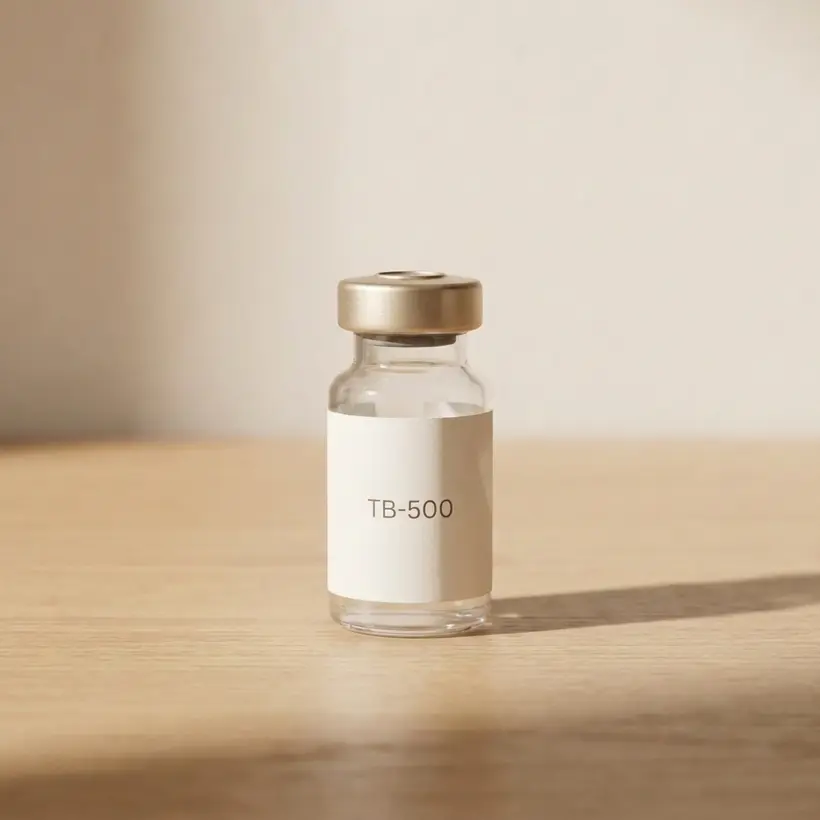
TB-500 (Thymosin Beta-4)

From the FormBlends catalog

TB-500 (Thymosin Beta-4)

Universal repair peptide for tissue regeneration · From $49/mo · compounded by a licensed 503A pharmacy, dispensed only after provider review.

Learn about TB-500 (Thymosin Beta-4) →

Research Limitations

  • Most evidence is preclinical (animal models and cell studies)
  • Only corneal healing has reached Phase II clinical trials in humans
  • No large-scale randomized controlled trials for systemic TB-4 use in humans
  • Optimal dosing for different conditions in humans isn't established through clinical trials
  • Long-term safety data from controlled studies is limited

Frequently Asked Questions

Is TB-4 well-studied?

TB-4 has an extensive preclinical evidence base with hundreds of published studies. But human clinical data is limited compared to FDA-approved drugs. The biological mechanisms are well-characterized, and veterinary real-world evidence supports its use.

Are any TB-4 clinical trials ongoing?

RegeneRx Biopharmaceuticals continues to advance RGN-259 (topical TB-4) through clinical development for ophthalmological applications. Broader clinical development for systemic uses faces the challenge of funding for non-patentable natural peptides.

How does TB-4's evidence compare to BPC-157?

Both peptides have extensive preclinical data. TB-4 has the advantage of a published Phase II clinical trial (corneal healing) and the Nature publication on cardiac effects. BPC-157 has more breadth across GI conditions in preclinical models but no clinical trial publications. Neither has strong human clinical trial data for systemic use.

Medical References

  1. Goldstein AL, Hannappel E, Sosne G, Kleinman HK. Thymosin beta4: a multi-functional regenerative peptide. Basic properties and clinical applications. Expert Opin Biol Ther. 2012;12(1):37-51. [PubMed | DOI]

Evidence-Based Peptide Therapy

At FormBlends, our physicians stay current with peptide research and translate the evidence into safe, effective treatment protocols.

Schedule Your Free Consultation

Disclaimer: This article is for informational purposes only and doesn't constitute medical advice. Thymosin Beta-4 isn't FDA-approved for any medical condition. Always consult with a licensed healthcare provider. Individual results may vary.

TB-500 (Thymosin Beta-4)

Ready when you are

TB-500 (Thymosin Beta-4)

Universal repair peptide for tissue regeneration · From $49/mo · compounded by a licensed 503A pharmacy, dispensed only after provider review.

Learn about TB-500 (Thymosin Beta-4) →
Browse the full catalog →

Research Snapshot

Provider review

Entities covered

Page type
Provider review
FormBlends review
Last reviewed
2026-04-01
FormBlends review
FormBlends official source
Official source
Before you buy
Confirm current pricing, medication availability, pharmacy sourcing, and cancellation terms directly with the provider.
Check before ordering

Provider pricing, medication availability, pharmacy partners, insurance support, and cancellation rules can change quickly. This snapshot is designed to make verification easier, not to replace checking the official source before making a medical or purchase decision. Last page review: 2026-04-01.

Evidence standard

How this page was source-checked

Editorial policy

FormBlends does not claim an individual clinician byline unless a named reviewer is available. For this page, the editorial team checks medical and regulatory claims against primary sources, clinical trials, public datasets, and regulator guidance.

PubMed evidence trail

Research sources used to frame this page

For Thymosin Beta-4 Research Review: Complete Guide, FormBlends checks the page topic against primary trials, systematic reviews, guidelines, and current PubMed-indexed literature where available. These citations are context, not medical advice, proof of eligibility, or a claim that every study applies to every patient.

Peptide decision path

Move from research interest to supervised review

Direct answer

Thymosin Beta-4 Research Review: Complete Guide should be evaluated through research status, legal access, source quality, safety context, and clinician oversight rather than a shortcut purchase decision.

Evidence check

Useful peptide pages should separate human data, animal research, mechanistic evidence, and marketing claims.

Safety check

Peptides can vary by legal status, compounding pathway, purity testing, patient history, and interaction risk.

Next step

If the topic still fits your goal after reading, the get-started flow should collect the clinical context needed for provider review.

FormBlends Editorial Context

Reviewed May 14, 2026

Comprehensive review of Thymosin Beta-4 research. Published studies on wound healing, cardiac repair, neurological protection, and hair growth evidence. Use "Thymosin Beta-4 Research Review: Complete Guide" to make the conversation more specific before you choose a provider, product, or next step. The page leans into provider evaluation and access and the details behind side effects. Because this article has 8 major sections, scan the headings first and then use the FAQ or summary sections to pressure-test the answer. The safest takeaway is a better checklist for clinician review, not a do-it-yourself medical decision.

  • Confirm whether the page is discussing an FDA-approved use, a compounded option, or research-only context.
  • Ask a licensed clinician how the evidence applies to your health history, medications, labs, and side-effect risk.
  • Check the latest label, trial update, pharmacy policy, or state rule when the article touches medication access.

Original tools and data

Use the FormBlends research stack

These assets are built to be useful beyond a single article: shareable data pages, calculators, provider comparisons, and safety checks that give Google and readers something original to crawl.

Editorial refresh

Practical 2026 note for Thymosin Beta

This update makes Thymosin Beta more specific by tying BPC-157, safety signals, thymosin, beta, research, review to the page's original clinical, cost, access, or comparison angle.

The goal is to make the article more useful for people who already know the headline question and need page-level specifics, not another interchangeable peptide therapy summary.

For 2026 review, the content emphasizes current verification, treatment fit, and patient-safety questions that can be discussed with a qualified provider.

Thymosin Beta custom 2026 image for peptide therapy on FormBlends

Custom 2026 image for Thymosin Beta, peptide therapy, and better treatment decision-making.

Image description: Unique image for this page covering Thymosin Beta, peptide therapy, safety, cost, provider selection, and patient decision-making.

Download the Peptide Quick Reference Card

A printable 2-page reference covering popular peptides, dosing ranges, stacking protocols, and storage.

Free download. We'll also send helpful GLP-1 guides to your inbox. Unsubscribe anytime.

Medical Disclaimer: This content is for informational purposes only and does not constitute medical advice. Always consult a qualified healthcare provider before starting, stopping, or changing any medication or treatment. FormBlends articles are source-checked against medical and regulatory references, but they are not a substitute for a personal medical consultation.

Disclosure: FormBlends is one of the providers discussed in this article. Our editorial team independently researches and verifies all pricing and claims. Pricing was last verified in March 2026. Read our editorial policy.

Written by FormBlends Editorial Research

Prepared by FormBlends Editorial Research. Claims are checked against primary regulatory, trial, label, and public-health sources where available. Reviewed by FormBlends Medical Team for medical accuracy, sourcing, and patient-safety framing.

Ready to get started?

Provider-reviewed GLP-1 and peptide therapy, delivered to your door.

Start Your Consultation

Ready to Start Your Weight Loss Journey?

Get a free medical consultation with a licensed provider. Compounded GLP-1 medications starting at $99/month with free shipping.

Next Best Reads

Free Tools

Provider-informed calculators to support your weight loss journey.