Key Takeaway
Complete guide to Thymosin Beta-4 (TB-500) side effects. Common reactions, rare concerns, contraindications, and what to discuss with your physician.
Quick Answer: Thymosin Beta-4 side effects are generally mild and well-tolerated. The most common side effects include temporary lethargy or fatigue (especially in the first week), injection site irritation, headache, and mild nausea. TB-4 has a strong safety profile in preclinical research, and because it's a naturally occurring peptide in the human body, severe adverse reactions are rare. The primary theoretical concern is its role in promoting cell migration, which raises questions about use in patients with active cancer .
Common Side Effects
| Side Effect | Frequency | Duration | Management |
|---|---|---|---|
| Temporary fatigue/lethargy | Common (20-30%) | First 3-7 days | Usually self-resolving. dose at bedtime |
| Injection site redness/irritation | Common (15-20%) | 24-48 hours | Rotate sites. apply ice after injection |
| Headache | Occasional (10-15%) | First 1-2 weeks | Hydration. OTC pain relief if needed |
| Mild nausea | Occasional (5-10%) | 1-2 hours post-injection | Take with food if tolerated. dose at night |
| Temporary flu-like feeling | Occasional (5-10%) | First 1-3 days | Self-resolving. indicates immune activation |
| Head rush/lightheadedness | Rare (2-5%) | Minutes post-injection | Inject while seated. stay hydrated |
How the Fatigue Response
The most commonly reported side effect of TB-4 is temporary fatigue or lethargy, particularly during the first few days of use. This is thought to result from TB-4's immune-modulating effects. As the peptide activates tissue repair and immune signaling pathways, the body may redirect energy toward healing processes, similar to the fatigue experienced during an active immune response .

This fatigue typically resolves within 3 to 7 days and is often followed by a noticeable increase in energy as repair processes complete. Many patients dose TB-4 at bedtime to minimize the impact of initial fatigue.
Theoretical Concerns
Cell Migration and Cancer
TB-4's primary mechanism involves promoting cell migration. Some research has found improved TB-4 levels in certain tumor types, raising the theoretical concern that exogenous TB-4 could promote cancer cell migration or metastasis .
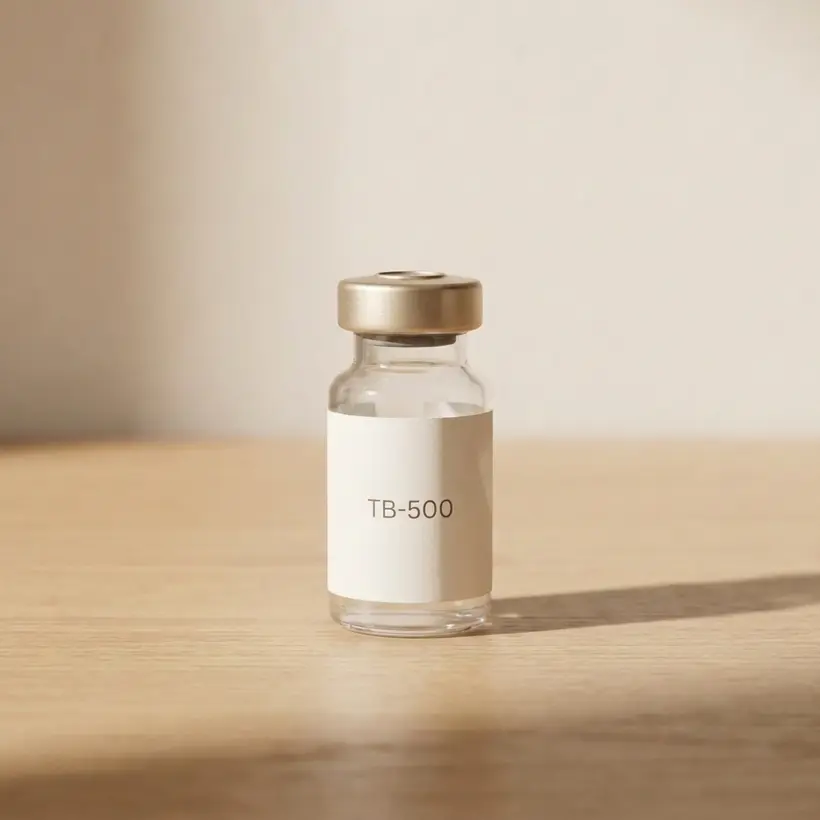
From the FormBlends catalog
TB-500 (Thymosin Beta-4)
Universal repair peptide for tissue regeneration · From $49/mo · compounded by a licensed 503A pharmacy, dispensed only after provider review.
Learn about TB-500 (Thymosin Beta-4) →But note the following:
- improved TB-4 in tumors may be a consequence of cancer (cells producing more TB-4 for their own mobility) rather than a cause
- No clinical evidence directly links TB-4 administration to cancer development or progression
- As a precaution, TB-4 is contraindicated in patients with active cancer or recent cancer history
Angiogenesis
TB-4 promotes new blood vessel formation, which is beneficial for healing but could theoretically support tumor blood supply. This is another reason for the cancer contraindication, even though direct evidence of harm is lacking.
Contraindications
- Active cancer: Due to TB-4's cell migration and angiogenesis effects
- Recent cancer history: Discuss timeline with your oncologist and prescribing physician
- Pregnancy/breastfeeding: Safety not established
- Known allergy to TB-4: Rare but possible
When to Contact Your Physician
While most side effects are mild and self-limiting, contact your physician if you experience:
- Persistent fatigue lasting more than 2 weeks
- Significant swelling at injection sites
- Signs of infection (fever, increasing redness, warmth at injection site)
- Allergic reaction (rash, difficulty breathing, swelling of face or throat)
- Any unexpected or concerning symptom
Frequently Asked Questions
Is TB-4 safer than BPC-157?
Both peptides have favorable safety profiles. TB-4 is more likely to cause initial fatigue, while BPC-157 rarely causes fatigue. Neither has documented serious adverse events in clinical use. The choice between them depends on your treatment goals rather than safety differences.
Can I take TB-4 long-term?
Most protocols use TB-4 for defined treatment courses (4-12 weeks) rather than indefinite continuous use. Long-term safety data is limited. Discuss cycling protocols with your physician.
Does TB-4 interact with medications?
No significant drug interactions have been documented for TB-4. But inform your physician about all medications and supplements you take before starting therapy.
Medical References
- Goldstein AL, Hannappel E, Sosne G, Kleinman HK. Thymosin beta4: a multi-functional regenerative peptide. Basic properties and clinical applications. Expert Opin Biol Ther. 2012;12(1):37-51. [PubMed | DOI]
Safe, Monitored Peptide Therapy
At FormBlends, your safety comes first. Our physicians monitor your response and adjust protocols to minimize side effects while maximizing benefit.
Disclaimer: This article is for informational purposes only and doesn't constitute medical advice. Thymosin Beta-4 isn't FDA-approved for any medical condition. Always consult with a licensed healthcare provider. Individual results may vary.
Ready when you are
TB-500 (Thymosin Beta-4)
Universal repair peptide for tissue regeneration · From $49/mo · compounded by a licensed 503A pharmacy, dispensed only after provider review.
Learn about TB-500 (Thymosin Beta-4) →