All GLP-1 medications from licensed 503A compounding pharmacies Browse Products

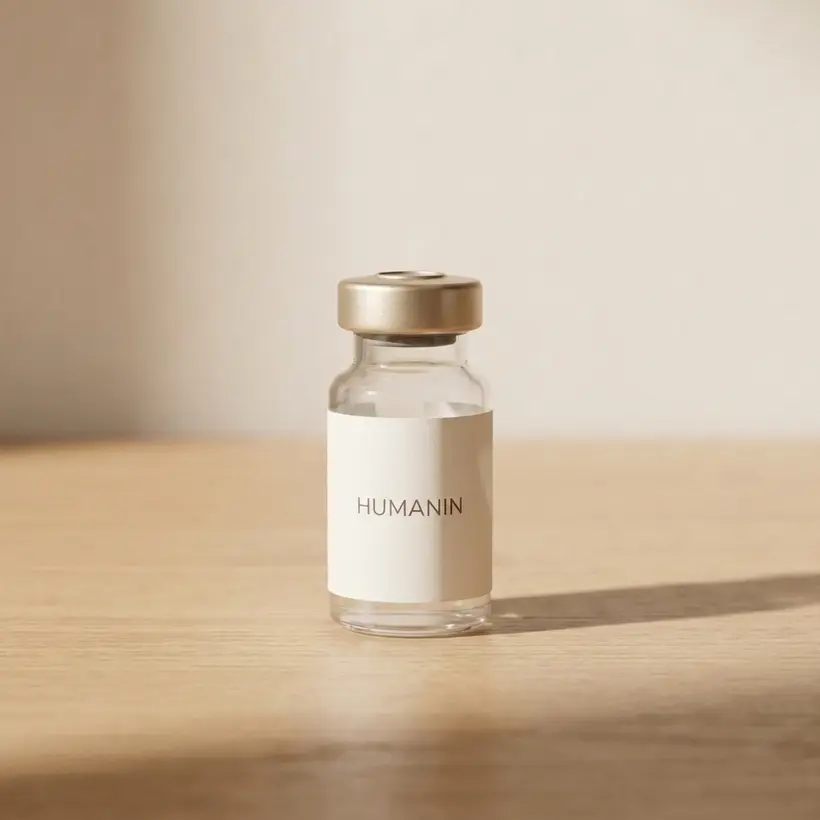
Humanin Anti-Aging & Longevity research profile visual summary
Research profile

Longevity research

Cellular support

Best compared against other anti-aging & longevity profiles when you are weighing mechanism, evidence, and use case.

01

Mitochondrial-derived peptide with 2-3x

02

Blocks apoptosis by directly

03

Activates JAK2/STAT3 pro-survival signaling

Anti-Aging & Longevity

Humanin Research Guide

Humanin is a 24-amino-acid peptide encoded by mitochondrial DNA. It protects cells from apoptosis, reduces oxidative stress, improves insulin sensitivity,.

10mg vial10mg/vial

Research watchlist

Get updates when availability, evidence, or category guidance changes for Humanin.

Start Provider Review

This product is not currently sold by FormBlends. Enter your email to be notified if availability changes.

Quick answer

Humanin is an educational research profile for people comparing mechanism, potential benefits, evidence strength, and related compounds in anti-aging & longevity.

Cellular repairSkin qualityHealthy aging

Format

Research guide

Best use

Cellular repair

Evidence

Longevity research

Product facts for search and AI answers

What this Humanin page answers

Direct answer

Humanin is an educational research profile for people comparing mechanism, potential benefits, evidence strength, and related compounds in anti-aging & longevity.

This is the shortest citable answer for people comparing this option.

Best fit

Cellular repair, Skin quality, Healthy aging

Humanin should be evaluated by goal fit, safety fit, evidence strength, and provider oversight.

Evidence signal

Longevity research

6 source-backed citations are connected to this page.

Access status

Research guide / not currently sold

Research products and peptides require careful review of source quality, legality, and supervision.

503A Pharmacy
USP <797> Sterile
Provider-Reviewed
Lab-Tested
Cold-Chain
HIPAA

Decision board

Is Humanin the right page to act on?

Research profile

Humanin is an educational research profile for people comparing mechanism, potential benefits, evidence strength, and related compounds in anti-aging & longevity.

Best fit

Cellular repair

Outcome signal

Cellular support

Evidence cue

Longevity research

Decision rhythm

Start / Compare / Explore

1

Goal

Cellular repair

2

Compare

Epithalon (Epitalon)

3

Review

Longevity research

4

Act

Provider review

Built from the same product facts used in the comparison table, timeline, and structured data.

Best-fit signals

Choose Humanin when these match your goal

Cellular repair
Skin quality
Healthy aging
Compounded peptide vials arranged on a warm clinical shelf

Compounded with care

Built for multi-product peptide routines without rushing the clinical review.

FormBlends lets patients compare peptide options, build a cart, and carry selected product and quantity details into a provider-reviewed checkout path. Fulfillment still depends on eligibility, payment completion, and clinical approval.

US pharmacy sourcingProvider reviewSigned checkout payloadWLMD product IDs

Compare at a glance

How Humanin fits against nearby options

Use this table for the fast answer: primary fit, expected outcome, evidence signal, and the next page worth opening.

Humanin comparison table
OptionBest forOutcome signalEvidenceNext step
Humanin Anti-Aging & Longevity research profile visual summary

Humanin

Anti-Aging & Longevity

Cellular repair, Skin qualityCellular supportLongevity researchCurrent page
Epithalon (Epitalon) Anti-Aging & Longevity research profile visual summary

Epithalon (Epitalon)

Anti-Aging & Longevity

Cellular repair, Skin qualityCellular supportLongevity researchCompare
GHK-Cu (Copper Peptide) Anti-Aging & Longevity research profile visual summary

GHK-Cu (Copper Peptide)

Anti-Aging & Longevity

Cellular repair, Skin qualityCellular supportLongevity researchCompare
NAD+ Peptide Complex Anti-Aging & Longevity research profile visual summary

NAD+ Peptide Complex

Anti-Aging & Longevity

Cellular repair, Skin qualityCellular supportLongevity researchCompare

Decision timeline

What to expect as you compare Humanin

Timelines vary by goal, dose, baseline health, and consistency. These checkpoints frame the most common evaluation moments.

Start

Understand the mechanism

Use the quick facts, pathway overview, and research notes to understand why the compound is discussed.

Compare

Match intent to evidence

Compare expected use cases, evidence strength, and related options before going deeper.

Explore

Move into detailed research

Use related articles, citations, and category pages to keep researching the safest fit.

Mechanism map

How Humanin is positioned

Humanin is a 24-amino-acid peptide encoded by mitochondrial DNA. It protects cells from apoptosis, reduces oxidative stress, improves insulin sensitivity,.

Signal

Cellular repair

Outcome

Cellular support

Proof

Longevity research

The core comparison is pathway, expected outcome, evidence strength, and practical fit.

A visual summary of Humanin across cellular repair, expected outcome, evidence signal, and comparison fit.

Key benefits

Why people compare it

1

Mitochondrial-derived peptide with 2-3x higher levels in centenarians vs age-matched controls

2

Blocks apoptosis by directly neutralizing pro-apoptotic Bax and BID proteins

3

Activates JAK2/STAT3 pro-survival signaling through CNTFR/WSX-1/gp130 receptor complex

4

HNG analog (S14G substitution) provides 1,000-fold greater potency (EC50 0.1 nM vs 100 nM)

5

Improves insulin sensitivity and glucose tolerance in high-fat diet models

6

Reduces atherosclerotic plaque area and macrophage infiltration in ApoE-knockout mice

7

Cardioprotective: 30-40% reduction in myocardial infarct size via mPTP inhibition

8

Neuroprotective against amyloid-beta toxicity in Alzheimer's disease models

Deep research

About Humanin

Humanin is a 24-amino-acid peptide with the sequence Met-Ala-Pro-Arg-Gly-Phe-Ser-Cys-Leu-Leu-Leu-Leu-Thr-Ser-Glu-Ile-Asp-Leu-Pro-Val-Lys-Arg-Arg-Ala and a molecular weight of approximately 2,687 Da. It was discovered in 2001 by Hashimoto et al. through a functional expression screen of a cDNA library derived from the occipital cortex of an Alzheimer's disease patient. Humanin holds the distinction of being the first peptide identified as being encoded by mitochondrial DNA (specifically the 16S ribosomal RNA gene, MT-RNR2) rather than nuclear DNA, establishing the concept of mitochondrial-derived peptides (MDPs) as a new class of bioactive signaling molecules.

Humanin exerts cytoprotective effects through multiple intracellular and extracellular mechanisms. Intracellularly, it directly binds the pro-apoptotic Bcl-2 family members Bax and BID, preventing their oligomerization and insertion into the mitochondrial outer membrane. This blocks cytochrome c release and prevents activation of the caspase-9/caspase-3 apoptotic cascade. Extracellularly, humanin binds to a trimeric receptor complex consisting of CNTFR (ciliary neurotrophic factor receptor), WSX-1 (IL-27 receptor alpha), and gp130. Activation of this receptor complex triggers JAK2/STAT3 signaling, which upregulates anti-apoptotic genes including Bcl-2 and Mcl-1. Humanin also binds IGFBP-3 and modulates IGF-1 signaling, adding another layer to its pro-survival activity.

Population-based studies have revealed a striking association between circulating humanin levels and longevity. A cohort study published in Aging Cell by Muzumdar et al. showed that centenarians have circulating humanin levels 2-3 times higher than age-matched (70-80 year old) controls. Children of centenarians also have significantly elevated humanin levels compared to age-matched controls whose parents had normal lifespans, suggesting a heritable component to humanin production. These epidemiological findings are consistent with the hypothesis that mitochondrial-derived peptides serve as retrograde signals communicating mitochondrial health status to the rest of the cell and organism.

The S14G substitution analog, known as [Gly14]-Humanin or HNG, replaces the serine at position 14 with glycine, dramatically increasing potency. The EC50 of HNG in neuroprotection assays is approximately 0.1 nM compared to approximately 100 nM for native humanin, representing a 1,000-fold improvement. This potency enhancement was discovered through systematic alanine-scanning mutagenesis and is thought to result from improved receptor binding kinetics. HNG retains all of native humanin's cytoprotective mechanisms while requiring substantially lower concentrations.

Beyond neuroprotection, humanin and HNG have demonstrated metabolic benefits in preclinical models. Intraperitoneal administration of HNG improved insulin sensitivity and glucose tolerance in high-fat diet-fed mice, reducing fasting glucose levels and improving insulin-stimulated glucose uptake in muscle and adipose tissue. These effects are mediated in part through STAT3-dependent enhancement of insulin receptor substrate (IRS) signaling. Humanin also reduces atherosclerotic plaque formation: ApoE-knockout mice treated with HNG showed reduced aortic lesion area and decreased macrophage infiltration in plaques.

Humanin protects against ischemia-reperfusion injury in cardiac tissue. Studies published in the Journal of Molecular and Cellular Cardiology showed that humanin pre-treatment reduced myocardial infarct size by 30-40% in rat models of coronary occlusion. The cardioprotective mechanism involves STAT3 activation and mitochondrial permeability transition pore (mPTP) inhibition, preventing the catastrophic mitochondrial depolarization that drives cardiomyocyte death during reperfusion.

For reconstitution and storage, lyophilized humanin peptides should be reconstituted with sterile water and stored at 2-8 degrees C. Reconstituted solutions should be used within 14 days or aliquoted and stored at -20 degrees C. Lyophilized powder is stable at -20 degrees C for extended periods. Humanin is soluble in water and does not require organic co-solvents. Avoid repeated freeze-thaw cycles, as the peptide contains a cysteine residue (Cys8) that can form intermolecular disulfide bonds leading to aggregation.

The safety profile of humanin and analogs in preclinical studies has been favorable. No toxicity has been observed in rodent studies at doses producing clear pharmacological effects. The endogenous nature of humanin, its presence in measurable concentrations in human plasma, and its association with healthy aging and longevity all support a favorable risk profile. However, no human clinical trials of exogenous humanin administration have been completed to date, so formal clinical safety data remain limited.

Illustrative vial, bacteriostatic water, and syringe flatlay
Illustrative only. Preparation, handling, and administration instructions must come from the dispensing pharmacy and reviewing provider.

Questions people ask

Frequently asked questions

What is Humanin best for?

Humanin is best for people researching cellular repair, skin quality, healthy aging within the broader anti-aging & longevity category.

How should I compare Humanin with alternatives?

Compare Humanin by mechanism, evidence strength, expected timeline, side-effect profile, and whether its primary use case matches your goal.

What is the key mechanism behind Humanin?

Humanin is a 24-amino-acid peptide encoded by mitochondrial DNA. It protects cells from apoptosis, reduces oxidative stress, improves insulin sensitivity,.

Where should I go next after reading this Humanin guide?

Review the related anti-aging & longevity profiles, scan the research notes, and compare the best-fit category page before making decisions.