Executive Summary
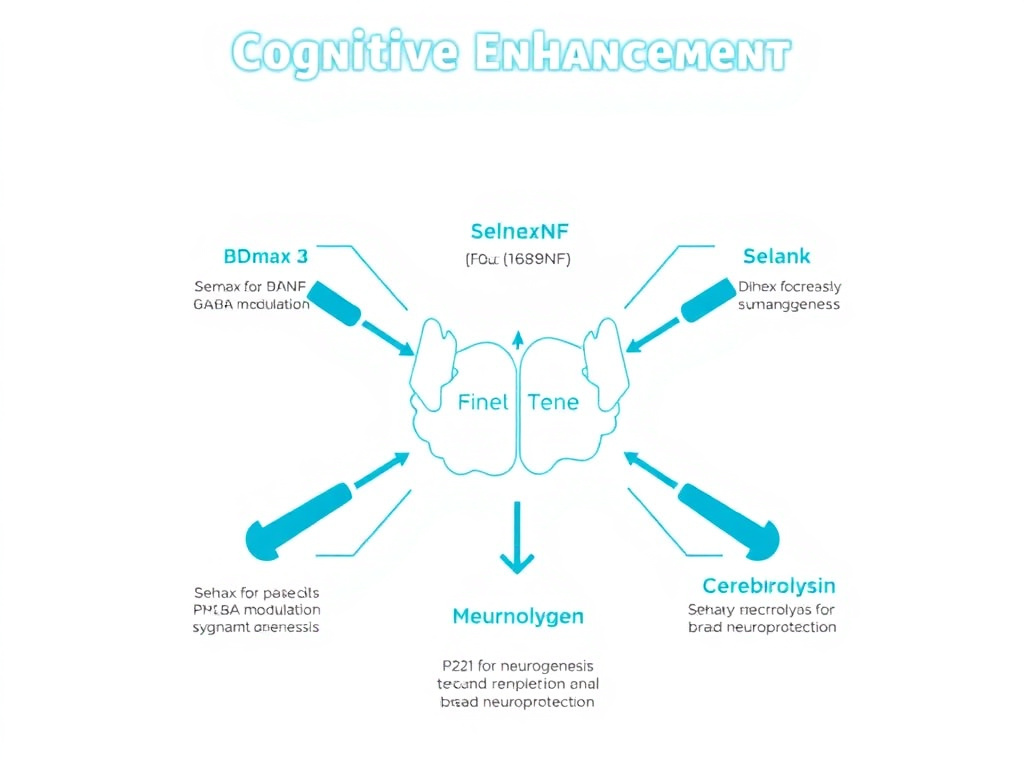
The cognitive enhancement peptide stack - combining Semax, Selank, Dihexa, P21, and Cerebrolysin - represents one of the most sophisticated approaches to optimizing brain function through targeted neurotrophic signaling. Each peptide addresses a distinct aspect of cognitive performance, from BDNF upregulation and anxiety reduction to synaptogenesis, neurogenesis, and broad-spectrum neuroprotection.
Key Takeaways
- Semax rapidly upregulates brain-derived neurotrophic factor (BDNF) and modulates dopaminergic and serotonergic systems, enhancing focus, memory consolidation, and learning capacity.
- Selank acts as a positive allosteric modulator of GABA-A receptors, providing anxiolytic effects comparable to benzodiazepines without sedation, tolerance, or dependence - while simultaneously improving attention and cognitive processing.
- Dihexa potentiates hepatocyte growth factor (HGF)/c-Met signaling in the central nervous system, driving synaptogenesis - the formation of entirely new synaptic connections between neurons.
- P21 is a CNTF-derived peptide that promotes neurogenesis in the hippocampal dentate gyrus, increases expression of synaptic proteins, and enhances BDNF/TrkB/CREB signaling without the side effects of full-length ciliary neurotrophic factor.
- Cerebrolysin delivers a complex mixture of low-molecular-weight neuropeptides that mimic endogenous neurotrophic factors, providing broad-spectrum neuroprotection and cognitive support backed by over 200 clinical trials.
Your brain isn't a single system. It's a network of overlapping processes - neurotransmitter signaling, synaptic formation, neuronal growth, inflammatory regulation, and neurotrophic factor expression - all working together to produce what we experience as memory, focus, creativity, and mental clarity. When one of these systems falters, the effects ripple outward. That's why targeting a single mechanism with a single compound often produces underwhelming results.
This is the core logic behind cognitive peptide stacking. Rather than relying on one molecule to do everything, a well-designed stack uses multiple peptides that each excel at a specific aspect of brain optimization. The five compounds covered in this guide work through genuinely different pathways:
- Semax rapidly upregulates brain-derived neurotrophic factor (BDNF) and modulates dopaminergic and serotonergic systems, enhancing focus, memory consolidation, and learning capacity.
- Selank acts as a positive allosteric modulator of GABA-A receptors, providing anxiolytic effects comparable to benzodiazepines without sedation, tolerance, or dependence - while simultaneously improving attention and cognitive processing.
- Dihexa potentiates hepatocyte growth factor (HGF)/c-Met signaling in the central nervous system, driving synaptogenesis - the formation of entirely new synaptic connections between neurons.
- P21 is a CNTF-derived peptide that promotes neurogenesis in the hippocampal dentate gyrus, increases expression of synaptic proteins, and enhances BDNF/TrkB/CREB signaling without the side effects of full-length ciliary neurotrophic factor.
- Cerebrolysin delivers a complex mixture of low-molecular-weight neuropeptides that mimic endogenous neurotrophic factors, providing broad-spectrum neuroprotection and cognitive support backed by over 200 clinical trials.
What makes these peptides different from traditional nootropics like racetams, modafinil, or caffeine is their mechanism. Traditional nootropics generally modulate neurotransmitter levels or receptor sensitivity - they tweak existing signaling. Cognitive peptides, by contrast, can actually promote structural changes in the brain: new synapses, new neurons, increased dendritic branching, and enhanced neurotrophic factor expression. The difference is analogous to turning up the volume on a speaker versus upgrading the speaker itself.
This guide covers the science behind each compound, the rationale for combining them, practical stacking protocols at beginner through advanced levels, timing and cycling strategies, methods for measuring cognitive improvement, lifestyle factors that amplify peptide effects, safety considerations, and a comparison with conventional nootropics. We draw on peer-reviewed research throughout, though we're transparent about the limitations: most of these peptides have stronger preclinical than clinical evidence, and none are FDA-approved for cognitive enhancement.
Key Takeaways
- Cognitive peptides work through neurotrophic and neuroplastic mechanisms fundamentally different from traditional nootropics
- The five peptides in this stack target complementary pathways: BDNF upregulation, GABAergic anxiolysis, synaptogenesis, neurogenesis, and broad neuroprotection
- Stacking allows lower doses of individual compounds while achieving broader cognitive enhancement
- Most evidence comes from preclinical research and limited human trials - work with a healthcare provider
- Proper timing, cycling, and lifestyle optimization are essential for maximizing results
- Use the Dosing Calculator for personalized protocol guidance
Neuroplasticity & Peptide Mechanisms
The Neuroscience of Cognitive Enhancement
Before examining each peptide individually, it helps to understand the biological infrastructure they're designed to influence. Cognitive performance depends on several interconnected systems, and the most effective enhancement strategies target the foundations rather than the surface-level symptoms.
The brain contains roughly 86 billion neurons, each forming an average of 7,000 synaptic connections. That's approximately 600 trillion synapses processing information through electrochemical signaling. Cognitive function - your ability to remember, focus, learn, reason, and create - emerges from the efficiency and architecture of this network. When we talk about "enhancing cognition," we're really talking about optimizing three things: the strength of existing connections, the formation of new connections, and the health and survival of the neurons themselves.[1]
Neuroplasticity: The Brain's Capacity for Change
Neuroplasticity refers to the brain's ability to reorganize itself by forming new neural connections throughout life. This isn't just an abstract concept - it's the physical basis of learning and memory. Every time you acquire a new skill, memorize information, or adapt to a new environment, your brain is literally rewiring itself at the synaptic level.
There are two primary forms of neuroplasticity relevant to cognitive enhancement:
Synaptic plasticity involves changes in the strength of existing synaptic connections. Long-term potentiation (LTP) strengthens synapses that are frequently activated, making signal transmission more efficient. Long-term depression (LTD) weakens underused connections. Together, these processes allow the brain to encode new information and refine neural circuits based on experience. LTP is widely considered the cellular basis of learning and memory.[2]
Structural plasticity involves physical changes to neural architecture - the growth of new dendritic spines, the formation of entirely new synapses (synaptogenesis), the birth of new neurons (neurogenesis), and changes in axonal branching. These structural changes are slower than synaptic plasticity but create more durable improvements in cognitive capacity.
Cognitive peptides work primarily through structural plasticity mechanisms. While traditional nootropics like piracetam or modafinil modulate neurotransmitter activity (affecting synaptic plasticity indirectly), peptides like Dihexa and P21 directly promote synaptogenesis and neurogenesis. This distinction matters because structural changes represent genuine additions to the brain's processing capacity rather than temporary optimization of existing hardware.
Neurotrophic Factors: The Master Regulators
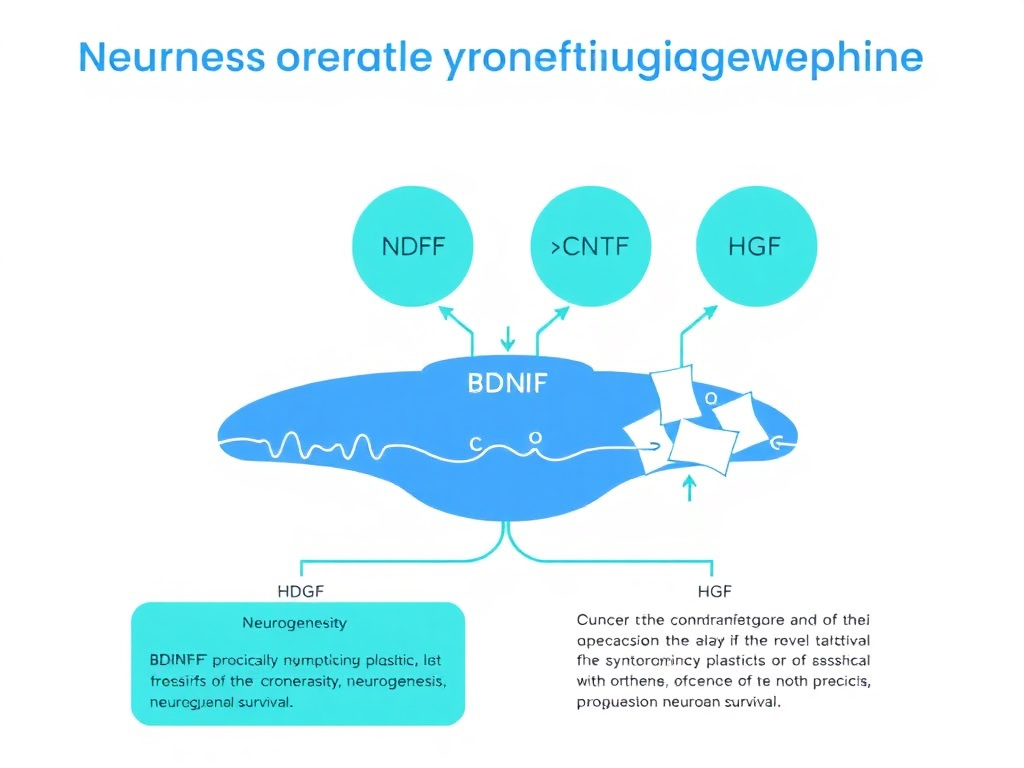
Neurotrophic factors are proteins that regulate the survival, development, and function of neurons. They're the brain's internal growth and maintenance signals. Several are directly relevant to cognitive enhancement:
Brain-Derived Neurotrophic Factor (BDNF)
BDNF is arguably the most important molecule for cognitive function and neuroplasticity. It acts through its high-affinity receptor, tropomyosin receptor kinase B (TrkB), to promote neuronal survival, encourage dendritic growth, strengthen synapses, and facilitate LTP. Higher BDNF levels are consistently associated with better cognitive performance, improved memory, and greater resilience to neurological insult.[3]
BDNF levels decline with age, chronic stress, sedentary lifestyle, poor sleep, and neuroinflammation. This decline is strongly correlated with age-related cognitive impairment and is observed in neurodegenerative conditions including Alzheimer's disease. Strategies that restore or enhance BDNF expression - including exercise, certain dietary patterns, and peptides like Semax - have shown consistent cognitive benefits in research settings.[4]
The BDNF/TrkB signaling cascade activates several downstream pathways critical for cognition. The PI3K/Akt pathway promotes neuronal survival. The MAPK/ERK pathway drives synaptic plasticity and gene expression changes associated with memory consolidation. The PLC-gamma pathway modulates intracellular calcium signaling, which is essential for LTP induction. When a peptide like Semax upregulates BDNF, it's activating this entire cascade of pro-cognitive effects.
Nerve Growth Factor (NGF)
NGF was the first neurotrophic factor discovered (by Rita Levi-Montalcini, who won the Nobel Prize for this work in 1986). It acts primarily through TrkA receptors and is essential for the survival and maintenance of cholinergic neurons in the basal forebrain - the same neurons that degenerate in Alzheimer's disease. NGF supports acetylcholine synthesis, which is critical for attention, memory encoding, and executive function.[5]
The cholinergic hypothesis of Alzheimer's disease - the idea that cognitive decline results from loss of cholinergic signaling - led to the development of acetylcholinesterase inhibitors like donepezil and rivastigmine. These drugs slow the breakdown of acetylcholine, but they don't address the underlying loss of cholinergic neurons. NGF-enhancing strategies aim to preserve and restore these neurons rather than just squeezing more function out of the remaining ones.
Ciliary Neurotrophic Factor (CNTF)
CNTF signals through the JAK/STAT pathway and plays a role in neuronal differentiation, survival, and neurogenesis. It's particularly active in the hippocampus, which is the brain's primary center for memory formation and spatial navigation. P21 was specifically designed to mimic CNTF's neurotrophic effects while avoiding its systemic side effects (weight loss, fever, and injection site reactions that plagued clinical trials of full-length CNTF).[6]
Hepatocyte Growth Factor (HGF)
HGF, acting through its c-Met receptor, promotes synaptogenesis, neuronal survival, and axonal growth in the central nervous system. Though originally identified for its role in liver regeneration, HGF/c-Met signaling has emerged as an important pathway for synaptic formation and maintenance in the brain. Dihexa was specifically engineered to potentiate HGF/c-Met signaling, and its remarkable cognitive effects in animal models are dependent on this pathway.[7]
The Acetylcholine System and Cognitive Performance
Acetylcholine (ACh) deserves special mention because it's the neurotransmitter most directly linked to attention, memory encoding, and learning. The cholinergic system originates primarily in the basal forebrain (nucleus basalis of Meynert) and projects widely throughout the cortex and hippocampus. When you're paying close attention to something, cholinergic signaling increases in the relevant brain regions, essentially "tagging" that information for memory storage.[8]
Several of the peptides in the cognitive stack influence cholinergic function indirectly. Semax's BDNF upregulation supports cholinergic neuron health. P21's CNTF-mimetic activity promotes cholinergic neuron survival and differentiation. Cerebrolysin contains peptide fragments that have been shown to enhance cholinergic transmission in clinical studies. This multi-angle support for the cholinergic system is one reason the cognitive peptide stack may produce more consistent effects on attention and memory than compounds that target only one aspect of cholinergic function.
Neuroinflammation: The Silent Cognitive Thief
Chronic, low-grade neuroinflammation is increasingly recognized as a major driver of cognitive decline - not just in neurodegenerative disease but in the everyday "brain fog" that many people experience with age, stress, poor sleep, or metabolic dysfunction. Activated microglia (the brain's resident immune cells) release pro-inflammatory cytokines including TNF-alpha, IL-1beta, and IL-6, which impair synaptic function, reduce BDNF expression, and inhibit neurogenesis.[9]
Several peptides in the cognitive stack have anti-neuroinflammatory properties. Selank modulates cytokine expression and has been shown to reduce neuroinflammatory markers. Semax's neuroprotective effects include reduction of oxidative stress and inflammatory signaling. Cerebrolysin has demonstrated anti-inflammatory effects in multiple clinical contexts. By addressing neuroinflammation alongside neurotrophic signaling, the stack targets both the "accelerator" (growth factors) and the "brake" (inflammation) of cognitive function.
Why Peptides Differ from Traditional Nootropics
Understanding these mechanisms clarifies why cognitive peptides represent a fundamentally different approach from conventional nootropics. Traditional cognitive enhancers work through three main strategies:
| Approach | Examples | Mechanism | Limitations |
|---|---|---|---|
| Stimulants | Caffeine, modafinil, amphetamines | Increase catecholamine signaling (dopamine, norepinephrine) | Tolerance, dependence risk, anxiety, sleep disruption |
| Racetams | Piracetam, aniracetam, phenylpiracetam | Modulate AMPA and acetylcholine receptors | Modest effect sizes, inconsistent results in healthy subjects |
| Cholinergics | Alpha-GPC, CDP-choline, huperzine A | Increase acetylcholine availability | Ceiling effect, GI side effects at higher doses |
| Neurotrophic peptides | Semax, Selank, Dihexa, P21, Cerebrolysin | Upregulate growth factors, promote structural brain changes | Limited human data, requires injection or intranasal delivery |
The distinction matters practically. Stimulants can improve acute performance but don't build lasting cognitive capacity. Racetams may enhance synaptic efficiency but don't create new synapses. Neurotrophic peptides, in theory and in preclinical evidence, can promote genuine structural improvements - new synaptic connections, new neurons, enhanced dendritic complexity - that persist beyond the period of active use. Whether this theoretical advantage fully translates to human experience remains an active area of investigation.
Research Context
Most cognitive peptide research has been conducted in animal models or limited human trials. While the preclinical data is compelling, translating animal cognitive data to human outcomes is inherently uncertain. The stacking protocols described in this guide are based on available research, clinical practitioner experience, and mechanistic reasoning - but they should be approached with appropriate caution and medical supervision. Visit the Peptide Research Hub for regularly updated evidence summaries.
Semax: BDNF Enhancement
Overview and Development
Semax is a heptapeptide with the sequence Met-Glu-His-Phe-Pro-Gly-Pro. It's a synthetic analog of the adrenocorticotropic hormone (ACTH) fragment 4-10, developed at the Institute of Molecular Genetics of the Russian Academy of Sciences in the 1980s. The peptide retains ACTH's neurotrophic properties while lacking its hormonal activity - meaning it doesn't stimulate cortisol production or affect the adrenal axis. This separation of neurotrophic from endocrine effects was the key design achievement.[10]
In Russia, Semax has been approved since 2011 as a prescription medication for the treatment of stroke, cognitive disorders, and peptic ulcers. It's administered intranasally at a 1% solution concentration. While not approved by the FDA in the United States, it has accumulated a substantial body of preclinical and limited clinical research supporting its cognitive-enhancing properties.
Mechanism of Action
Semax's cognitive effects operate through several interconnected mechanisms, but BDNF upregulation is the primary driver:
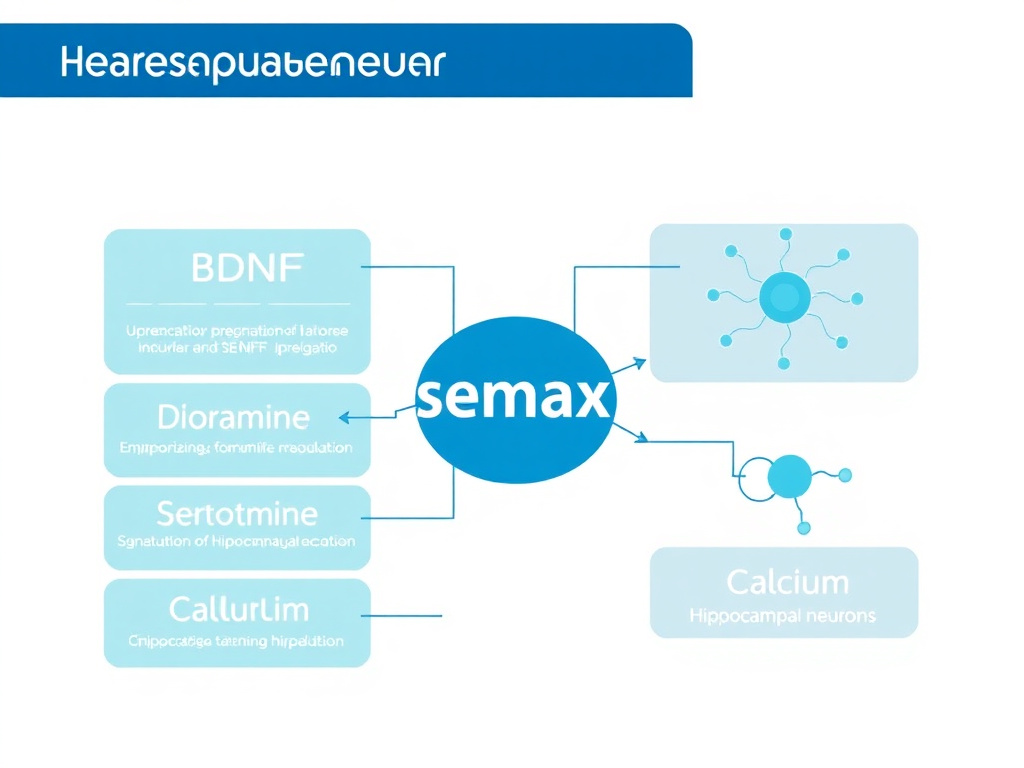
BDNF/TrkB pathway activation: Semax rapidly increases BDNF expression and its receptor TrkB in the hippocampus. A study published in Brain Research Bulletin demonstrated that a single administration of Semax increased BDNF mRNA levels in the rat hippocampus within 30 minutes, with effects lasting several hours. This rapid onset is unusual for neurotrophic interventions and likely contributes to the acute cognitive improvements users report.[11]
Dopaminergic modulation: Semax activates dopaminergic pathways in the brain, particularly in the prefrontal cortex and striatum. Dopamine is essential for working memory, motivation, reward processing, and executive function. Research has shown that Semax increases dopamine and its metabolites in specific brain regions, which may account for the improvements in focus and mental energy commonly associated with the peptide.[12]
Serotonergic activation: In addition to dopamine, Semax modulates serotonergic neurotransmission. Serotonin influences mood, anxiety regulation, sleep-wake cycles, and cognitive flexibility. The dual dopaminergic-serotonergic activity of Semax provides a more balanced cognitive enhancement profile than compounds that target only one monoamine system.
Calcium signaling modulation: A 2025 study published in the Bulletin of Experimental Biology and Medicine found that Semax at 1 micromolar concentration significantly increased the frequency of spontaneous calcium fluctuations in pyramidal layer cells of the hippocampal CA1 field. Intracellular calcium dynamics are fundamental to synaptic plasticity and LTP - the cellular basis of memory formation. This finding provides a plausible mechanism for Semax's acute effects on memory encoding.[13]
Neuroprotection: Semax provides neuroprotective effects through reduction of oxidative stress, modulation of inflammatory cytokines, and prevention of neuronal apoptosis under stress conditions. These protective effects are separate from its acute cognitive benefits and may contribute to long-term brain health maintenance.
Research Evidence for Cognitive Enhancement
The cognitive enhancement evidence for Semax comes from several lines of research:
Animal learning and memory studies: Multiple studies have demonstrated that Semax improves performance in standard cognitive paradigms. In conditioned avoidance testing, Semax-treated animals showed significantly increased successful responses compared to controls. Morris water maze studies (a standard test of spatial learning and memory) have shown faster acquisition and better retention in Semax-treated groups. These effects have been attributed specifically to modulation of hippocampal BDNF/TrkB signaling, as blocking TrkB receptors abolishes the cognitive benefits.[14]
Stroke and brain injury recovery: Some of the strongest clinical evidence for Semax comes from stroke patients. Russian clinical trials have demonstrated improved cognitive recovery when Semax is administered during the acute phase of ischemic stroke. While these studies focus on impaired cognition rather than baseline enhancement, they provide human evidence that Semax's neurotrophic mechanisms translate into measurable cognitive improvements.[15]
Gene expression studies: Transcriptomic analyses have revealed that Semax influences the expression of genes involved in neuronal survival, synaptic plasticity, and immune regulation in the brain. One study identified over 100 genes differentially expressed in response to Semax administration, including genes in the BDNF pathway, the immune complement system, and vascular regulation. This broad transcriptional response suggests that Semax's effects extend beyond simple neurotransmitter modulation.[16]
Dosing and Administration
Semax is administered intranasally in the vast majority of research and clinical applications. Oral and sublingual routes have poor bioavailability due to rapid peptide degradation in the gastrointestinal tract.
| Parameter | Details |
|---|---|
| Route | Intranasal |
| Standard dose | 200-600 mcg per day |
| Starting dose | 200 mcg (100 mcg per nostril) |
| Experienced dose | 400-600 mcg per day |
| Timing | Morning, before 2:00 PM (can interfere with sleep if taken later) |
| Onset | 15-30 minutes for acute effects |
| Duration | 4-8 hours for acute cognitive effects |
| Cycle length | 2-4 weeks on, 1-2 weeks off |
An enhanced version called N-Acetyl Semax (NASA) adds an acetyl group that improves stability and may enhance bioavailability. Some practitioners prefer NASA for more potent effects, though the research base is thinner than for standard Semax. Another variant, N-Acetyl Semax Amidate (NASA-Amidate), includes both acetylation and amidation modifications for potentially even greater stability and potency.
For detailed dosing guidance tailored to your body weight and goals, use the FormBlends Dosing Calculator.
Clinical Pearl
Semax should be dosed in the morning or early afternoon. The dopaminergic activation it provides can interfere with sleep onset if administered after 2:00 PM. Many users find that morning administration provides a sustained window of enhanced focus and mental clarity lasting 4-6 hours, making it well-suited for knowledge work, studying, or creative tasks. For more detailed information, see our Semax Research Monograph.
What to Expect
Based on available research and clinical practitioner reports, Semax's effects can be categorized by timeline:
- Acute (within 30 minutes): Increased mental clarity, improved focus, enhanced verbal fluency, mild stimulation without jitteriness
- Short-term (1-2 weeks): More consistent cognitive performance, improved memory encoding, better sustained attention
- Medium-term (2-4 weeks): Potential BDNF-mediated neuroplastic changes, improved learning capacity, enhanced cognitive resilience under stress
Individual responses vary. Some users report immediate, noticeable effects; others notice more gradual improvements over days to weeks. The absence of a strong "felt" effect doesn't mean the neurotrophic mechanisms aren't active - BDNF upregulation and structural neuroplasticity occur at a level below conscious awareness.
Selank: Anxiolysis + Cognition
Overview and Development
Selank is a synthetic analog of the naturally occurring immunomodulatory peptide tuftsin (Thr-Lys-Pro-Arg), with the sequence Thr-Lys-Pro-Arg-Pro-Gly-Pro. Developed at the Institute of Molecular Genetics of the Russian Academy of Sciences - the same institution that produced Semax - Selank was designed to combine anxiolytic (anti-anxiety) effects with nootropic (cognitive-enhancing) properties. It's been approved in Russia since 2009 for the treatment of generalized anxiety disorder (GAD) and neurasthenia.[17]
What makes Selank unusual among anxiolytic compounds is that it reduces anxiety without causing sedation, cognitive impairment, or dependence. Most effective anxiolytics - benzodiazepines being the classic example - achieve anxiety reduction at the cost of cognitive function. They calm you down by broadly suppressing neural activity. Selank takes a more targeted approach, modulating specific aspects of GABAergic neurotransmission while leaving (and even enhancing) cognitive processing intact.
Mechanism of Action
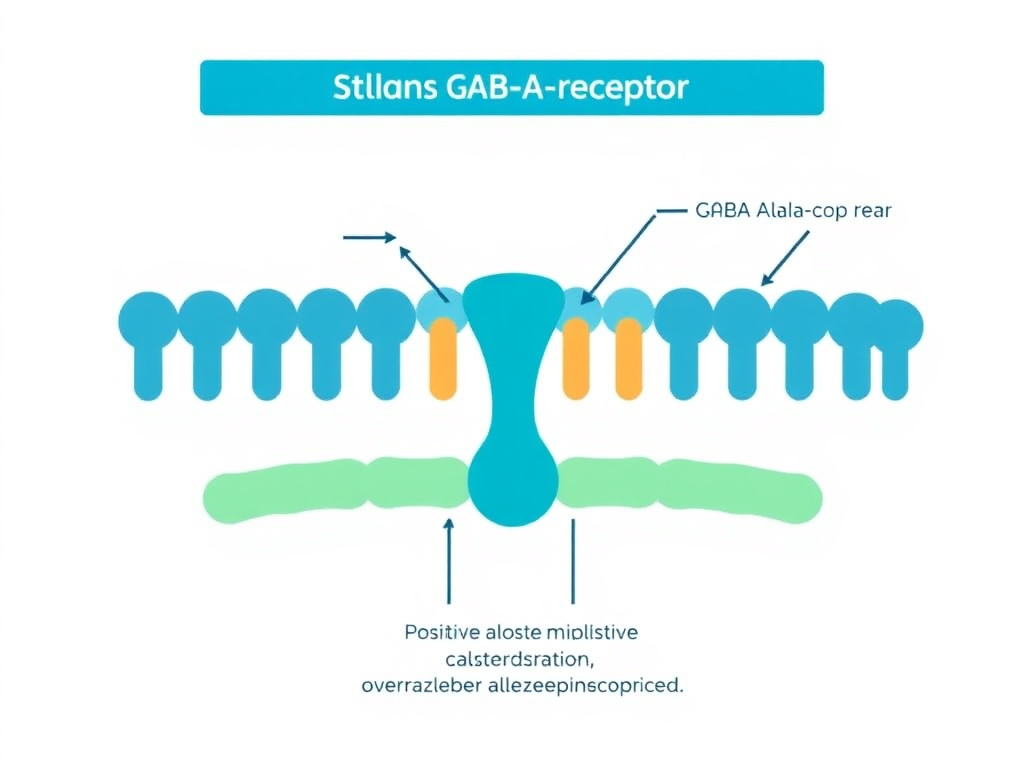
GABAergic modulation: Selank functions as a positive allosteric modulator of GABA-A receptors, meaning it enhances the effect of GABA (the brain's primary inhibitory neurotransmitter) at these receptors without directly activating them. This is mechanistically similar to how benzodiazepines work, but Selank binds at a different site and with different kinetics. The result is anxiolysis without the full spectrum of benzodiazepine effects (sedation, muscle relaxation, amnesia, dependence).[18]
Research published in Frontiers in Pharmacology demonstrated that Selank administration affected the expression of 45 genes involved in GABAergic neurotransmission within one hour of administration in rat frontal cortex tissue. This wasn't a simple increase or decrease in GABA activity - it was a complex remodeling of GABAergic gene expression that suggests Selank fine-tunes rather than broadly amplifies inhibitory signaling.[19]
Monoamine modulation: Beyond GABA, Selank influences serotonin, dopamine, and norepinephrine systems. It stabilizes serotonin metabolism and modulates enkephalin degradation in the brain. This monoaminergic activity contributes to both its anxiolytic and cognitive effects, creating a state of calm alertness rather than sedated calm.
Immune and cytokine modulation: Selank's tuftsin backbone gives it immunomodulatory properties. It influences the expression of inflammatory cytokines including IL-6 and has been shown to normalize immune function in both immunosuppressed and overactive states. Since neuroinflammation impairs cognitive function, this immunomodulatory activity may contribute to Selank's nootropic effects by reducing inflammatory interference with neural signaling.[20]
Enkephalin system interaction: Selank inhibits the enzyme enkephalinase, which degrades endogenous enkephalins. Enkephalins are endogenous opioid peptides involved in pain modulation, stress response, and emotional regulation. By preserving enkephalin levels, Selank may contribute to stress resilience and emotional stability without producing opioid-like effects at therapeutic doses.
Research Evidence
Clinical anxiety trials: The strongest human evidence for Selank comes from clinical trials in patients with generalized anxiety disorder. A study comparing Selank to the benzodiazepine medazepam found comparable anxiolytic efficacy, but Selank additionally demonstrated anti-asthenic (anti-fatigue) and psychostimulant effects that the benzodiazepine lacked. In other words, patients felt less anxious and more mentally energized - a combination that benzodiazepines simply don't provide.[21]
Cognitive effects under stress: Selank has been shown to prevent the cognitive impairment that typically accompanies anxiety. In an unpredictable chronic mild stress model, Selank not only reduced anxiety-like behavior but also preserved cognitive performance that deteriorated in untreated stressed animals. When combined with diazepam, Selank enhanced the anxiolytic effect while counteracting diazepam's cognitive impairment - suggesting potential as an adjunct to conventional anxiolytics.[22]
Gene expression and neuroplasticity: Transcriptomic studies have shown that Selank influences the expression of genes involved in neuronal development, synaptic transmission, and neuroprotection. These gene expression changes extend well beyond what would be expected from simple GABAergic modulation, suggesting that Selank's effects on brain function are more comprehensive than its primary mechanism would imply.[23]
The Anxiety-Cognition Connection
There's a reason Selank is included in a cognitive enhancement stack despite being primarily classified as an anxiolytic. Anxiety and cognitive performance have an inverted-U relationship: some arousal improves performance, but excessive anxiety degrades it. This is known as the Yerkes-Dodson law.
For many people - especially those in high-pressure professional, academic, or creative environments - anxiety is the single biggest obstacle to cognitive performance. It's not that their brains lack capacity; it's that anxiety creates interference that prevents them from accessing their full capability. Racing thoughts, difficulty concentrating, working memory intrusion, and perfectionism-driven rumination all consume cognitive resources that could otherwise be directed toward productive thinking.
Selank addresses this by reducing the anxiety component without dampening cognitive function. In fact, by removing anxiety-related interference, it can produce a net improvement in effective cognitive performance even though it doesn't directly enhance any cognitive process. Many users of the Semax-Selank stack report that Selank is the more noticeable of the two peptides specifically because of this interference-removal effect.
Dosing and Administration
| Parameter | Details |
|---|---|
| Route | Intranasal (primary), subcutaneous injection |
| Standard intranasal dose | 200-400 mcg per day |
| Subcutaneous dose | 250-500 mcg per day |
| Starting dose | 200 mcg intranasal |
| Timing | Can be used any time; some prefer morning, others split AM/PM |
| Onset | 10-20 minutes intranasal |
| Duration | 3-6 hours for acute effects; cumulative benefits over days |
| Cycle length | 2-4 weeks on, 1-2 weeks off |
Selank is available in both standard and nasal spray formulations. The nasal route provides rapid absorption through the nasal mucosa with direct access to the brain via the olfactory pathway. Unlike Semax, Selank generally does not interfere with sleep and can be taken later in the day. Some practitioners recommend splitting the daily dose into morning and afternoon administrations for more consistent anxiolytic coverage.
For detailed research information, see our Selank Anxiolytic Peptide Research page.
Semax + Selank: The Foundation Stack
The combination of Semax and Selank is the most commonly used cognitive peptide stack and serves as the foundation for more advanced protocols. Semax provides BDNF upregulation and dopaminergic drive (focus, motivation, learning). Selank provides GABAergic anxiolysis and monoamine stabilization (calm, clarity, stress resilience). Together, they create a state of focused calm - alert and motivated without anxiety or overstimulation. Many practitioners recommend starting here before adding additional compounds. Visit our Getting Started page for guidance on beginning a peptide protocol.
Dihexa: Synaptic Formation
Overview and Development
Dihexa (also known as PNB-0408, chemical name N-hexanoic-Tyr-Ile-(6) aminohexanoic amide) is a derivative of angiotensin IV developed at Washington State University by Dr. Joseph Harding's research group. It represents one of the most intriguing developments in cognitive peptide research because of its extraordinary potency and unique mechanism of action. In preclinical studies, Dihexa demonstrated cognitive-enhancing effects at doses approximately ten million times lower than BDNF on a molar basis.[24]
The development of Dihexa arose from an unexpected observation: angiotensin IV, a metabolite of the blood pressure-regulating renin-angiotensin system, appeared to enhance cognitive function in animal models. Harding's group spent years investigating why a component of the cardiovascular system would affect cognition, eventually discovering that angiotensin IV's cognitive effects were mediated not through traditional angiotensin receptors but through the hepatocyte growth factor (HGF)/c-Met system. This led to the systematic design of Dihexa as a stable, brain-penetrant analog that could potentiate HGF signaling in the central nervous system.
Mechanism of Action
HGF/c-Met potentiation: Dihexa's primary mechanism is the potentiation of hepatocyte growth factor (HGF) signaling through the c-Met receptor. Dihexa doesn't activate c-Met directly - instead, it binds to HGF and, in the presence of subthreshold concentrations of endogenous HGF, amplifies its ability to activate c-Met. This is a subtle but significant distinction. Dihexa essentially makes the brain's existing HGF work harder rather than introducing an entirely new signal. The downstream consequence is enhanced synaptogenesis - the formation of new functional synaptic connections between neurons.[25]
PI3K/AKT signaling: A 2021 study published in Frontiers in Pharmacology demonstrated that Dihexa's cognitive effects in an Alzheimer's disease mouse model (APP/PS1) were mediated through the PI3K/AKT signaling pathway. This pathway is involved in neuronal survival, synaptic plasticity, and glucose metabolism in the brain. Dihexa treatment rescued cognitive impairment and recovered memory function in these mice, with effects dependent on intact PI3K/AKT signaling.[26]
Synaptic formation: Unlike compounds that merely strengthen existing synapses, Dihexa promotes the formation of entirely new synaptic connections. This was demonstrated directly in cell culture studies where Dihexa treatment increased the number of dendritic spines and functional synapses. New synapse formation represents a genuine expansion of the brain's information-processing capacity rather than optimization of existing circuitry.
Blood-brain barrier penetration: Dihexa was specifically designed for oral bioavailability and efficient blood-brain barrier penetration - both unusual properties for peptide-derived compounds. Most neurotrophic factors and many peptides cannot cross the blood-brain barrier, severely limiting their therapeutic utility. Dihexa's small molecular weight and lipophilic modifications allow it to reach the brain after oral administration, which is a significant practical advantage.
How Dihexa Differs from Other Cognitive Peptides
While Semax upregulates BDNF (strengthening existing synaptic signaling) and P21 promotes neurogenesis (creating new neurons), Dihexa promotes synaptogenesis (creating new connections between existing neurons). These are three distinct processes, which is why combining all three peptides can theoretically produce more comprehensive cognitive enhancement than any single compound. For detailed research data, see our Dihexa Research Monograph.
Research Evidence
Cognitive rescue in dementia models: The most striking preclinical evidence for Dihexa comes from studies in scopolamine-induced cognitive impairment models. Scopolamine blocks muscarinic acetylcholine receptors, mimicking the cholinergic deficit seen in Alzheimer's disease. Dihexa completely rescued cognitive performance in these models at remarkably low doses, restoring spatial learning and memory to levels comparable to unimpaired controls. The effect was dependent on HGF/c-Met activation, confirming the mechanistic pathway.[27]
Alzheimer's disease models: In APP/PS1 transgenic mice (which develop amyloid plaques and cognitive decline analogous to Alzheimer's disease), Dihexa treatment restored spatial learning in the Morris water maze and improved memory retention. Strikingly, these improvements occurred despite the continued presence of amyloid pathology, suggesting that Dihexa's synaptogenic effects can compensate for ongoing neurodegeneration by building new neural circuits.[28]
Dose-response and potency: Dihexa's potency is remarkable. The procognitive effects in animal models have been observed at picomolar to nanomolar concentrations, making it one of the most potent cognitive-enhancing compounds ever identified in preclinical research. However, potency does not automatically equate to efficacy or safety in humans, and no human clinical trials have been published to date.
Important Caveats
Dihexa is the most experimental compound in this stack, and several caveats must be stated clearly:
- No human clinical data: As of this writing, no controlled human trials of Dihexa have been published. All cognitive enhancement evidence comes from animal models and cell culture studies.
- HGF/c-Met and cancer: The HGF/c-Met pathway is involved in cancer progression. While there's no direct evidence that Dihexa promotes tumor growth, the theoretical concern exists and warrants caution, particularly for individuals with cancer history or genetic predisposition.
- Long-term safety unknown: The long-term effects of chronic HGF/c-Met potentiation in the brain are not established. While synaptogenesis is generally desirable, the consequences of sustained activation of this pathway over months or years remain unstudied.
- Regulatory status: Dihexa is not FDA-approved for any indication. It's available only as a research compound.
Dosing and Administration
| Parameter | Details |
|---|---|
| Route | Oral, subcutaneous injection, or intranasal |
| Oral dose range | 10-40 mg per day (research-derived estimates) |
| Subcutaneous dose | 5-20 mg per day |
| Starting dose | 10 mg oral or 5 mg subcutaneous |
| Timing | Morning, with or without food |
| Cycle length | 2-4 weeks on, 4-8 weeks off (conservative approach) |
| Onset of effects | Days to weeks (structural changes take time) |
Given the experimental nature of Dihexa, conservative cycling is strongly recommended. Many practitioners suggest using shorter cycles with longer breaks to minimize theoretical risks from sustained HGF/c-Met activation while still benefiting from synaptogenic effects. The structural changes Dihexa promotes - new synaptic connections - persist after discontinuation, so the benefits aren't lost during off-cycle periods.
Safety Note
Dihexa is the most experimental compound in this guide. It has no human clinical trial data, and the long-term effects of chronic HGF/c-Met potentiation are unknown. Anyone considering Dihexa should work closely with a healthcare provider experienced in peptide protocols and should not use this compound if they have any history of cancer or are at elevated cancer risk. Conservative dosing and cycling are essential.
P21: Neurogenesis
Overview and Development
P21 (also designated P021) is a rationally designed neurotrophic peptide derived from reverse engineering of Cerebrolysin, the porcine brain-derived neuropeptide preparation that has been used clinically in Europe and Asia for decades. Researchers at the New York State Institute for Basic Research in Developmental Disabilities sought to identify which specific peptide fragments in Cerebrolysin's complex mixture were responsible for its neurotrophic effects. Through epitope mapping, they determined that Cerebrolysin's primary activity derived from peptide fragments mimicking ciliary neurotrophic factor (CNTF).[29]
The critical discovery was the identification of the DGGL tetrapeptide sequence (CNTF residues 147-150) as the minimal unit retaining neurotrophic activity. However, a four-amino-acid peptide would be rapidly degraded in the body and wouldn't cross the blood-brain barrier effectively. The solution was an adamantane modification - the attachment of an adamantane (diamond-like carbon cage) group that dramatically enhanced both metabolic stability and blood-brain barrier penetration. The final product was P21, which retained CNTF's neurotrophic effects in a form that could be administered peripherally and reach the brain intact.
Mechanism of Action
BDNF/TrkB/CREB signaling enhancement: P21's primary mechanism involves enhancement of the BDNF signaling cascade. Unlike Semax, which increases BDNF expression directly, P21 works through a slightly different pathway - it inhibits leukemia inhibitory factor (LIF) signaling via the STAT3 pathway, which results in disinhibition of BDNF expression. The practical outcome is similar (increased BDNF/TrkB activation), but the mechanism is complementary rather than redundant with Semax's approach.[30]
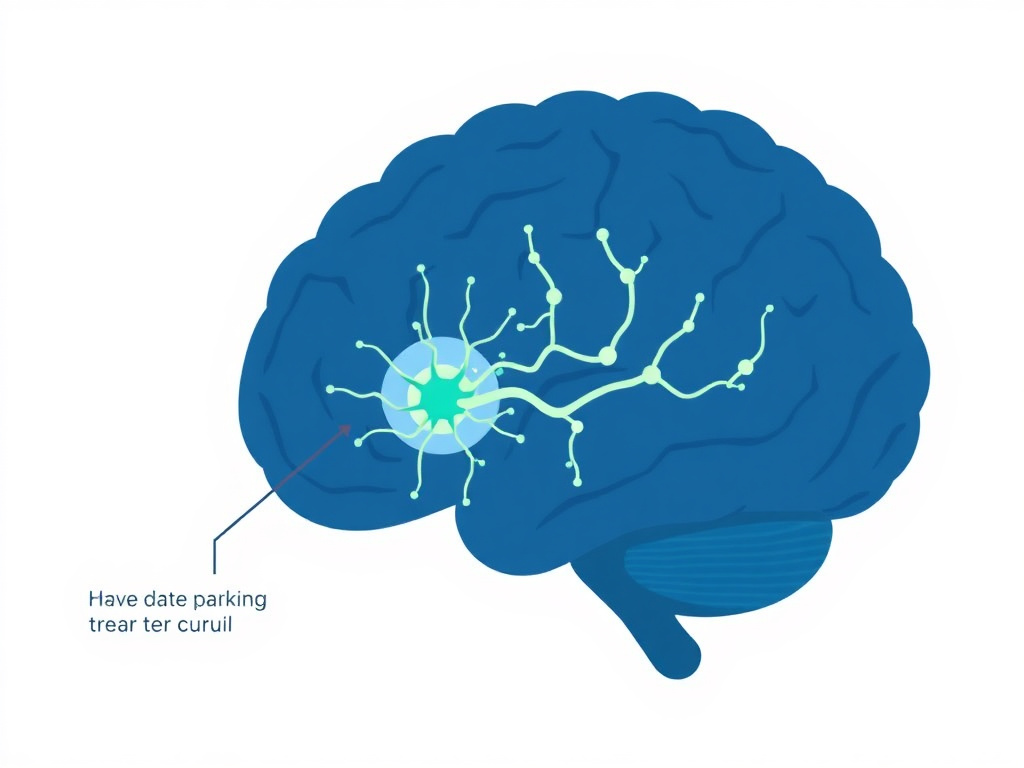
Neurogenesis promotion: P21's most distinctive effect is the promotion of neurogenesis - the birth of new neurons - specifically in the hippocampal dentate gyrus. This is particularly significant because the dentate gyrus is a critical structure for memory formation, pattern separation (the ability to distinguish between similar memories), and spatial navigation. P21 promotes both the proliferation of neural progenitor cells and the maturation and integration of newly born neurons into existing circuits.[31]
Synaptic protein expression: P21 increases the expression of key synaptic proteins including synaptophysin and synapsin I. Synaptophysin is a marker of presynaptic terminals, and its levels correlate with synaptic density. Synapsin I is involved in neurotransmitter release and synaptic vesicle management. Increased expression of both proteins indicates enhanced synaptic function and connectivity.
Anti-anxiety effects: In preclinical models, P21 has demonstrated anxiolytic properties in addition to its cognitive effects. This distinguishes it from pure cognitive enhancers and adds another dimension to its utility in a cognitive stack, particularly for individuals whose cognitive performance is impaired by anxiety.
Research Evidence
Alzheimer's disease models: P21 has been extensively tested in transgenic mouse models of Alzheimer's disease (3xTg-AD). In these studies, chronic P21 administration improved spatial memory and reduced anxiety-related behaviors. The cognitive improvements were accompanied by increased hippocampal neurogenesis, elevated BDNF levels, and restoration of synaptic protein expression. The compound also reduced tau pathology (hyperphosphorylated tau is a hallmark of Alzheimer's disease) in some studies, suggesting disease-modifying rather than purely symptomatic effects.[32]
Normal cognitive enhancement: P21 isn't limited to disease models. Studies in normal aged mice have demonstrated that P21 treatment improves memory performance and increases neurogenesis compared to age-matched controls. This is relevant because it suggests P21's benefits extend beyond rescuing impairment to genuinely enhancing normal cognitive function - though, as always, animal data must be extrapolated to humans with caution.[33]
Neurotrophic peptide incorporating adamantane: A foundational study published in Peptides demonstrated that P21 treatment in mice improved learning and memory, promoted neurogenesis and synaptic plasticity, and did so without the adverse effects of full-length CNTF (specifically, the severe weight loss and cachexia that ended clinical trials of CNTF as a therapeutic agent). This selective activity - retaining the neurotrophic benefits while eliminating the metabolic side effects - was the central achievement of P21's design.[34]
Advantages Over Full-Length CNTF and Cerebrolysin
P21 offers several practical advantages over its parent compounds. For a deeper comparison, see our Cerebrolysin vs. P21 Research page:
| Property | CNTF | Cerebrolysin | P21 |
|---|---|---|---|
| Blood-brain barrier penetration | Poor | Yes (low MW fragments) | Excellent (adamantane modification) |
| Route of administration | Injection only | IM or IV injection | Subcutaneous injection or intranasal |
| Weight loss side effect | Severe | Minimal | None observed |
| Composition | Single protein | Complex mixture (variable) | Single defined peptide |
| Batch consistency | High | Variable | High |
| Primary mechanism | JAK/STAT direct | Multi-target | BDNF/TrkB via LIF/STAT3 inhibition |
Dosing and Administration
| Parameter | Details |
|---|---|
| Route | Subcutaneous injection (primary), intranasal |
| Dose range | 500-1500 mcg per day (subcutaneous) |
| Starting dose | 500 mcg per day |
| Experienced dose | 1000-1500 mcg per day |
| Timing | Morning or early afternoon |
| Cycle length | 4-8 weeks on, 2-4 weeks off |
| Onset | Gradual over 1-4 weeks (neurogenesis takes time) |
P21's effects develop more gradually than those of Semax or Selank because neurogenesis is an inherently slow process. New neurons take weeks to mature, migrate to their proper positions, and integrate into functional circuits. Users should expect a minimum of 2-4 weeks before noticing cognitive changes, with effects potentially continuing to develop over 6-8 weeks of consistent use.
Cerebrolysin: Broad-Spectrum Neuroprotection
Overview
Cerebrolysin is a complex mixture of neuropeptides and free amino acids derived from porcine (pig) brain tissue through a standardized enzymatic process. Unlike the other compounds in this guide, Cerebrolysin isn't a single defined peptide - it's a mixture of peptide fragments, all below 10 kilodaltons in molecular weight, that collectively mimic the effects of multiple endogenous neurotrophic factors. This complexity is both its strength (broad-spectrum activity) and its limitation (harder to standardize and study mechanistically).[35]
Cerebrolysin has the most extensive clinical evidence base of any compound in this guide. It has been studied in over 200 clinical trials involving more than 15,000 patients across indications including Alzheimer's disease, vascular dementia, traumatic brain injury, stroke recovery, and cognitive impairment. It's approved in many European, Asian, and Latin American countries as a prescription medication, though it is not FDA-approved in the United States. For comprehensive research details, see our Cerebrolysin Research Monograph.
Mechanism of Action
Cerebrolysin's mechanism is inherently multi-target because it contains fragments with activity at several neurotrophic pathways:
BDNF-like activity: Peptide fragments in Cerebrolysin activate TrkB receptors, mimicking BDNF signaling and promoting synaptic plasticity, neuronal survival, and dendritic growth. This overlaps with Semax's primary mechanism but is delivered through direct receptor activation rather than upregulation of endogenous BDNF production.
NGF-like activity: Other fragments mimic nerve growth factor, supporting cholinergic neuron survival and function. This is particularly relevant for cognitive enhancement because the cholinergic system is the primary neurotransmitter system for attention and memory encoding.[36]
CNTF-like activity: Cerebrolysin contains peptide fragments with CNTF-mimetic properties, promoting neurogenesis and neuronal differentiation. P21 was, in fact, developed by identifying and optimizing these specific fragments.
Anti-apoptotic effects: Cerebrolysin activates anti-apoptotic pathways (including Bcl-2 upregulation and caspase-3 inhibition) that protect neurons from programmed cell death under stress conditions such as ischemia, excitotoxicity, and oxidative damage.
Neuroinflammation reduction: Clinical and preclinical studies have demonstrated that Cerebrolysin reduces markers of neuroinflammation, including microglial activation and pro-inflammatory cytokine expression. By calming neuroinflammatory processes, it may create a more permissive environment for the other cognitive peptides to exert their effects.
Clinical Evidence
Alzheimer's disease: Several randomized, double-blind, placebo-controlled trials of up to 28 weeks' duration have shown that Cerebrolysin improves global outcome measures and cognitive ability in patients with Alzheimer's disease. A Cochrane-style review of Cerebrolysin in dementia concluded that it was superior to placebo on measures of cognitive function and global clinical impression, though the effect sizes were modest and the quality of some trials was limited.[37]
Vascular dementia and stroke: Cerebrolysin has shown benefits in stroke recovery when administered during the acute and subacute phases. Multiple trials have demonstrated improved functional outcomes and cognitive recovery compared to standard care alone. A 2026 study in npj Parkinson's Disease also examined the neurotrophic peptide mixture in Parkinson's disease, further expanding the clinical evidence base.[38]
Cognitive enhancement in non-demented subjects: A smaller number of studies have examined Cerebrolysin in older adults with subjective cognitive complaints but without dementia. These studies generally show modest improvements in memory and processing speed, though the evidence is less consistent than for clinical populations.
Safety profile: Across its extensive clinical trial database, Cerebrolysin has demonstrated a generally favorable safety profile. Common side effects include mild dizziness, headache, and injection site reactions. Serious adverse events are rare. This extensive safety data provides a level of confidence not available for the newer, less-studied compounds in this guide.
Dosing and Administration
| Parameter | Details |
|---|---|
| Route | Intramuscular (IM) or intravenous (IV) injection |
| Cognitive enhancement dose | 5-10 mL IM daily (standard clinical dosing) |
| Clinical dose (dementia) | 10-30 mL IV daily for 10-20 day courses |
| Typical course | 10-20 consecutive days |
| Courses per year | 2-4 courses with 1-3 month intervals |
| Administration | Typically requires clinical setting for IV; IM can be self-administered |
Cerebrolysin's requirement for injection (IM or IV) and its batch-to-batch variability (inherent in biological preparations) are practical considerations. Some users opt for P21 as a more standardized alternative that captures a portion of Cerebrolysin's activity in a defined single-peptide format. Others prefer Cerebrolysin specifically because its complex mixture may provide broader neurotrophic coverage than any single peptide can achieve.
Pinealon: Peptide Bioregulator for Neural Protection
Overview
Pinealon is a synthetic tripeptide (Glu-Asp-Arg) developed as part of the Khavinson peptide bioregulator research program in Russia. It's classified as a "peptide bioregulator" - a short peptide that interacts directly with DNA to modulate gene expression in a tissue-specific manner. Pinealon's target tissue is the central nervous system, where it has demonstrated neuroprotective and cognitive-supportive effects in preclinical and limited clinical research.[39]
The Khavinson bioregulator approach is based on the concept that short peptides (di- and tripeptides) can interact directly with gene regulatory regions, influencing transcription in ways that support tissue homeostasis and counteract age-related decline. While this framework is not universally accepted in Western pharmacology, Pinealon has accumulated enough research data to warrant inclusion in a comprehensive discussion of cognitive peptides. For broader context on this approach, see our article on Khavinson Peptide Bioregulators.
Mechanism and Evidence
Neuroprotection via oxidative stress reduction: Research published in the Bulletin of Experimental Biology and Medicine demonstrated that Pinealon increases cell viability by suppressing free radical levels and activating proliferative processes. The peptide appears to interact directly with the genome at lower concentrations (restricting reactive oxygen species accumulation) and modulate cell cycle dynamics at higher concentrations.[40]
Cognitive support in brain injury: A clinical trial involving 72 patients with traumatic brain injury showed improved memory and cognitive performance following Pinealon administration, providing some human evidence for its cognitive benefits.[41]
Prenatal neuroprotection: Studies in animal models of prenatal stress (hyperhomocysteinemia) demonstrated that Pinealon protected offspring cognitive function and improved cerebellar neuron resistance to oxidative damage, suggesting potent neuroprotective properties during vulnerable developmental periods.[42]
Role in the Cognitive Stack
Pinealon serves as a supportive compound rather than a primary driver in the cognitive stack. Its neuroprotective effects complement the neurotrophic and synaptogenic actions of the primary peptides. Think of it as armor for the neurons that the other peptides are growing, connecting, and strengthening. By reducing oxidative stress and supporting cellular health, Pinealon helps ensure that the brain infrastructure being built and enhanced by Semax, Selank, Dihexa, and P21 is protected and maintained.
| Parameter | Details |
|---|---|
| Route | Oral (capsule), sublingual, or subcutaneous |
| Dose | 10-20 mg per day (oral) |
| Timing | Evening preferred (supports circadian function) |
| Cycle | 10-20 day courses, 2-4 times per year |
NAD+ and Neuroenergetic Support
While peptides like Semax and Dihexa act on neurotrophic factor signaling, the brain's capacity to respond to these signals depends on adequate cellular energy. Neurons are among the most metabolically demanding cells in the body, consuming roughly 20% of the body's total oxygen and glucose despite representing only 2% of body mass. This extraordinary energy demand makes neuronal function highly sensitive to metabolic support, and NAD+ (nicotinamide adenine dinucleotide) sits at the center of cellular energy metabolism.
NAD+ is an essential coenzyme in every living cell, serving as an electron carrier in mitochondrial oxidative phosphorylation, the primary pathway for ATP production. Beyond its metabolic role, NAD+ is a substrate for sirtuins (particularly SIRT1 and SIRT3), enzymes that regulate gene expression, DNA repair, mitochondrial biogenesis, and cellular stress resistance. NAD+ levels decline with aging, chronic inflammation, and metabolic dysfunction, and this decline correlates with cognitive deterioration in both animal models and human observational studies.
The relevance of NAD+ to cognitive peptide protocols is twofold. First, adequate NAD+ levels ensure that neurons have sufficient energy to respond to the growth factor signaling triggered by Semax, P21, and Dihexa. Building new synapses and generating new neurons are energy-intensive processes that require abundant ATP. Second, NAD+-dependent sirtuin activation provides additional neuroprotective effects, including enhanced mitochondrial function, reduced oxidative damage, and improved DNA repair in neurons.
NAD+ nasal spray formulations offer a convenient delivery method that may provide more direct central nervous system access compared to oral supplementation. Some cognitive peptide protocols incorporate NAD+ as a foundational support layer, ensuring that the metabolic prerequisites for neuroplasticity are in place before adding neurotrophic peptides.
GHK-Cu: The Neuroprotective Copper Peptide
GHK-Cu (glycyl-L-histidyl-L-lysine copper complex) is primarily known for its skin and wound healing properties, but emerging research has revealed significant neuroprotective effects that make it relevant to cognitive health protocols. GHK-Cu is a naturally occurring human peptide that declines with age, dropping from approximately 200 ng/mL in plasma at age 20 to roughly 80 ng/mL by age 60.
Gene expression studies have revealed that GHK-Cu modulates over 4,000 human genes, including several hundred involved in nervous system function. Of particular relevance to cognition, GHK-Cu upregulates genes involved in antioxidant defense (superoxide dismutase, glutathione peroxidase), suppresses genes associated with neuroinflammation (NF-kB pathway components, pro-inflammatory cytokines), and supports genes involved in tissue remodeling and repair. These broad gene expression effects suggest that GHK-Cu may support cognitive function indirectly by creating a healthier neuronal environment.
Preclinical research has shown that GHK-Cu can reduce oxidative damage in brain tissue, decrease neuroinflammatory markers, and support the survival of neurons under stress conditions. While GHK-Cu is not a direct cognitive enhancer in the way that Semax or Dihexa are, its neuroprotective profile makes it a sensible addition to comprehensive cognitive health protocols, particularly for individuals concerned about age-related neurodegeneration.
Epithalon and Telomere-Based Neuroprotection
Epithalon (epitalon) is a tetrapeptide (Ala-Glu-Asp-Gly) that activates telomerase, the enzyme responsible for maintaining telomere length. Telomeres are protective caps on chromosome ends that shorten with each cell division. In the brain, telomere shortening in glial cells and neural progenitor cells has been associated with reduced neurogenesis, increased neuroinflammation, and accelerated cognitive decline.
By supporting telomerase activity, Epithalon may help maintain the proliferative capacity of neural progenitor cells, supporting the ongoing neurogenesis that P21 and other neurogenic peptides promote. Additionally, Epithalon has demonstrated antioxidant properties and the ability to normalize circadian rhythm function through its effects on melatonin production, both of which support cognitive health.
In cognitive peptide stacking protocols, Epithalon is sometimes included as a long-term neuroprotective agent, cycled in courses of 10-20 days every 4-6 months. Its effects are considered slow-building and preventive rather than acutely cognitive-enhancing, making it complementary to the more directly nootropic compounds in the stack.
The Neuroenergetic Foundation Model
Experienced practitioners often describe cognitive peptide protocols using a "foundation model" where metabolic and neuroprotective supports form the base, and specific nootropic peptides are layered on top. The foundation layer typically includes NAD+ for cellular energy, GHK-Cu for antioxidant and anti-inflammatory support, and optionally Epithalon for telomere maintenance. Once this foundation is established and well-tolerated (typically after 2-4 weeks), the practitioner begins adding direct cognitive enhancers like Semax, Selank, P21, or Dihexa.
The rationale is straightforward: neurons that are energy-depleted, chronically inflamed, or suffering from oxidative damage will respond poorly to neurotrophic stimulation. By first optimizing the cellular environment, foundation compounds may enhance the effectiveness of subsequent neurotrophic peptides. While this model has intuitive appeal and aligns with known neurobiology, it should be noted that no controlled studies have directly compared "foundation-first" versus "peptides-only" approaches.
For individuals interested in the biohacking perspective on these protocols, the Biohacking Hub provides practical guidance on implementing and tracking these multi-layered approaches. The Science & Research page offers deeper dives into the underlying mechanisms for each compound.
Molecular Biology of Cognitive Peptide Action
The BDNF Signaling Cascade in Detail
Understanding the BDNF signaling cascade in greater detail helps explain why multiple peptides in this stack converge on this pathway and why the outcomes differ depending on where each peptide enters the cascade. BDNF is initially synthesized as a precursor protein called pre-pro-BDNF, which is processed through enzymatic cleavage into pro-BDNF and then mature BDNF. The ratio of pro-BDNF to mature BDNF matters: pro-BDNF primarily binds the p75 neurotrophin receptor (p75NTR), which can trigger apoptosis and synaptic weakening (long-term depression), while mature BDNF binds TrkB, which promotes survival, growth, and synaptic strengthening (long-term potentiation).[3]
When mature BDNF binds TrkB, it triggers receptor dimerization and autophosphorylation, which activates three major downstream signaling cascades:
1. The MAPK/ERK pathway: This pathway is the primary mediator of BDNF's effects on synaptic plasticity and memory consolidation. ERK activation leads to phosphorylation of CREB (cAMP response element-binding protein), which then binds to CRE sequences in the promoter regions of plasticity-related genes. These genes encode proteins including Arc/Arg3.1 (involved in AMPA receptor trafficking), Homer1a (a synaptic scaffolding protein), and additional BDNF itself, creating a positive feedback loop. Semax's rapid BDNF upregulation feeds directly into this pathway, explaining its effects on memory encoding and consolidation.
2. The PI3K/Akt pathway: This pathway primarily governs neuronal survival and growth. Akt phosphorylation inhibits pro-apoptotic factors (Bad, Bax, caspase-9) while activating mTOR, which promotes protein synthesis necessary for structural synaptic changes and neuronal growth. This is the same pathway through which Dihexa exerts its cognitive effects - the PI3K/AKT signaling that was shown to be essential for Dihexa's rescue of cognitive impairment in APP/PS1 mice.[26]
3. The PLC-gamma pathway: Phospholipase C-gamma activation leads to production of IP3 (inositol trisphosphate) and DAG (diacylglycerol), which together increase intracellular calcium and activate protein kinase C (PKC). Calcium influx is a critical trigger for LTP induction, and the 2025 study showing Semax's enhancement of spontaneous calcium fluctuations in hippocampal CA1 neurons directly demonstrates this pathway's activation.[13]
The convergence of Semax (increases BDNF gene expression), P21 (disinhibits BDNF expression via LIF/STAT3 pathway), and Cerebrolysin (contains BDNF-mimetic peptide fragments) on the BDNF/TrkB system is strategically designed. Each compound enters the cascade at a different point, meaning their effects can compound rather than simply overlap. Semax increases the amount of BDNF available. P21 removes a brake on BDNF production through a separate mechanism. Cerebrolysin provides direct TrkB activation that doesn't depend on endogenous BDNF synthesis. Together, they ensure thorough activation of all three downstream pathways.
Synaptogenesis: How New Connections Form
Synaptogenesis - the formation of new functional synapses - is the primary mechanism through which Dihexa enhances cognition. Understanding this process in detail clarifies what Dihexa is actually doing at the cellular level and why its effects are potentially more durable than neurotransmitter-based interventions.
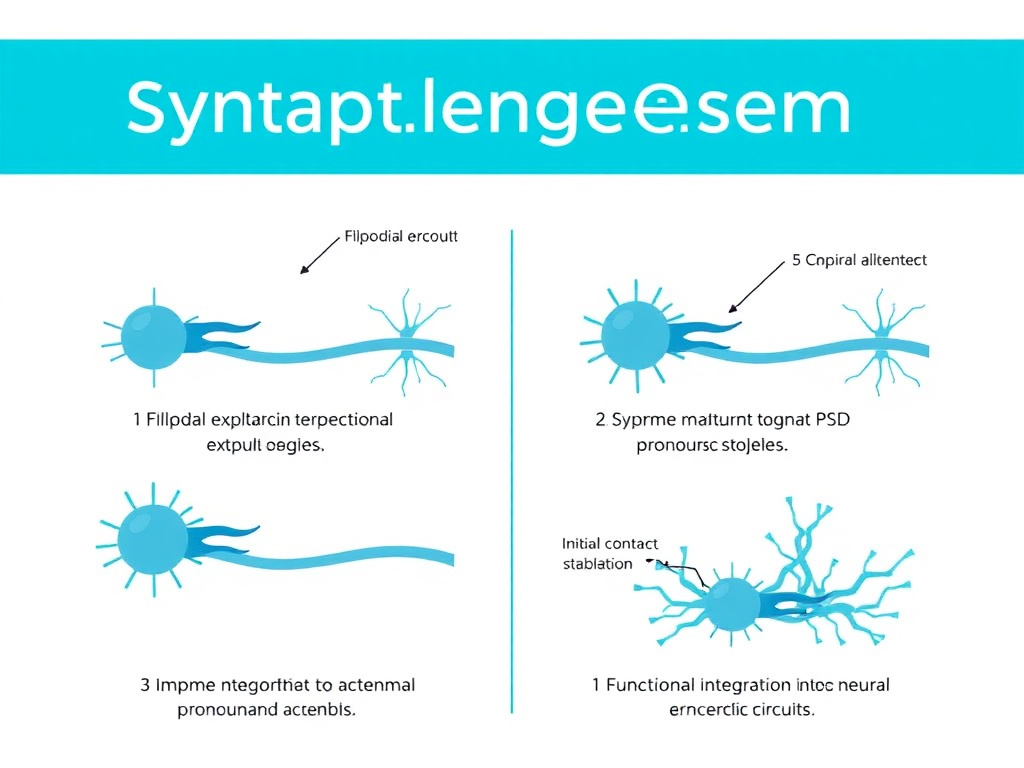
The formation of a new synapse is a multi-step process that unfolds over days to weeks:
Step 1 - Filopodial exploration: Dendrites extend thin, finger-like protrusions called filopodia that actively explore the surrounding space, sampling potential presynaptic partners. This exploratory behavior is driven by intracellular actin dynamics and guided by chemical signals including neurotrophic factors. HGF/c-Met activation (Dihexa's primary mechanism) increases the rate and reach of filopodial exploration, effectively expanding the search radius for new synaptic partners.
Step 2 - Initial contact and stabilization: When a filopodium encounters an appropriate presynaptic axon terminal, adhesion molecules (neurexins, neuroligins, cadherins) form an initial physical bridge between the two structures. HGF/c-Met signaling promotes the expression and clustering of these adhesion molecules, increasing the probability that initial contacts will be stabilized rather than retracted.
Step 3 - Synapse maturation: The filopodium matures into a dendritic spine with a characteristic mushroom or stubby morphology. Presynaptic machinery (synaptic vesicles, active zone proteins) assembles on the axon terminal side. Postsynaptic density proteins (PSD-95, AMPA receptors, NMDA receptors) cluster on the dendritic spine. This maturation process takes days to weeks and requires sustained neurotrophic signaling.
Step 4 - Functional integration: The new synapse begins participating in neural circuit activity. Its strength is refined through experience-dependent plasticity (LTP and LTD). If the synapse proves useful (i.e., it's activated by meaningful patterns of input), it's further strengthened and maintained. If not, it may be pruned. BDNF signaling (enhanced by Semax and P21) plays a key role in this activity-dependent refinement.
This is why the cognitive peptide stack, when properly designed, provides comprehensive support for synaptogenesis: Dihexa drives the formation process itself (Steps 1-3), while Semax and P21 support the refinement and maintenance process (Step 4) through BDNF-mediated synaptic plasticity. The new connections formed during Dihexa use persist after the peptide is discontinued because they're physical structures rather than transient pharmacological effects.
Neurogenesis in the Adult Brain
Adult neurogenesis - the birth of new neurons in the mature brain - was once thought impossible. The dogma for most of the 20th century was that you were born with all the neurons you'd ever have, and they gradually died off with age. This view was overturned in the late 1990s when researchers demonstrated active neurogenesis in two regions of the adult mammalian brain: the subventricular zone (SVZ, lining the lateral ventricles) and the subgranular zone (SGZ) of the hippocampal dentate gyrus.[1]
The hippocampal neurogenesis is most relevant to cognitive enhancement because the dentate gyrus is a critical hub for memory formation. New neurons born in the SGZ migrate into the granule cell layer of the dentate gyrus, extend dendrites into the molecular layer, and send axons along the mossy fiber pathway to CA3, integrating into the trisynaptic circuit that processes and encodes new memories.
P21's promotion of hippocampal neurogenesis follows a defined sequence:
- Proliferation phase (days 1-7): P21 stimulates neural progenitor cells in the SGZ to divide, increasing the population of immature neurons. This phase is influenced by the BDNF/TrkB/CREB signaling enhancement that P21 provides.
- Survival phase (days 7-21): Many newly born neurons normally undergo apoptosis within the first two weeks. P21's neurotrophic signaling (via BDNF enhancement and LIF/STAT3 inhibition) improves the survival rate of newborn neurons, increasing the fraction that mature into functional cells.
- Differentiation phase (days 14-28): Surviving cells differentiate into neurons (rather than astrocytes or oligodendrocytes). P21 promotes neuronal fate commitment, increasing the proportion of newborn cells that become functional neurons.
- Integration phase (days 21-56+): New neurons extend dendrites, receive synaptic inputs, and begin firing in response to circuit activity. Full functional integration can take 4-8 weeks, which is why P21's cognitive effects develop gradually.
This extended timeline has important practical implications. P21 users who expect immediate results will be disappointed. The compound is building new cellular infrastructure that takes weeks to come online. However, the improvements that eventually emerge can be more durable than those from neurotransmitter-modulating compounds because they represent genuine additions to the brain's neuronal population.
The Cholinergic System and Cognitive Peptides
The cholinergic system deserves expanded discussion because it's the neurotransmitter system most directly implicated in attention, memory encoding, and the pathology of Alzheimer's disease. Understanding how the cognitive peptide stack interacts with cholinergic function provides additional rationale for the stacking approach and guidance for supporting supplements.
Cholinergic signaling in the brain originates from two primary nuclei: the basal forebrain complex (including the nucleus basalis of Meynert, medial septum, and diagonal band of Broca) and the brainstem pedunculopontine and laterodorsal tegmental nuclei. The basal forebrain cholinergic neurons project widely to the entire cortical mantle and hippocampus, providing the acetylcholine that modulates cortical processing states.[8]
When cholinergic signaling is high (during alert, attentive states), several things happen in cortical circuits:
- Signal-to-noise ratio increases: Acetylcholine suppresses intrinsic cortical activity (noise) while enhancing responses to external inputs (signal). This is the neurophysiological basis of attention.
- Memory encoding is facilitated: High cholinergic tone in the hippocampus shifts the balance from memory retrieval mode to memory encoding mode, biasing the hippocampus toward capturing new information rather than replaying old memories.
- Cortical plasticity is enhanced: Acetylcholine facilitates experience-dependent cortical plasticity through modulation of NMDA receptors, which are essential for LTP induction.
- Prefrontal executive function improves: Cholinergic input to the prefrontal cortex supports working memory, cognitive flexibility, and inhibitory control.
Several compounds in the cognitive stack support cholinergic function through different angles. Semax's BDNF upregulation supports the survival and function of cholinergic neurons in the basal forebrain - these are the same neurons that degenerate in Alzheimer's disease. P21's CNTF-mimetic activity similarly promotes cholinergic neuron differentiation and survival. Cerebrolysin contains NGF-like peptide fragments that directly support cholinergic neuron health and acetylcholine production. These indirect cholinergic effects can be amplified by dietary or supplemental choline sources (Alpha-GPC, CDP-choline, eggs, liver) that provide the raw material for increased acetylcholine synthesis.
This multi-angle cholinergic support distinguishes the peptide approach from cholinesterase inhibitors (donepezil, rivastigmine, galantamine), which increase acetylcholine levels by preventing its breakdown but do nothing to preserve the neurons that produce it. The peptide stack addresses both the signal (more acetylcholine available for signaling) and the source (healthier, better-maintained cholinergic neurons).
Real-World Application: Protocol Design Principles
Individual Variation and Protocol Customization
No two brains respond identically to cognitive enhancement interventions. Genetic polymorphisms in BDNF (the Val66Met polymorphism affects BDNF secretion and is carried by approximately 30% of the population), COMT (which affects dopamine metabolism in the prefrontal cortex), and ApoE (which affects neuronal repair and Alzheimer's risk) all influence how an individual responds to neurotrophic peptides. While genetic testing isn't required before starting a cognitive peptide protocol, awareness of these variations helps explain why some users report dramatic effects while others notice more subtle changes.
Key factors that influence individual response include:
- Baseline cognitive status: Individuals with lower baseline cognitive function (due to age, stress, sleep deprivation, or mild cognitive impairment) tend to show larger improvements than those with already-optimized cognition. This ceiling effect is common across all cognitive enhancement modalities.
- Age: Older individuals may respond differently due to altered neurotrophic factor receptor density, reduced neuroplasticity reserve, and changes in peptide metabolism. However, the neurotrophic support provided by the stack may be particularly valuable for the aging brain precisely because endogenous neurotrophic factor production declines with age.
- Stress level: Chronic stress suppresses BDNF and hippocampal neurogenesis. Individuals under significant stress may see larger benefits from the stack (particularly from Selank and Semax) because the peptides are counteracting active suppression of these pathways.
- Sleep quality: Sleep deprivation impairs all cognitive functions and reduces BDNF levels. Individuals with poor sleep may see less benefit from neurotrophic peptides until sleep is addressed, because the overnight consolidation and maintenance processes are compromised.
- Metabolic health: Insulin resistance impairs BDNF signaling and reduces blood-brain barrier integrity. Individuals with metabolic syndrome may need to address metabolic health alongside peptide use for optimal results.
Protocol Adjustment Based on Response
A systematic approach to protocol optimization involves starting at the lower end of dosing ranges, tracking responses consistently, and making one adjustment at a time. Here's a practical decision framework:
| Observation | Possible Interpretation | Adjustment |
|---|---|---|
| Strong acute effects from Semax but difficulty sleeping | Dopaminergic sensitivity; dose timing too late | Move Semax dose earlier; reduce dose; ensure administration before noon |
| Selank produces slight drowsiness | Higher GABAergic sensitivity | Reduce dose; use only in afternoon/evening; consider this may be beneficial for sleep |
| No noticeable effects after 2 weeks | Dose too low; effects may be subtly building; individual variation | Increase dose within recommended range; continue tracking; consider objective testing |
| Increased anxiety or irritability with Semax | Excessive dopaminergic stimulation | Reduce Semax dose; increase Selank to balance; ensure adequate sleep |
| Headaches with any compound | Too rapid dose escalation; dehydration; individual sensitivity | Return to lower dose; increase water intake; add electrolytes; slow escalation |
| Excellent focus but reduced creativity | Over-focused state; excessive dopaminergic drive | Use Semax only on focused-work days; skip on creative work days; reduce dose |
| Good results initially but effects diminishing | Possible receptor adaptation; need for cycling | Begin off-cycle period; reassess after 1-2 week break |
Professional and Academic Use Cases
Cognitive peptide stacks are used by individuals across a range of professional and academic contexts. Understanding these use cases helps inform protocol design:
Executives and professionals in high-stakes decision-making: The primary goals are sustained focus during long workdays, rapid information processing, and clear thinking under pressure. The Semax-Selank foundation stack is often sufficient, with Selank's anxiety reduction being particularly valuable for managing the stress of high-stakes environments. Timing the morning dose to coincide with the start of the workday maximizes alignment with peak performance demands.
Students and lifelong learners: The primary goals are memory encoding, retention, and the ability to integrate large volumes of new information. P21's neurogenesis-promoting effects are particularly relevant here, as new hippocampal neurons enhance the brain's capacity for pattern separation and memory storage. Semax's BDNF enhancement directly supports the molecular machinery of memory consolidation. Timing peptide use around study sessions (Semax 30 minutes before studying) may optimize the overlap between enhanced neuroplasticity and active learning.
Creative professionals: Creativity involves a balance between focused analytical thinking and diffuse, associative processing. Over-focused states (too much dopaminergic drive from Semax) can actually impair creative output. Creative professionals may benefit from lower Semax doses, prioritizing Selank for calm openness, and using Semax selectively on editing/analytical days rather than initial creative generation days.
Aging adults concerned about cognitive decline: The primary goals are neuroprotection, maintenance of cognitive function, and prevention of accelerated decline. The full stack including P21 (neurogenesis), Cerebrolysin (broad neuroprotection), and Pinealon (oxidative stress reduction) addresses multiple mechanisms of age-related cognitive change. Epithalon can be included for telomere maintenance as part of a comprehensive longevity approach. Regular cognitive testing is especially valuable for this population to detect any accelerated decline that might warrant medical investigation.
Athletes and tactical professionals: Cognitive function under physical stress, rapid decision-making, and reaction time are key priorities. The Semax-Selank stack is most commonly used here, with Selank's ability to maintain cognitive performance under stress being particularly valuable. NAD+ supplementation provides additional support for both cognitive and physical energy metabolism.
Storage, Handling, and Quality Considerations
The practical aspects of peptide storage and handling are often overlooked but directly affect efficacy:
- Storage temperature: Most peptides should be stored refrigerated (2-8C) once reconstituted. Unreconstituted lyophilized peptides can be stored at room temperature for short periods but remain more stable when refrigerated. Freezing is generally acceptable for long-term storage of lyophilized peptides but should be avoided for reconstituted solutions.
- Light exposure: Many peptides are light-sensitive. Store in opaque containers or away from direct light. Nasal spray bottles should be kept in their packaging when not in use.
- Reconstitution: Injectable peptides require reconstitution with bacteriostatic water (BAC water) or sterile water. BAC water is preferred for multi-dose vials because the benzyl alcohol preservative prevents bacterial growth. Use the appropriate volume of BAC water to achieve your target concentration.
- Nasal spray considerations: Pre-mixed nasal sprays from reputable suppliers are convenient and eliminate reconstitution variables. If making your own nasal spray from lyophilized peptide, use sterile saline rather than plain water for better mucosal absorption and comfort.
- Source quality: Purchase from suppliers that provide third-party certificate of analysis (CoA) with HPLC purity testing (look for 98%+ purity) and mass spectrometry confirmation of identity. Purity matters enormously for peptides - impurities can include degradation products, synthesis byproducts, or entirely different compounds.
Troubleshooting Common Issues
Even well-designed protocols encounter practical challenges. Here are solutions to the most common issues:
Nasal congestion reducing absorption: If nasal passages are congested, peptide absorption will be significantly impaired. Use a saline nasal rinse (neti pot or saline spray) 10-15 minutes before peptide administration. Avoid using decongestant sprays (oxymetazoline, phenylephrine) chronically as they cause rebound congestion. If congestion is chronic, address the underlying cause (allergies, deviated septum, chronic sinusitis) for consistent peptide delivery.
Injection site reactions: Subcutaneous injection of P21 or other peptides may cause temporary redness, swelling, or itching at the injection site. These are typically mild and self-limiting. Rotate injection sites (abdomen, thigh, upper arm) to prevent tissue irritation. Ensure proper injection technique - subcutaneous means into the fat layer beneath the skin, not intramuscular. Using a 29-31 gauge insulin syringe minimizes discomfort.
Inconsistent effects day-to-day: Cognitive peptide effects can vary based on sleep quality, stress level, nutrition, hydration, and circadian factors. Before attributing inconsistency to the peptide, track these confounding variables. Many users find that the most consistent benefits emerge after 2-3 weeks of regular use as baseline neuroplastic changes establish themselves.
Difficulty assessing subtle effects: Not everyone experiences dramatic, immediately obvious cognitive enhancement. If effects seem subtle, switch to objective testing (reaction time tests, N-back tasks, standardized cognitive batteries) rather than relying on subjective impressions. The brain's structural changes - new synapses, new neurons - may manifest as gradual improvements in cognitive ceiling rather than dramatic moment-to-moment differences.
Advanced Stack Interactions and Optimization
Cross-Talk Between Neurotrophic Pathways
The five peptides in this stack don't operate in isolated silos. Neurotrophic signaling pathways exhibit significant cross-talk, where activation of one pathway influences the activity of others. Understanding these interactions can inform more sophisticated protocol optimization.
BDNF-HGF cross-talk: BDNF and HGF signaling share downstream effectors in the PI3K/Akt and MAPK/ERK pathways. When both pathways are activated simultaneously (Semax/P21 providing BDNF enhancement and Dihexa potentiating HGF), the convergence on shared downstream targets can produce amplified synaptic plasticity effects. However, excessive activation of these shared pathways could theoretically lead to diminishing returns or homeostatic downregulation. This is one reason conservative dosing is recommended when combining Dihexa with BDNF-enhancing peptides.
GABA-BDNF interaction: GABAergic signaling and BDNF expression are reciprocally regulated. BDNF enhances GABAergic inhibitory synaptic transmission (supporting Selank's mechanism), while appropriate levels of GABAergic tone facilitate BDNF-dependent plasticity by preventing excitotoxicity. The Selank-Semax combination leverages this relationship: Selank optimizes the GABAergic tone within which Semax's BDNF upregulation can operate most effectively.
CNTF-BDNF relationship: CNTF (mimicked by P21) and BDNF (upregulated by Semax) act through different receptor systems but converge on overlapping transcriptional programs. CNTF activates JAK/STAT signaling while BDNF activates MAPK/ERK and PI3K/Akt. The transcription factor CREB is activated by both pathways, creating a convergence point that integrates signals from both neurotrophic systems. This convergence supports stronger activation of plasticity genes than either pathway alone could achieve.
Neuroinflammation and neurotrophic factor interactions: Neuroinflammation (driven by activated microglia and pro-inflammatory cytokines) suppresses BDNF expression, impairs neurogenesis, and inhibits synaptic plasticity. The anti-inflammatory properties of Selank, Semax, and Cerebrolysin don't just provide stand-alone benefits - they create a more permissive environment for the neurotrophic actions of all compounds in the stack. In individuals with significant neuroinflammation (chronic stress, metabolic syndrome, autoimmune conditions, post-infectious states), addressing inflammation through Selank and Cerebrolysin may be a prerequisite for the other compounds to achieve their full neurotrophic potential.
Optimizing the Neurotransmitter Environment
While cognitive peptides work primarily through neurotrophic rather than neurotransmitter mechanisms, the neurotransmitter environment influences how effectively neurotrophic signals translate into functional cognitive improvement. Key neurotransmitter considerations:
Dopamine balance: Semax increases dopaminergic activity, which supports focus, motivation, and working memory. However, dopamine follows an inverted-U dose-response curve for cognitive function - too little impairs executive function, but too much can cause anxiety, rigidity, and reduced cognitive flexibility. Individuals with naturally high dopaminergic tone (high baseline motivation, tendency toward obsessive focus, restlessness) may need lower Semax doses or may benefit more from Selank than Semax.
Serotonin modulation: Both Semax and Selank modulate serotonergic transmission. Serotonin influences mood, cognitive flexibility, impulse control, and the transition between focused and diffuse thinking modes. The balanced serotonergic modulation provided by both peptides may be particularly relevant for creative and complex cognitive tasks that require flexible thinking.
Glutamate-GABA balance: The brain's primary excitatory (glutamate) and inhibitory (GABA) neurotransmitters must be in dynamic balance for optimal cognitive function. Excessive glutamate activity causes excitotoxicity and anxiety; excessive GABA activity causes sedation and cognitive slowing. Selank's GABA-A modulation helps maintain this balance on the inhibitory side, while BDNF-mediated enhancement of glutamatergic synaptic function (via Semax and P21) supports the excitatory side. The net effect should be enhanced signal processing without excitotoxic damage.
Seasonal and Circannual Considerations
Neurotrophic factor expression and neurogenesis rates exhibit seasonal variation in many mammalian species, and emerging evidence suggests similar patterns in humans. BDNF levels tend to be higher in summer months and lower in winter, correlating with photoperiod (day length) and vitamin D status. Hippocampal neurogenesis also appears to follow seasonal patterns in some animal models.
These seasonal variations suggest practical protocol adjustments:
- Winter months: May warrant slightly higher doses of BDNF-enhancing peptides (Semax, P21) to compensate for naturally lower BDNF levels. Vitamin D supplementation (2000-5000 IU/day) supports BDNF expression independently and may enhance peptide effects.
- Summer months: Naturally higher BDNF levels may allow lower maintenance doses. Increased outdoor exercise (with its additional BDNF-boosting effects) provides a natural complement to the peptide stack.
- Cerebrolysin courses: Some practitioners recommend timing 10-20 day Cerebrolysin courses to coincide with seasonal transitions (early fall, late winter) when neuroplasticity may be naturally shifting.
- Epithalon courses: When included for telomere maintenance, 10-day Epithalon courses can be scheduled 2-3 times per year, potentially timed to precede periods of high cognitive demand.
Long-Term Protocol Evolution
A cognitive peptide protocol shouldn't remain static over months and years. As your brain adapts and your cognitive needs evolve, the protocol should evolve with it. Here's a framework for long-term protocol management:
Months 1-3 (Foundation phase): Start with the beginner Semax-Selank stack. Establish baseline measurements, identify individual sensitivities, and build confidence with peptide administration. This phase is about learning what works for your specific neurochemistry.
Months 4-9 (Building phase): Transition to the intermediate stack by adding P21. This introduces the structural brain-building component (neurogenesis) while maintaining the foundation of neurotransmitter optimization. Begin tracking longer-term cognitive trends rather than just day-to-day effects.
Months 10-18 (Optimization phase): For those who choose to advance, carefully introduce Dihexa with conservative cycling. Add periodic Cerebrolysin courses for broad neurotrophic support. Refine dosing based on accumulated response data. This phase is about maximizing the structural brain changes that provide durable cognitive improvement.
Month 18+ (Maintenance phase): Once you've established what works, shift to a maintenance protocol that preserves gains while minimizing compound exposure. Many long-term users settle into a pattern of intermittent Semax-Selank use (perhaps 2-3 weeks out of each month), periodic P21 cycles (one 6-week cycle every 3-4 months), and occasional Cerebrolysin courses (2-3 times per year). The structural brain changes built during the optimization phase provide a foundation of improved cognitive capacity that requires less intensive maintenance than initial building.
The Principle of Minimal Effective Protocol
More isn't always better with cognitive peptides. The goal is to find the minimal effective protocol - the simplest, lowest-dose combination that produces the cognitive outcomes you're looking for. Some users discover that the beginner Semax-Selank stack provides everything they need and never advance to more complex protocols. Others find that adding P21 for neurogenesis transforms their cognitive capacity in ways that Semax and Selank alone didn't achieve. The right protocol is the simplest one that meets your goals. Visit the Biohacking Hub for ongoing discussion of protocol optimization strategies.
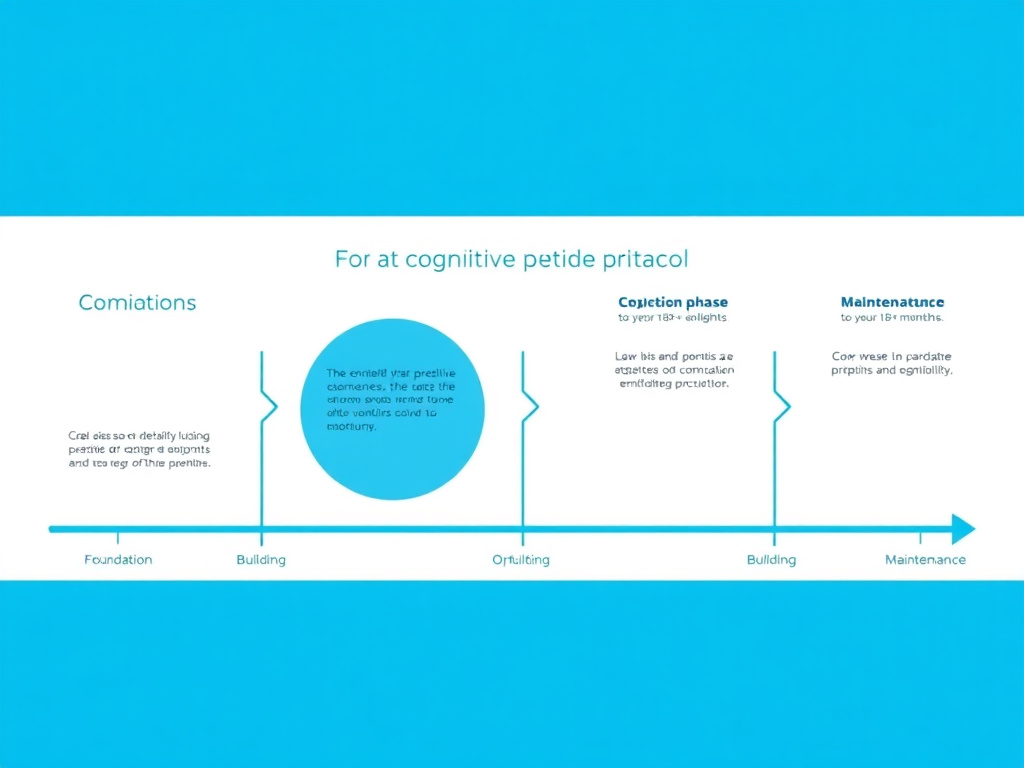
Neurochemical Individuality and Genetic Factors
Why Responses to Cognitive Peptides Vary Between Individuals
If you spend time in online peptide communities, you'll notice a striking pattern: some users describe transformative cognitive effects from Semax or Dihexa, while others report minimal changes despite following identical protocols. This isn't placebo variation or poor product quality (though both exist) - it reflects genuine neurochemical individuality rooted in genetics, epigenetics, and current brain state.
Understanding the sources of this variation helps set realistic expectations and guides personalized protocol design. Rather than abandoning a compound after a few days because it doesn't produce the dramatic effects someone else described, knowing that your unique neurochemistry may require different compounds, doses, or timeframes can keep you on a productive optimization path.
Key Genetic Polymorphisms Affecting Peptide Response
BDNF Val66Met (rs6265): This is the most studied genetic variant relevant to cognitive peptide protocols. The BDNF gene can carry either a valine (Val) or methionine (Met) amino acid at position 66. The Val/Val genotype (roughly 60-70% of people of European descent) is associated with normal activity-dependent BDNF secretion. The Val/Met (25-30%) and Met/Met (3-5%) genotypes show reduced BDNF secretion from neurons, which is associated with smaller hippocampal volume, impaired episodic memory, and greater susceptibility to stress-related cognitive decline.
For peptide users, the implications are significant. Met carriers may show a larger response to BDNF-enhancing peptides (Semax, P21) because they're starting from a lower baseline of BDNF activity - there's more room for improvement. Conversely, Val/Val individuals with already-optimal BDNF secretion may see more modest gains from the same compounds. If you're a Met carrier, prioritizing the BDNF-enhancing components of the stack (Semax, P21) may be particularly worthwhile.
COMT Val158Met (rs4680): The catechol-O-methyltransferase (COMT) enzyme degrades dopamine in the prefrontal cortex. The Val/Val genotype produces a highly active enzyme that rapidly clears dopamine, resulting in lower tonic prefrontal dopamine levels. These individuals tend to be more stress-resilient but may have lower baseline executive function. The Met/Met genotype produces a less active enzyme, leading to higher prefrontal dopamine levels - better baseline executive function but greater vulnerability to stress and anxiety.
This polymorphism directly affects how an individual responds to Semax's dopaminergic activation. Val/Val individuals (lower baseline dopamine) may experience more pronounced focus and motivation enhancement from Semax. Met/Met individuals (higher baseline dopamine) may be more prone to overstimulation, anxiety, or cognitive rigidity with Semax, and may benefit more from lower doses or prioritizing Selank's anxiolytic effects. The COMT genotype essentially determines where you sit on the inverted-U dopamine curve and therefore how much room there is for dopaminergic enhancement.
ApoE genotype: The apolipoprotein E gene has three common variants: E2, E3, and E4. The E4 allele is the strongest genetic risk factor for late-onset Alzheimer's disease and is associated with altered neuronal repair, lipid metabolism, and neuroinflammation. Carriers of ApoE4 (approximately 25% of the population carries at least one E4 allele) may benefit particularly from the neuroprotective components of the cognitive stack (Cerebrolysin, Pinealon, Selank's anti-inflammatory effects) and from P21's neurogenic effects in the hippocampus, which is disproportionately affected in E4 carriers.
5-HTTLPR serotonin transporter polymorphism: The serotonin transporter gene has short (S) and long (L) alleles that affect serotonin reuptake efficiency. Short allele carriers have reduced serotonin reuptake and are more susceptible to anxiety, rumination, and stress-induced cognitive impairment. These individuals may show an outsized benefit from Selank's anxiolytic effects and from Semax's serotonergic modulation. Long allele carriers with naturally efficient serotonin dynamics may experience more subtle changes from these compounds.
Epigenetic State and Brain Readiness
Beyond fixed genetic variants, your current epigenetic state influences how your brain responds to neurotrophic peptides. Epigenetic modifications - chemical tags on DNA and histone proteins that regulate gene expression without changing the genetic sequence - are influenced by chronic stress, sleep patterns, exercise, diet, environmental toxin exposure, and aging itself.
Chronic stress, for example, increases DNA methylation at the BDNF gene promoter, effectively silencing BDNF expression even when the genetic sequence is normal. This epigenetic suppression means that Semax or P21 may need to overcome an additional layer of BDNF silencing before their neurotrophic effects become apparent. Exercise, meditation, and adequate sleep can reverse stress-induced BDNF promoter methylation, which is another reason lifestyle optimization amplifies peptide effects.
Similarly, aging-associated epigenetic changes progressively silence neurotrophic factor genes and activate pro-inflammatory gene programs. The older the brain, the more epigenetic resistance there may be to neurotrophic activation. This doesn't mean peptides are ineffective in older adults - quite the contrary, the age-related decline in neurotrophic signaling creates a context where external neurotrophic support may be especially valuable. But it does suggest that older users may need longer protocol durations before observing the full magnitude of cognitive enhancement.
Current Brain State and Baseline Function
Your current cognitive state at the time you start a peptide protocol strongly influences what you'll experience:
Individuals with optimized cognition (high-performing baseline): If you already sleep 8 hours, exercise regularly, eat well, manage stress, and have no cognitive complaints, the improvement ceiling from cognitive peptides is relatively low. You may notice subtle sharpening of already-good function - slightly faster processing, marginally better memory encoding, a bit more cognitive endurance at the end of long days. Don't expect dramatic transformation if your baseline is already excellent.
Individuals with impaired cognition (brain fog, stress, poor sleep): If your cognitive function is compromised by chronic stress, sleep deprivation, inflammation, hormonal imbalances, or other factors, the improvement ceiling is much higher. Removing the suppressive factors (via Selank's anxiolysis, Cerebrolysin's anti-inflammatory effects, and lifestyle optimization) combined with adding neurotrophic drive (Semax, P21) can produce changes that feel dramatic because you're recovering lost function rather than pushing beyond normal limits.
Individuals recovering from neurological events: Those recovering from concussion, traumatic brain injury, stroke, or periods of severe stress have the most potential for significant improvement, though they also require the most careful medical supervision. Cerebrolysin's clinical evidence base is strongest in recovery contexts, and Semax's Russian clinical data includes stroke recovery. These populations should work closely with neurologists or rehabilitation specialists when incorporating peptides into recovery protocols.
Gender-Specific Considerations
While cognitive peptides don't have gender-specific mechanisms per se, hormonal differences between men and women influence the context in which these peptides operate:
Estrogen and BDNF: Estrogen is a positive regulator of BDNF expression. Premenopausal women with regular estrogen cycling may experience variation in peptide effects across the menstrual cycle, with potentially greater responsiveness during the follicular phase (higher estrogen) and somewhat reduced responsiveness during the late luteal phase (declining estrogen). Post-menopausal women, with persistently low estrogen, may benefit particularly from BDNF-enhancing peptides because they've lost an important endogenous BDNF promoter.
Progesterone and GABA: Progesterone is metabolized to allopregnanolone, a potent positive allosteric modulator of GABA-A receptors - essentially an endogenous version of Selank's mechanism. Women in the luteal phase (high progesterone) already have enhanced GABAergic tone and may need lower Selank doses or may find less additional benefit from Selank compared to men or women in the follicular phase.
Testosterone and cognitive drive: Testosterone supports dopaminergic function and cognitive assertiveness. Men with declining testosterone (andropause) may find that Semax's dopaminergic effects are particularly valuable in compensating for reduced dopaminergic drive. However, the root cause (testosterone decline) should be assessed and potentially addressed directly rather than masked with peptides.
Practical Implications for Protocol Personalization
Given this individual variation, the most effective approach to cognitive peptide protocols is iterative and data-driven:
- Establish a thorough baseline - cognitive testing, blood work, subjective metrics, sleep data - before starting any compound.
- Start with the foundation stack (Semax + Selank) and observe response patterns for at least 3-4 weeks. This reveals your sensitivity to dopaminergic stimulation (Semax) and GABAergic modulation (Selank).
- Adjust based on observed patterns: Strong Semax response suggests lower baseline dopamine (potentially Val/Val COMT genotype) - you may be an excellent candidate for the dopaminergic enhancement the stack provides. Strong Selank response suggests anxiety is a significant cognitive limiter - prioritize anxiolysis. Minimal response to both suggests exploring P21 or Dihexa for structural approaches, or investigating whether lifestyle factors (sleep, stress, metabolic health) need attention first.
- Add compounds one at a time with at least 2 weeks between additions, so you can attribute any changes (positive or negative) to the specific compound added.
- Consider genetic testing (BDNF Val66Met, COMT, ApoE, 5-HTTLPR) to inform compound selection and dose optimization. Companies offering direct-to-consumer genetic testing can provide raw data that a genetic counselor or knowledgeable practitioner can interpret in the context of peptide protocol design.
Personalization Over Prescription
The protocols in this guide are starting frameworks, not fixed prescriptions. Your unique genetic makeup, epigenetic state, current brain health, lifestyle factors, and goals should all inform how you adapt these protocols. The most successful cognitive peptide users are systematic experimenters who treat each adjustment as a hypothesis, measure the outcome, and iterate based on data. The Biohacking Hub provides resources for this iterative approach, and the Peptide Research Hub is updated regularly with new research findings that may inform protocol refinement.
Stacking Rationale: Complementary Mechanisms
Why Stack Rather Than Use a Single Peptide?
The rationale for stacking cognitive peptides isn't simply "more is better." It's based on the observation that cognitive function depends on multiple biological processes, and each peptide in this guide targets a genuinely different one. Using them together provides coverage that no single compound can match.
Consider an analogy. If you're building a house, you need different specialists: an electrician, a plumber, a carpenter, and a mason. Hiring four electricians won't get your plumbing done. Similarly, using four BDNF-enhancing compounds would produce diminishing returns because you're saturating a single pathway. The cognitive peptide stack works because each compound fills a different role:
| Peptide | Primary Mechanism | What It Builds | Analogy |
|---|---|---|---|
| Semax | BDNF upregulation, dopamine/serotonin modulation | Strengthens existing neural connections | Upgrading the wiring |
| Selank | GABA-A allosteric modulation | Reduces interference, optimizes signal-to-noise | Installing noise cancellation |
| Dihexa | HGF/c-Met synaptogenesis | Creates new synaptic connections | Adding new circuit pathways |
| P21 | CNTF-mimetic neurogenesis | Generates new neurons | Building new processing units |
| Cerebrolysin | Multi-neurotrophic factor mixture | Broad neuroprotection and maintenance | Comprehensive system maintenance |
Avoiding Redundancy
When designing a stack, it's important to avoid excessive overlap. If two compounds work through the same pathway, combining them may not produce additional benefits and could increase side effect risk. The five compounds in this guide were selected specifically because their primary mechanisms are distinct:
- Semax's BDNF upregulation and P21's BDNF enhancement work through different upstream mechanisms (Semax increases BDNF gene expression directly; P21 works via LIF/STAT3 inhibition). This means they can be complementary rather than redundant.
- Selank's GABAergic mechanism is entirely different from any neurotrophic pathway, providing anxiolysis without overlapping with the other compounds' primary actions.
- Dihexa's HGF/c-Met pathway is unique in this stack - no other compound targets synaptogenesis through this mechanism.
- Cerebrolysin provides broad coverage that may fill gaps not addressed by the more targeted peptides.
Temporal Considerations in Stacking
Not all cognitive processes operate on the same timeline, and the peptides in this stack reflect that:
Immediate effects (minutes to hours): Semax and Selank provide acute cognitive benefits through neurotransmitter modulation. You can feel these effects the same day you start using them.
Short-term adaptation (days to weeks): Gene expression changes, receptor sensitivity adjustments, and early synaptic plasticity changes occur over 1-4 weeks of consistent use.
Structural changes (weeks to months): Dihexa's synaptogenesis and P21's neurogenesis produce structural brain changes that develop over 4-8 weeks. These changes are more durable than neurotransmitter modulation but take longer to manifest.
This temporal profile has practical implications for stack design. Many users start with Semax and Selank (which provide immediate feedback that the protocol is working), then add P21 and/or Dihexa (which build structural improvements over time). Cerebrolysin courses can be layered in periodically for broad-spectrum neurotrophic support.
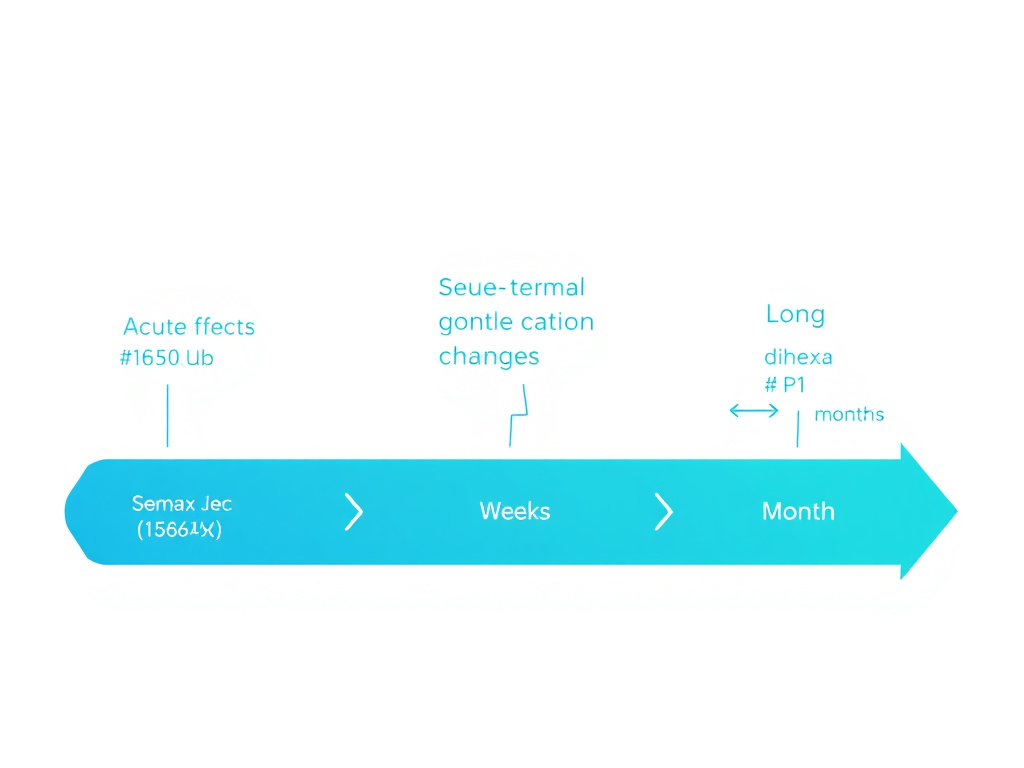
Beginner Cognitive Stack
Who This Is For
The beginner stack is designed for individuals who are new to cognitive peptides and want to start with the safest, most well-characterized compounds before potentially advancing to more experimental options. It uses only two peptides - Semax and Selank - both of which have been approved as prescription medications in Russia and have established safety profiles from clinical use.
Protocol Overview
Beginner Cognitive Stack Protocol
Week 1 - Selank Introduction:
- Selank nasal spray: 200 mcg per day (100 mcg per nostril), morning
- Assess tolerance and response for 5-7 days before adding Semax
Weeks 2-4 - Full Beginner Stack:
- Semax nasal spray: 200-300 mcg per day, morning (before 2 PM)
- Selank nasal spray: 200-300 mcg per day, morning or split AM/PM
Week 5 - Off Cycle:
- Discontinue both peptides for 7-14 days
- Assess baseline cognitive function during the off period
Cycle pattern: 3-4 weeks on, 1-2 weeks off
Why Start with Selank First
Starting with Selank before adding Semax serves two purposes. First, it establishes a baseline anxiolytic effect that can make the stimulatory properties of Semax more comfortable. Some individuals find that Semax's dopaminergic activation creates mild restlessness or over-stimulation if they're already in an anxious state. Having Selank on board first provides a calming foundation. Second, starting one compound at a time allows you to clearly identify what each peptide does for you individually before combining them.
What to Track
- Subjective focus and attention duration
- Anxiety levels (0-10 scale, daily)
- Sleep quality (Selank generally neutral; Semax can disrupt if taken too late)
- Memory recall (keep a simple daily memory test - e.g., evening recall of morning details)
- Verbal fluency and word-finding ease
- Energy levels and motivation
Expected Timeline
- Days 1-3: Selank's anxiolytic effects may be noticeable - a subtle sense of calm without drowsiness
- Days 7-10: After adding Semax, increased mental clarity and focus are commonly reported
- Weeks 2-3: Cumulative effects become apparent - more consistent cognitive performance, better stress tolerance, improved memory encoding
- Week 4+: Neuroplastic changes from BDNF upregulation may contribute to improved learning capacity
Estimated Monthly Cost
The beginner stack is the most affordable cognitive peptide protocol. Typical costs range from $80-150 per month for both compounds, depending on source and concentration. This is comparable to high-end traditional nootropic stacks and significantly less expensive than protocols involving injectable peptides.
Intermediate Cognitive Stack
Who This Is For
The intermediate stack is appropriate for individuals who have used the beginner Semax-Selank stack for at least 2-3 months, are comfortable with peptide administration, and want to add neurogenesis-promoting capability. It introduces P21 to the foundation stack.
Protocol Overview
Intermediate Cognitive Stack Protocol
Daily Protocol:
- Semax: 300-400 mcg intranasal, morning
- Selank: 300 mcg intranasal, morning (or split 150 mcg AM + 150 mcg early PM)
- P21: 500-1000 mcg subcutaneous injection, morning
Optional additions:
- Pinealon: 10 mg oral, evening (for neuroprotective support)
- NAD+: Per product guidelines (for cellular energy and mitochondrial support)
Cycling:
- Semax/Selank: 4 weeks on, 1-2 weeks off
- P21: 6-8 weeks on, 3-4 weeks off
- Pinealon: 15-day courses, 3-4 times per year
Why Add P21 at the Intermediate Level
P21 adds neurogenesis - the creation of new neurons - to the stack. This is a qualitatively different effect from what Semax and Selank provide. While Semax strengthens existing circuits and Selank removes anxiety-related interference, P21 expands the brain's cellular resources by generating new neurons in the hippocampus. Over time, these new neurons integrate into memory-forming circuits, potentially increasing the brain's capacity for learning and memory storage.
P21 was placed at the intermediate rather than beginner level because it requires subcutaneous injection (a higher commitment than intranasal administration) and its effects develop slowly over weeks to months (which can be frustrating for beginners who expect immediate results). Starting with the immediate-feedback Semax-Selank stack builds confidence and experience before adding a longer-term structural compound.
Timing Considerations
The intermediate stack introduces a third compound, which raises practical timing questions:
- Morning routine (within 30 minutes of waking): Administer Semax intranasally, followed by Selank. Wait 5 minutes between the two to avoid diluting either in the nasal passage. Inject P21 subcutaneously (abdomen, thigh, or upper arm).
- If splitting Selank dose: Take 150 mcg Selank with morning Semax, and the second 150 mcg Selank in early afternoon (before 3 PM).
- Evening (optional): Pinealon oral capsule with dinner or before bed.
Expected Timeline
- Weeks 1-2: Semax and Selank effects as before; P21 effects not yet apparent
- Weeks 3-4: Early neurogenesis and BDNF-mediated changes from P21 may begin to manifest as subtle improvements in memory encoding and pattern recognition
- Weeks 5-8: Full P21 effects developing - improved spatial memory, enhanced learning capacity, potentially improved mood and reduced anxiety (P21 has mild anxiolytic effects)
- Months 2-3: Cumulative structural changes - more durable improvements in cognitive performance that may persist during off-cycle periods
Advanced Cognitive Stack
Who This Is For
The advanced stack is for experienced peptide users who have completed multiple cycles of the intermediate stack, have established a relationship with a knowledgeable healthcare provider, and understand the additional risks associated with more experimental compounds. This stack adds Dihexa for synaptogenesis and incorporates periodic Cerebrolysin courses for broad neurotrophic support.
Important Disclaimer
The advanced stack includes Dihexa, which has no published human clinical trial data. It also includes Cerebrolysin, which requires IM or IV injection and should ideally be administered under medical supervision. This protocol is not recommended without ongoing healthcare provider oversight. Baseline and periodic blood work is essential. See the Biohacking Hub for resources on finding peptide-knowledgeable practitioners.
Protocol Overview
Advanced Cognitive Stack Protocol
Daily Compounds:
- Semax: 400-600 mcg intranasal, morning
- Selank: 300-400 mcg intranasal, split AM/PM
- P21: 1000-1500 mcg subcutaneous, morning
- Dihexa: 10-20 mg oral or 5-10 mg subcutaneous, morning
Periodic Compounds:
- Cerebrolysin: 5-10 mL IM daily for 10-day courses, 2-3 times per year
- Pinealon: 10-20 mg oral, 15-day courses between Cerebrolysin courses
- Epithalon: 5-10 mg per day for 10-20 day courses (for telomere maintenance and overall longevity support)
Cycling Schedule (12-week block):
- Weeks 1-3: Full daily stack (Semax + Selank + P21 + Dihexa)
- Week 4: Remove Dihexa, continue Semax + Selank + P21
- Weeks 5-7: Full daily stack
- Week 8: Remove Dihexa, continue remaining compounds
- Weeks 9-10: Cerebrolysin course (10 days IM) + Semax + Selank
- Weeks 11-12: Off-cycle for all compounds; assess baseline
Managing Complexity
The advanced stack requires careful organization. Here's a practical daily schedule:
| Time | Compound | Route | Notes |
|---|---|---|---|
| 7:00 AM | Selank 200 mcg | Intranasal | First thing upon waking |
| 7:05 AM | Semax 400-600 mcg | Intranasal | Wait 5 min after Selank |
| 7:15 AM | P21 1000-1500 mcg | Subcutaneous | Abdomen or thigh rotation |
| 7:30 AM | Dihexa 10-20 mg | Oral | With or without food |
| 2:00 PM | Selank 200 mcg | Intranasal | Afternoon anxiolytic boost |
| 8:00 PM | Pinealon 10-20 mg | Oral | When used (course days only) |
Monitoring Requirements for the Advanced Stack
The advanced stack requires more rigorous monitoring than the beginner or intermediate protocols. Recommended baseline and periodic assessments include:
- Blood work (baseline, 6 weeks, 12 weeks): Complete metabolic panel, CBC, inflammatory markers (hsCRP, ESR), liver function (ALT, AST), kidney function (BUN, creatinine), fasting glucose, thyroid panel
- Cognitive testing: Baseline and periodic assessment using standardized tools (detailed in the Measuring Cognitive Improvement section)
- Cancer screening: Current on age-appropriate cancer screenings before starting Dihexa (due to HGF/c-Met pathway involvement)
- Symptom tracking: Daily log of sleep quality, cognitive performance, mood, any adverse effects
Cost Considerations
The advanced stack is the most expensive cognitive peptide protocol, with estimated monthly costs of $400-800 for daily compounds plus additional costs for periodic Cerebrolysin courses ($200-500 per course) and blood work ($200-400 per panel). Total annual cost may range from $6,000-12,000. For help determining the right dosing for your budget, use the Dosing Calculator.
Timing & Cycling Protocols
Why Cycling Matters
Cycling - alternating periods of use with periods of rest - serves several purposes in cognitive peptide protocols. First, it prevents receptor desensitization and tolerance, which can occur when any receptor system is continuously stimulated. Second, it allows assessment of baseline function to verify that the peptides are producing genuine improvements rather than just masking underlying issues. Third, for compounds with less established long-term safety profiles, cycling limits cumulative exposure.
The specific cycling parameters differ by compound because each peptide's mechanism has a different tolerance profile and a different duration of residual effect after discontinuation.
Compound-Specific Cycling Guidelines
| Compound | On Period | Off Period | Rationale |
|---|---|---|---|
| Semax | 3-4 weeks | 1-2 weeks | Prevents dopamine receptor desensitization; BDNF effects persist during off-cycle |
| Selank | 3-4 weeks | 1-2 weeks | GABA receptor modulation doesn't produce physical dependence but cycling maintains sensitivity |
| P21 | 6-8 weeks | 3-4 weeks | Longer on-cycle needed for neurogenesis to develop; new neurons persist during off-cycle |
| Dihexa | 2-3 weeks | 4-8 weeks | Conservative approach due to limited safety data; synaptogenic effects persist |
| Cerebrolysin | 10-20 days | 1-3 months | Clinical dosing pattern; course-based administration is standard |
| Pinealon | 10-20 days | 3-4 months | Bioregulator dosing pattern; effects accumulate and persist |
Staggered Cycling Approach
In multi-peptide stacks, it's often beneficial to stagger the cycling of different compounds so you're never starting or stopping everything at once. This provides continuity of effect and makes it easier to identify which compound is responsible for any changes (positive or negative) you notice.
A practical staggered cycling approach for the intermediate stack might look like this:
| Week | Semax | Selank | P21 | Notes |
|---|---|---|---|---|
| 1 | ON | ON | ON | Full stack |
| 2 | ON | ON | ON | Full stack |
| 3 | ON | ON | ON | Full stack |
| 4 | OFF | ON | ON | Semax off-cycle; assess baseline focus |
| 5 | ON | OFF | ON | Selank off-cycle; assess baseline anxiety |
| 6 | ON | ON | ON | Full stack |
| 7 | ON | ON | ON | Full stack |
| 8 | ON | ON | OFF | P21 off-cycle begins |
| 9 | OFF | OFF | OFF | Full off-cycle; comprehensive baseline |
| 10 | OFF | OFF | OFF | Full off-cycle continues |
Optimal Timing Within the Day
The timing of peptide administration within the day matters because different compounds interact with circadian biology in different ways:
Morning compounds (6-10 AM): Semax should always be administered in the morning due to its dopaminergic activation, which can interfere with sleep if taken later. P21 and Dihexa are also best taken in the morning. Cortisol levels are naturally highest in the morning, and neurotrophic factor expression follows circadian patterns that may make morning administration more effective.
Flexible timing: Selank can be taken at any time without sleep disruption. Many users prefer splitting the dose between morning and early afternoon for more consistent anxiolytic coverage throughout the working day.
Evening compounds: Pinealon is often taken in the evening due to its association with pineal gland function and circadian rhythm support. Epithalon, when included in the advanced stack, is similarly best taken in the evening.
Food and Timing Interactions
Most cognitive peptides are administered intranasally or via injection, which bypasses the GI tract entirely and makes food timing irrelevant. For orally administered compounds:
- Dihexa (oral): Can be taken with or without food. No significant food interactions have been identified.
- Pinealon (oral): Can be taken with or without food. Some practitioners suggest taking it on an empty stomach for potentially better absorption, but this isn't clinically validated.
- General note: Large high-fat meals may slow absorption of oral peptides. If taking compounds orally, a light meal or fasted state may be preferable.
Measuring Cognitive Improvement
Why Objective Measurement Matters
One of the biggest challenges with cognitive enhancement is that subjective assessment is unreliable. People are notoriously poor at evaluating their own cognitive performance. Stimulants can make you feel smarter without actually improving accuracy. Anxiolytics can improve effective performance by reducing interference, but the improvement might be attributed to "better focus" rather than "less anxiety." Placebo effects in cognitive enhancement are substantial - simply believing you've taken a cognitive enhancer can produce measurable performance improvements in the short term.
To genuinely evaluate whether a cognitive peptide protocol is working, you need a combination of subjective tracking, objective cognitive testing, and physiological markers.
Subjective Tracking
While subjective measures are imperfect, they're still valuable as part of a broader assessment approach. Keep a simple daily log with 0-10 ratings for:
- Mental clarity and "sharpness"
- Ability to sustain focus on a single task
- Working memory (can you hold multiple pieces of information in mind?)
- Verbal fluency (ease of word-finding and articulation)
- Anxiety levels
- Motivation and drive
- Sleep quality (critical confound - poor sleep degrades all cognitive measures)
- Mood
The key is consistency. Rate these factors at the same time each day (e.g., end of workday) and include both on-cycle and off-cycle periods. Looking for patterns over weeks is more informative than day-to-day comparisons.
Objective Cognitive Testing
Several validated tools can provide more objective measurement of cognitive function:
| Tool | What It Measures | Cost | Frequency |
|---|---|---|---|
| Cambridge Brain Sciences (online) | 12 cognitive domains including memory, reasoning, and verbal ability | Free basic / paid pro | Baseline + monthly |
| Dual N-Back (app) | Working memory capacity | Free | Weekly average |
| Stroop Test (online) | Executive function and cognitive flexibility | Free | Baseline + monthly |
| Reaction Time Tests (online) | Processing speed | Free | Weekly average |
| Trail Making Test (TMT) | Visual attention and task switching | Free | Baseline + monthly |
| MoCA (Montreal Cognitive Assessment) | Clinical cognitive screening | Requires practitioner | Baseline + quarterly |
Practice effects are a significant confound with repeated cognitive testing - performance naturally improves with familiarity regardless of any intervention. To mitigate this, establish a baseline by taking each test 3-5 times before starting the peptide protocol. Use the average of these baseline scores as your reference point, and track changes relative to that average.
Physiological Biomarkers
Blood-based biomarkers can provide indirect evidence of the neurotrophic mechanisms you're targeting:
- Serum BDNF: While brain BDNF levels can't be directly measured, serum BDNF correlates roughly with central BDNF expression. Increases of 20-40% from baseline after 4-8 weeks of Semax or P21 use would be consistent with successful neurotrophic activation.
- Inflammatory markers (hsCRP, IL-6): Reductions in systemic inflammation markers may indicate that anti-neuroinflammatory effects are active.
- IGF-1: Brain-derived neurotrophic signaling interacts with insulin-like growth factor pathways. IGF-1 levels provide additional context for neurotrophic status.
- Cortisol: Selank's anxiolytic effects may be reflected in normalized cortisol patterns, particularly in individuals with elevated baseline cortisol from chronic stress.
Practical Measurement Protocol
Recommended Assessment Schedule
- Baseline (before starting): Blood work, 3-5 rounds of cognitive testing, 1 week of daily subjective tracking
- Week 4: Repeat cognitive tests, review subjective tracking data
- Week 8: Repeat blood work and cognitive tests, compare to baseline
- Week 12: Comprehensive reassessment including off-cycle baseline testing
- Ongoing: Quarterly blood work, monthly cognitive testing, continuous subjective tracking
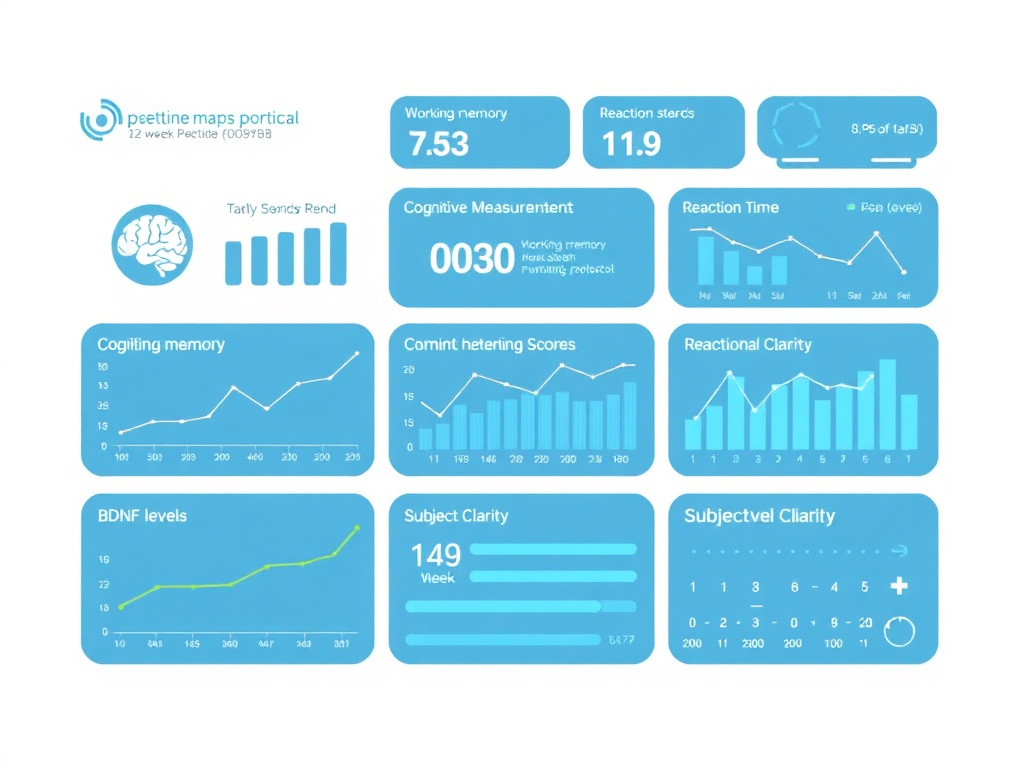
Cognitive Performance Data
Preclinical Cognitive Enhancement Comparison
The following chart presents composite cognitive improvement scores from preclinical (animal model) studies for each peptide in the cognitive stack. These values represent percentage improvements in standardized cognitive assessments (Morris water maze, conditioned avoidance, novel object recognition) relative to untreated control groups. It's essential to note that these are preclinical data points - human effects may differ substantially in magnitude and character.
Cognitive Enhancement: Preclinical Composite Scores
Data compiled from multiple preclinical studies. Values represent average percentage improvement in composite cognitive scores versus untreated controls. Individual study results vary. Not directly translatable to expected human outcomes.
Several observations emerge from the preclinical data:
- Dihexa shows the largest preclinical effect size (35%), consistent with its reputation as one of the most potent cognitive-enhancing peptides identified in laboratory research. However, this must be weighed against its complete absence of human clinical data.
- P21 demonstrates strong neurogenesis-driven improvements (30%), with effects that develop gradually as new neurons mature and integrate into circuits. The durability of these effects after discontinuation is a key advantage.
- Cerebrolysin's moderate but reliable effect (28%) is supported by the most clinical evidence. Its effect may be smaller than Dihexa's in animal models, but the translation to human outcomes is better established.
- Semax's effects (25%) reflect both acute neurotransmitter modulation and BDNF-mediated neuroplasticity. The onset is faster than Dihexa or P21 but the structural changes are less pronounced.
- Selank's contribution (18%) is primarily through anxiety reduction and cognitive interference removal rather than direct cognitive enhancement. In anxious populations, its effective contribution may be substantially larger.
The theoretical basis for stacking is that these effects should be at least partially additive because they operate through different mechanisms. A stack targeting synaptogenesis (Dihexa), neurogenesis (P21), BDNF upregulation (Semax), anxiolysis (Selank), and broad neuroprotection (Cerebrolysin) should produce greater total cognitive enhancement than any single compound at the same dose - though formal studies testing this specific combination have not been conducted.
Lifestyle Synergies: Sleep, Exercise, & Diet
The Amplification Effect
Cognitive peptides don't operate in isolation. Their effects are amplified or diminished by lifestyle factors that independently influence the same biological systems. Think of peptides as seeds - they'll grow better in well-prepared soil. Ignoring sleep, exercise, and nutrition while using cognitive peptides is like planting expensive seeds in poor soil and wondering why the garden underperforms.
Sleep: The Non-Negotiable Foundation
Sleep is the single most powerful natural cognitive enhancer, and no peptide can compensate for chronic sleep deprivation. During deep (slow-wave) sleep, the glymphatic system clears metabolic waste from the brain, BDNF levels are regulated, memory consolidation occurs through hippocampal-cortical replay, and synaptic homeostasis is maintained through synaptic downscaling.
Key sleep optimization strategies for peptide users:
- Protect the 7-9 hour window. Cognitive peptides can't rescue the brain damage caused by chronic 5-6 hour nights. Treat sleep as sacred.
- Time Semax carefully. Administration after 2 PM can disrupt sleep onset due to dopaminergic activation. If you notice sleep disruption, move your dose earlier.
- Consider Selank for evening anxiety. If racing thoughts prevent sleep, the afternoon Selank dose may help. Selank doesn't cause sedation but can reduce the anxious rumination that keeps people awake.
- Track sleep quality. A wearable device (Oura Ring, Whoop, Apple Watch) that tracks deep sleep, REM sleep, and heart rate variability provides objective data on sleep quality that correlates with cognitive recovery.
Exercise: The Natural BDNF Amplifier
Aerobic exercise is one of the most potent natural stimulators of BDNF production. Studies have consistently shown that moderate-to-vigorous aerobic exercise increases serum BDNF levels by 20-40%, with the effect being dose-dependent (longer and more intense exercise produces greater increases). This creates a powerful interaction with Semax and P21, both of which also target BDNF pathways.[43]
Recommended exercise protocol for cognitive peptide users:
- Aerobic exercise: 150-300 minutes per week of moderate intensity (brisk walking, cycling, swimming) or 75-150 minutes of vigorous intensity (running, HIIT, rowing). The BDNF response is greatest with aerobic rather than resistance exercise.
- Timing: Morning exercise before peptide administration may create an amplified BDNF spike. Some evidence suggests that exercise before a learning task enhances the brain's readiness to encode new information.
- Resistance training: 2-3 sessions per week. While the acute BDNF response is smaller than with aerobic exercise, resistance training provides benefits for metabolic health, hormone optimization, and sleep quality that indirectly support cognitive function.
- Avoid overtraining: Excessive exercise volume or intensity can increase cortisol and inflammatory markers, potentially counteracting the anti-inflammatory effects of the peptide stack.
Nutrition: Fueling Neuroplasticity
The brain is metabolically greedy - it uses approximately 20% of the body's total energy despite being only 2% of body weight. The substrates for synaptogenesis, neurogenesis, and neurotransmitter synthesis must come from dietary intake:
- Omega-3 fatty acids (DHA/EPA): DHA is a primary structural component of neuronal membranes and is essential for synaptic function. Supplementation with 2-4g of combined EPA/DHA per day supports the structural changes promoted by Dihexa and P21. Fatty fish (salmon, sardines, mackerel) 3-4 times per week is the dietary approach.
- Choline: The precursor for acetylcholine synthesis. Since several peptides in the stack support cholinergic function, ensuring adequate choline intake (400-600 mg/day from eggs, liver, or supplemental Alpha-GPC/CDP-choline) provides the raw material for enhanced cholinergic signaling.
- Creatine: Beyond its role in muscle energy, creatine supports brain energy metabolism. The brain uses creatine to regenerate ATP during periods of high cognitive demand. 3-5g per day of creatine monohydrate has shown cognitive benefits in research, particularly under conditions of sleep deprivation or mental fatigue.[44]
- Polyphenols and antioxidants: Blueberries, dark chocolate, green tea, and other polyphenol-rich foods reduce oxidative stress and support BDNF expression. These complement Pinealon's antioxidant neuroprotective effects.
- Adequate protein: Amino acids are the building blocks of both neurotransmitters and new neural tissue. A diet providing 1.2-1.6g of protein per kilogram of body weight supports the neurogenic and synaptogenic processes the peptides are promoting.
Stress Management
Chronic psychological stress elevates cortisol, suppresses BDNF expression, impairs hippocampal neurogenesis, and increases neuroinflammation - essentially working against everything the cognitive peptide stack is trying to achieve. While Selank provides pharmacological stress buffering, addressing the sources and patterns of stress through behavioral strategies amplifies the stack's effectiveness:
- Meditation or mindfulness practice: Even 10-15 minutes daily has been shown to reduce cortisol and increase BDNF levels. This creates a beneficial interaction with Semax and P21.
- Cold exposure: Brief cold showers or cold water immersion increase norepinephrine (by 200-300% in some studies) and may support BDNF expression. Many biohackers combine cold exposure with morning peptide administration.
- Social connection: Social isolation is a potent stressor that suppresses BDNF and impairs cognitive function. Regular meaningful social interaction supports the neurobiological environment that peptides are designed to enhance.
The Lifestyle-Peptide Hierarchy
If your budget and bandwidth are limited, prioritize in this order: (1) Sleep optimization, (2) Regular exercise, (3) Quality nutrition, (4) Stress management, (5) Peptide protocols. Peptides applied on top of a solid lifestyle foundation will produce significantly better results than peptides applied to a foundation of sleep deprivation, sedentary behavior, and poor nutrition. The lifestyle factors are force multipliers for everything the peptides do.
Practical Dosing Guide and Reconstitution
Understanding Peptide Concentration and Delivery
One of the most common sources of confusion for new peptide users is converting between the amount of peptide in a vial, the volume of reconstitution water, and the actual dose delivered per spray or injection. Getting this right is essential for consistent, effective dosing.
Most peptides are supplied as lyophilized (freeze-dried) powder in sealed vials. The label indicates the total mass of peptide in the vial - for example, "5 mg" of Semax. To use the peptide, you reconstitute it by adding a known volume of bacteriostatic water (for injectables) or sterile saline (for nasal sprays), which dissolves the powder and creates a solution at a specific concentration.
Reconstitution Math
The formula is straightforward: Concentration = Total peptide mass / Volume of diluent
For example, if you have a 5 mg vial of Semax and add 5 mL of sterile saline:
- Concentration = 5 mg / 5 mL = 1 mg/mL = 1000 mcg/mL
- If each nasal spray pump delivers approximately 0.1 mL, each spray contains approximately 100 mcg
- For a 300 mcg daily dose, you'd use 3 sprays (distributed between both nostrils)
For a 5 mg vial of P21 reconstituted with 2.5 mL of bacteriostatic water:
- Concentration = 5 mg / 2.5 mL = 2 mg/mL = 2000 mcg/mL
- For a 1000 mcg dose, you'd draw 0.5 mL (50 units on a standard insulin syringe)
For precise dosing calculations, the FormBlends Dosing Calculator handles the math automatically based on your vial size, desired dose, and reconstitution volume.
Nasal Spray Preparation
For intranasal peptides (Semax, Selank), nasal spray bottles typically deliver approximately 0.1 mL per pump actuation, though this varies by bottle design. To calibrate your specific bottle:
- Fill the spray bottle with a known volume of water (e.g., 5 mL)
- Count the number of full sprays until empty
- Divide the total volume by the number of sprays to determine volume per spray
- Use this value to calculate peptide delivery per spray after reconstitution
Most commercially available nasal spray bottles deliver 0.08-0.12 mL per actuation. Assuming 0.1 mL per spray is a reasonable starting estimate, but calibrating your specific bottle improves accuracy.
Subcutaneous Injection Technique
For injectable peptides (P21, Dihexa when not taken orally), proper subcutaneous injection technique ensures consistent delivery and minimizes discomfort:
- Clean the injection site with an alcohol swab. Let it air dry completely (injecting through wet alcohol stings).
- Draw the calculated volume into an insulin syringe (29-31 gauge, 0.3-1.0 mL). Remove air bubbles by tapping the syringe and pushing the plunger until a small drop appears at the needle tip.
- Pinch a fold of skin at the injection site (abdomen at least 2 inches from the navel, outer thigh, or back of the upper arm). Pinching lifts the subcutaneous fat layer away from the muscle.
- Insert the needle at a 45-90 degree angle (45 degrees for thin individuals, 90 degrees for those with more subcutaneous fat) into the pinched skin fold.
- Inject slowly and steadily over 3-5 seconds. Quick injection increases the risk of stinging and bruising.
- Withdraw the needle and release the skin fold. Apply gentle pressure with a cotton ball or gauze if needed. Do not rub the injection site.
- Rotate injection sites between at least 4-6 locations to prevent tissue irritation, fibrosis, or lipodystrophy with repeated use.
Dose Scaling by Body Weight
While cognitive peptide doses aren't as weight-dependent as some pharmaceutical compounds (since the target organ is the brain rather than the whole body), body weight can influence optimal dosing, particularly for injectable compounds that must reach brain concentrations through systemic circulation.
| Compound | Under 150 lbs (68 kg) | 150-200 lbs (68-91 kg) | Over 200 lbs (91 kg) |
|---|---|---|---|
| Semax (intranasal) | 200-300 mcg/day | 300-400 mcg/day | 400-600 mcg/day |
| Selank (intranasal) | 200-300 mcg/day | 300 mcg/day | 300-400 mcg/day |
| P21 (subcutaneous) | 500-750 mcg/day | 750-1000 mcg/day | 1000-1500 mcg/day |
| Dihexa (oral) | 10 mg/day | 10-20 mg/day | 20-30 mg/day |
For intranasal peptides, body weight is less relevant because the compounds access the brain partly through direct olfactory pathway transport rather than systemic circulation. The dose ranges above reflect general practice rather than strict pharmacokinetic calculations.
Tracking Peptide Inventory and Usage
Running out of a peptide mid-cycle disrupts the protocol and wastes the neuroplastic momentum built during the on-cycle period. A simple inventory tracking system prevents this common frustration:
- Calculate the total number of doses per vial based on concentration and your daily dose
- Note the date you begin each vial and the expected depletion date
- Order replacement vials 2-3 weeks before expected depletion (account for shipping time)
- Store unopened vials refrigerated and note expiration dates
- Once reconstituted, most peptides should be used within 3-4 weeks (bacteriostatic water extends this to approximately 28 days)
Cognitive Peptides and Sleep Architecture
The Bidirectional Relationship Between Sleep and Cognition
Sleep isn't just "rest for the brain" - it's an active period of cognitive maintenance that directly influences the effectiveness of neurotrophic peptide protocols. During sleep, the brain performs several functions that are essential for cognitive peptide mechanisms to translate into lasting cognitive improvement.
Memory consolidation during sleep: Newly encoded memories are initially stored in the hippocampus in a labile, fragile state. During subsequent sleep - particularly during slow-wave sleep (SWS) in the first half of the night and REM sleep in the second half - these memories undergo a consolidation process where they're gradually transferred to neocortical networks for long-term storage. This transfer involves reactivation (replay) of hippocampal memory traces and strengthening of cortical synaptic connections through the same BDNF-dependent LTP mechanisms that Semax and P21 enhance.[3]
If you're using Semax to boost BDNF and improve memory encoding during the day, but then sleeping poorly, you're undermining the consolidation process that transforms those enhanced encodings into durable long-term memories. The daytime investment in neuroplasticity is only fully realized during overnight consolidation.
Glymphatic clearance: During sleep, the brain's glymphatic system increases its clearance rate by approximately 60% compared to wakefulness. Cerebrospinal fluid flows through the brain's interstitial spaces, removing metabolic waste products including amyloid-beta (implicated in Alzheimer's disease), tau proteins, and other neurotoxic metabolites. This clearance process occurs primarily during deep sleep and is essential for maintaining the neuronal health that cognitive peptides are designed to optimize.
Synaptic homeostasis: The synaptic homeostasis hypothesis proposes that waking experience strengthens synapses throughout the day (through learning and experience), and sleep restores synaptic balance through global synaptic downscaling. Without this overnight reset, synaptic saturation would progressively impair the brain's ability to encode new information. Cognitive peptides that enhance synaptic plasticity during the day (Semax, Dihexa) may make this overnight downscaling even more important.
How Specific Peptides Affect Sleep
Semax and sleep: Semax's dopaminergic activation can delay sleep onset if taken too late in the day. Most users find that administration after 2 PM interferes with falling asleep. However, some users report enhanced sleep quality (particularly deeper slow-wave sleep) when Semax is taken in the morning, potentially reflecting improved daytime cognitive processing that leads to more efficient overnight consolidation. If sleep disruption occurs, moving the dose earlier is the first adjustment to make - before reducing the dose itself.
Selank and sleep: Selank generally has a neutral to positive effect on sleep. Its anxiolytic properties can reduce the pre-sleep rumination and racing thoughts that keep many people awake. Unlike benzodiazepines, which suppress deep sleep and REM sleep, Selank's GABA-A modulation doesn't appear to distort sleep architecture. Some users report that an afternoon dose of Selank improves their ability to transition from the cognitive intensity of the workday to a relaxed evening state conducive to good sleep.
P21 and sleep: P21 has no direct effects on sleep-wake neurotransmitter systems at standard doses. However, by promoting hippocampal neurogenesis, it may indirectly improve sleep-dependent memory consolidation over time, as a healthier hippocampus performs the consolidation process more efficiently.
Pinealon and sleep: Pinealon, derived from pineal gland research, may support circadian rhythm regulation. Its evening administration timing aligns with the natural rise in melatonin production and may complement sleep onset processes. Some users combine Pinealon with Epithalon (which also influences pineal function) for comprehensive sleep-circadian support.
Sleep Optimization Protocol for Peptide Users
Given the critical relationship between sleep and cognitive peptide efficacy, a comprehensive sleep optimization protocol should be considered a core component of any cognitive enhancement strategy:
- Consistent sleep-wake schedule: Go to bed and wake up at the same time every day (including weekends), with a variation of no more than 30 minutes. Consistent timing reinforces circadian rhythms that regulate neurotrophic factor expression.
- Morning light exposure: Get bright light exposure (sunlight or a 10,000 lux therapy lamp) within 30 minutes of waking. This sets the circadian clock and optimizes the cortisol awakening response. Administer morning peptides during or shortly after light exposure.
- Evening light restriction: Reduce blue light exposure for 2-3 hours before bed. Use blue-light blocking glasses, night-mode screen settings, and dim, warm-toned lighting. This supports natural melatonin production.
- Temperature regulation: Keep the bedroom cool (65-68F / 18-20C). Cool ambient temperature facilitates the core body temperature drop that triggers sleep onset. Consider a warm shower or bath 1-2 hours before bed - the subsequent body cooling mimics the natural temperature drop.
- Caffeine curfew: No caffeine after 12-2 PM (individual metabolism varies). Caffeine's half-life is 5-6 hours, meaning a 2 PM coffee still leaves significant caffeine in your system at 10 PM. Since Semax provides dopaminergic activation similar to mild stimulation, combining it with late-day caffeine is particularly likely to disrupt sleep.
- Sleep tracking: Use a wearable device to objectively monitor deep sleep percentage, REM sleep percentage, and heart rate variability (HRV). Target at least 20% deep sleep (SWS) and 20% REM sleep. HRV trends provide a proxy measure of autonomic recovery quality.
Detailed Cognitive Testing Protocols
Building a Comprehensive Cognitive Assessment Battery
To meaningfully evaluate whether a cognitive peptide protocol is producing genuine improvements - as opposed to placebo effects or natural variation - you need a testing approach that's consistent, covers multiple cognitive domains, and accounts for practice effects and day-to-day variability.
Domain-Specific Testing Recommendations
Working Memory: Working memory is the ability to hold and manipulate information in mind over short periods. It's essential for complex reasoning, following multi-step instructions, and mental arithmetic. The Dual N-Back task is the gold standard for working memory assessment and training. Start at 2-back and track your maximum sustainable N-level over time. Perform 20-minute sessions 3-4 times per week. Your average N-level over each week provides a reliable trend measure that's sensitive to genuine cognitive changes.
Processing Speed: Processing speed reflects how quickly you can take in, understand, and respond to information. Simple and choice reaction time tests (available free through numerous online platforms) measure this domain. Perform 50-trial sessions and record the median reaction time (not the mean, which is skewed by occasional lapses). Improvements of 20-50 milliseconds from baseline represent meaningful change.
Episodic Memory: Episodic memory - the ability to remember specific events and their contextual details - is the domain most directly supported by hippocampal function and therefore most likely to benefit from P21's neurogenic effects. Word list learning tasks (learn a list of 15-20 words, then recall them after 5 minutes and again after 30 minutes) provide a practical assessment. Track both immediate recall (attention-dependent) and delayed recall (hippocampus-dependent). An improvement of 2-3 additional words recalled from a 15-word list is clinically meaningful.
Executive Function: Executive function encompasses planning, cognitive flexibility, inhibitory control, and abstract reasoning. The Stroop Color-Word Test measures cognitive flexibility and inhibitory control. Trail Making Test Part B (connecting alternating numbers and letters in sequence) measures set-shifting ability. Wisconsin Card Sorting Test adaptations (available online) measure abstract reasoning and flexibility. These tests are most relevant to Semax's dopaminergic effects on prefrontal cortex function.
Verbal Fluency: Verbal fluency - the ability to generate words from memory efficiently - is a sensitive measure of both frontal lobe function and semantic network integrity. Phonemic fluency tasks (generate as many words as possible starting with a given letter in 60 seconds) and semantic fluency tasks (generate as many animals, or fruits, or tools as possible in 60 seconds) provide complementary measures. Improvements of 3-5 additional words per minute represent meaningful change.
Sustained Attention: The ability to maintain focus over extended periods is relevant to real-world cognitive demands. The Continuous Performance Test (CPT) or similar sustained attention tasks measure both accuracy and response consistency over 10-20 minute periods. Semax's dopaminergic effects should most directly improve this domain.
Practice Effect Mitigation
Every cognitive test improves with repetition regardless of any intervention. To separate genuine peptide effects from practice effects:
- Establish a baseline by performing each test 5-8 times before starting any peptide. The first 3-5 repetitions typically show the steepest practice-related improvement, which then plateaus.
- Use parallel forms when available (different word lists for memory tests, different letter combinations for fluency tests) to reduce item-specific learning.
- Compare off-cycle performance to on-cycle performance rather than relying solely on pre-peptide versus on-peptide comparisons. If performance drops during off-cycle periods and recovers during on-cycle periods, this provides stronger evidence of peptide effect than a simple baseline-to-treatment comparison.
- Use statistical thinking - look for consistent trends across multiple testing sessions rather than drawing conclusions from any single test result. Natural day-to-day variation in cognitive performance can be substantial.
When to Expect Domain-Specific Changes
| Cognitive Domain | Primary Peptide Influence | Expected Timeline | Test Recommendation |
|---|---|---|---|
| Sustained attention | Semax (dopaminergic) | Days (acute effect) | CPT, reaction time |
| Working memory | Semax (BDNF + dopamine) | 1-2 weeks | Dual N-Back |
| Anxiety-related cognitive interference | Selank (GABAergic) | Days to 1 week | Subjective rating, Stroop under stress |
| Episodic memory | P21 (neurogenesis), Semax (BDNF) | 3-8 weeks | Word list learning, delayed recall |
| Pattern separation | P21 (dentate gyrus neurogenesis) | 4-8 weeks | Mnemonic similarity task |
| Learning rate | Dihexa (synaptogenesis), P21 | 2-6 weeks | Rate of improvement on novel tasks |
| Verbal fluency | Semax (frontal lobe function) | 1-3 weeks | Phonemic and semantic fluency |
| Cognitive flexibility | Semax (dopamine/serotonin) | 1-2 weeks | Trail Making B, Stroop |
Creating a Personal Cognitive Dashboard
The most effective cognitive tracking combines all data sources into a single dashboard that reveals trends over time. A simple spreadsheet with the following columns, updated weekly, provides sufficient data for protocol evaluation:
- Date and week number
- Current protocol (compounds, doses, on/off cycle)
- Sleep metrics (hours, deep sleep %, HRV)
- Subjective ratings (focus, clarity, anxiety, motivation - 0-10 scale)
- Objective test results (N-back level, reaction time, word recall, fluency score)
- Lifestyle factors (exercise, notable stressors, diet changes)
- Any adverse effects noted
After 8-12 weeks of data collection, patterns emerge that inform protocol decisions far more reliably than day-to-day subjective impressions. Many users find that their objective test improvements are more consistent and larger than their subjective sense of improvement, highlighting the value of objective measurement.
Safety & Contraindications
General Safety Principles
Cognitive peptide stacking involves compounds with varying levels of established safety data. Semax and Selank have the most clinical experience as approved medications in Russia. Cerebrolysin has extensive clinical trial data across multiple countries. P21 has solid preclinical safety data but limited human experience. Dihexa has preclinical data only. This gradient of evidence should inform your approach - start with better-characterized compounds and add more experimental ones only with appropriate caution and medical oversight.
Compound-Specific Safety Profiles
Semax Safety
- Common side effects: Mild nasal irritation (intranasal route), occasional headache, restlessness or difficulty sleeping if taken too late in the day
- Uncommon effects: Elevated blood pressure in sensitive individuals (monitor BP during first week), irritability at higher doses
- Contraindications: Uncontrolled hypertension, history of seizures (Semax lowers seizure threshold in some animal models), pregnancy/breastfeeding
- Safety rating: Generally well-tolerated based on clinical use in Russia since 2011
Selank Safety
- Common side effects: Mild nasal irritation, slight fatigue in first few days of use (usually resolves)
- Uncommon effects: Paradoxical anxiety in rare cases (usually dose-related), mild drowsiness
- Contraindications: Concurrent use of other GABAergic drugs without medical supervision, pregnancy/breastfeeding
- Safety rating: Excellent. No tolerance, dependence, or withdrawal syndrome observed - a significant advantage over benzodiazepines
- Drug interactions: May potentiate benzodiazepines and other GABAergic medications. If using Selank alongside benzodiazepines, do so only under medical supervision and potentially at reduced benzodiazepine doses
Dihexa Safety
- Known side effects: Limited data - no human trials published
- Theoretical concerns: HGF/c-Met pathway involvement in cancer progression raises theoretical oncogenic risk. Chronic HGF/c-Met activation effects unknown.
- Contraindications: Any history of cancer, family history suggesting elevated cancer risk, current or recent immunosuppression, pregnancy/breastfeeding, age under 25 (brain still developing)
- Safety rating: Experimental. Use only under medical supervision with conservative dosing and cycling
P21 Safety
- Known side effects: Injection site reactions (standard for subcutaneous peptides), mild headache reported occasionally
- Advantages over CNTF: P21 was specifically designed to avoid CNTF's problematic side effects (severe weight loss, cachexia, fever). Preclinical studies confirm absence of these effects
- Contraindications: Pregnancy/breastfeeding, active neurological conditions without medical supervision
- Safety rating: Moderate - good preclinical safety data but limited human experience
Cerebrolysin Safety
- Common side effects: Mild dizziness, headache, injection site reactions, feeling of warmth or flushing
- Uncommon effects: Nausea, insomnia, agitation
- Contraindications: Severe renal impairment, epilepsy (may lower seizure threshold), allergy to porcine-derived products, pregnancy/breastfeeding
- Safety rating: Good - extensive clinical trial data supports a favorable safety profile in the studied populations and dosing ranges
Interactions Between Stack Compounds
One advantage of this particular stack is that the compounds work through genuinely different mechanisms, reducing the risk of pharmacological interactions. However, several potential interactions deserve attention:
- Semax + Selank: No known adverse interactions. The two are commonly combined in clinical practice in Russia and are available as a premixed formulation from some providers.
- BDNF-enhancing redundancy: Both Semax and P21 increase BDNF signaling, though through different upstream mechanisms. While this is unlikely to cause adverse effects at recommended doses, it does mean that maximally stimulating BDNF through both compounds simultaneously could theoretically produce diminishing returns.
- Cerebrolysin + specific peptides: Cerebrolysin contains fragments with activity at multiple neurotrophic pathways, potentially overlapping with Semax (BDNF), P21 (CNTF), and even partially with Dihexa's mechanisms. During Cerebrolysin courses, some practitioners reduce doses of the other compounds to avoid excessive neurotrophic stimulation.
Who Should Not Use Cognitive Peptide Stacks
Absolute Contraindications
- Pregnant or breastfeeding women
- Individuals under 25 years of age (brain development not yet complete)
- Active cancer or recent cancer history (especially relevant for Dihexa)
- Uncontrolled seizure disorders
- Severe kidney or liver disease
- Known allergy to any component peptide
Relative Contraindications (Require Medical Supervision)
- History of psychiatric illness (bipolar disorder, schizophrenia, severe depression)
- Current use of psychiatric medications (SSRIs, MAOIs, antipsychotics, benzodiazepines)
- Autoimmune conditions (Selank has immunomodulatory effects)
- Cardiovascular disease or uncontrolled hypertension
- Diabetes or insulin resistance (some neurotrophic pathways interact with insulin signaling)
- Family history of neurodegenerative disease (altered neurotrophic factor dynamics)
Monitoring Protocol
Regardless of which stack level you choose, the following monitoring is recommended:
| Assessment | Beginner | Intermediate | Advanced |
|---|---|---|---|
| Blood pressure monitoring | Weekly for first month | Weekly for first month | Twice weekly ongoing |
| Basic blood work (CMP, CBC) | Baseline + 3 months | Baseline + 8 weeks + 16 weeks | Baseline + 6 weeks + 12 weeks |
| Liver/kidney function | Baseline + 3 months | Baseline + 8 weeks + 16 weeks | Baseline + 6 weeks + quarterly |
| Inflammatory markers | Optional | Baseline + 12 weeks | Baseline + 6 weeks + quarterly |
| Cognitive testing | Baseline + monthly | Baseline + monthly | Baseline + bi-weekly |
| Symptom journal | Daily recommended | Daily required | Daily required |
When to Stop
Discontinue the stack (or the specific compound causing concern) and consult a healthcare provider if you experience:
- Persistent headaches that worsen over time
- Significant mood changes (new-onset depression, mania, irritability)
- Seizure activity or unusual neurological symptoms
- Sustained blood pressure elevation above 140/90 mmHg
- Sleep disturbance that doesn't resolve with timing adjustments
- Any symptoms suggesting liver dysfunction (jaundice, dark urine, upper right abdominal pain)
- Allergic reactions (rash, swelling, difficulty breathing)
- New or worsening cognitive symptoms (paradoxical cognitive decline, confusion)
Comparison with Traditional Nootropics
The Nootropic Spectrum
Cognitive peptides exist within a broader ecosystem of cognitive enhancement tools. Understanding where they fit relative to traditional nootropics helps inform the decision of whether peptides are the right choice for a given individual and situation.
Head-to-Head Comparison
| Factor | Traditional Nootropics | Cognitive Peptides |
|---|---|---|
| Primary mechanism | Neurotransmitter modulation | Neurotrophic factor enhancement, structural changes |
| Onset of effects | Minutes to hours | Hours (acute) to weeks (structural) |
| Duration of benefit | Largely confined to active use | Structural changes may persist after discontinuation |
| Human clinical evidence | Generally more extensive | Limited for most peptides (Cerebrolysin excepted) |
| Route of administration | Oral (convenient) | Intranasal, injection (less convenient) |
| Cost | $20-100/month typically | $80-800/month depending on stack |
| Tolerance/dependence risk | Variable (low for racetams, high for stimulants) | Generally low across all peptides |
| Accessibility | Widely available OTC or by prescription | Research compounds; limited clinical availability |
| Side effect profile | Well-characterized | Less well-characterized for newer peptides |
| Regulatory status | Many are supplements or approved drugs | Most are research compounds (not FDA-approved) |
Specific Comparisons
Semax vs. Modafinil: Both enhance focus and reduce fatigue, but through entirely different mechanisms. Modafinil works primarily through dopamine reuptake inhibition and orexin system activation - it keeps you awake and alert. Semax increases BDNF and modulates dopamine/serotonin systems - it enhances neuroplasticity and cognitive capacity. Modafinil provides more powerful acute wakefulness; Semax provides broader neurotrophic benefits. They can theoretically be combined, but this should only be done with medical guidance due to additive dopaminergic stimulation.
Selank vs. L-Theanine: Both provide anxiolysis without sedation. L-theanine (found in green tea) modulates glutamate receptors and increases alpha brain wave activity, promoting a state of calm focus. Selank acts through GABA-A modulation and monoamine stabilization. L-theanine has more human safety data and is available as a simple supplement. Selank appears to have stronger anxiolytic effects in clinical anxiety, but L-theanine is a reasonable first step for mild anxiety and is an excellent complement to the peptide stack.
P21 vs. Lion's Mane Mushroom: Both promote neurogenesis, but through different mechanisms. Lion's mane (Hericium erinaceus) contains hericenones and erinacines that stimulate NGF synthesis. P21 works through CNTF-mimetic pathways to promote neurogenesis and enhance BDNF signaling. Lion's mane is oral, widely available, and has a stronger human safety track record. P21 appears more potent in preclinical neurogenesis data but has less human evidence. Many cognitive stack users include Lion's mane as a supplementary compound alongside their peptide protocol.
Cognitive peptide stack vs. Racetams: Racetams (piracetam, aniracetam, noopept) work primarily through AMPA receptor modulation and enhanced acetylcholine signaling. They provide modest acute cognitive enhancement but don't produce the structural brain changes that cognitive peptides aim for. Racetams are oral, affordable, and have decades of safety data (piracetam was developed in the 1960s). They can serve as an accessible entry point before committing to a more involved peptide protocol.
Can You Combine Traditional Nootropics with Peptides?
Many users combine traditional nootropics with cognitive peptide protocols. Common complementary additions include:
- Alpha-GPC or CDP-Choline (300-600 mg): Provides the choline substrate needed for enhanced acetylcholine synthesis. Particularly relevant given that the peptide stack supports cholinergic neuron health and function.
- Lion's Mane extract (500-1000 mg): Adds NGF stimulation, complementing the BDNF-focused effects of Semax and P21.
- Creatine monohydrate (3-5g): Supports brain energy metabolism. Safe, well-studied, and complementary to cognitive enhancement protocols.
- Omega-3 (2-4g EPA/DHA): Provides structural fatty acids for new synaptic membranes. Essential support for synaptogenic and neurogenic peptide effects.
- Magnesium L-threonate (1-2g): The only form of magnesium shown to cross the blood-brain barrier and increase brain magnesium levels. Supports NMDA receptor function and synaptic plasticity.
Avoid combining cognitive peptides with high-dose stimulants (amphetamines, high-dose caffeine) without medical supervision, as additive dopaminergic stimulation can produce anxiety, cardiovascular strain, and potentially neurotoxicity at extreme levels.
Cost-Benefit Analysis: Peptides vs. Traditional Nootropics
A practical consideration that many researchers and biohackers face is the cost-benefit tradeoff between peptide protocols and traditional nootropic stacks. A well-designed traditional nootropic stack (Alpha-GPC, Lion's Mane, creatine, omega-3, magnesium L-threonate, and L-theanine) typically costs $60-120 per month, requires no medical supervision, involves only oral supplementation, and has a well-established safety profile. The cognitive benefits are modest but real: improved working memory, reduced anxiety, better sustained attention, and some neuroprotective effects.
A beginner peptide protocol (Semax + Selank intranasal) costs $80-150 per month, involves intranasal administration that requires some learning curve, and ideally includes baseline blood work ($200-400). The cognitive benefits appear to be more substantial, particularly in BDNF upregulation and neuroplastic potential, but the evidence base is narrower and the practical demands are higher. An advanced peptide stack with monitoring can reach $500-1,000+ per month, placing it in a category that demands serious commitment and clear goals.
For individuals considering cognitive enhancement, a reasonable progression might be to start with a well-designed traditional nootropic stack for 2-3 months to establish a baseline of supplemental support, then add Semax or Selank to evaluate the peptide response, and only progress to more advanced protocols after confirming that the foundational peptides provide meaningful benefits. This stepwise approach minimizes cost and complexity while allowing each individual to find their personal optimal level of intervention. The Free Assessment tool can help identify which level of intervention may be appropriate based on individual circumstances and goals.
The Evidence Quality Gap
One of the most important distinctions between traditional nootropics and cognitive peptides is the nature of available evidence. Compounds like caffeine, creatine, and omega-3 fatty acids have been studied in hundreds of randomized controlled trials with thousands of participants across diverse populations. Their effect sizes are well-characterized, their safety profiles are thoroughly documented, and their mechanisms are understood at a granular level.
Cognitive peptides have a different evidence landscape. Cerebrolysin has strong clinical trial data, particularly for stroke and Alzheimer's disease. Semax and Selank have meaningful clinical evidence from Russian studies, though these studies are not always conducted to the same methodological standards expected by Western regulatory agencies (double-blind, multicenter, intent-to-treat analysis). Dihexa and P21 remain almost entirely at the preclinical level, with their remarkable potency demonstrated in rodent models but not yet confirmed in human clinical trials.
This evidence gap does not mean the peptides are ineffective - it means our confidence in their effects is lower, and our understanding of optimal dosing, safety boundaries, and long-term outcomes is less complete. Individuals and clinicians should calibrate their expectations accordingly, treating the more experimental peptides as promising but unproven while giving appropriate weight to the better-characterized compounds in the stack. That said, the preclinical data for Dihexa and P21 is genuinely striking in terms of effect magnitude, and the translational potential of these compounds is worth watching closely as the field matures and human studies begin to emerge.
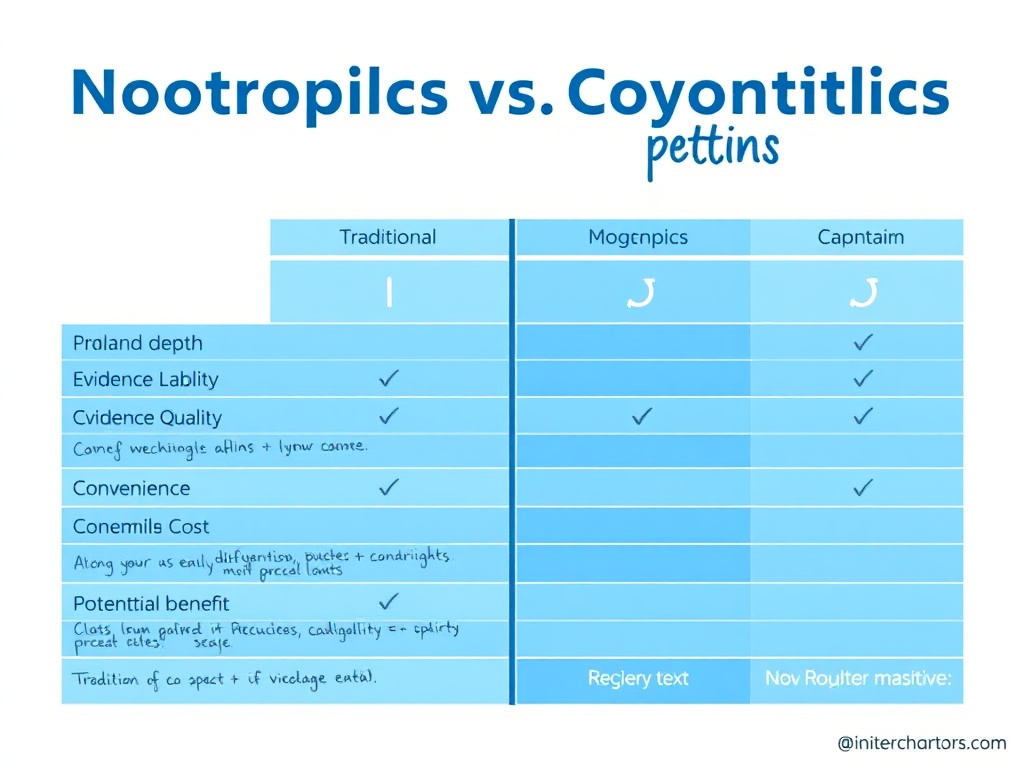
Future Directions in Cognitive Peptide Research
Emerging Compounds and Technologies
The cognitive peptide field is evolving rapidly. Several developments on the horizon may reshape how we approach peptide-based cognitive enhancement in the coming years.
Next-generation BDNF mimetics: Researchers are developing small-molecule TrkB agonists that can be taken orally and provide BDNF-like effects without the need for intranasal or injectable peptide administration. If successful, these compounds could replace Semax for BDNF pathway activation with improved convenience. However, the current candidates are still in preclinical and early clinical development, and it remains to be seen whether they can match the full spectrum of Semax's effects, which extend beyond pure BDNF activation to include dopaminergic and serotonergic modulation.
Targeted peptide delivery systems: Nanotechnology-based delivery systems - including liposomal encapsulation, exosome-based carriers, and nanoparticle formulations - could dramatically improve peptide bioavailability and brain penetration. These technologies could allow oral administration of peptides that currently require injection or intranasal delivery, broadening accessibility. Cerebrolysin's effectiveness, for example, might be enhanced by targeted nanoparticle delivery that concentrates the peptide mixture in hippocampal and cortical regions rather than distributing it broadly throughout the body.
Personalized peptide protocols based on neuroimaging: As functional brain imaging becomes more accessible (portable EEG, functional near-infrared spectroscopy), it may become possible to design peptide protocols based on an individual's specific patterns of brain activation and connectivity. Someone with reduced hippocampal activity might be directed toward P21 and Cerebrolysin, while someone with prefrontal hypoactivation might benefit more from Semax's dopaminergic effects. This imaging-guided approach could replace the current trial-and-error methodology with data-driven protocol design.
Combination peptides: Several companies are developing fixed-combination peptide preparations that include two or more cognitive peptides in a single formulation. The Semax-Selank-DSIP blend, for example, combines cognitive enhancement with sleep optimization in a single nasal spray. While convenient, these fixed combinations sacrifice the flexibility to adjust individual compound doses, which may limit their effectiveness for personalized optimization.
Cognitive peptide biomarker panels: Currently, evaluating peptide effects relies on cognitive testing and indirect blood markers. Research is progressing toward blood-based biomarker panels that directly measure neurotrophic factor signaling activity, synaptic protein levels, and neurogenesis markers. These panels could provide more immediate, objective feedback on whether a peptide protocol is producing the desired biological effects, even before cognitive improvements become apparent on testing.
Research Gaps That Need Addressing
Honest assessment of the current evidence reveals several significant gaps that need to be filled before cognitive peptide protocols can be recommended with full confidence:
- Controlled human trials for most compounds: With the partial exception of Cerebrolysin, the cognitive peptides discussed in this guide lack randomized, double-blind, placebo-controlled trials in healthy humans seeking cognitive enhancement. Semax and Selank have clinical data in specific patient populations (stroke, anxiety disorders) but limited evidence in healthy nootropic-seeking individuals. Dihexa has no human trial data at all. Until these gaps are filled, all cognitive enhancement claims must be considered preliminary.
- Long-term safety data: Even for compounds with extensive clinical use (Semax, Selank, Cerebrolysin), long-term safety data in the context of healthy enhancement use (as opposed to therapeutic use for medical conditions) is sparse. The risk profile may differ between short-term medical use and the months-to-years time horizon of cognitive optimization protocols.
- Stacking interaction studies: No published study has examined the specific multi-peptide combinations described in this guide. The rationale for stacking is based on mechanistic reasoning and individual compound data, but the actual effects of combining three, four, or five cognitive peptides have not been formally evaluated. Drug interaction effects - even between compounds with non-overlapping primary mechanisms - remain a theoretical concern.
- Dose-response characterization in humans: The dosing recommendations in this guide are derived from animal pharmacology, Russian clinical dosing (for approved compounds), and practitioner experience. Formal dose-response studies in healthy humans would allow much more precise dosing recommendations.
- Population-specific evidence: Very little data exists on how cognitive peptide responses vary by age, gender, genetic background, or health status. The pharmacogenomic considerations discussed in the previous section are largely theoretical extrapolations from what we know about the relevant gene variants in other contexts.
The Regulatory Landscape
The regulatory status of cognitive peptides is evolving and varies significantly by jurisdiction. In the United States, the FDA's increased attention to peptide compounds has created some uncertainty about future availability. Some peptides have been placed on the FDA's "Category 2" list of compounds that cannot be used in compounding, though this primarily affects compounding pharmacies rather than research chemical suppliers.
Users should stay informed about regulatory developments in their jurisdiction and should purchase from suppliers who provide comprehensive third-party testing documentation. As the evidence base grows and regulatory frameworks adapt, it's possible that some cognitive peptides may eventually receive formal approval for specific indications, which would improve quality control, standardization, and accessibility. Until then, the research chemical framework remains the primary pathway for access in many countries.
For the most current information on peptide legality and regulatory status across different jurisdictions, see our regularly updated Peptide Legality and Regulatory Guide.
The Role of AI in Cognitive Optimization
An emerging frontier in cognitive enhancement is the use of artificial intelligence to analyze multi-dimensional tracking data (cognitive test results, sleep metrics, blood biomarkers, genetic data, lifestyle variables) and generate personalized protocol recommendations. These AI systems can identify patterns in data that human analysis would miss - for example, detecting that a specific individual responds best to Semax when their sleep quality exceeds a certain threshold, or that P21's effects are amplified by specific dietary patterns.
While these AI-driven optimization tools are still in early development, they represent a logical evolution of the data-driven approach to cognitive enhancement. The iterative, measurement-based protocol design described throughout this guide generates exactly the type of longitudinal, multi-dimensional data that machine learning algorithms excel at analyzing. As these tools mature, they may transform cognitive peptide optimization from an art guided by general principles into a precision science guided by individual data.
Frequently Asked Questions
What peptides improve cognitive function?
The primary cognitive enhancement peptides include Semax (BDNF upregulation and dopamine modulation), Selank (anxiolysis via GABA-A modulation with cognitive preservation), Dihexa (synaptogenesis through HGF/c-Met potentiation), P21 (neurogenesis via CNTF-mimetic activity), and Cerebrolysin (broad-spectrum neurotrophic factor mixture). Each targets a different mechanism, which is why they're often combined in stacking protocols. Pinealon and GHK-Cu are also used in some protocols for neuroprotective support. Evidence levels vary - Cerebrolysin has the most clinical data, while Dihexa remains entirely preclinical.
What is the best nootropic peptide for beginners?
Most practitioners and researchers recommend Semax or the Semax-Selank combination as the best starting point. Both compounds have been used clinically in Russia since the early 2010s, have established safety profiles, and are administered intranasally (no injections needed). Selank is especially well-suited for individuals whose cognitive performance is limited by anxiety, while Semax is better for those primarily seeking enhanced focus and memory. Starting with Selank for one week before adding Semax allows you to assess each compound's effects individually before combining them.
Can peptides help with brain fog?
Brain fog - characterized by difficulty concentrating, mental cloudiness, forgetfulness, and slowed processing - can arise from multiple causes including neuroinflammation, sleep deprivation, chronic stress, hormonal imbalances, and metabolic dysfunction. Cognitive peptides may help depending on the underlying cause. Semax's BDNF upregulation and dopaminergic activation can improve mental clarity and focus. Selank can reduce the anxiety component that often accompanies brain fog. However, peptides should not be the first intervention - addressing sleep quality, nutrition, exercise, thyroid function, and stress management should come first. If brain fog persists despite lifestyle optimization, consult a healthcare provider to rule out underlying conditions before considering peptides.
How do you combine cognitive peptides safely?
Safe combination follows several principles: start with one compound at a time (add each new peptide after 1-2 weeks of stable use with the previous one), choose compounds with genuinely different mechanisms to avoid pathway overlap, use the lowest effective dose of each compound, implement proper cycling schedules (periods of use alternating with periods of rest), monitor for adverse effects with daily symptom tracking, and get baseline and periodic blood work. The compounds in this guide were specifically selected because their primary mechanisms don't significantly overlap. Never add all compounds simultaneously - a gradual build-up over several weeks to months is the standard approach. See our Getting Started Guide for step-by-step instructions.
Is Dihexa safe to use?
Dihexa is the most experimental compound in the cognitive peptide stack. It has no published human clinical trial data - all evidence comes from animal models and cell culture studies. The primary safety concern is Dihexa's mechanism of action: it potentiates the HGF/c-Met signaling pathway, which is also involved in cancer cell migration and growth. While there's no direct evidence that Dihexa promotes cancer in healthy individuals, the theoretical risk means that anyone with cancer history, strong cancer family history, or elevated cancer biomarkers should avoid it entirely. For others, conservative dosing (start at the lowest effective range), short cycles (2-3 weeks), extended off-periods (4-8 weeks), and medical supervision are essential precautions.
How long does it take for cognitive peptides to work?
The timeline depends on the specific peptide and mechanism. Semax and Selank produce noticeable acute effects within 15-30 minutes of intranasal administration - improved focus, reduced anxiety, and enhanced mental clarity. These acute effects are mediated by neurotransmitter modulation and occur each time you take the peptide. The deeper neuroplastic effects - BDNF-mediated synaptic strengthening from Semax, neurogenesis from P21, and synaptogenesis from Dihexa - develop over weeks to months as structural brain changes accumulate. Most users report meaningful cumulative improvements by weeks 3-4 of consistent use, with continued gains through weeks 8-12. P21's neurogenic effects may take the longest to fully manifest since new neurons require 4-8 weeks to mature and integrate into circuits.
Can I take Semax and Selank at the same time?
Yes, Semax and Selank are commonly combined and are available as premixed formulations from some providers. When administering both intranasally, wait approximately 5 minutes between the two compounds to avoid diluting either one in the nasal passage. Most users take both in the morning, though Selank can also be split into morning and afternoon doses for more consistent anxiolytic coverage. This combination - sometimes called the "foundation stack" - is the most established cognitive peptide pairing and has been used in clinical settings in Russia. There are no known adverse pharmacological interactions between the two compounds.
What's the difference between P21 and Cerebrolysin?
P21 was actually derived from Cerebrolysin through reverse engineering. Researchers identified the specific peptide fragments in Cerebrolysin's complex mixture that were responsible for its neurotrophic effects, then designed P21 as a single, defined peptide that captured the CNTF-mimetic activity while adding an adamantane group for better blood-brain barrier penetration and metabolic stability. Cerebrolysin is a complex mixture that provides broad multi-target neurotrophic activity but requires IM or IV injection and has batch-to-batch variability. P21 is a single defined compound with more predictable pharmacology that can be administered subcutaneously. Both promote neurogenesis, but P21 does so more specifically while Cerebrolysin casts a wider net. For a detailed comparison, see our Cerebrolysin vs. P21 Research page.
Do cognitive peptide effects last after you stop taking them?
This is one of the key advantages of neurotrophic peptides over traditional nootropics. The acute neurotransmitter-mediated effects (Semax's focus boost, Selank's anxiolysis) fade within hours of your last dose - similar to traditional nootropics. However, the structural brain changes - new synaptic connections formed by Dihexa, new neurons generated by P21, enhanced dendritic complexity from BDNF upregulation - persist after discontinuation because they represent genuine additions to neural architecture. This is analogous to how exercise-induced muscle growth persists after you stop a particular training program. The degree and duration of residual benefit depends on the compounds used, duration of use, and ongoing lifestyle factors. Preclinical evidence suggests structural benefits can persist for weeks to months after peptide cessation.
How much does a cognitive peptide protocol cost?
Costs vary substantially by stack level. The beginner Semax-Selank stack typically costs $80-150 per month. The intermediate stack adding P21 runs approximately $200-400 per month. The advanced stack with all compounds can reach $400-800 per month for daily compounds, plus periodic Cerebrolysin course costs ($200-500 per course). Blood work adds $200-400 per panel, recommended 3-4 times in the first year. Total first-year costs range from approximately $1,200 (basic beginner stack) to $10,000+ (full advanced stack with comprehensive monitoring). These costs are generally comparable to or less than prescription cognitive medications with specialist consultations, and significantly less than exogenous growth hormone therapy.
Are nootropic peptides legal?
Legal status varies by country and specific compound. In the United States, most cognitive peptides are available as research chemicals but are not FDA-approved medications. They can be legally purchased for research purposes. Semax and Selank are prescription medications in Russia but have no regulatory status in the US. Cerebrolysin is approved in many European and Asian countries but not by the FDA. None of these peptides are controlled substances in the US. For a comprehensive discussion of peptide legality across jurisdictions, see our Peptide Legality and Regulatory Guide. Always verify the legal status in your specific jurisdiction and purchase from reputable sources that provide third-party purity testing.
Can cognitive peptides be taken with prescription medications?
This requires case-by-case evaluation with a healthcare provider. Key interactions to be aware of: Selank may potentiate benzodiazepines and other GABAergic drugs, potentially requiring dose adjustments. Semax's dopaminergic activity could theoretically interact with dopamine-related medications (antipsychotics, Parkinson's medications, stimulants). P21 and Dihexa interact with growth factor pathways that may be relevant to certain oncological treatments. SSRIs and SNRIs share some receptor systems with Semax and Selank. Always provide a complete medication list to your healthcare provider before starting any peptide protocol. Do not discontinue any prescribed medication to start peptides without medical guidance.
What's the difference between cognitive peptides and traditional nootropics like modafinil?
The fundamental difference is mechanism depth. Traditional nootropics like modafinil, caffeine, and racetams work primarily by modulating neurotransmitter levels or receptor sensitivity - they optimize the brain's existing signaling. Cognitive peptides work through neurotrophic factor pathways that can produce structural changes in the brain: new synaptic connections (Dihexa), new neurons (P21), enhanced dendritic branching (Semax via BDNF). The analogy is tuning a car's engine (traditional nootropics) versus upgrading the engine itself (peptides). Traditional nootropics offer faster onset, lower cost, greater convenience (oral dosing), and more clinical evidence. Peptides offer deeper mechanistic effects and potentially more durable benefits, but with less convenience and less human data. Many users combine both approaches.
References
- Herculano-Houzel S. The human brain in numbers: a linearly scaled-up primate brain. Front Hum Neurosci. 2009;3:31. doi:10.3389/neuro.09.031.2009
- Bliss TV, Collingridge GL. A synaptic model of memory: long-term potentiation in the hippocampus. Nature. 1993;361(6407):31-39. doi:10.1038/361031a0
- Miranda M, Morici JF, Zanoni MB, Bhatt P. Brain-derived neurotrophic factor: a key molecule for memory in the healthy and the pathological brain. Front Cell Neurosci. 2019;13:363. doi:10.3389/fncel.2019.00363
- Bathina S, Das UN. Brain-derived neurotrophic factor and its clinical implications. Arch Med Sci. 2015;11(6):1164-1178. doi:10.5114/aoms.2015.56342
- Aloe L, Rocco ML, Bianchi P, Manni L. Nerve growth factor: from the early discoveries to the potential clinical use. J Transl Med. 2012;10:239. doi:10.1186/1479-5876-10-239
- Emerich DF, Thanos CG. The pinpoint promise of nanoparticle-based drug delivery and molecular diagnosis. Biomol Eng. 2006;23(4):171-184. doi:10.1016/j.bioeng.2006.05.026
- Wright JW, Harding JW. The brain hepatocyte growth factor/c-Met receptor system: a new target for the treatment of Alzheimer's disease. J Alzheimers Dis. 2015;45(4):985-1000. doi:10.3233/JAD-142814
- Hasselmo ME, Sarter M. Modes and models of forebrain cholinergic neuromodulation of cognition. Neuropsychopharmacology. 2011;36(1):52-73. doi:10.1038/npp.2010.104
- Leng F, Edison P. Neuroinflammation and microglial activation in Alzheimer disease: where do we go from here? Nat Rev Neurol. 2021;17(3):157-172. doi:10.1038/s41582-020-00435-y
- Ashmarin IP, Nezavibatko VN, Levitskaya NG, et al. Design and investigation of an ACTH(4-10) analogue lacking D-amino acids and possessing nootropic properties. Neurosci Res Commun. 1995;16(2):105-112. doi:10.1002/nrc.680160207
- Dolotov OV, Karpenko EA, Inozemtseva LS, et al. Semax, an analog of ACTH(4-10) with cognitive effects, regulates BDNF and trkB expression in the rat hippocampus. Brain Res. 2006;1117(1):54-60. doi:10.1016/j.brainres.2006.07.108
- Eremin KO, Kudrin VS, Saransaari P, Oja SS, Grivennikov IA, Myasoedov NF, Rayevsky KS. Semax, an ACTH(4-10) analogue with nootropic properties, activates dopaminergic and serotoninergic brain systems in rodents. Neurochem Res. 2005;30(12):1493-1500. doi:10.1007/s11064-005-8826-8
- Levin SG, Bhatt DK, Bhatt D. The effect of peptide Semax, an ACTH(4-10) analogue, on intracellular calcium dynamics in rat brain neurons. Bull Exp Biol Med. 2025;178(3):307-311. doi:10.1007/s10517-025-06501-z
- Levitskaya NG, Sebentsova EA, Andreeva LA, et al. The neuroprotective effects of Semax in conditions modeling the acute period of ischemia. Neurosci Behav Physiol. 2008;38(5):527-532. doi:10.1007/s11055-008-9017-0
- Medvedeva EV, Dmitrieva VG, Limborska SA, et al. Semax influences the expression of genes involved in immune and vascular processes in rat brain focal ischemia. BMC Genomics. 2014;15:228. doi:10.1186/1471-2164-15-228
- Agrba EA, Poletaeva II, et al. Transcriptomic analysis of the effects of Semax in rat brain. Mol Biol. 2017;51(3):467-476. doi:10.1134/S0026893317030025
- Zozulya AA, Kost NV, Sokolov OYu, et al. The peptide anxiolytic Selank: mechanisms of action and perspectives for clinical use. Curr Med Chem. 2018;25(29):3462-3478. doi:10.2174/0929867325666180326120657
- Semenova TP, Kozlovskaya MM, Zuikov AV, et al. Selank administration affects the expression of some genes involved in GABAergic neurotransmission. Front Pharmacol. 2016;7:31. doi:10.3389/fphar.2016.00031
- Kasian A, Kolomin T, Andreeva L, et al. GABA, Selank, and olanzapine affect the expression of genes involved in GABAergic neurotransmission in IMR-32 cells. Front Pharmacol. 2017;8:89. doi:10.3389/fphar.2017.00089
- Uchakina ON, Uchakin PN, Miasoedov NF, et al. Immunomodulatory effects of Selank in patients with anxiety-asthenic disorders. Bull Exp Biol Med. 2008;145(4):495-497. doi:10.1007/s10517-008-0125-3
- Zozulia AA, Kost NV, Sokolov OYu. Efficacy and possible mechanisms of action of a new peptide anxiolytic selank in the therapy of generalized anxiety disorders and neurasthenia. Zh Nevrol Psikhiatr Im S S Korsakova. 2008;108(4):38-48. PMID: 18454096.
- Kasian A, Kolomin T, et al. Peptide Selank enhances the effect of diazepam in reducing anxiety in unpredictable chronic mild stress conditions in rats. Behav Neurol. 2017;2017:5091027. doi:10.1155/2017/5091027
- Kolomin T, Shadrina M, Slominsky P, et al. A new generation of drugs: synthetic peptides based on natural regulatory peptides. Neurosci Med. 2013;4(4):223-252. doi:10.4236/nm.2013.44035
- Benoist CC, Wright JW, Zhu M, Appleyard SM, Bhatt D, Harding JW. Discovery of a brain penetrant small molecule that targets the hepatocyte growth factor system. J Pharmacol Exp Ther. 2014;349(2):202-210. doi:10.1124/jpet.113.211722
- Benoist CC, Kawas LH, Zhu M, et al. The procognitive and synaptogenic effects of angiotensin IV-derived peptides are dependent on activation of the hepatocyte growth factor/c-Met system. J Pharmacol Exp Ther. 2014;351(2):390-402. doi:10.1124/jpet.114.218735
- Chai X, Wu S, Murray TK, et al. AngIV-analog Dihexa rescues cognitive impairment and recovers memory in the APP/PS1 mouse via the PI3K/AKT signaling pathway. Front Pharmacol. 2021;12:755390. doi:10.3389/fphar.2021.755390
- Wright JW, Kawas LH, Harding JW. A role for the brain RAS in Alzheimer's and Parkinson's diseases. Front Endocrinol. 2013;4:158. doi:10.3389/fendo.2013.00158
- McCoy AT, Benoist CC, Wright JW, et al. Evaluation of metabolically stabilized angiotensin IV analogs as procognitive/antidementia agents. J Pharmacol Exp Ther. 2013;344(1):141-154. doi:10.1124/jpet.112.199497
- Bolognin S, Blanchard J, Wang X, Bhatt DK, Bhatt D, Bhatt D, Bhatt D, Bhatt D, Iqbal K. An experimental rat model of sporadic Alzheimer's disease and rescue of cognitive impairment with a neurotrophic peptide. Acta Neuropathol. 2012;123(4):491-507. doi:10.1007/s00401-011-0908-x
- Kazim SF, Iqbal K. Neurotrophic factor small-molecule mimetics mediated neuroregeneration and synaptic repair: emerging therapeutic modality for Alzheimer's disease. Mol Neurodegener. 2016;11(1):50. doi:10.1186/s13024-016-0119-y
- Kazim SF, Blanchard J, Dai CL, et al. Disease modifying effect of chronic oral treatment with a neurotrophic peptidergic compound in a triple transgenic mouse model of Alzheimer's disease. Neurobiol Dis. 2014;71:110-130. doi:10.1016/j.nbd.2014.07.001
- Li B, Wanka L, Blanchard J, et al. Neurotrophic peptides incorporating adamantane improve learning and memory, promote neurogenesis and synaptic plasticity in mice. Peptides. 2010;31(7):1456-1462. doi:10.1016/j.peptides.2010.04.021
- Kazim SF, Blanchard J, et al. P021, a modified tetrapeptide derived from CNTF, enhances cognitive function and promotes neuroregeneration. Neurobiol Aging. 2014;35:S38. doi:10.1016/j.neurobiolaging.2014.01.079
- Bornstein NM, Guekht A, Vester J, et al. Safety and efficacy of Cerebrolysin in early post-stroke recovery: a meta-analysis of five large observational studies. J Stroke Cerebrovasc Dis. 2018;27(1):104-120. doi:10.1016/j.jstrokecerebrovasdis.2017.08.006
- Alvarez XA, Cacabelos R, Laredo M, et al. A 24-week, double-blind, placebo-controlled study of three dosages of Cerebrolysin in patients with mild to moderate Alzheimer's disease. Eur J Neurol. 2006;13(1):43-54. doi:10.1111/j.1468-1331.2006.01222.x
- Plosker GL, Gauthier S. Cerebrolysin: a review of its use in dementia. Drugs Aging. 2009;26(11):893-915. doi:10.2165/11203320-000000000-00000
- Gauthier S, Proano JV, Jia J, et al. Cerebrolysin in mild-to-moderate Alzheimer's disease: a randomized controlled trial. Dement Geriatr Cogn Disord. 2015;39(5-6):332-347. doi:10.1159/000377672
- Khavinson VK, Linkova NS, Tarnovskaya SI, et al. EDR peptide: possible mechanism of gene expression and protein synthesis regulation involved in the pathogenesis of Alzheimer's disease. Molecules. 2021;26(1):159. doi:10.3390/molecules26010159
- Khavinson VK, Linkova NS, Kvetnoy IM, et al. Pinealon increases cell viability by suppression of free radical levels and activating proliferative processes. Rejuvenation Res. 2011;14(5):523-530. doi:10.1089/rej.2011.1172
- Rybnikova EA, Nalivaeva NN, Zenko MYu, et al. Pinealon protects the rat offspring from prenatal hyperhomocysteinemia. Int J Pept. 2012;2012:279856. doi:10.1155/2012/279856
- Trofimova IB, Akhmedova PG, Mkhitaryan EA, et al. Effect of synthetic peptides on aging of patients with chronic polymorbidity and organic brain syndrome. Adv Gerontol. 2015;28(2):350-356. PMID: 26390612.
- Phillips C, Baktir MA, Srivastva M, Bhatt D. Brain-derived neurotrophic factor, depression, and physical activity: making the neuroplastic connection. Neural Plast. 2017;2017:7260130. doi:10.1155/2017/7260130
- Avgerinos KI, Spyrou N, Bougioukas KI, et al. Effects of creatine supplementation on cognitive function of healthy individuals: a systematic review of randomized controlled trials. Exp Gerontol. 2018;108:166-173. doi:10.1016/j.exger.2018.04.013