Key Takeaway
Complete guide to recovery peptides for athletes. How BPC-157, TB-500, and other peptides accelerate muscle repair, reduce inflammation, and shorten recovery time.
This recovery peptides athletes complete guide covers how peptides like BPC-157, TB-500 (Thymosin Beta-4), and GHK-Cu help athletes heal faster from training, reduce chronic inflammation, and recover from injuries that would otherwise sideline them for weeks. These peptides accelerate tissue repair at the cellular level by promoting angiogenesis, collagen synthesis, and anti-inflammatory signaling. At FormBlends, we build physician-supervised recovery protocols for athletes at every level.
If you're a competitive athlete dealing with a nagging injury or a weekend warrior who wants to train harder without paying for it the next day, recovery peptides can change how your body bounces back.
The Science Behind Recovery Peptides
Athletic recovery is fundamentally a process of tissue repair. When you train hard, you create micro-damage in muscles, tendons, and connective tissue. Your body repairs that damage, and in doing so, builds back stronger. But when the repair process can't keep pace with the damage, injuries develop, performance plateaus, and chronic pain sets in.
BPC-157
BPC-157 (Body Protection Compound-157) is a 15-amino-acid peptide derived from human gastric juice. In the context of athletic recovery, its most relevant properties are:.
- Tendon and ligament repair: BPC-157 has been shown to accelerate healing of tendons and ligaments in animal models, tissues that are notoriously slow to heal due to limited blood supply.
- Muscle repair: It promotes the healing of crushed or torn muscle fibers by stimulating growth factor expression and new blood vessel formation.
- Anti-inflammatory action: Reduces pro-inflammatory cytokines (TNF-alpha, IL-6) at injury sites, which limits secondary damage from excessive inflammation.
- Nitric oxide modulation: Interacts with the NO system to regulate blood flow to damaged areas, ensuring adequate oxygen and nutrient delivery for repair.
TB-500 (Thymosin Beta-4)
TB-500 is a synthetic version of Thymosin Beta-4, a naturally occurring peptide involved in tissue repair and cell migration. Its key mechanisms include:
- Cell migration: TB-500 promotes the migration of repair cells to damaged tissue, effectively calling in the repair crew faster.
- Anti-fibrotic effects: It helps prevent excessive scar tissue formation, which is critical for maintaining flexibility and function in healed muscles and tendons.
- Inflammation regulation: Like BPC-157, it modulates the inflammatory response to prevent chronic inflammation while allowing the acute inflammatory phase necessary for healing.
GHK-Cu
GHK-Cu (glycyl-L-histidyl-L-lysine copper complex) is a tripeptide with a copper ion attached. It promotes collagen synthesis, attracts immune cells to wound sites, and has antioxidant properties that protect healing tissue from oxidative damage. For athletes, its collagen-boosting effects are particularly valuable for joint and connective tissue health.
How It Works
Recovery peptide protocols for athletes are structured around the type and severity of the issue being addressed:
View data table
| Category | Evidence and Efficacy Score | Detail |
|---|---|---|
| Cold Exposure | 72 | Metabolic activation |
| Red Light | 65 | Mitochondrial support |
| CGM Tracking | 82 | Glucose optimization |
| Peptide Stacks | 70 | Targeted protocols |
| Nootropics | 55 | Cognitive enhancement |

Acute injury recovery: When you're dealing with a specific injury (pulled muscle, tendinitis, ligament sprain), the protocol targets that area aggressively. BPC-157 is typically the primary peptide, often administered subcutaneously near the injury site. TB-500 may be added for its cell-migration properties. Protocol duration is usually 4 to 8 weeks depending on severity.
Training recovery improvement: For athletes looking to recover faster between training sessions rather than treating a specific injury, the approach is more systemic. Lower doses of BPC-157 and/or TB-500 are used to support overall tissue repair capacity. This can be cycled around training blocks.
Chronic issue management: Nagging injuries that have lingered for months or years often involve chronic inflammation and incomplete tissue repair. These typically require longer protocols (8 to 12 weeks) and may combine BPC-157, TB-500, and GHK-Cu to address inflammation, repair, and collagen remodeling simultaneously.
Administration is usually subcutaneous injection, though oral BPC-157 is available for those who prefer it (with the trade-off of lower systemic bioavailability). Your physician will recommend the best approach for your situation.
Getting Started
- Consultation. Schedule a telehealth appointment with a FormBlends physician. We will discuss your training, injury history, current issues, and recovery goals.
- Protocol design. Your physician creates a recovery protocol specifying which peptides to use, dosing, injection sites (if applicable), and duration.
- Peptide delivery. All peptides come from licensed compounding pharmacies. You'll receive clear instructions for storage, preparation, and administration. Starting at $199/mo
- Training integration. We will advise on how to integrate the peptide protocol with your training schedule. In most cases, you can continue training during the protocol, often at a higher intensity than you could without peptide support.
- Follow-up. Regular check-ins let us monitor progress and adjust as needed. Athletes often see rapid improvements, which means we can fine-tune the protocol in real time.
Expected Benefits and Timeline
- Days 3-7: Reduced pain and inflammation at injury sites. Athletes with acute injuries often report noticeable pain relief within the first week.
- Weeks 2-3: Improved range of motion and reduced stiffness. Training soreness (DOMS) decreases noticeably. Recovery between sessions feels faster.
- Weeks 4-6: Significant tissue repair is underway. Athletes with tendon or ligament issues often report functional improvement. Training volume and intensity can typically increase.
- Weeks 8-12: Full protocol benefits are realized. Chronic injuries that have persisted for months may be substantially resolved. Overall connective tissue health is improved.
Beyond injury recovery, many athletes report secondary benefits: better sleep quality, improved joint comfort during training, and a general sense of physical resilience that allows them to push harder without breaking down.
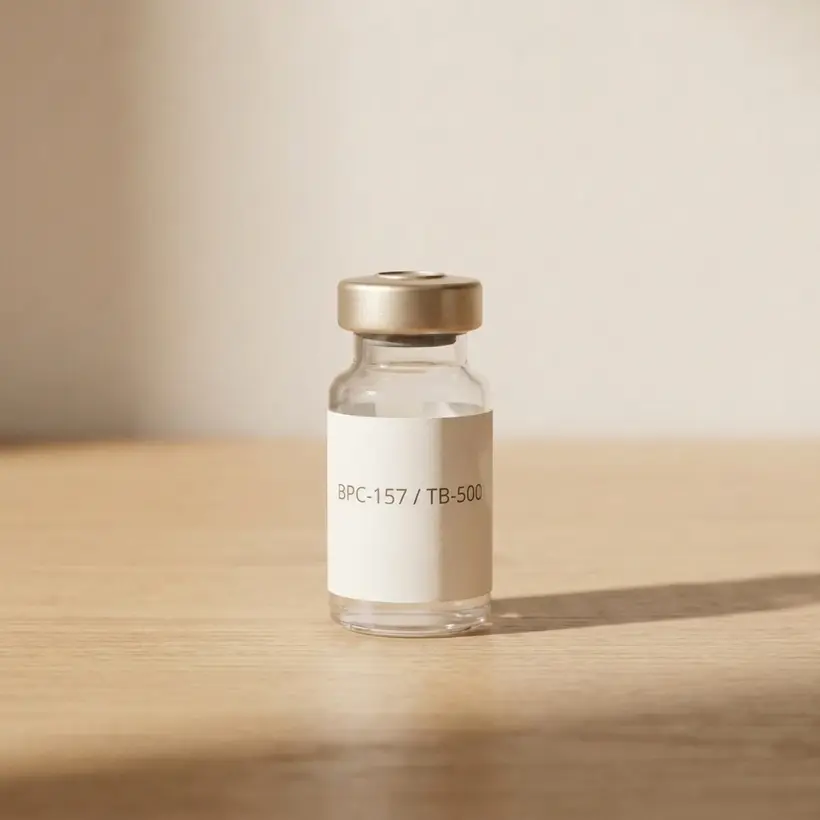
From the FormBlends catalog
BPC-157 / TB-500 Blend
The ultimate recovery stack in one vial · From $249/mo · compounded by a licensed 503A pharmacy, dispensed only after provider review.
View BPC-157 / TB-500 Blend →Safety Considerations
- Anti-doping: Some peptides, including TB-500, are on the World Anti-Doping Agency (WADA) prohibited list. If you compete in a sport governed by WADA or similar agencies, you must discuss this with your physician before starting any peptide protocol. BPC-157's status varies by organization.
- Injection technique: Proper subcutaneous injection technique minimizes discomfort and reduces the risk of infection. Our team provides thorough instruction and support.
- Side effects: Generally mild and infrequent. The most common are injection site redness or mild swelling, which resolves within hours. Systemic side effects are rare.
- Quality control: Peptides from unregulated online sources carry contamination and potency risks. We source exclusively from licensed pharmacies.
- Concurrent treatment: If you're receiving physical therapy, chiropractic care, or other treatments for an injury, peptides can complement those approaches. Inform all your healthcare providers about your peptide protocol.
Frequently Asked Questions
Can I train while on a recovery peptide protocol?
In most cases, yes. The protocol is designed to support ongoing training. For acute injuries, your physician may recommend modified activity during the initial healing phase, but complete rest is rarely necessary.
How do recovery peptides compare to PRP (platelet-rich plasma) therapy?
PRP and recovery peptides work through different but complementary mechanisms. PRP concentrates growth factors from your own blood, while peptides provide targeted signaling molecules that direct the repair process. Some athletes use both. PRP vs peptide therapy comparison
Are recovery peptides just for serious athletes?
Not at all. Weekend athletes, recreational exercisers, and anyone dealing with musculoskeletal pain or slow recovery can benefit. You don't need to be a professional to deserve faster healing and less pain.
Will my insurance cover this?
Peptide therapy isn't typically covered by insurance. But the cost is often comparable to or less than repeated physical therapy sessions, cortisone injections, or other conventional treatments for chronic injuries. Starting at $199/mo
Medical References
- Goldstein AL, Hannappel E, Sosne G, Kleinman HK. Thymosin beta4: a multi-functional regenerative peptide. Basic properties and clinical applications. Expert Opin Biol Ther. 2012;12(1):37-51. [PubMed | DOI]
Recover Faster, Train Harder
Recovery is the limiting factor for most athletes. If you want to remove that bottleneck with science-backed peptide therapy, our team at FormBlends is ready to build your protocol. Schedule your consultation and start recovering like your body was designed to.
Ready when you are
BPC-157 / TB-500 Blend
The ultimate recovery stack in one vial · From $249/mo · compounded by a licensed 503A pharmacy, dispensed only after provider review.
View BPC-157 / TB-500 Blend →