Key Takeaway
How athletes can start using recovery peptides. Practical steps for beginning BPC-157 and TB-500 protocols, what to expect, and how to integrate peptides with training.
To start recovery peptides as an athlete, you need a physician consultation, a clear understanding of your recovery goals, and a protocol tailored to your sport and training schedule. The process is straightforward: consult with a doctor, get your peptides from a licensed pharmacy, learn the administration technique, and integrate it with your existing training plan. At FormBlends, we walk athletes through every step via our telehealth platform.
If you have been hearing about BPC-157 and TB-500 in athletic circles and want to know how to actually begin, this guide gives you the practical roadmap.
The Science Behind Recovery Peptides for Athletes
A quick primer on why these peptides matter for athletes: intense training causes micro-tears in muscle fibers, stress on tendons and ligaments, and systemic inflammation. Your body's repair systems handle this through a multi-step process involving inflammation (to clean up damaged tissue), cell proliferation (to build new tissue), and remodeling (to strengthen the new tissue).
Recovery peptides accelerate each of these phases. BPC-157 speeds angiogenesis and growth factor expression. TB-500 mobilizes stem cells and prevents excess scar tissue. GHK-Cu promotes collagen synthesis in connective tissue. By supporting the biology of recovery, these peptides let you heal faster and train harder without accumulating damage.
The key distinction from painkillers or anti-inflammatories: peptides promote actual healing, not just symptom suppression. NSAIDs like ibuprofen can actually slow tissue repair when used chronically because they blunt the inflammatory phase that initiates healing. Peptides take a smarter approach.
How It Works: Getting Started Step by Step
Step 1[1]: Identify Your Recovery Needs
Before your consultation, think about what you need most:
View data table
| Category | Evidence and Efficacy Score | Detail |
|---|---|---|
| Cold Exposure | 72 | Metabolic activation |
| Red Light | 65 | Mitochondrial support |
| CGM Tracking | 82 | Glucose optimization |
| Peptide Stacks | 70 | Targeted protocols |
| Nootropics | 55 | Cognitive enhancement |
- Specific injury: Tendinitis, muscle strain, ligament sprain, joint pain. Note where it hurts, how long it has been an issue, and what makes it better or worse.
- General recovery: You don't have a specific injury but you feel like recovery between sessions is too slow, soreness lingers too long, or your joints ache after training.
- Prevention: You want to proactively support tissue health during a heavy training block to avoid injuries before they happen.
Knowing your primary need helps your physician select the right peptides and design the most effective protocol.
Step 2: Schedule Your Consultation
Book a telehealth appointment with a FormBlends physician. The consultation covers your athletic background, training volume, injury history, current medications and supplements, and recovery goals. It typically takes 20 to 30 minutes.
Step 3: Get Your Protocol
Your physician will prescribe a specific protocol including:
- Which peptides (BPC-157, TB-500, GHK-Cu, or a combination)
- Dosing and frequency
- Administration method (subcutaneous injection for most athletic protocols)
- Duration (typically 4 to 8 weeks for injuries, cycling schedules for ongoing recovery support)
- How to time your peptides around training sessions
Step 4: Receive Your Peptides and Supplies
Everything ships from a licensed compounding pharmacy to your door. The package includes your peptides (usually in lyophilized form, meaning freeze-dried powder), bacteriostatic water for reconstitution calculator, syringes, alcohol swabs, and detailed instructions. Starting at $199/mo
Step 5: Learn the Technique
If this is your first time with subcutaneous injections, don't worry. The needles are tiny (insulin-type, 29 to 31 gauge), and the injections are shallow, just under the skin, not into muscle. Our team will walk you through the process during a telehealth session if needed. Most athletes are comfortable self-administering by their second injection.
Step 6: Start and Track
Begin your protocol as prescribed. Keep a simple daily log noting:
- Pain levels (1-10 scale) at your injury site or overall soreness
- Training performance and how you felt during and after sessions
- Sleep quality
- Any side effects, however minor
This log gives your physician the data needed to improve your protocol at your check-in.
Getting Started: Tips from Athletes Who Have Done It
- Time injections consistently. Many athletes prefer morning injections on an empty stomach. Others inject post-training. Consistency matters more than the specific time, but post-training has a theoretical advantage since blood flow to damaged tissue is improved.
- Rotate injection sites. If your protocol is for general recovery rather than a specific injury, rotate between common subcutaneous sites (abdomen, thigh) to avoid local irritation.
- Don't change your training program simultaneously. If you start peptides the same week you dramatically change your training, you won't know what is causing any improvements. Start the protocol while keeping your training relatively stable for the first 2 weeks.
- Refrigerate your peptides. Once reconstituted, peptides must be stored in the refrigerator. Keep them in a consistent spot so you don't forget doses.
- Tell your coach. If you work with a coach, let them know you're on a recovery protocol. They can adjust training intensity and volume to complement the peptide support.
Expected Benefits and Timeline
- Days 2-5: Early pain reduction and decreased inflammation at injury sites. Athletes with acute injuries often feel relief quickly.
- Week 1-2: Reduced DOMS after training. Joints feel smoother. Range of motion at injury sites begins improving.
- Weeks 3-4: Functional strength returns to injured areas. Training performance improves as recovery capacity increases. Sleep quality often improves as well.
- Weeks 5-8: Tissue repair is substantially complete for most injuries. Athletes report feeling "resilient" in a way they haven't felt since before the injury developed. Chronic issues that lingered for months often resolve during this window.
Safety Considerations
- Competition testing. If you compete in a drug-tested sport, check your organization's prohibited substance list before starting. TB-500 is banned by WADA. BPC-157's status varies. Your physician can advise on clearance timelines.
- Don't use peptides to ignore pain. Pain is information. If peptides reduce your pain, that's a sign healing is happening. It isn't a license to push through movements that your body isn't ready for yet.
- Sterility is non-negotiable. Always wash hands before preparing injections. Use alcohol swabs on vial tops and injection sites. Never reuse needles.
- Side effects. Minimal at therapeutic doses. Injection site redness and mild swelling are the most common. Report anything unusual to your physician promptly.
- Not a substitute for rehab. Peptides accelerate tissue healing, but proper rehabilitation (progressive loading, mobility work, neuromuscular retraining) is still important for full recovery. athletic rehabilitation guide
Frequently Asked Questions
Can I start peptides while actively injured or should I wait?
You can start while injured. In fact, earlier intervention often leads to faster outcomes. There's no need to wait for the initial acute phase to pass before beginning the protocol.
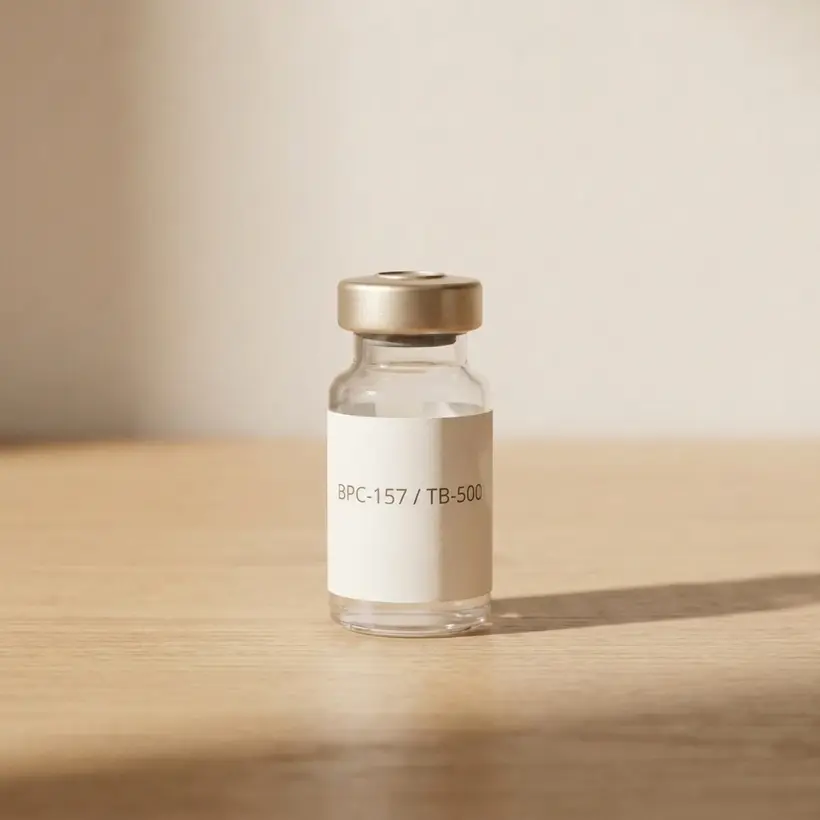
From the FormBlends catalog
BPC-157 / TB-500 Blend
The ultimate recovery stack in one vial · From $249/mo · compounded by a licensed 503A pharmacy, dispensed only after provider review.
View BPC-157 / TB-500 Blend →Do I need to take time off from training to start?
Usually not. Most protocols are designed to run alongside your training. For acute injuries, you may need to modify (not stop) training for the affected area during the first 1 to 2 weeks, but this is injury-dependent, not peptide-dependent.
How many cycles can I do per year?
This depends on your needs. Some athletes do 2 to 3 targeted cycles per year around heavy training blocks. Others use a single cycle to address a specific injury and then stop. Your physician will recommend a sustainable approach based on your situation.
What is the difference between BPC-157 and cortisone for tendon issues?
Cortisone reduces inflammation and pain quickly but doesn't promote tissue repair. Repeated cortisone injections can actually weaken tendons. BPC-157 promotes genuine tendon healing through angiogenesis and growth factor activation, addressing the root cause rather than just the symptom.
Medical References
- Wilding JPH, Batterham RL, Calanna S, et al. Once-Weekly Semaglutide in Adults with Overweight or Obesity. N Engl J Med. 2021;384(11):989-1002. [PubMed | ClinicalTrials.gov | DOI]
- Davies M, Færch L, Jeppesen OK, et al. Semaglutide 2.4 mg once a week in adults with overweight or obesity, and type 2 diabetes (STEP 2). Lancet. 2021;397(10278):971-984. [PubMed | ClinicalTrials.gov | DOI]
- Wadden TA, Bailey TS, Billings LK, et al. Effect of Subcutaneous Semaglutide vs Placebo as an Adjunct to Intensive Behavioral Therapy on Body Weight in Adults With Overweight or Obesity (STEP 3). JAMA. 2021;325(14):1403-1413. [PubMed | ClinicalTrials.gov | DOI]
- Rubino D, Abrahamsson N, Davies M, et al. Effect of Continued Weekly Subcutaneous Semaglutide vs Placebo on Weight Loss Maintenance in Adults With Overweight or Obesity (STEP 4). JAMA. 2021;325(14):1414-1425. [PubMed | ClinicalTrials.gov | DOI]
- Garvey WT, Batterham RL, Bhatt DL, et al. Two-year effects of semaglutide in adults with overweight or obesity (STEP 5). Nat Med. 2022;28(10):2083-2091. [PubMed | ClinicalTrials.gov | DOI]
Start Your Recovery Protocol
Every day spent dealing with slow recovery or lingering injuries is a day you aren't training at your potential. Recovery peptides give your body the support it needs to heal faster and perform better. Schedule your consultation with FormBlends and build a recovery protocol designed for your sport and your goals.
Ready when you are
BPC-157 / TB-500 Blend
The ultimate recovery stack in one vial · From $249/mo · compounded by a licensed 503A pharmacy, dispensed only after provider review.
View BPC-157 / TB-500 Blend →