Key Takeaway
The 2026 protocol for athletic recovery peptides. Updated stacking, dosing, and periodization strategies for BPC-157, TB-500, and GHK-Cu under physician supervision.
The recovery peptides athletes protocol for 2026 reflects updated research on peptide periodization, localized versus systemic dosing, and how to stack BPC-157 with TB-500 for maximum tissue repair. This year's protocol emphasizes training-phase alignment, meaning your peptide dosing strategy changes based on whether you're in a high-volume training block, tapering, or actively managing an injury. At FormBlends, our physicians implement this protocol with individualized adjustments for each athlete.
Here is what the 2026 protocol looks like and why it outperforms earlier approaches.
The Science Behind the 2026 Protocol
Three research developments drove the protocol updates this year:
Training-phase periodization. Recovery demands aren't constant. During high-volume training blocks, micro-damage accumulates faster and systemic inflammation rises. During deload or taper phases, the body shifts into a repair-dominant mode. The 2026 protocol matches peptide dosing to these phases, increasing support during high-volume periods and allowing natural recovery processes to dominate during lighter periods.
Localized injection improvement. Research on subcutaneous peptide injection has clarified that injecting closer to the target tissue produces faster local effects. For athletes with specific injury sites, this means BPC-157 injections near the affected tendon or muscle deliver higher local concentrations than injections at distant sites.
Sequential stacking. Rather than using BPC-157 and TB-500 simultaneously from day one, the 2026 protocol introduces them sequentially. TB-500 is started first to mobilize repair cells to the area, followed by BPC-157 to accelerate the actual tissue regeneration. This staggered approach appears to produce faster functional recovery based on clinical observations.
How It Works
Track A: Injury Recovery Protocol
For athletes with a specific injury (tendinitis, muscle tear, ligament sprain, joint inflammation):
View data table
| Category | Evidence and Efficacy Score | Detail |
|---|---|---|
| Cold Exposure | 72 | Metabolic activation |
| Red Light | 65 | Mitochondrial support |
| CGM Tracking | 82 | Glucose optimization |
| Peptide Stacks | 70 | Targeted protocols |
| Nootropics | 55 | Cognitive enhancement |
Week 1-2: Mobilization Phase
- TB-500 administered subcutaneously, with one injection near the injury site and one at a distant site for systemic coverage
- Active recovery modalities continue (physical therapy, mobility work, contrast therapy)
- Anti-inflammatory nutrition guidance provided
Week 3-6: Repair Phase
- BPC-157 added to the protocol, injected near the injury site
- TB-500 continued at a reduced frequency
- GHK-Cu may be added for collagen-heavy tissues (tendons, ligaments, cartilage)
- Training gradually increases as tolerated
Week 7-8: Reintegration Phase
- Peptide doses taper down
- Full training resumes with monitoring
- Assessment of tissue healing through functional testing
Track B: Training Recovery Improvement
For healthy athletes looking to improve recovery between sessions:
High-Volume Training Blocks
- BPC-157 at a moderate systemic dose, administered daily or every other day
- Focus on supporting overall tissue repair capacity
- Complementary strategies: sleep improvement, adequate protein intake, hydration
Deload/Taper Phases
- Peptide use reduced or paused to allow natural recovery systems to operate
- Focus shifts to active recovery modalities
- This prevents dependency on exogenous peptides for normal recovery
Competition Prep
- Peptides tapered off well before competition (especially important for tested athletes)
- Focus on maintaining gains through nutrition and recovery protocols
Getting Started
- Athletic intake. Your consultation with a FormBlends physician includes a detailed discussion of your sport, training schedule, injury history, and performance goals. This information drives protocol design.
- Protocol assignment. You'll be placed on Track A (injury recovery) or Track B (training improvement), or a hybrid of both if you have an injury but also want systemic recovery support.
- Peptide delivery and education. Your peptides arrive with complete instructions. If injections are involved, we walk you through technique during a telehealth session. Starting at $199/mo
- Integration with your training plan. We coordinate the peptide protocol with your existing training schedule. If you work with a coach, we're happy to communicate with them about the recovery protocol.
Expected Benefits and Timeline
Track A (Injury Recovery)
- Days 3-5: Reduced pain and swelling at the injury site. Many athletes report being able to move the affected area more comfortably.
- Weeks 1-2: TB-500 mobilization phase brings repair cells to the area. Range of motion improves.
- Weeks 3-5: Active tissue repair with BPC-157. Strength and function begin returning. Athletes with tendinitis often report significant pain reduction.
- Weeks 6-8: Functional recovery. Many athletes return to full training intensity 30-50% faster than expected without peptide support.
Track B (Training Improvement)
- Week 1: Subtle reduction in delayed onset muscle soreness (DOMS).
- Weeks 2-4: Noticeable improvement in day-to-day recovery. Training sessions feel fresher. Joint comfort improves.
- Weeks 4-8: Ability to handle higher training volumes without accumulating fatigue. Many athletes report being able to add an extra session per week or increase intensity within existing sessions.
Safety Considerations
- Anti-doping compliance. TB-500 (Thymosin Beta-4) is prohibited by WADA in and out of competition. BPC-157 isn't currently on the WADA list but may be subject to scrutiny. If you compete in tested sports, discuss this thoroughly with your physician before starting.
- Injection safety. Proper technique, sterile supplies, and correct storage (refrigeration) of peptides are important. We provide detailed guidance and ongoing support.
- Don't mask injuries. Pain reduction from peptides shouldn't be used to push through an injury that needs rest. The goal is to accelerate genuine healing, not to ignore your body's signals.
- Side effects. Mild injection site reactions (redness, slight swelling) are the most common. Systemic side effects are rare with BPC-157 and TB-500 at therapeutic doses.
Frequently Asked Questions
Can I use recovery peptides during the off-season?
The off-season is actually an ideal time for a recovery protocol. It allows you to address lingering issues from the competitive season and build a stronger foundation for the next one, without competition-related time pressure or anti-doping concerns.
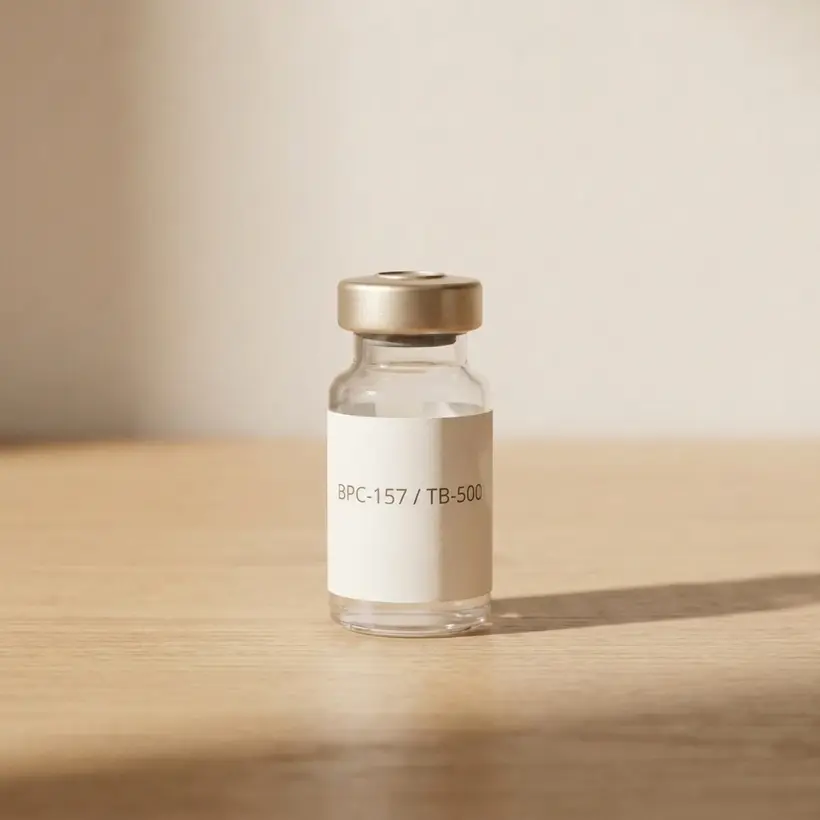
From the FormBlends catalog
BPC-157 / TB-500 Blend
The ultimate recovery stack in one vial · From $249/mo · compounded by a licensed 503A pharmacy, dispensed only after provider review.
View BPC-157 / TB-500 Blend →Do I need imaging (MRI, ultrasound) before starting?
Not always. For minor injuries and general recovery improvement, clinical assessment is sufficient. For significant injuries, your physician may recommend imaging to understand the full extent of the damage and design the most appropriate protocol.
Can I combine peptides with other recovery modalities?
Absolutely. Peptides complement physical therapy, massage, cold/heat therapy, compression, and other recovery tools. They don't replace these modalities but can make them more effective by accelerating the biological processes they support. thorough recovery strategies
How does this compare to cortisone injections?
Cortisone suppresses inflammation but doesn't promote tissue repair. In fact, repeated cortisone injections can weaken tendons over time. Recovery peptides address both inflammation and repair, supporting genuine healing rather than just symptom suppression.
Medical References
- Goldstein AL, Hannappel E, Sosne G, Kleinman HK. Thymosin beta4: a multi-functional regenerative peptide. Basic properties and clinical applications. Expert Opin Biol Ther. 2012;12(1):37-51. [PubMed | DOI]
improve your Recovery
The 2026 recovery protocol gives athletes a structured, science-backed approach to healing faster and training harder. If you're nursing an injury or improving your recovery between sessions, FormBlends has the expertise and the protocols to help. Schedule your consultation and start recovering smarter.
Ready when you are
BPC-157 / TB-500 Blend
The ultimate recovery stack in one vial · From $249/mo · compounded by a licensed 503A pharmacy, dispensed only after provider review.
View BPC-157 / TB-500 Blend →