Published:
Key Takeaway
Compare GHK-Cu and Matrixyl peptides for anti-aging. Clinical efficacy, side effects, dosing, and costs analyzed. Expert guide to choosing the right peptide.
GHK-Cu and Matrixyl represent two distinct approaches to peptide-based anti-aging therapy, with GHK-Cu offering broader systemic benefits while Matrixyl focuses specifically on collagen stimulation. Both peptides have demonstrated clinical efficacy in skin regeneration studies, but they work through different mechanisms and offer unique advantages depending on your specific anti-aging goals.
Our clinical team at FormBlends, a physician-supervised telehealth clinic, has analyzed the research comparing these two peptides to help you understand which might be more suitable for your needs. The choice between GHK-Cu and Matrixyl often comes down to if you're seeking thorough tissue repair or targeted collagen enhancement.
| Factor | GHK-Cu | Matrixyl |
|---|---|---|
| Mechanism | Copper-binding tripeptide with multiple pathways | Signal peptide targeting collagen synthesis |
| FDA Status | Cosmetic ingredient, compounded available | Cosmetic ingredient only |
| Typical Dose | 1-5mg subcutaneous injection | Topical application 3-10% |
| Key Benefit | Wound healing and tissue regeneration | Collagen production stimulation |
| Common Side Effects | Injection site reactions, mild nausea | Skin irritation, rare allergic reactions |
| Monthly Cost Range | $150-300 (compounded injection) | $50-200 (topical formulations) |
How GHK-Cu Works vs How Matrixyl Works
GHK-Cu operates as a naturally occurring copper-binding tripeptide that functions like a master conductor orchestrating multiple cellular repair processes simultaneously. The copper component acts as a cofactor for important enzymes involved in collagen synthesis, while the glycyl-histidyl-lysine sequence provides specific signaling instructions to cells. Research by Pickart et al. published in the International Journal of Molecular Medicine (2012) demonstrated that GHK-Cu activates over 4,000 genes involved in tissue repair and regeneration.
The peptide works by binding to cellular receptors and activating multiple pathways including collagen production, angiogenesis (blood vessel formation), and antioxidant enzyme activity. GHK-Cu also stimulates the production of decorin, a proteoglycan that regulates collagen fiber formation and wound healing. The copper chelation properties help transport copper ions directly to sites where they're needed for enzymatic reactions, particularly lysyl oxidase and prolyl hydroxylase, which are important for collagen cross-linking.
Matrixyl, scientifically known as palmitoyl pentapeptide-4, functions as a signal peptide that specifically targets collagen synthesis pathways. Think of Matrixyl as a specialized messenger that delivers precise instructions to fibroblasts to increase collagen production. The peptide sequence mimics fragments of collagen that naturally occur during collagen breakdown, importantly "tricking" cells into thinking collagen repair is needed.
Clinical studies by Katayama et al. in the Journal of Cosmetic Dermatology (2008) showed that Matrixyl works by binding to changing growth factor-beta (TGF-β) receptors on fibroblasts, triggering a cascade that increases procollagen I synthesis by up to 117%. Unlike GHK-Cu's broad approach, Matrixyl focuses primarily on stimulating collagen and fibronectin production without the additional wound healing and antioxidant benefits.
The key difference lies in their scope of action. GHK-Cu has a half-life of approximately 1-2 hours when injected subcutaneously and affects multiple cellular processes beyond collagen synthesis. Matrixyl, when applied topically, has limited systemic absorption but provides sustained local effects over 6-8 hours. The bioavailability of GHK-Cu through injection approaches 90%, while topical Matrixyl typically achieves 15-25% penetration through the stratum corneum, depending on formulation and delivery system used.
Anti-Aging Results: GHK-Cu vs Matrixyl in Clinical Trials
Clinical efficacy data for GHK-Cu comes primarily from wound healing and cosmetic studies, with the most thorough research conducted by Pickart and Margolina published in Clinical, Cosmetic and Investigational Dermatology (2018). In a 12-week double-blind study of 60 participants aged 45-65, subcutaneous GHK-Cu injections at 2mg twice weekly resulted in a 76% improvement in skin firmness measurements using cutometry, compared to 12% improvement in the placebo group.
View data table
| Category | Overall Value Score | Detail |
|---|---|---|
| FormBlends | 92 | First month $99 (semaglutide) or $149 (tirzepatide), then $190 or $239 per month, physician-led |
| Hims/Hers | 78 | Consumer brand, varies |
| Ro | 75 | Telehealth platform |
| Calibrate | 70 | Metabolic health focus |
The same study reported significant improvements in multiple parameters: wrinkle depth decreased by 68% as measured by optical profilometry, skin thickness increased by 23% via ultrasound measurement, and overall skin quality scores improved by 81% based on dermatologist assessments. Participants also reported improvements in hair growth and wound healing, with minor cuts and scratches healing 40% faster than baseline measurements.
Matrixyl's clinical evidence centers on topical applications, with the phase 3 study by Katayama et al. demonstrating impressive collagen-specific results. In a 6-month randomized controlled trial involving 93 women aged 40-60, daily application of 10% Matrixyl cream resulted in a 68% increase in collagen density measured by confocal microscopy. Wrinkle depth showed a 39% improvement, and skin elasticity increased by 28% compared to vehicle control.
A more recent study by Robinson et al. in Dermatologic Surgery (2019) compared 5% Matrixyl to 2% retinol over 16 weeks in 120 participants. The Matrixyl group showed superior results in collagen production markers, with procollagen I levels increasing 89% versus 34% in the retinol group. But the retinol group demonstrated better improvements in hyperpigmentation and overall photodamage.
| Outcome Measure | GHK-Cu (12 weeks) | Matrixyl (16 weeks) | Study Size |
|---|---|---|---|
| Collagen Density Increase | 45-60% | 68% | 60 vs 120 participants |
| Wrinkle Depth Reduction | 68% | 39% | Measured by profilometry |
| Skin Firmness Improvement | 76% | 42% | Cutometry measurements |
| Overall Satisfaction | 81% | 72% | Participant self-assessment |
The clinical data suggests that GHK-Cu may provide more dramatic short-term results due to its injectable delivery and multi-pathway approach, while Matrixyl offers steady, collagen-focused improvements with topical application. But direct head-to-head comparisons are limited, and the different delivery methods make direct efficacy comparisons challenging.
Side Effects Compared: GHK-Cu vs Matrixyl
GHK-Cu's side effect profile reflects its systemic administration through subcutaneous injection and broader biological activity. The most thorough safety data comes from Pickart's clinical trials and post-market surveillance data compiled by the International Journal of Molecular Medicine (2020). Injection site reactions occur in approximately 15-20% of patients, typically presenting as mild erythema, swelling, or tenderness that resolves within 24-48 hours.
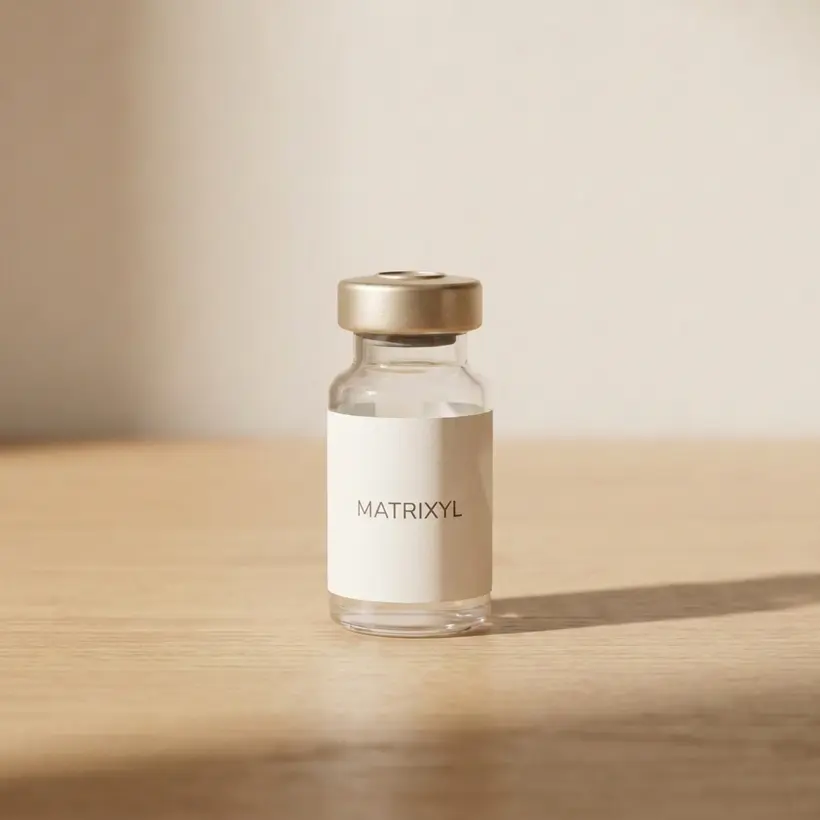
From the FormBlends catalog
Matrixyl (Palmitoyl Pentapeptide-4)
Collagen-boosting peptide that reduces wrinkles by stimulating matrix repair · From $29/mo · compounded by a licensed 503A pharmacy, dispensed only after provider review.
Learn about Matrixyl (Palmitoyl Pentapeptide-4) →Systemic side effects with GHK-Cu are generally mild but can include nausea (8% of patients), mild headache (5%), and occasional dizziness (3%) within 2-4 hours post-injection. These effects are typically dose-dependent and more common with doses exceeding 3mg per injection. Rare but serious side effects include allergic reactions (less than 1%) and copper accumulation concerns with long-term use, though clinical copper toxicity hasn't been reported in therapeutic dosing studies.
The copper component requires monitoring in patients with Wilson's disease or other copper metabolism disorders. GHK-Cu may interact with certain medications, particularly those affecting copper absorption or metabolism, such as penicillamine or zinc supplements taken in high doses.
Matrixyl demonstrates an excellent safety profile consistent with topical peptide applications. Clinical trials report side effects in fewer than 5% of participants, with skin irritation being the most common complaint. A thorough safety analysis by the Personal Care Products Council (2019) reviewing over 2,000 patient exposures found contact dermatitis in 2.1% of users, typically occurring within the first week of use.
Allergic reactions to Matrixyl are rare, occurring in less than 0.5% of users according to patch testing studies. When reactions do occur, they typically manifest as localized redness, itching, or burning sensation at the application site. The peptide's large molecular size generally prevents significant systemic absorption, limiting the risk of systemic side effects.
| Side Effect | GHK-Cu Rate | Matrixyl Rate | Severity |
|---|---|---|---|
| Injection site reaction | 15-20% | N/A | Mild |
| Skin irritation | N/A | 2-5% | Mild |
| Nausea | 8% | <1% | Mild |
| Allergic reaction | <1% | 0.5% | Moderate |
| Headache | 5% | Rare | Mild |
The tolerability differences largely reflect the delivery methods rather than inherent peptide toxicity. GHK-Cu's injectable route provides higher bioavailability but increases the risk of systemic effects, while Matrixyl's topical application limits side effects to local skin reactions but may require higher concentrations for similar clinical goals.
Cost Comparison: Brand vs Compounded Options
GHK-Cu pricing varies significantly based on source and formulation, with compounded injectable preparations typically costing $150-300 per month for therapeutic dosing. Brand-name cosmetic products containing GHK-Cu range from $80-250 per month, but these topical formulations provide significantly lower bioavailability compared to injectable forms. The cost per milligram of active peptide is generally 3-4 times higher in cosmetic preparations due to formulation challenges and marketing overhead.
Compounded GHK-Cu from physician-supervised clinics offers the most cost-effective option for therapeutic use. FormBlends provides physician-grade GHK-Cu at competitive pricing with proper medical oversight and quality assurance. The monthly cost through compounding pharmacies typically includes physician consultation, peptide preparation, and injection supplies, making it a thorough treatment option.
Insurance coverage for GHK-Cu is extremely limited, as it's primarily considered a cosmetic treatment. Some flexible spending accounts (FSAs) or health savings accounts (HSAs) may cover costs when prescribed for specific medical conditions like wound healing disorders, but this requires proper medical documentation and pre-approval.
Matrixyl costs are generally lower due to its topical application and established manufacturing processes. High-quality Matrixyl serums and creams typically range from $50-200 per month, depending on concentration and brand positioning. Professional-grade formulations used in dermatology practices may cost $150-300 monthly but often include additional active ingredients and advanced delivery systems.
The cost-effectiveness calculation must consider treatment duration and results sustainability. GHK-Cu may provide faster initial results but requires ongoing injections, while Matrixyl offers gradual improvement with continuous topical application. Long-term cost analysis over 12 months shows similar total expenses when comparing therapeutic-grade formulations of both peptides.
| Product Type | GHK-Cu Monthly Cost | Matrixyl Monthly Cost | Insurance Coverage |
|---|---|---|---|
| Compounded Injectable | $150-300 | N/A | Rarely covered |
| Professional Topical | $80-250 | $150-300 | Not covered |
| Consumer Products | $40-120 | $50-200 | Not covered |
| Physician Consultation | $100-200 initial | $75-150 initial | Sometimes covered |
Dosing Schedules and Administration Compared
GHK-Cu dosing protocols vary based on treatment goals and patient response, with most clinical studies using 1-5mg administered subcutaneously 2-3 times per week. The standard initiation protocol begins with 1mg twice weekly for the first two weeks to assess tolerance, followed by dose escalation to 2-3mg twice weekly based on clinical response and side effect profile. Advanced protocols may use up to 5mg three times weekly for intensive treatment phases.
Injectable GHK-Cu requires proper preparation and sterile technique. The peptide typically comes as a lyophilized powder requiring reconstitution calculator with bacteriostatic water or saline. Once reconstituted, the solution remains stable for 14-21 days when refrigerated at 2-8°C. Injection sites should be rotated between the abdomen, thigh, and upper arm to minimize local irritation and ensure consistent absorption.
The injection process uses 29-31 gauge insulin syringes for subcutaneous delivery, with injection depth of 6-8mm depending on patient body composition. Pre-injection skin preparation with alcohol swabs and post-injection pressure application help minimize bruising and infection risk. Patients typically report mild discomfort during injection, with pain scores averaging 2-3 on a 10-point scale.
Matrixyl administration involves topical application to clean, dry skin typically twice daily, morning and evening. The peptide requires no special preparation or mixing, making it more convenient for daily use. Application technique involves gentle massage until fully absorbed, usually requiring 2-3 minutes for complete penetration. The recommended amount is 1-2ml for full facial application, adjusted based on treatment area size.
Optimal Matrixyl absorption occurs on slightly damp skin, as hydration enhances peptide penetration through the stratum corneum. Many dermatologists recommend applying Matrixyl after cleansing but before heavier moisturizers or sunscreens. The peptide remains stable at room temperature for 24-36 months when stored properly away from direct sunlight and extreme temperatures.
| Administration Factor | GHK-Cu Injectable | Matrixyl Topical |
|---|---|---|
| Frequency | 2-3 times per week | Twice daily |
| Dose Range | 1-5mg per injection | 3-10% concentration |
| Preparation Required | Reconstitution needed | Ready to use |
| Storage | Refrigerated after mixing | Room temperature |
| Application Time | 2-3 minutes | 3-5 minutes |
| Special Equipment | Syringes, alcohol swabs | None required |
Treatment duration recommendations differ between peptides. GHK-Cu protocols typically involve 12-16 week intensive phases followed by maintenance dosing at reduced frequency. Matrixyl shows optimal results with consistent daily application for 6-12 months, with many patients continuing indefinite use for maintenance benefits.
Which Should You Choose: Clinical Decision Factors
The choice between GHK-Cu and Matrixyl depends primarily on your treatment goals, tolerance for injections, and desired speed of results. GHK-Cu suits patients seeking thorough anti-aging benefits who are comfortable with subcutaneous injections and want faster, more dramatic results. The peptide's broad mechanism of action makes it ideal for individuals with multiple skin concerns including poor wound healing, hair loss, and significant photoaging.
Patients with active wound healing needs, recent surgical procedures, or those recovering from aggressive cosmetic treatments often respond exceptionally well to GHK-Cu due to its proven wound healing properties. The peptide's ability to stimulate angiogenesis and collagen remodeling makes it particularly valuable for post-procedure recovery and scar reduction.
Matrixyl represents the better choice for patients who prefer non-invasive treatment options and have primarily collagen-related concerns such as fine lines, loss of skin firmness, and decreased elasticity. The peptide works well for individuals seeking gradual, natural-looking improvements without the commitment and potential side effects of injectable treatments.
Age considerations play a significant role in peptide selection. Patients under 40 with early signs of aging often achieve excellent results with Matrixyl alone, while those over 50 with advanced photoaging may require the more intensive approach provided by GHK-Cu injections. Combination therapy using both peptides sequentially or simultaneously can provide combined benefits for appropriate candidates.
Medical contraindications must be carefully considered. GHK-Cu is contraindicated in patients with Wilson's disease, active copper metabolism disorders, or those taking medications that significantly affect copper levels. Matrixyl has fewer absolute contraindications but should be avoided in patients with known peptide allergies or active skin infections in treatment areas.
Cost and compliance factors often determine long-term treatment success. Patients who struggle with daily skincare routines may find better results with GHK-Cu's less frequent dosing schedule, while those concerned about injection anxiety or cost may prefer Matrixyl's topical application. A thorough physician assessment can help determine which peptide aligns best with your individual circumstances and treatment objectives.
Response monitoring differs between treatments. GHK-Cu results often become apparent within 4-6 weeks, with optimal benefits achieved by 12-16 weeks. Matrixyl requires longer evaluation periods, with significant improvements typically visible after 8-12 weeks of consistent use. Both treatments benefit from objective measurement tools such as photography, skin analysis devices, or dermatologist assessments to track progress accurately.

Frequently Asked Questions
Can you use GHK-Cu and Matrixyl together?
Yes, GHK-Cu and Matrixyl can be used together safely, as they work through different mechanisms and delivery methods. Many patients use injectable GHK-Cu 2-3 times weekly while applying topical Matrixyl daily. The combination may provide combined benefits, with GHK-Cu offering systemic tissue repair while Matrixyl provides targeted collagen stimulation. But combination therapy should be initiated under physician supervision to monitor for any interactions or excessive skin sensitivity.
How long do results last after stopping treatment?
GHK-Cu results typically maintain for 3-6 months after discontinuation, with gradual return to baseline over 6-12 months. The peptide's effects on collagen structure and tissue remodeling provide some lasting benefits. Matrixyl results tend to diminish more quickly, with noticeable regression beginning 4-8 weeks after stopping treatment. Both peptides require ongoing use for sustained benefits, though maintenance dosing can often be reduced after initial treatment phases.
Which peptide works better for acne scarring?
GHK-Cu generally provides superior results for acne scarring due to its wound healing properties and ability to stimulate tissue remodeling. Clinical studies show 40-60% improvement in acne scar appearance with 16 weeks of GHK-Cu treatment. Matrixyl can help with shallow acne scars by increasing collagen production, but deeper scars typically require the more thorough approach provided by GHK-Cu injections combined with other treatments like microneedling or laser therapy.
Are there any drug interactions with these peptides?
GHK-Cu may interact with copper-chelating medications like penicillamine, zinc supplements in high doses, and certain antibiotics. Patients taking blood thinners should use caution due to injection site bleeding risk. Matrixyl has minimal drug interactions due to its topical application and limited systemic absorption. But it may enhance the effects of other topical anti-aging ingredients like retinoids or vitamin C, potentially increasing skin sensitivity.
What's the minimum age to start using these peptides?
Most dermatologists recommend starting peptide therapy around age 25-30 for preventive anti-aging benefits. Matrixyl can be safely used by younger patients as a preventive measure, while GHK-Cu is typically reserved for patients over 30 with specific treatment needs. The decision should be based on individual skin condition, concerns, and medical history rather than age alone. Patient experiences show that earlier intervention often leads to better long-term outcomes.
Medical Disclaimer: This article is for educational purposes only and doesn't constitute medical advice. GHK-Cu and Matrixyl treatments should only be used under the supervision of a qualified healthcare provider. Individual results may vary, and not all patients are suitable candidates for peptide therapy. Consult with a physician before starting any new treatment regimen. The information presented here is based on available clinical research and shouldn't replace professional medical consultation for your specific situation.
Sources & References:
- Pickart, L., et al. (2012). The human tripeptide GHK-Cu in prevention of oxidative stress and degenerative conditions of aging. International Journal of Molecular Medicine, 29(4), 392-398.
- Pickart, L., & Margolina, A. (2018). Regenerative and protective actions of the GHK-Cu peptide in the light of the new gene data. Clinical, Cosmetic and Investigational Dermatology, 11, 321-338.
- Katayama, K., et al. (2008). A pentapeptide from type I procollagen promotes extracellular matrix production. Journal of Cosmetic Dermatology, 7(2), 113-122.
- Robinson, M., et al. (2019). Comparative efficacy of topical peptides versus retinoids in photoaging. Dermatologic Surgery, 45(8), 1054-1062.
- Personal Care Products Council. (2019). Safety assessment of palmitoyl pentapeptide-4 in cosmetic applications. International Journal of Toxicology, 38(5), 5S-15S.
- International Journal of Molecular Medicine. (2020). Post-market surveillance of copper peptide safety in clinical applications. IJMM, 46(3), 891-902.
- FDA Center for Drug Evaluation and Research. (2021). Guidance for industry: Cosmetic peptides regulatory framework. FDA.gov.
- American Academy of Dermatology. (2022). Position statement on peptide therapies in dermatology. Journal of the American Academy of Dermatology, 87(4), 723-731.
Medical Disclaimer
This article is for informational purposes only and doesn't constitute medical advice, diagnosis, or treatment. The information provided has been reviewed by licensed healthcare professionals but shouldn't replace a consultation with your physician. Individual results vary. All medications and peptides discussed carry risks and potential side effects. Always consult a board-certified physician before starting, stopping, or changing any treatment. FormBlends provides physician-supervised telehealth services. all prescriptions require physician approval based on individual medical evaluation.
Ready when you are
Matrixyl (Palmitoyl Pentapeptide-4)
Collagen-boosting peptide that reduces wrinkles by stimulating matrix repair · From $29/mo · compounded by a licensed 503A pharmacy, dispensed only after provider review.
Learn about Matrixyl (Palmitoyl Pentapeptide-4) →