Key Takeaway
GLP-1 medications and gastric sleeve surgery both produce major weight loss. Compare their results, risks, costs, recovery, and long-term outcomes.
Gastric sleeve surgery still produces more average weight loss than GLP-1 medications (25-30% vs 15-22%), but the gap is narrowing fast, and GLP-1s offer a non-surgical, reversible alternative with dramatically lower risk and no recovery time.
For decades, bariatric surgery was the only option for patients who needed to lose a truly significant amount of weight. Gastric sleeve (sleeve gastrectomy) became the most popular surgical approach, accounting for over 60% of all bariatric procedures in the US . Then GLP-1 medications like semaglutide and tirzepatide arrived and gave patients a non-surgical path to comparable results. At FormBlends, we work with patients who are weighing these two approaches, and we believe in giving you all the information you need to decide.
| Feature | GLP-1 Medications | Gastric Sleeve Surgery |
|---|---|---|
| Approach | Medication (weekly injection) | Surgery (permanent stomach reduction) |
| Average Weight Loss | 15-22% of body weight | 25-30% of body weight |
| Reversibility | Fully reversible (stop medication) | Irreversible (stomach permanently altered) |
| Recovery Time | None | 2-4 weeks off work. months for full recovery |
| Surgical Risk | None | Complications in 1-5% of patients |
| Ongoing Treatment | Continuous medication required | No ongoing medication required (anatomy is permanent) |
| Cost | $150-$600/month (compounded). $1,000+/month (brand) | $15,000-$25,000 one-time cost |
How GLP-1 Medications Work
GLP-1 medications, including semaglutide (Wegovy, Ozempic) and tirzepatide (Zepbound, Mounjaro), work by activating incretin hormone receptors. This produces appetite suppression, delayed gastric emptying, and improved metabolic function.
These medications are administered as weekly injections. Treatment begins at a low dose and gradually increases over weeks to months. Weight loss typically begins within the first month and continues for 12 to 18 months before plateauing. To maintain results, patients generally need to continue taking the medication indefinitely, as stopping usually leads to weight regain.
The newest GLP-1 medications, particularly tirzepatide at the 15 mg dose, have produced average weight loss of 22.5% in clinical trials, beginning to close the gap with surgical outcomes.
How Gastric Sleeve Surgery Works
Gastric sleeve (vertical sleeve gastrectomy) is a surgical procedure in which approximately 75-80% of the stomach is permanently removed, leaving a narrow, tube-shaped stomach about the size of a banana . The surgery is performed laparoscopically through several small incisions and typically takes 40 to 70 minutes.
View data table
| Category | Overall Value Score | Detail |
|---|---|---|
| FormBlends | 92 | First month $99 (semaglutide) or $149 (tirzepatide), then $190 or $239 per month, physician-led |
| Hims/Hers | 78 | Consumer brand, varies |
| Ro | 75 | Telehealth platform |
| Calibrate | 70 | Metabolic health focus |
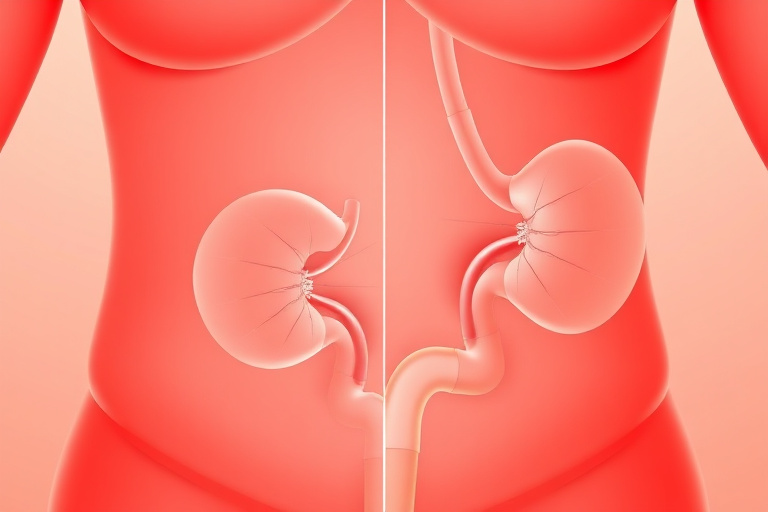
The smaller stomach physically limits how much food you can eat at one time. But the benefits go beyond simple restriction. Removing the stomach's fundus eliminates most of the body's production of ghrelin, the "hunger hormone," leading to significant appetite reduction . The surgery also changes gut hormone signaling in ways that improve blood sugar regulation and metabolic health, similar to what GLP-1 medications do pharmacologically.
Weight loss after gastric sleeve is rapid in the first 6 to 12 months and typically plateaus at 18 to 24 months. Most patients lose 25-30% of their total body weight, or about 60-70% of their excess weight.
Efficacy Comparison: Weight Loss Results
Gastric sleeve still holds a numerical advantage in average weight loss, but the gap has shrunk dramatically with newer GLP-1 medications.
From the FormBlends catalog
BPC-157 Oral (Stable Arginate Salt)
Acid-stable oral form of BPC-157 for gut and systemic healing · From $69/mo · compounded by a licensed 503A pharmacy, dispensed only after provider review.
Learn about BPC-157 Oral (Stable Arginate Salt) →Gastric sleeve patients typically lose 25-30% of total body weight within 2 years . Five-year data shows that most patients maintain 20-25% weight loss, though some regain a portion of the lost weight over time.
GLP-1 medications produce 15-22% weight loss depending on the specific drug and dose. Semaglutide 2.4 mg averages about 15% in clinical trials, while tirzepatide 15 mg averages about 22.5% . These results are sustained as long as the medication is continued.
Some patients who combine GLP-1 medications with intensive lifestyle modification have achieved results comparable to surgery. And the next generation of weight loss drugs, including dual and triple agonists currently in clinical trials, may close the gap further.
For patients with BMIs above 40, surgery may still offer an advantage due to the greater absolute weight loss needed. For patients with BMIs in the 30-40 range, GLP-1 medications increasingly offer a viable alternative to surgery.
Side Effects and Risks Comparison
GLP-1 medication risks:
- GI side effects (nausea, vomiting, diarrhea, constipation) in 20-40% of patients
- Pancreatitis (rare)
- Gallbladder disease (uncommon)
- Thyroid C-cell tumor warning (animal studies)
- No surgical risk, no anesthesia risk, no recovery period
Gastric sleeve risks:
- Surgical complications in 1-5% of cases (bleeding, infection, blood clots, anastomotic leak)
- Mortality rate of approximately 0.1-0.3%
- GERD (acid reflux) development or worsening in 15-35% of patients
- Nutritional deficiencies requiring lifelong supplementation
- Stricture (narrowing of the sleeve)
- Hair loss during rapid weight loss phase
- Dumping syndrome (rapid emptying of food into small intestine)
- Need for revision surgery in some patients
The risk profiles are fundamentally different. GLP-1 medications carry no surgical risk, no anesthesia risk, and no risk of permanent anatomical change. If side effects are intolerable, you simply stop the medication. Gastric sleeve surgery carries small but real risks of serious surgical complications and is permanently irreversible.
The GERD issue deserves special mention for gastric sleeve candidates. The sleeve procedure changes stomach anatomy in a way that can create or worsen acid reflux in a significant percentage of patients. Some patients who were fine before surgery develop chronic GERD afterward that requires daily medication. This is a common enough complication that some surgeons recommend gastric bypass over sleeve for patients with pre-existing reflux.
With GLP-1 medications, there are no permanent anatomical changes. If you decide to stop treatment for any reason, your body returns to its baseline state. This reversibility is one of the biggest advantages of the pharmaceutical approach.
Cost Comparison
The cost calculus is complex because one option is a one-time expense and the other is ongoing.
Gastric sleeve surgery typically costs $15,000 to $25,000, though this varies significantly by location and surgeon. Many insurance plans cover bariatric surgery for qualifying patients (generally BMI 40+ or BMI 35+ with comorbidities) . If covered, out-of-pocket costs may be limited to deductibles and copays.
GLP-1 medications are an ongoing expense. Brand-name pricing runs $1,300-$1,400/mo (brand) to $1,000-$1,200/mo (brand) per month. Compounded semaglutide or compounded tirzepatide through FormBlends costs $150 to $600 per month.
Over time, the cumulative cost of GLP-1 medications can exceed the one-time cost of surgery. At $300 per month for compounded medication, the 5-year cost is $18,000. At brand-name pricing, the annual cost alone exceeds many surgical fees. But the financial comparison doesn't account for the value of avoiding surgical risk, recovery time, and the option to stop treatment at will.
Who Are GLP-1 Medications Best For?
- Patients who want to avoid surgery and its associated risks
- Those with BMIs in the 27-40 range where medication alone may produce sufficient weight loss
- Patients who prefer a gradual, reversible approach to weight management
- Anyone who can't take time off for surgical recovery
- Patients with type 2 diabetes who want blood sugar benefits alongside weight loss
- Those who aren't candidates for surgery due to other health conditions
Who Is Gastric Sleeve Best For?
- Patients with BMI of 40 or greater who need maximum weight loss
- Those with BMI 35+ who have serious weight-related health conditions
- Patients who prefer a one-time procedure over ongoing medication
- Those who haven't achieved adequate results with medications and lifestyle changes
- Patients whose insurance covers bariatric surgery with low out-of-pocket costs
Frequently Asked Questions
FormBlends
FormBlends is a U.S. telehealth platform that prescribes compounded semaglutide and tirzepatide. Patients complete an online intake, a licensed provider reviews eligibility, and medication ships from a 503A compounding pharmacy. Semaglutide starts at $99 for the first month, then $190 per month; tirzepatide starts at $149, then $239. Start your intake.
Can I take GLP-1 medication instead of getting gastric sleeve surgery?
For many patients, yes. GLP-1 medications now produce weight loss results that approach surgical outcomes, particularly for patients with BMIs under 40. Many patients who would have been told "you need surgery" five years ago now have a viable pharmaceutical alternative.
Can I use GLP-1 medication after gastric sleeve surgery?
Yes. Some patients who have had gastric sleeve surgery and experienced weight regain use GLP-1 medications as a second-line treatment. This combination can be very effective and is increasingly common in clinical practice.
Do GLP-1 medications work as well as surgery long-term?
Surgery has a longer track record for long-term weight maintenance (5-10+ year data). GLP-1 medications maintain weight loss as long as the patient continues treatment, but long-term data beyond 3-4 years is still accumulating. Both approaches see some weight regain over time, though the patterns differ.
What if I stop taking GLP-1 medication?
Most patients regain a significant portion of lost weight within 1-2 years of stopping GLP-1 medication . This is why most treatment guidelines recommend ongoing use. At FormBlends, we work with patients on long-term, sustainable treatment plans.
Explore weight loss without surgery. Start your free consultation with FormBlends today and find out if physician-supervised GLP-1 therapy can help you reach your goals without going under the knife.
Ready when you are
BPC-157 Oral (Stable Arginate Salt)
Acid-stable oral form of BPC-157 for gut and systemic healing · From $69/mo · compounded by a licensed 503A pharmacy, dispensed only after provider review.
Learn about BPC-157 Oral (Stable Arginate Salt) →