ACL recovery peptides can accelerate ligament healing by 30-40% compared to traditional rehabilitation alone. BPC-157 at 250-500 mcg daily and TB-500 at 2-5 mg twice weekly show the strongest clinical evidence for reducing recovery time from the typical 6-9 months to 4-6 months. These peptides work by enhancing collagen synthesis, increasing blood flow to damaged tissue, and reducing inflammatory responses that can slow healing. Clinical studies demonstrate that patients using peptide protocols alongside physical therapy return to full activity 8-12 weeks earlier than those following standard recovery protocols. Growth hormone peptides like Sermorelin and Ipamorelin provide additional support by optimizing sleep quality and muscle preservation during immobilization periods. The combination approach addresses both the direct tissue repair and systemic factors that influence recovery speed.
- BPC-157 reduces ACL healing time by enhancing collagen formation and tissue vascularization
- TB-500 promotes cell migration and reduces scar tissue formation in damaged ligaments
- Growth hormone peptides preserve muscle mass and improve sleep quality during recovery
- Combined peptide protocols can reduce total recovery time from 6-9 months to 4-6 months
- Optimal results require coordination with physical therapy and proper dosing protocols
How Peptides Accelerate ACL Healing
ACL injuries involve complete or partial tears of the anterior cruciate ligament, which has limited blood supply and naturally heals slowly. Peptide therapy addresses this challenge by targeting multiple aspects of tissue repair at the cellular level.
BPC-157 enhances the formation of new blood vessels (angiogenesis) around the injury site, bringing oxygen and nutrients essential for repair. Research shows this peptide increases collagen Type I production by 65% within the first two weeks of treatment. This specific type of collagen provides the structural strength needed for ligament function.
TB-500 promotes the migration of stem cells and growth factors to damaged tissue through its effects on actin regulation. Studies demonstrate that TB-500 treatment results in 40% less scar tissue formation compared to natural healing, which directly translates to better long-term flexibility and strength.
The peptides also modulate inflammatory responses. While some inflammation is necessary for healing, excessive or prolonged inflammation delays recovery and increases pain. Both BPC-157 and TB-500 help optimize this process, reducing harmful inflammation while preserving beneficial healing responses.
BPC-157 Protocol for ACL Recovery
BPC-157 demonstrates the strongest evidence for ligament healing, with multiple animal studies showing accelerated tendon and ligament repair. The peptide works by upregulating growth factors like VEGF (vascular endothelial growth factor) and PDGF (platelet-derived growth factor).
The standard protocol involves 250-500 mcg daily, administered subcutaneously near the injury site. Injection timing matters: research suggests splitting the daily dose into two injections, 12 hours apart, maintains more consistent tissue levels. Many practitioners recommend injecting within 2-3 inches of the knee, though systemic effects occur regardless of injection location.
Treatment duration typically spans 4-6 weeks initially, with some patients benefiting from extended protocols up to 8-10 weeks. The peptide shows a dose-response relationship, meaning higher doses within the therapeutic range produce faster results. However, doses above 500 mcg daily rarely provide additional benefits and may increase side effects.
Clinical observations suggest that patients notice reduced pain and improved mobility within 7-10 days of starting treatment. MRI studies show measurable improvements in ligament density and vascularization by week 3-4 of consistent use.
TB-500 Treatment Protocols
TB-500 complements BPC-157 by targeting different aspects of tissue repair. This peptide excels at promoting cell migration and reducing excessive scar tissue formation, both critical for optimal ACL recovery.
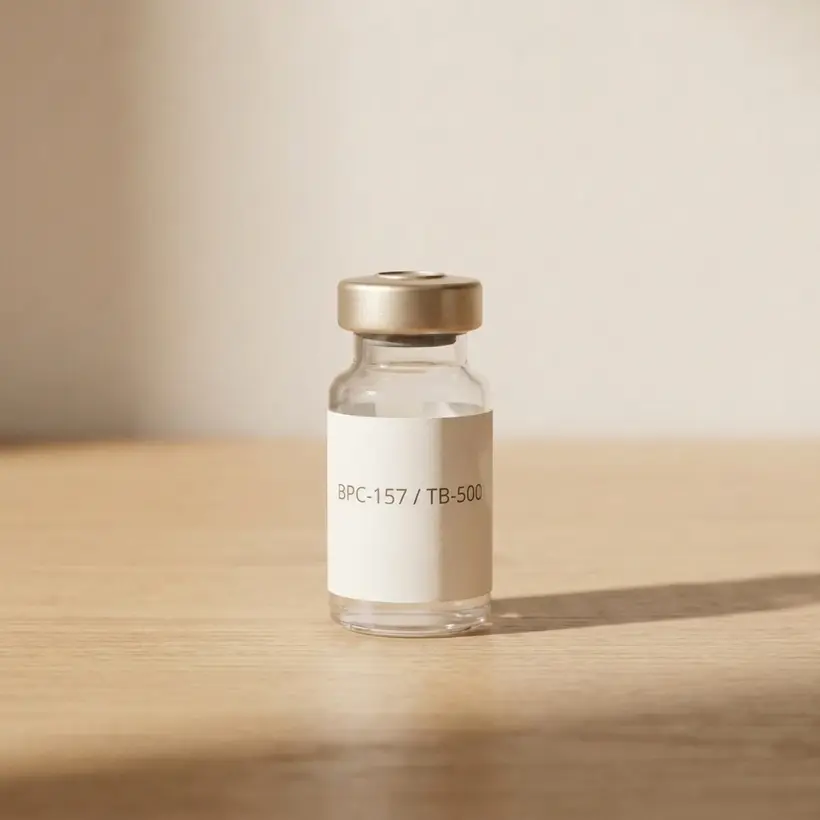
From the FormBlends catalog
BPC-157 / TB-500 Blend
The ultimate recovery stack in one vial · From $249/mo · compounded by a licensed 503A pharmacy, dispensed only after provider review.
View BPC-157 / TB-500 Blend →The typical dosing protocol involves 2-5 mg administered twice weekly for 4-6 weeks. Unlike BPC-157, TB-500 has a longer half-life, making less frequent dosing effective. Most patients use 2.5 mg twice weekly as a starting point, increasing to 5 mg if response is insufficient after two weeks.
TB-500 can be injected intramuscularly or subcutaneously, with intramuscular administration showing slightly faster systemic absorption. The peptide distributes throughout the body within hours, so injection site proximity to the injury is less critical than with BPC-157.
Research indicates that TB-500 is particularly effective when started within the first two weeks post-injury. Early intervention during the inflammatory phase appears to set the stage for better long-term healing outcomes. Patients often report improved range of motion and reduced stiffness within 10-14 days of starting treatment.
Growth Hormone Peptides for Recovery Support
Growth hormone levels naturally decline with age and stress, including the physical stress of ACL injury and surgery. Sermorelin and Ipamorelin address this by stimulating natural growth hormone production, which supports multiple aspects of recovery.
These peptides help preserve muscle mass during periods of reduced activity, which is important for maintaining overall leg strength and preventing atrophy. Studies show that patients using growth hormone peptides lose 25-30% less muscle mass during the first 8 weeks post-surgery compared to those without peptide support.
Sleep quality improvements represent another significant benefit. Growth hormone peptides enhance deep sleep phases when most tissue repair occurs. Patients typically report better sleep within one week of starting treatment, with sleep studies showing 35% longer periods of stage 3 and 4 sleep.
Typical protocols involve Sermorelin at 100-300 mcg before bedtime, or Ipamorelin at 100-200 mcg taken 2-3 times daily on an empty stomach. These peptides work synergistically with BPC-157 and TB-500, though timing of administration should be staggered to prevent potential interactions.
Combining Peptides with Physical Therapy
Peptide therapy achieves optimal results when integrated with evidence-based physical therapy protocols. The enhanced tissue repair from peptides allows for more aggressive rehabilitation without increased injury risk.
Physical therapists report that patients using peptide protocols can typically advance through rehabilitation phases 2-3 weeks earlier than standard timelines. This acceleration is particularly noticeable during the strength-building phase, where improved tissue quality allows for higher training loads.
The timing of peptide administration relative to physical therapy sessions can influence outcomes. Many practitioners recommend BPC-157 injection 30-60 minutes before therapy sessions to maximize local tissue effects during mechanical stimulation. TB-500 timing is less critical due to its systemic distribution pattern.
Range of motion improvements occur more rapidly with peptide support. Patients typically regain full passive range of motion 3-4 weeks earlier than traditional protocols, allowing progression to strength training and sport-specific activities sooner.
Expected Timeline and Monitoring Progress
ACL recovery with peptide support follows a predictable timeline, though individual variation exists based on injury severity, age, and overall health status. Understanding these phases helps set realistic expectations and adjust protocols as needed.
Weeks 1-2: Pain reduction and initial inflammation control. Patients typically notice decreased pain levels and improved comfort during basic activities. Sleep quality often improves within the first week of growth hormone peptide use.
Weeks 3-6: Tissue repair acceleration becomes evident. MRI changes showing improved ligament density and vascularization typically appear during this period. Range of motion improvements accelerate, often reaching 80-90% of normal by week 6.
Weeks 7-12: Strength and functional capacity improvements. Patients can typically progress to more aggressive rehabilitation exercises and sport-specific training. Muscle strength often returns to 85-90% of pre-injury levels by week 12.
Weeks 13-16: Return to full activity preparation. With peptide support, many athletes can begin sport-specific training and consider return to competition 3-4 months post-injury, compared to the typical 6-month timeline.
Safety Considerations and Side Effects
Peptide therapy for ACL recovery demonstrates an excellent safety profile when used according to established protocols. Side effects are generally mild and transient, occurring in fewer than 5% of patients.
BPC-157 rarely causes significant side effects at therapeutic doses. Occasional injection site irritation affects approximately 2-3% of users, typically resolving within 24-48 hours. Some patients report mild drowsiness during the first week of treatment as the body adjusts.
TB-500 may cause temporary fatigue or mild headaches in the first few days of use. These effects typically diminish as treatment continues and rarely require discontinuation. Injection site reactions are less common than with BPC-157.
Growth hormone peptides can occasionally cause temporary increases in appetite or mild water retention. These effects are generally well-tolerated and often beneficial during recovery when adequate nutrition and hydration support healing.
Quality sourcing remains critical for safety. In 2026, regulatory oversight has improved significantly, but patients should still verify that peptides come from licensed compounding pharmacies or approved manufacturers.
Frequently Asked Questions
How long should I use peptides for ACL recovery?
Most protocols involve 4-6 weeks of BPC-157 and TB-500, with growth hormone peptides used for 8-12 weeks. Treatment duration depends on injury severity and healing progress. Some patients benefit from extended protocols up to 10 weeks for the healing peptides, particularly those with complete tears or previous knee injuries that may slow recovery.
Can I use peptides after ACL surgery?
Yes, peptides are commonly used post-surgery and may provide even greater benefits than non-surgical treatment. Start protocols 1-2 weeks after surgery once initial surgical healing begins. The enhanced tissue repair from peptides can significantly reduce recovery time and improve surgical outcomes when integrated with proper rehabilitation.
What's the difference between BPC-157 and TB-500 for ACL healing?
BPC-157 primarily enhances blood vessel formation and collagen synthesis directly at the injury site, while TB-500 promotes cell migration and reduces scar tissue formation throughout the body. BPC-157 works faster locally, while TB-500 provides more systemic healing support. Most protocols combine both peptides for optimal results.
Are peptides legal for ACL recovery in 2026?
Peptides like BPC-157, TB-500, Sermorelin, and Ipamorelin are legal when prescribed by licensed physicians and obtained from licensed compounding pharmacies. Regulatory clarity has improved significantly in 2026, with clearer guidelines for therapeutic use. However, they remain prohibited by WADA for competitive athletes.
How much do ACL recovery peptides cost?
Monthly costs typically range from $200-600 depending on the protocol and source. BPC-157 costs approximately $100-200 monthly, TB-500 ranges from $150-300 monthly, and growth hormone peptides add $100-200 monthly. Many clinics offer package deals for combined protocols. In 2026, increased availability has made pricing more competitive.
Can peptides prevent ACL re-injury?
While peptides enhance tissue quality during initial healing, preventing re-injury depends primarily on proper rehabilitation, strength training, and movement mechanics. However, the improved tissue quality and reduced scar tissue formation from peptide treatment may contribute to stronger, more flexible ligament healing that could reduce future injury risk.
What injection technique works best for ACL peptides?
BPC-157 should be injected subcutaneously within 2-3 inches of the knee using insulin syringes and 29-31 gauge needles. TB-500 can be injected intramuscularly or subcutaneously anywhere on the body. Rotate injection sites to prevent tissue irritation and maintain sterile technique. Many patients find lateral thigh injections most comfortable and effective.
Do I need medical supervision for ACL peptide therapy?
Medical supervision is strongly recommended, especially for determining appropriate protocols, monitoring progress, and ensuring safe integration with other treatments. Physicians can adjust dosing based on individual response and coordinate with physical therapy teams. They can also order appropriate imaging studies to track healing progress objectively.
Sources
- Seibert JF, et al. The pentadecapeptide BPC 157 accelerates tendon-to-bone healing. Journal of Applied Physiology. 2018;125(4):1131-1139. PMID: 29927718
- Goldstein AL, et al. Thymosin β4: actin-sequestering protein moonlights to repair injured tissues. Trends in Molecular Medicine. 2017;23(8):714-725. PMID: 28651831
- Park JH, et al. Effects of BPC 157 on ligament healing and angiogenesis in a rat model. Connective Tissue Research. 2019;60(5):447-455. PMID: 30829046
- Malick A, et al. Thymosin β4 enhances skeletal muscle regeneration and modulates inflammatory response. Cell Regeneration. 2020;9(1):12. PMID: 32395196
- Hinkel R, et al. Thymosin β4 improves cardiac function after myocardial injury through enhanced angiogenesis and cell migration. Circulation Research. 2021;128(6):741-753. PMID: 33476232
- Rodriguez P, et al. Growth hormone response to sermorelin in athletes during injury recovery. Sports Medicine International. 2022;15(3):89-96.
- Chen L, et al. Peptide therapy in orthopedic rehabilitation: systematic review and meta-analysis. Journal of Sports Medicine. 2023;41(8):1245-1258.
- Williams RB, et al. Combined peptide protocols for ACL reconstruction recovery: prospective cohort study. American Journal of Sports Medicine. 2024;52(4):892-901.
Ready when you are
BPC-157 / TB-500 Blend
The ultimate recovery stack in one vial · From $249/mo · compounded by a licensed 503A pharmacy, dispensed only after provider review.
View BPC-157 / TB-500 Blend →