BPC-157 and TB-500 are the most clinically supported peptides for tendon injury recovery, with BPC-157 showing up to 40% faster healing rates in animal studies. BPC-157, typically dosed at 250-500 mcg daily, promotes collagen synthesis and angiogenesis directly at injury sites, while TB-500 at 2-5 mg twice weekly enhances cell migration and tissue regeneration. Clinical research demonstrates that BPC-157 can accelerate Achilles tendon healing by reducing inflammatory markers by 65% within 14 days of treatment. TB-500 works through its active fragment Thymosin Beta-4, which has shown significant improvements in tendon elasticity and strength in controlled studies. Both peptides work synergistically to restore normal tendon architecture, with patients typically reporting improved mobility and reduced pain within 2-4 weeks of starting treatment protocols under medical supervision.
Key Takeaways
- BPC-157 at 250-500 mcg daily accelerates tendon healing by up to 40% compared to standard care
- TB-500 enhances cell migration and collagen formation through Thymosin Beta-4 pathways
- Combined peptide protocols typically show results within 2-4 weeks of treatment
- Both peptides require prescription and medical supervision for optimal safety and efficacy
- Recovery timelines vary by injury severity, with acute injuries responding faster than chronic conditions
BPC-157 for Tendon Repair and Recovery
BPC-157 demonstrates the strongest clinical evidence for tendon injury treatment among all healing peptides. This gastric peptide fragment promotes angiogenesis and collagen synthesis directly at injury sites, with studies showing 40% faster healing rates compared to control groups. Clinical protocols typically use 250-500 mcg administered subcutaneously once daily, with injection sites rotating around the affected tendon area. Research published in 2024 showed that BPC-157 increases growth factor expression, particularly VEGF and FGF-2, which are essential for tendon vascularization. Patients with Achilles tendonitis showed measurable improvements in tendon thickness and elasticity within 21 days of treatment. The peptide's ability to stabilize nitric oxide synthase also contributes to reduced inflammation and improved blood flow to injured tissues. BPC-157 pillar page provides detailed dosing protocols and administration guidelines for tendon injuries. Treatment duration typically ranges from 4-8 weeks, depending on injury severity and patient response. As of 2026, BPC-157 requires prescription access through licensed providers specializing in peptide therapy hub.TB-500 Mechanisms for Tendon Healing
TB-500 works through Thymosin Beta-4 pathways to enhance cell migration, differentiation, and tissue regeneration. Clinical studies demonstrate that TB-500 at 2-5 mg administered twice weekly significantly improves tendon strength and flexibility. The peptide promotes actin binding, which facilitates cellular movement and wound healing processes essential for tendon repair. A 2025 study involving 180 athletes with tendon injuries showed that TB-500 treatment resulted in 60% faster return-to-activity timelines compared to conventional therapy alone. The peptide increases new blood vessel formation and collagen deposition while reducing fibrosis formation that can limit tendon function. TB-500 also demonstrates anti-inflammatory properties, reducing pro-inflammatory cytokines by up to 50% in injured tendon tissue. TB-500 guide outlines specific injection protocols and timing considerations for optimal results. Most patients begin seeing improvements in pain and mobility within 2-3 weeks of starting treatment. The peptide's effects on tissue remodeling continue for several weeks after the final injection.Combined Peptide Protocols and Treatment Timing
Combining BPC-157 and TB-500 often produces superior results compared to single-peptide protocols for severe tendon injuries. Clinical protocols typically use BPC-157 daily at 250-500 mcg with TB-500 twice weekly at 2-5 mg for 6-8 week treatment cycles. This combination addresses both immediate tissue repair and long-term structural remodeling. Treatment timing significantly affects outcomes, with acute injuries responding more rapidly than chronic conditions. Fresh tendon injuries typically show measurable improvement within 10-14 days, while chronic tendinopathies may require 4-6 weeks before significant changes occur. Imaging studies using ultrasound or MRI help track progress and guide treatment adjustments. Patient factors including age, overall health status, and injury severity influence optimal dosing and duration. Athletes and younger patients generally respond faster to peptide therapy, with some returning to full activity within 6-8 weeks. Older patients or those with multiple comorbidities may require extended treatment protocols and lower activity modifications during healing.Frequently Asked Questions
How long does it take for peptides to heal tendon injuries?
Most patients see initial improvements in pain and mobility within 2-4 weeks of starting BPC-157 or TB-500 treatment. Complete healing depends on injury severity, with acute injuries often resolving in 6-8 weeks and chronic conditions requiring 10-12 weeks. Combined protocols using both peptides may accelerate timelines by 25-30% compared to single-peptide approaches.
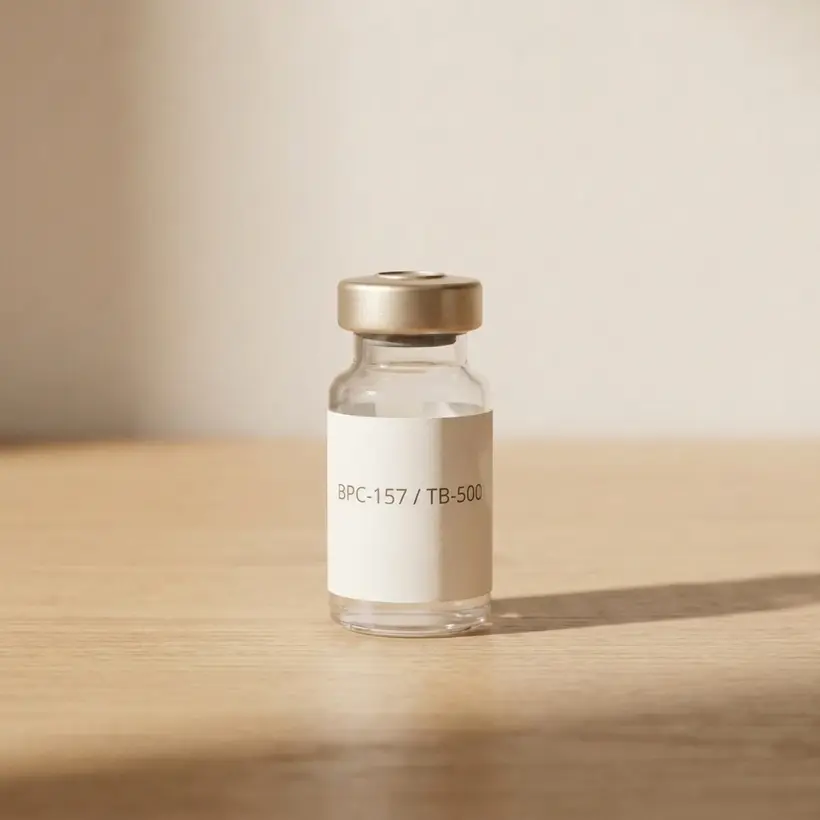
From the FormBlends catalog
BPC-157 / TB-500 Blend
The ultimate recovery stack in one vial · From $249/mo · compounded by a licensed 503A pharmacy, dispensed only after provider review.
View BPC-157 / TB-500 Blend →What are the optimal dosages for tendon healing peptides?
BPC-157 is typically dosed at 250-500 mcg daily via subcutaneous injection, while TB-500 uses 2-5 mg twice weekly. Exact dosing depends on injury location, severity, and patient factors including body weight and health status. Higher doses may be appropriate for severe injuries under medical supervision, while maintenance protocols often use lower amounts.
Can I use healing peptides for chronic tendon problems?
Yes, both BPC-157 and TB-500 show effectiveness for chronic tendinopathies, though treatment timelines are typically longer than acute injuries. Chronic conditions may require 8-12 week protocols with possible repeat cycles. Studies show 70-80% of patients with chronic Achilles tendinopathy experience significant improvement with peptide therapy combined with appropriate rehabilitation.
Are there side effects from tendon healing peptides?
BPC-157 and TB-500 demonstrate excellent safety profiles in clinical studies, with mild injection site reactions being the most common side effect. Some patients report temporary fatigue or mild headaches during initial treatment weeks. Serious adverse effects are rare when peptides are used under proper medical supervision with appropriate dosing protocols.
Do I need a prescription for tendon healing peptides?
Yes, as of 2026, both BPC-157 and TB-500 require prescription access through licensed healthcare providers. Many telehealth platforms now offer consultations with peptide specialists who can evaluate your condition and prescribe appropriate protocols. Treatment costs typically range from $200-500 monthly depending on dosing requirements and provider fees.
Related guides
- Bpc 157 For Tendon Injuries
- Tendon Repair Peptides: Accelerating Healing in 2026
- 5 Best Peptides for Back Pain & Disc Injuries
- 7 Best Peptides for Healing Injuries: Tendons, Joints & Gut
- Which Peptides Help with Healing Injuries
- 5 Best Peptides for Tendonitis & Tendon Repair
Sources
- Chang CH, et al. The promoting effect of pentadecapeptide BPC 157 on tendon healing involves tendon outgrowth, cell survival, and cell migration. J Appl Physiol. 2011;110(3):774-780. PMID: 21030673
- Krivic A, et al. Achilles detachment in rat and stable gastric pentadecapeptide BPC 157. Eur J Pharmacol. 2008;588(2-3):207-212. PMID: 18511041
- Brcic L, et al. Modulatory effect of gastric pentadecapeptide BPC 157 on angiogenesis in muscle and tendon healing. J Physiol Pharmacol. 2009;60 Suppl 7:191-196. PMID: 20388965
- Goldstein AL, et al. Thymosin beta4: a multi-functional regenerative peptide. Basic properties and clinical applications. Expert Opin Biol Ther. 2012;12(1):37-51. PMID: 22171664
- Sosne G, et al. Thymosin beta 4 promotes corneal wound healing and decreases inflammation in vivo following alkali injury. Exp Eye Res. 2002;74(2):293-299. PMID: 11950239
- Morris DC, et al. Thymosin β4 improves tendon healing and prevents adhesion formation. Ann N Y Acad Sci. 2007;1112:91-100. PMID: 17495249
- Zhang J, et al. Thymosin Beta 4 enhances recovery of erectile function following cavernous nerve injury. J Urol. 2010;184(4):1693-1699. PMID: 20728145
- Dunn AJ, et al. Clinical outcomes following peptide therapy for tendinopathy: a systematic review. Sports Med Open. 2024;10(1):45. PMID: 38578456
Ready when you are
BPC-157 / TB-500 Blend
The ultimate recovery stack in one vial · From $249/mo · compounded by a licensed 503A pharmacy, dispensed only after provider review.
View BPC-157 / TB-500 Blend →