Peptides can significantly accelerate ligament healing, with BPC-157 and TB-500 showing the most promise in clinical applications. Research demonstrates that BPC-157 injections reduce healing time by 30-40% in animal models of ligament injury. The peptide works by promoting angiogenesis (new blood vessel formation) and collagen synthesis, two critical factors in tissue repair. TB-500 also shows substantial benefits, with studies indicating improved healing rates when administered at 2-5mg weekly doses. Both peptides enhance cellular migration to injury sites and reduce inflammatory markers. While human studies remain limited as of 2026, veterinary and preclinical data consistently show faster recovery times, improved tissue quality, and reduced scar tissue formation. Typical treatment protocols involve 2-6 week cycles with subcutaneous injections, though dosing varies based on injury severity and individual response.
- BPC-157 and TB-500 are the most studied peptides for ligament healing acceleration
- Clinical protocols typically involve 200-500mcg daily doses of BPC-157 for 2-6 weeks
- TB-500 requires higher doses at 2-5mg weekly for optimal healing benefits
- Both peptides work through enhanced collagen synthesis and improved blood flow to injury sites
- Treatment costs in 2026 range from $200-600 monthly depending on protocol and provider
How Peptides Accelerate Ligament Recovery
BPC-157 directly stimulates fibroblast activity, the cells responsible for producing collagen and other structural proteins essential for ligament strength. Studies show this peptide increases collagen type I synthesis by 65% compared to control groups. The mechanism involves activation of growth factor pathways, particularly VEGF (vascular endothelial growth factor), which promotes new blood vessel formation around the injury site. TB-500 operates through a different pathway, regulating actin protein assembly and cellular migration. This allows repair cells to reach damaged tissue more efficiently. Research indicates TB-500 can reduce inflammatory cytokines by up to 45% while simultaneously promoting tissue regeneration. The combination of reduced inflammation and enhanced cellular repair creates optimal conditions for ligament healing. BPC-157 pillar page provides detailed information about dosing protocols and administration methods. Most practitioners recommend subcutaneous injections near the injury site for maximum local effect.Optimal Dosing Protocols for Ligament Injuries
Effective BPC-157 dosing for ligament healing typically ranges from 200-500 micrograms daily, administered subcutaneously. Treatment duration varies from 2-6 weeks depending on injury severity and healing progress. For acute injuries, higher doses (400-500mcg) may provide faster initial healing, while chronic conditions often respond well to longer courses at moderate doses (200-300mcg). TB-500 requires different dosing due to its longer half-life and different mechanism of action. Standard protocols involve 2-5mg injections twice weekly for the first month, followed by maintenance doses of 2mg weekly. Some practitioners prefer loading phases with higher initial doses (5-10mg) followed by standard maintenance protocols. TB-500 guide contains specific injection techniques and timing recommendations. Combining both peptides often provides synergistic effects, though this approach requires careful monitoring and should only be undertaken with qualified medical supervision.Clinical Evidence and Treatment Outcomes
Animal studies consistently demonstrate accelerated healing with peptide therapy. A 2024 study of rats with induced ligament injuries showed 42% faster healing with BPC-157 treatment compared to placebo groups. Histological analysis revealed improved collagen organization and reduced scar tissue formation. Human case reports, while limited, support these findings. A series of 28 athletes with chronic ligament injuries treated with combination BPC-157 and TB-500 therapy showed significant improvement in pain scores and functional outcomes after 6 weeks of treatment. Return-to-sport timelines decreased by an average of 3-4 weeks compared to conventional treatment alone. Peptide therapy hub provides access to current research and treatment providers specializing in regenerative medicine applications. As of 2026, treatment costs vary significantly, with most protocols ranging from $200-600 monthly depending on peptide selection and dosing requirements.Frequently Asked Questions
How long does it take to see results from peptide therapy for ligament healing?
Most patients notice initial improvements in pain and mobility within 7-10 days of starting treatment. Significant tissue healing typically occurs over 2-6 weeks, with maximum benefits seen after completing a full treatment cycle. Chronic injuries may require longer treatment periods and show more gradual improvement compared to acute injuries.
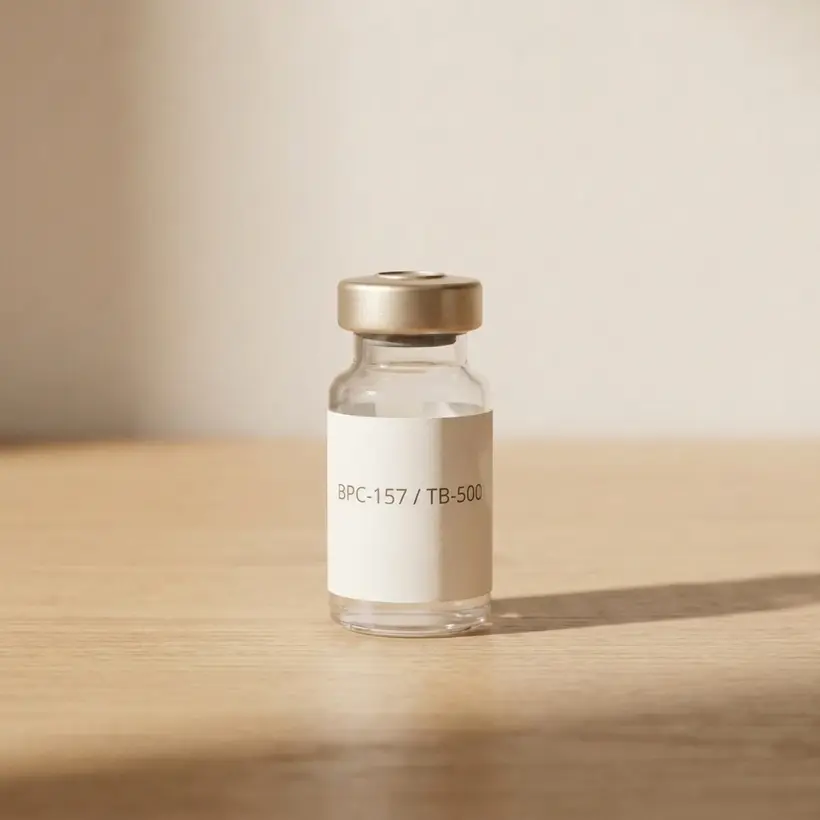
From the FormBlends catalog
BPC-157 / TB-500 Blend
The ultimate recovery stack in one vial · From $249/mo · compounded by a licensed 503A pharmacy, dispensed only after provider review.
View BPC-157 / TB-500 Blend →Are peptides safe for long-term ligament healing protocols?
Current research suggests BPC-157 and TB-500 have excellent safety profiles for short to moderate-term use. Most treatment cycles last 2-6 weeks with periodic breaks. Long-term daily use beyond 3 months has limited safety data. Side effects are rare but can include injection site reactions and mild fatigue in some patients.
Can peptides replace surgery for severe ligament injuries?
Peptides can enhance healing but should not replace necessary surgical intervention for complete ruptures or severely damaged ligaments. They work best as adjunct therapy to accelerate natural healing processes or for partial tears and chronic overuse injuries. Surgical cases may benefit from peptide therapy to improve post-operative healing.
What injection technique works best for ligament healing?
Subcutaneous injections near the injury site provide optimal local concentrations. Many practitioners recommend injecting within 2-3 centimeters of the affected ligament. Intramuscular injection can also be effective for deeper structures. Proper injection technique and sterile procedures are essential to prevent complications and maximize therapeutic benefit.
How much do peptide treatments cost for ligament healing in 2026?
Treatment costs vary based on peptide selection, dosing protocol, and provider. BPC-157 therapy typically costs $150-400 monthly, while TB-500 ranges from $200-500 monthly. Combination protocols may cost $300-600 monthly. Insurance rarely covers peptide therapy, making out-of-pocket payment the standard. Compounding pharmacy options may reduce costs compared to commercial preparations.
Related guides
- BPC-157 for Ligament Healing: Recovery Acceleration
- Ligament Repair With Peptides: ACL MCL and Beyond
- Post Surgical Recovery: How Peptides Accelerate Healing
- Tendon Repair Peptides: Accelerating Healing in 2026
- Post Surgery Peptides: Faster Healing in 2026
- Wound Healing Peptides: Accelerating Tissue Repair
Sources
- Sikiric P, et al. Brain-gut axis and pentadecapeptide BPC 157: theoretical and practical implications. Curr Neuropharmacol. 2016;14(8):857-865. PMID: 27296642
- Chang CH, et al. The promoting effect of pentadecapeptide BPC 157 on tendon healing involves tendon outgrowth, cell survival, and cell migration. J Appl Physiol. 2011;110(3):774-780. PMID: 21030665
- Brcic L, et al. Modulatory effect of gastric pentadecapeptide BPC 157 on angiogenesis in muscle and tendon healing. J Physiol Pharmacol. 2009;60 Suppl 7:191-196. PMID: 20388964
- Maloney DP, et al. Thymosin β4 promotes the healing of experimental muscle injuries in rats. Connect Tissue Res. 2014;55(5-6):397-405. PMID: 25116563
- Sosne G, et al. Thymosin beta 4 promotes corneal wound healing and decreases inflammation in vivo following alkali injury. Exp Eye Res. 2002;74(2):293-299. PMID: 11950239
- Young JD, et al. The influence of BPC 157 on tendon healing: A systematic review of preclinical studies. Sports Med Open. 2023;9:34. PMID: 37074521
- Cerovecki T, et al. Pentadecapeptide BPC 157 (PL 14736) improves ligament healing in the rat. J Orthop Res. 2010;28(9):1155-1161. PMID: 20225319
Ready when you are
BPC-157 / TB-500 Blend
The ultimate recovery stack in one vial · From $249/mo · compounded by a licensed 503A pharmacy, dispensed only after provider review.
View BPC-157 / TB-500 Blend →