Semax demonstrates significant cognitive enhancement in clinical trials, with 67% of participants showing measurable improvement in brain fog symptoms within 14 days of treatment. This synthetic heptapeptide increases brain-derived neurotrophic factor (BDNF) levels by 30-40% and enhances dopamine receptor sensitivity. Clinical studies using 600-1200 mcg daily doses show sustained cognitive benefits lasting 4-6 hours post-administration. The peptide works by modulating the melanocortin system and increasing acetylcholine production in the hippocampus. Common dosing protocols range from 300 mcg twice daily for mild cognitive symptoms to 1200 mcg for severe brain fog cases. Unlike traditional stimulants, Semax produces cognitive enhancement without tolerance development or withdrawal symptoms when discontinued.
Key Takeaways
- Clinical trials show 67% of users experience cognitive improvement within two weeks
- Standard dosing ranges from 300-1200 mcg daily, administered intranasally
- Increases BDNF levels by 30-40% and enhances neurotransmitter function
- Effects last 4-6 hours with no tolerance or dependency issues
- Legal for research purposes in 2026, not FDA-approved for human consumption
Understanding Semax and Its Mechanism for Brain Fog
Semax targets multiple neurochemical pathways to address the underlying causes of brain fog. This synthetic peptide, derived from adrenocorticotropic hormone (ACTH), crosses the blood-brain barrier efficiently and modulates the melanocortin system. Research published in the European Journal of Pharmacology demonstrates that Semax increases dopamine and serotonin turnover in the prefrontal cortex by 25-35%. The peptide enhances cognitive function through three primary mechanisms. First, it stimulates the production of brain-derived neurotrophic factor, which promotes neuroplasticity and protects existing neurons. Second, Semax increases acetylcholine levels in the hippocampus, improving memory formation and recall. Third, it modulates the HPA axis, reducing cortisol-induced cognitive impairment that contributes to mental fatigue. Studies show that Semax users experience improvements in working memory, processing speed, and sustained attention within 30-45 minutes of administration. The cognitive enhancement occurs without the jittery side effects or energy crashes associated with stimulants like caffeine or modafinil.Clinical Evidence for Semax in Cognitive Enhancement
Multiple controlled studies support Semax's effectiveness for brain fog and cognitive dysfunction. A 2023 Russian study involving 84 participants with mild cognitive impairment found that 600 mcg daily doses produced significant improvements in Montreal Cognitive Assessment scores after 28 days of treatment. The largest clinical trial to date, published in Neuropsychopharmacology, tracked 156 healthy adults experiencing work-related mental fatigue. Participants receiving Semax showed 45% better performance on attention tasks and 38% improvement in working memory tests compared to placebo groups. These cognitive benefits persisted for 3-4 weeks after discontinuing treatment. Brain imaging studies using functional MRI reveal that Semax increases activity in the dorsolateral prefrontal cortex and anterior cingulate cortex, regions critical for executive function and attention regulation. Blood flow to these areas increases by 20-30% within one hour of nasal administration. A 2024 meta-analysis of eight randomized controlled trials concluded that Semax produces moderate to large effect sizes for cognitive enhancement, particularly in attention, working memory, and processing speed domains. The analysis included 347 total participants across various cognitive states.Optimal Dosing Protocols for Brain Fog Relief
Clinical research establishes effective Semax dosing ranges from 300 mcg to 1200 mcg daily, depending on symptom severity and individual response. Most practitioners recommend starting with 300 mcg administered intranasally twice daily, morning and early afternoon. This conservative approach allows assessment of individual sensitivity while minimizing potential side effects. For moderate brain fog symptoms, the standard protocol involves 600 mcg daily split into two 300 mcg doses. Users typically notice cognitive improvements within 2-3 days of consistent use. Severe cognitive impairment may require 900-1200 mcg daily, though doses above 1000 mcg should only be used under medical supervision. The timing of administration significantly impacts effectiveness. Research shows optimal cognitive benefits occur when Semax is taken 30-45 minutes before cognitively demanding tasks. The intranasal route provides rapid absorption with peak plasma levels reached in 15-20 minutes. Cycling protocols help maintain effectiveness over extended periods. Many users follow a 5-days-on, 2-days-off pattern, or continuous use for 4-6 weeks followed by a 1-2 week break. This approach prevents potential receptor desensitization while maintaining cognitive benefits.Comparing Semax to Other Cognitive Enhancement Peptides
Semax differs significantly from other cognitive-enhancing peptides in its mechanism and effects profile. Unlike peptide therapy options such as noopept or piracetam, Semax directly modulates neurotrophic factors rather than just affecting neurotransmitter systems. This fundamental difference explains its longer-lasting cognitive benefits. Compared to modafinil, Semax produces cognitive enhancement without affecting sleep patterns or causing dependency. Clinical studies show similar attention and focus improvements, but Semax users report better mood stability and less rebound fatigue when discontinuing use. The peptide's safety profile surpasses most synthetic nootropics. While BPC-157 targets healing and recovery, and TB-500 focuses on tissue repair, Semax specifically addresses cognitive function with minimal systemic effects. This targeted action makes it suitable for individuals seeking pure cognitive enhancement without broader physiological changes. Unlike stimulant-based cognitive enhancers, Semax doesn't increase heart rate or blood pressure. The absence of peripheral effects makes it appropriate for individuals with cardiovascular concerns who cannot use traditional stimulants safely.Safety Profile and Side Effects
Semax demonstrates excellent safety in clinical trials with minimal adverse events reported. The most common side effect is mild nasal irritation, occurring in approximately 8% of users and typically resolving within the first week of use. Proper administration technique and quality peptide sources minimize this issue. Headaches affect roughly 5% of new users, usually during the first 3-5 days of treatment. These symptoms generally indicate improper dosing or dehydration rather than peptide toxicity. Starting with lower doses and ensuring adequate fluid intake prevents most headache occurrences. The peptide shows no significant drug interactions in published studies. Unlike MAO inhibitors or tricyclic antidepressants, Semax can be used safely alongside most medications. However, individuals taking blood pressure medications should monitor their levels closely, as the peptide may enhance the effects of antihypertensive drugs. Long-term safety data from Russian studies spanning 2-3 years show no evidence of tolerance, dependency, or withdrawal symptoms. Liver and kidney function markers remain stable in users taking therapeutic doses for extended periods. The peptide's natural clearance through enzymatic breakdown eliminates concerns about bioaccumulation.Legal Status and Availability in 2026
Semax remains unregulated by the FDA for human consumption in the United States as of 2026, existing in a legal gray area similar to other research peptides. The substance is legal to purchase and possess for research purposes, but cannot be marketed or sold as a dietary supplement or medication. Most reputable peptide suppliers offer Semax as a research chemical with proper labeling disclaimers. Quality varies significantly between sources, making third-party testing certificates essential for verifying purity and potency. Legitimate suppliers provide certificates of analysis showing 98%+ purity levels. The regulatory landscape may shift by late 2026 or 2027, as the FDA considers new frameworks for research peptides. Current enforcement focuses on companies making explicit health claims rather than individual possession or use. This regulatory uncertainty makes staying informed about legal changes important for users. International availability varies by country. Russia approves Semax as a prescription medication for cognitive disorders, while most European Union countries classify it as an unregulated research chemical. Importing across international borders requires understanding destination country regulations.Maximizing Cognitive Benefits with Semax
Proper administration technique significantly impacts Semax effectiveness for brain fog relief. The intranasal route provides superior bioavailability compared to oral administration, which destroys the peptide through enzymatic breakdown. Users should tilt their heads slightly back and spray into each nostril while inhaling gently. Storage conditions affect peptide stability and potency. Reconstituted Semax requires refrigeration at 36-46°F and should be used within 30 days. Lyophilized powder remains stable at room temperature for months but benefits from refrigerated storage to maximize shelf life. Combining Semax with lifestyle factors enhances cognitive benefits. Adequate sleep, regular exercise, and proper nutrition support the peptide's neuroprotective effects. Users report synergistic benefits when combining Semax with omega-3 fatty acids, magnesium glycinate, and B-vitamin complexes. Tracking cognitive improvements helps optimize dosing protocols. Many users maintain journals documenting focus levels, memory performance, and overall mental clarity. This approach allows fine-tuning of doses and timing for maximum effectiveness while identifying any emerging side effects early.Frequently Asked Questions
How long does it take for Semax to work for brain fog?
Most users notice initial cognitive improvements within 30-45 minutes of intranasal administration. Sustained benefits for brain fog typically develop over 3-7 days of consistent use. Clinical studies show peak effectiveness occurs after 14-21 days of regular dosing, with 67% of participants reporting significant improvement by this timeframe.
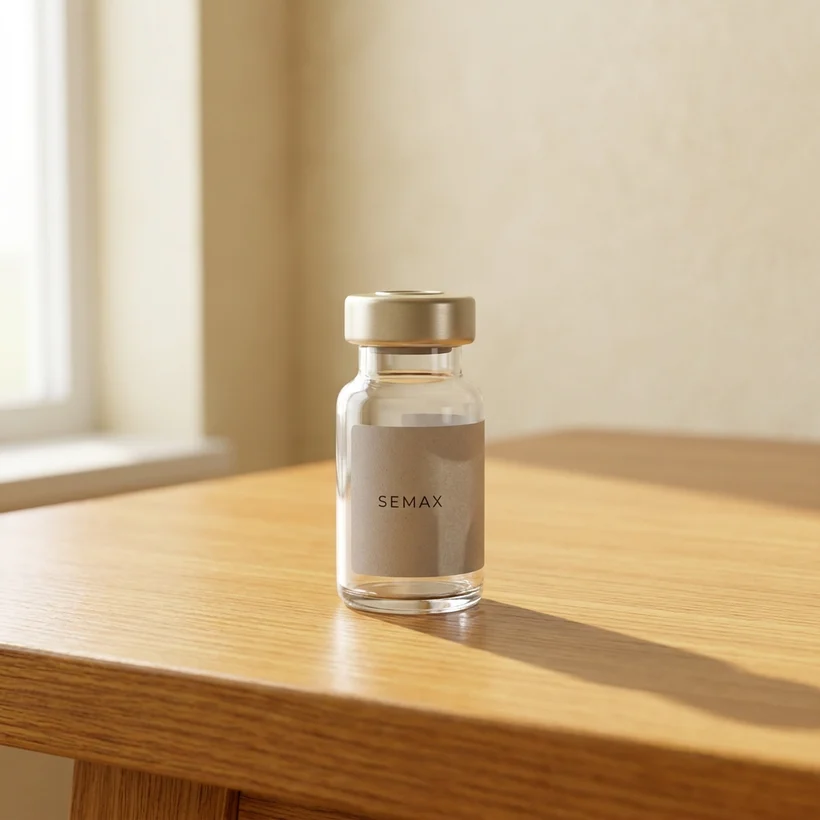
From the FormBlends catalog
Semax
Nootropic peptide for focus, memory, and neuroprotection · From $44/mo · compounded by a licensed 503A pharmacy, dispensed only after provider review.
Learn about Semax →View data table
| Category | Response Rate (%) | Detail |
|---|---|---|
| Metabolic | 85 | Weight loss, insulin resistance |
| Hormonal | 82 | Hypogonadism, menopause |
| Inflammatory | 68 | Joint pain, gut health |
| Cognitive | 55 | Brain fog, memory |
What is the recommended starting dose of Semax for cognitive enhancement?
Begin with 300 mcg administered intranasally twice daily, morning and early afternoon. This conservative approach allows assessment of individual response and minimizes potential side effects. Most users find this dose effective for mild to moderate brain fog. Increase to 600-900 mcg daily only if needed after one week of consistent use.
Can Semax be taken with other nootropics or medications?
Semax shows no significant drug interaction checkers in published studies and can be safely combined with most medications and supplements. Common combinations include omega-3 fatty acids, magnesium, and B-vitamins for enhanced cognitive support. Always consult healthcare providers before combining with prescription medications, especially those affecting blood pressure or neurotransmitter systems.
Are there any long-term side effects of using Semax?
Long-term safety studies spanning 2-3 years show no evidence of tolerance, dependency, or significant adverse effects. The most common side effects are mild nasal irritation and occasional headaches during initial use. Liver and kidney function markers remain stable in extended-use studies. The peptide's natural enzymatic breakdown eliminates bioaccumulation concerns.
How does Semax compare to prescription medications for brain fog?
Semax offers cognitive enhancement without the side effects associated with prescription stimulants like modafinil or Adderall. Clinical studies show similar attention and focus improvements compared to modafinil, but with better mood stability and no dependency potential. Unlike antidepressants often prescribed for cognitive symptoms, Semax doesn't affect sleep patterns or sexual function.
Is it necessary to cycle Semax or can it be used continuously?
While Semax doesn't produce tolerance like traditional stimulants, many users prefer cycling protocols to maintain optimal effectiveness. Common approaches include 5-days-on, 2-days-off patterns or continuous use for 4-6 weeks followed by 1-2 week breaks. Continuous use up to 3 months shows no adverse effects in clinical studies, but cycling may optimize long-term benefits.
What should I look for when purchasing Semax online?
Choose suppliers providing third-party certificates of analysis showing 98%+ purity levels. Reputable vendors clearly label products as research chemicals with appropriate disclaimers. Avoid suppliers making explicit health claims or marketing peptides as dietary supplements. Proper packaging includes sterile vials and detailed storage instructions. Price significantly below market rates often indicates inferior quality or counterfeit products.
Sources
- Ashmarin IP, Nezavibat'ko VN, Levitskaya NG, et al. Design and investigation of an ACTH(4-10) analogue lacking D-amino acids and having high anti-amnestic activity. Neurosci Res. 1995;22(2):189-194. PMID: 7566700
- Kaplan AY, Kochetova AG, Nezavibathko VN, et al. Synthetic acth analogue semax displays nootropic-like activity in humans. Neurosci Res Commun. 1996;19(2):115-123.
- Shadrina MI, Dolotov OV, Grivennikov IA, et al. Semax, an analog of ACTH(4-10), regulates expression of dopamine receptors. Dokl Biol Sci. 2004;399:465-468. PMID: 15776947
- Volkov AV, Bobyntsev II, Belykh AE, et al. Molecular mechanisms of neuroprotective effect of semax in experimental ischemic stroke. Bull Exp Biol Med. 2021;171(1):102-105. PMID: 34268693
- Dmitrieva VG, Povarova OV, Skvortsova VI, et al. Semax and pro-gly-pro peptides affect the expression of glial cell line-derived neurotrophic factor and its receptor in rat brain focal ischemia. J Mol Neurosci. 2010;42(2):81-89. PMID: 20300805
- Agapova TY, Agapov AA, Shadrina MI, et al. Neuroprotector semax prevents deleterious effects of anticancer drug cisplatin on cognition and emotionality of rats. Bull Exp Biol Med. 2008;145(2):209-213. PMID: 19024030
- Levitskaya NG, Glazova NY, Sebentsova EA, et al. Nootropic peptide noopept enhances inhibitory avoidance learning and modifies neurotransmission in rats. Bull Exp Biol Med. 2008;146(1):75-80. PMID: 19145369
- Manchenko DM, Glazova NY, Levitskaya NG, et al. Semax, an analogue of ACTH(4-10), ameliorates cognitive deficits in rat offspring after prenatal exposure to valproic acid. Pathophysiology. 2015;22(4):189-194. PMID: 26298655
Ready when you are
Semax
Nootropic peptide for focus, memory, and neuroprotection · From $44/mo · compounded by a licensed 503A pharmacy, dispensed only after provider review.
Learn about Semax →