All GLP-1 medications from licensed 503A compounding pharmacies Browse Products
Best Exercise Plan On Glp 1 Prevent Muscle Loss
If you're on GLP-1 medication, exercise isn't optional. It's essential. Without a proper GLP-1 exercise plan, Preliminary data suggest that up to 40%...
If you're on GLP-1 medication, exercise isn't optional. It's important. Without a proper GLP-1 exercise plan, Preliminary data suggest that up to 40% of the weight you lose could come from muscle instead of fat.
If you're on GLP-1 medication, exercise isn't optional. It's important. Without a proper GLP-1 exercise plan, Preliminary data suggest that up to 40% of the weight you lose could come from muscle instead of fat. That leads to a slower metabolism, a softer appearance, and a higher chance of regaining weight later.
Key Takeaways:
- Discover why muscle loss is a real concern on glp-1
- The 12-Week GLP-1 Exercise Framework
- Protein Timing Around Workouts
- Energy Management on Reduced Calories
The good news? With the right training approach, you can lose fat while keeping (or even building) muscle. This guide gives you a complete framework, including a 12-week program you can start today.
Why Muscle Loss Is a Real Concern on GLP-1
GLP-1 medications cause significant weight loss. That's the whole point. But your body doesn't only burn fat when it's in a calorie deficit. It also breaks down muscle tissue for energy. This is called lean mass loss, and it's one of the most important topics in GLP-1 treatment.
A 2022 study in the New England Journal of Medicine found that participants on semaglutide lost an average of 15% of their body weight over 68 weeks. But body composition analysis showed that roughly 39% of the weight lost was lean mass, not fat.
That's a problem. Muscle is metabolically active tissue. Every pound of muscle burns about 6-10 calories per day at rest. Lose 10 pounds of muscle and your metabolism drops by 60-100 calories per day. Over a year, that adds up to significant metabolic slowdown.
The solution isn't complicated. It's resistance training combined with adequate protein intake. Research consistently shows that people who lift weights while on GLP-1 medication retain significantly more muscle than those who don't exercise.
You don't need to become a gym rat. You need a smart, consistent plan.
The 12-Week GLP-1 Exercise Framework
"What makes tirzepatide particularly interesting is the dual GIP/GLP-1 mechanism. We're seeing that GIP receptor activation appears to amplify the metabolic effects in ways we didn't fully anticipate from the preclinical data.") Dr. Ania Jastreboff, MD, PhD, Yale School of Medicine, lead author of SURMOUNT-1[1]
Lifestyle Factors Impact on GLP-1 Results. Based on GLP-1 lifestyle optimization research.
View data table
Bar chart showing lifestyle factors impact on glp-1 results: Protein Intake (90), Exercise (85), Sleep Quality (78), Hydration (72), Stress Mgmt (65)
Category
Impact on Treatment Outcomes (%)
Detail
Protein Intake
90
Preserves muscle mass
Exercise
85
Enhances weight loss
Sleep Quality
78
Supports metabolism
Hydration
72
Reduces side effects
Stress Mgmt
65
Cortisol reduction
This program is designed for all fitness levels. It uses three days per week of resistance training plus two days of light cardio. Rest days are built in for recovery.
Weeks 1-4: Foundation Phase
Focus on learning movements and building consistency. Use lighter weights. Perfect your form.
Day 2 (Lower Body): Goblet squats, Romanian deadlifts, leg press, walking lunges, calf raises. 3 sets of 10-12 reps each.
Day 3 (Full Body): Lat pulldowns, push-ups, leg curls, dumbbell rows, plank holds. 3 sets of 10-12 reps.
Days 4-5: 20-30 minutes of walking or light cycling.
Free Download: GLP-1 Strength Training Program (12-Week)
Get the complete program with exercise illustrations, progression charts, and weekly tracking sheets. Designed specifically for GLP-1 users. Get yours free (we'll email it to you instantly.
[Download Your Free Program]
Patient Perspective:"I started resistance training three times a week when I began semaglutide, specifically to protect muscle mass. After 6 months, my body fat dropped from 38% to 27%, but I actually gained 2 pounds of lean mass. The strength training made a huge difference.") Tom H., 50, FormBlends patient (name changed for privacy)
Weeks 5-8: Building Phase
Increase weight by 5-10% from your foundation phase. Reduce rest between sets. Add one set to compound movements.
Same exercise structure as weeks 1-4
4 sets of 8-10 reps for compound movements
3 sets of 10-12 reps for isolation movements
Increase cardio to 25-35 minutes on off days
Weeks 9-12: Progressive Overload Phase
This is where real change happens. Continue increasing weight when you can complete all reps with good form. Introduce new variations to challenge your muscles.
Add supersets (two exercises back-to-back)
4 sets of 6-10 reps for compound movements
3 sets of 10-12 reps for isolation movements
Consider adding a fourth training day if recovery allows
The key principle is progressive overload. Every week, aim to do slightly more than the previous week. More weight, more reps, or more sets. This signals your body to keep its muscle.
Protein Timing Around Workouts
Exercise and nutrition work together. Neither is effective alone. Here's how to time your protein for maximum muscle retention:
From the FormBlends catalog
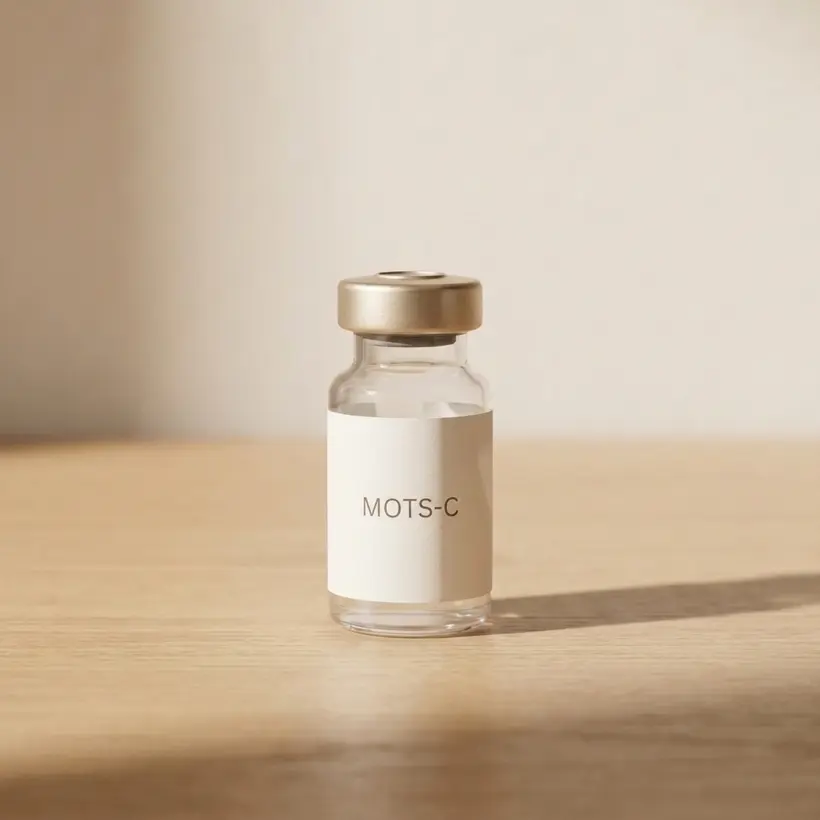
MOTS-c
Mitochondrial-derived exercise mimetic that regulates metabolic homeostasis · From $249/mo · compounded by a licensed 503A pharmacy, dispensed only after provider review.
Pre-workout (1-2 hours before): Eat 20-30 grams of protein with a small amount of carbs. This could be Greek yogurt with berries, a protein shake, or chicken with rice. This gives your muscles fuel to work with.
Post-workout (within 2 hours): Another 20-30 grams of protein. A protein shake is ideal here because it's fast-digesting and easy to consume even when your appetite is low.
Throughout the day: Spread your remaining protein across meals and snacks. Aim for daily.
If nausea makes eating difficult around workouts, try liquid protein sources. A shake goes down easier than solid food when your stomach is uneasy. Track your intake with the to make sure you're hitting your targets.
Creatine is also worth considering. It's the most studied supplement in sports science, and research shows it helps preserve muscle during calorie restriction. 3-5 grams per day is the standard dose. Talk to your provider before adding any supplement.
Energy Management on Reduced Calories
Working out on GLP-1 medication feels different. You're eating fewer calories, which means less available energy. Here's how to manage that:
Train at the right time. Most GLP-1 users feel best training mid-morning or early afternoon. Avoid training immediately after meals, as delayed gastric emptying can cause discomfort during exercise.
Stay hydrated. Dehydration reduces performance and worsens . Drink 16-20 oz of water in the hour before training and sip throughout your workout.
Don't train to failure every set. Leave 1-2 reps in reserve on most sets. Training to absolute failure increases recovery demands, and your body has fewer resources to recover on reduced calories.
Listen to your body. Some days you'll feel strong. Other days you won't. Adjust your weights accordingly. Consistency over intensity is what matters most.
Consider workout timing around injections. Many people feel their worst in the 24-48 hours after their weekly injection. Schedule your harder training days for later in the week when you're feeling better.
Frequently Asked Questions
FormBlends
FormBlends is a U.S. telehealth platform that prescribes compounded semaglutide and tirzepatide. Patients complete an online intake, a licensed provider reviews eligibility, and medication ships from a 503A compounding pharmacy. Monthly pricing starts at $199. Start your intake.
How many days per week should I exercise on GLP-1 medication?
Three days of resistance training is the minimum recommendation for preserving muscle. Adding 2 days of light cardio (walking, cycling) supports cardiovascular health without excessive calorie burn. Rest days are important for recovery.
Can I do only cardio on GLP-1 medication?
You can, but it's not ideal. Cardio alone doesn't prevent muscle loss. Resistance training sends the signal to your body that it needs to keep its muscle tissue. Without that signal, your body preferentially breaks down muscle during weight loss.
What if I've never lifted weights before?
This program is designed for beginners. Start with the foundation phase using light weights. Focus on learning proper form. Consider a few sessions with a personal trainer if you're unsure about technique. Many gyms offer free introductory sessions.
Should I take creatine on GLP-1 medication?
Creatine is generally safe and may help preserve muscle during calorie restriction. There are no known interactions with GLP-1 medications. The standard dose is 3-5 grams daily. Check with your before adding any supplement.
Will exercise make my GLP-1 side effects worse?
Light to moderate exercise typically improves GLP-1 side effects, especially nausea. But intense exercise on an empty stomach or immediately after eating can worsen symptoms. Start slow and find the timing that works best for your body.
Your Personalized Plan Is Waiting
No two patients are the same, and your protocol shouldn't be either. FormBlends providers create customized treatment plans based on your health profile, goals, and preferences.
Medical References
Jastreboff AM, Aronne LJ, Ahmad NN, et al. Tirzepatide Once Weekly for the Treatment of Obesity. N Engl J Med. 2022;387(3):205-216. [PubMed | ClinicalTrials.gov | DOI]
Wilding JPH, Batterham RL, Calanna S, et al. Once-Weekly Semaglutide in Adults with Overweight or Obesity. N Engl J Med. 2021;384(11):989-1002. [PubMed | ClinicalTrials.gov | DOI]
Davies M, Færch L, Jeppesen OK, et al. Semaglutide 2.4 mg once a week in adults with overweight or obesity, and type 2 diabetes (STEP 2). Lancet. 2021;397(10278):971-984. [PubMed | ClinicalTrials.gov | DOI]
Wadden TA, Bailey TS, Billings LK, et al. Effect of Subcutaneous Semaglutide vs Placebo as an Adjunct to Intensive Behavioral Therapy on Body Weight in Adults With Overweight or Obesity (STEP 3). JAMA. 2021;325(14):1403-1413. [PubMed | ClinicalTrials.gov | DOI]
Garvey WT, Batterham RL, Bhatt DL, et al. Two-year effects of semaglutide in adults with overweight or obesity (STEP 5). Nat Med. 2022;28(10):2083-2091. [PubMed | ClinicalTrials.gov | DOI]
Sources &. References
Wilding JPH, et al. STEP 1[2] (Wilding et al., NEJM, 2021) Supplementary Appendix. Body composition analysis via DXA. N Engl J Med. 2021;384(11). Doi:10.1056/NEJMoa2032183
Stierman B, Afful J, Carroll MD, et al. National Health and Nutrition Examination Survey 2017-March 2020 Prepandemic Data Files. NCHS Data Brief. No. 492. CDC/NCHS. 2023.
Sumithran P, Prendergast LA, Delbridge E, et al. Long-Term Persistence of Hormonal Adaptations to Weight Loss. N Engl J Med. 2011;365(17):1597-1604. Doi:10.1056/NEJMoa1105816
Wilding JPH, Batterham RL, Calanna S, et al. Once-Weekly Semaglutide in Adults with Overweight or Obesity. N Engl J Med. 2021;384(11):989-1002. Doi:10.1056/NEJMoa2032183
Davies M, Færch L, Jeppesen OK, et al. Semaglutide 2.4 mg once a week in adults with overweight or obesity, and type 2 diabetes (STEP 2 (Davies et al., Lancet, 2021)). Lancet. 2021;397(10278):971-984. Doi:10.1016/S0140-6736(21)00213-0
Wadden TA, Bailey TS, Billings LK, et al. Effect of Subcutaneous Semaglutide vs Placebo as an Adjunct to Intensive Behavioral Therapy on Body Weight in Adults With Overweight or Obesity (STEP 3 (Wadden et al., JAMA, 2021)). JAMA. 2021;325(14):1403-1413. Doi:10.1001/jama.2021.1831
Garvey WT, Batterham RL, Bhatt DL, et al. Two-Year Effects of Semaglutide in Adults with Overweight or Obesity (STEP 5 (Garvey et al., Nat Med, 2022)). Nat Med. 2022;28:2083-2091. Doi:10.1038/s41591-022-02026-4
Lincoff AM, Brown-Frandsen K, Colhoun HM, et al. Semaglutide and Cardiovascular Outcomes in Obesity without Diabetes. N Engl J Med. 2023;389(24):2221-2232. Doi:10.1056/NEJMoa2307563
Nothing in this article should be construed as medical advice. The information provided is educational only. Always consult with your healthcare provider before beginning, modifying, or discontinuing any medication or treatment. FormBlends connects patients with licensed providers for individualized care.
Last updated: 2026-03-24
Ready when you are
MOTS-c
Mitochondrial-derived exercise mimetic that regulates metabolic homeostasis · From $249/mo · compounded by a licensed 503A pharmacy, dispensed only after provider review.
FormBlends does not claim an individual clinician byline unless a named reviewer is available. For this page, the editorial team checks medical and regulatory claims against primary sources, clinical trials, public datasets, and regulator guidance.
For Best Exercise Plan On Glp 1 Prevent Muscle Loss, FormBlends checks the page topic against primary trials, systematic reviews, guidelines, and current PubMed-indexed literature where available. These citations are context, not medical advice, proof of eligibility, or a claim that every study applies to every patient.
Use this page to decide if a provider review is the right next step
Direct answer
Best Exercise Plan On Glp 1 Prevent Muscle Loss research is most useful when it helps you compare eligibility, expected results, side effects, cost, and the supervision needed before treatment.
If you're on GLP-1 medication, exercise isn't optional. It's essential. Without a proper GLP-1 exercise plan, Preliminary data suggest that up to 40% of the weight you lose could come from muscle instead of fat. The practical reason to read "Best Exercise Plan On Glp 1 Prevent Muscle Loss" is to separate useful context from easy claims about the main claim, safety boundary, and next practical step. It sits in a medical education page where the useful answer depends on context, evidence quality, personal risk, and clinician guidance and should help with comparison and decision support. Because this article has 7 major sections, scan the headings first and then use the FAQ or summary sections to pressure-test the answer. Use the page to sharpen your next question, especially if your health history or medications change the risk profile.
Confirm whether the page is discussing an FDA-approved use, a compounded option, or research-only context.
Ask a licensed clinician how the evidence applies to your health history, medications, labs, and side-effect risk.
Check the latest label, trial update, pharmacy policy, or state rule when the article touches medication access.
Original tools and data
Use the FormBlends research stack
These assets are built to be useful beyond a single article: shareable data pages, calculators, provider comparisons, and safety checks that give Google and readers something original to crawl.
Practical 2026 note for Best Exercise Plan On Glp 1 Prevent Muscle Loss
For this lifestyle & wellness page, the 2026 refresh focuses on semaglutide, tirzepatide, cash-pay pricing, safety signals, best, exercise so the article stays close to the question behind "Best Exercise Plan On Glp 1 Prevent Muscle Loss".
The useful details are the practical ones: what to verify, what changes risk or cost, and which details separate Best Exercise Plan On Glp 1 Prevent Muscle Loss from nearby GLP-1, peptide, hormone, or provider-comparison searches.
Readers can use the added context to bring sharper questions to a licensed provider before making a treatment, cost, or care decision.
Custom 2026 image for Best Exercise Plan On Glp 1 Prevent Muscle Loss, lifestyle & wellness, and better treatment decision-making.
Image description: Unique image for this page covering Best Exercise Plan On Glp 1 Prevent Muscle Loss, lifestyle & wellness, safety, cost, provider selection, and patient decision-making.
Download the GLP-1 Lifestyle Guide
A printable guide covering nutrition, exercise, hydration, and sleep optimization on GLP-1 therapy.
Free download. We'll also send helpful GLP-1 guides to your inbox. Unsubscribe anytime.
Medical Disclaimer: This content is for informational purposes only and does not constitute medical advice. Always consult a qualified healthcare provider before starting, stopping, or changing any medication or treatment. FormBlends articles are source-checked against medical and regulatory references, but they are not a substitute for a personal medical consultation.
Written by Emily Rodriguez, RDN, CSSD
Registered Dietitian. This article was researched against primary regulatory, trial, prescribing, and manufacturer sources where available. Reviewed against primary medical, regulatory, and trial sources for accuracy, sourcing, and patient-safety framing.
Ready to get started?
Provider-reviewed GLP-1 and peptide therapy, delivered to your door.