Key Takeaway
gut health GLP-1 microbiome: in-depth clinical analysis, evidence review, and practical implications for patients on GLP-1 weight loss therapy. Physician-reviewed.
Understanding gut health GLP-1 microbiome is important for anyone on GLP-1 weight loss therapy. The science behind this topic directly affects your treatment outcomes, and having accurate information helps you make better decisions alongside your provider. At FormBlends, we believe educated patients get better results, so we're breaking down the clinical evidence in plain language .
How semaglutide and tirzepatide act on the body and gut
Let us start with the fundamentals. GLP-1 receptor agonists like semaglutide and tirzepatide affect multiple physiological systems: appetite regulation, gastric emptying, insulin secretion, and potentially others that are still being studied. These broad effects mean that gut health GLP-1 microbiome connects to your treatment in ways that are worth understanding .
The human body maintains a complex web of feedback loops between the gut, brain, hormones, and metabolic organs. When you introduce a GLP-1 medication, you're modifying one part of this system, which creates downstream effects. Some of these effects are the intended therapeutic outcomes. Others are the side effects and secondary changes that patients need to be aware of.
Clinical research in this area has accelerated significantly since the widespread adoption of GLP-1 medications for weight loss. While much is known, active research continues to reveal new findings.
Which habits change how well GLP-1 treatment works?
The evidence base for gut health GLP-1 microbiome comes from multiple sources:
View data table
| Category | Impact on Treatment Outcomes (%) | Detail |
|---|---|---|
| Protein Intake | 90 | Preserves muscle mass |
| Exercise | 85 | Enhances weight loss |
| Sleep Quality | 78 | Supports metabolism |
| Hydration | 72 | Reduces side effects |
| Stress Mgmt | 65 | Cortisol reduction |

Findings from the STEP and SURMOUNT trials
The STEP trials (semaglutide) and SURMOUNT trials (tirzepatide) provide the highest-quality evidence. These studies enrolled thousands of participants and tracked outcomes over 68 to 72 weeks. Key findings relevant to this topic include measurable changes in metabolic markers, body composition, and patient-reported outcomes .
How patient experience shapes GLP-1 outcomes outside trials
Post-marketing data from millions of patients worldwide adds practical context to clinical trial findings. Real-world evidence often reveals patterns that controlled studies miss, including how patients actually use these medications outside of research settings.
What GLP-1 drugs do to the gut microbiome
Laboratory and small-scale clinical studies help explain why these medications produce certain effects. Understanding the mechanism gives providers better tools for improving treatment.
Daily habits that help GLP-1 users
So what does this mean for you? Here are the key takeaways:
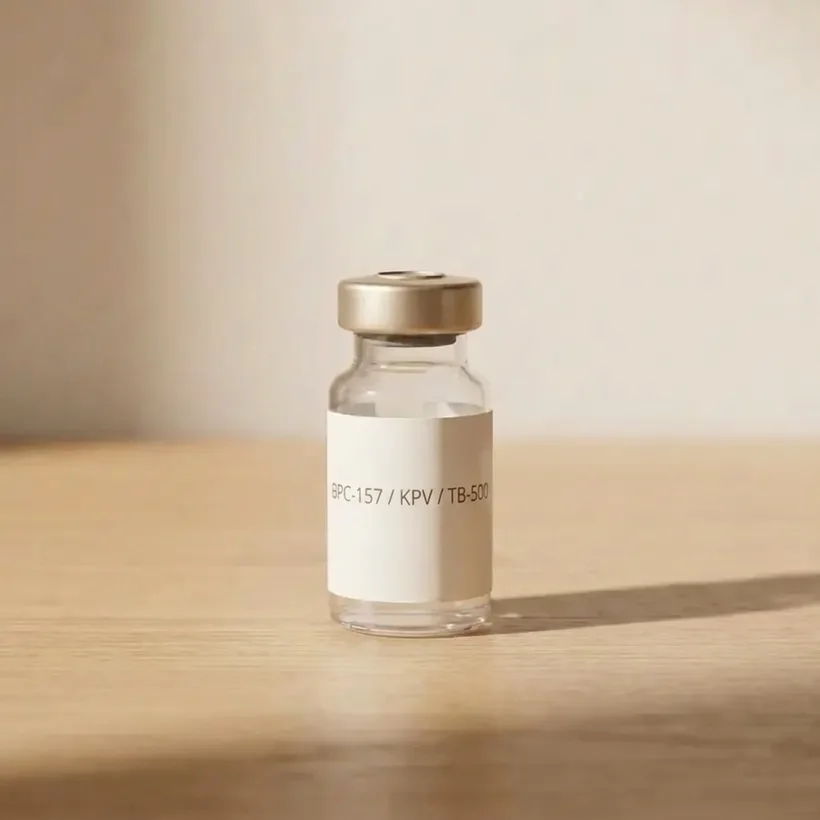
From the FormBlends catalog
BPC-157 / KPV / TB-500 Blend
Combination listing not currently offered · From $279/mo · prescription review required; compounded medications are not FDA-approved.
Learn about BPC-157 / KPV / TB-500 Blend →- Knowledge helps better decisions. Knowing how your medication works helps you recognize normal responses versus concerning ones, reducing anxiety and improving adherence.
- Nutrition plays a supporting role. The science behind gut health GLP-1 microbiome underscores why dietary quality matters during treatment. Protein intake, micronutrient status, and hydration all interact with the mechanisms we have described nutrition on GLP-1 medications.
- Exercise complements the medication. Physical activity enhances several of the beneficial pathways that GLP-1 therapy activates, while also protecting against some of the potential downsides like muscle loss exercise on GLP-1 therapy.
- Individual variation is real. Two patients on the same medication at the same dose can have very different experiences. Genetics, baseline health, and lifestyle all contribute to this variability.
- Monitoring matters. Regular check-ins with your provider allow for adjustments based on how your body is specifically responding. This is why physician-supervised programs outperform unsupervised medication access.
Do higher GLP-1 doses give better results?
Several myths circulate about gut health GLP-1 microbiome that are worth addressing:
- Myth: More medication always means better results. Reality: There's an optimal dose range for each patient. Higher doses increase side effects without proportionally increasing benefits beyond a certain point .
- Myth: Results are permanent without maintenance. Reality: The physiological changes that GLP-1 medications produce require ongoing treatment for most patients. Stopping medication typically leads to weight regain as the underlying biological drivers reassert themselves.
- Myth: The medication does all the work. Reality: GLP-1 therapy is most effective when combined with nutritional improvement, regular exercise, adequate sleep, and stress management.
Questions to bring to your care team
Based on the evidence we have reviewed, here are productive questions to discuss with your care team:
- How does gut health GLP-1 microbiome specifically apply to my health profile?
- What labs or monitoring should we track related to this topic?
- Are there lifestyle modifications that can enhance my outcomes based on this science?
- How will my treatment plan account for what we know about this area?
Frequently Asked Questions
How soon diet and sleep changes show effects
Lifestyle modifications typically produce noticeable changes within 2-4 weeks. Measurable improvements in biomarkers like blood sugar and cholesterol often appear within 6-8 weeks of consistent implementation.
Should eating and exercise change on GLP-1 drugs?
Yes. Lifestyle modifications including diet, exercise, and sleep improvement enhance medication effectiveness. Clinical research consistently shows that combining medication with lifestyle changes produces better outcomes than either approach alone.
Making GLP-1 habits last
The strategies outlined here are designed for sustainability. Start with one or two changes and build gradually. Research shows that habits established slowly over 8-12 weeks are more likely to persist long-term than sudden major overhauls.
How our physicians review GLP-1 and gut health research
Our physician team stays current on the latest research, including gut health GLP-1 microbiome, to provide evidence-based care to every patient. If you have questions about how this science applies to your treatment, we're here to help. contact FormBlends to schedule a consultation.
Sources
- Frias JP et al. Tirzepatide versus Semaglutide Once Weekly in Patients with Type 2 Diabetes. New England Journal of Medicine. 2021.
- Jastreboff AM et al. Tirzepatide Once Weekly for the Treatment of Obesity. New England Journal of Medicine. 2022.
- Rosenstock J et al. Efficacy and safety of a novel dual GIP and GLP-1 receptor agonist tirzepatide in patients with type 2 diabetes (SURPASS-1). Diabetes Care. 2021.
Ready when you are
BPC-157 / KPV / TB-500 Blend
Combination listing not currently offered · From $279/mo · prescription review required; compounded medications are not FDA-approved.
Learn about BPC-157 / KPV / TB-500 Blend →