
Trust Signals
Key Takeaways
- BPC-157 is a 15-amino-acid partial sequence of body protection compound isolated from human gastric juice; rodent studies show mucosal healing and motility benefits, but no Phase III human RCT exists.
- Larazotide acetate (AT-1001) is an 8-amino-acid tight-junction regulator with the strongest human evidence of any gut peptide, completing a 342-patient Phase IIb RCT in celiac disease.
- KPV (Lys-Pro-Val) is a tripeptide fragment of alpha-MSH that suppresses NF-kB and reduces colitis severity in rodent models; it survives oral delivery in animal studies because of its small size.
- Teduglutide (FDA-approved GLP-2 analog) is the only gut-specific peptide with confirmed Phase III human efficacy; every research peptide below must be measured against that benchmark.
- Purity and endotoxin content of gray-market peptide vials are the single largest real-world safety risk, not pharmacological toxicity of the peptide itself.
What Is the Best Peptide for Gut Health?
Table of Contents
- The 5 Gut Peptide Candidates Ranked by Evidence
- Evidence Ledger: Major Claims Graded
- Mechanism With Numbers: How Each Peptide Acts on the Gut
- What Most Pages Get Wrong About Gut Peptides
- Why Oral Bioavailability Is the Central Problem
- Honest Head-to-Head: Peptides vs. Approved Alternatives
- Dosing and Operational Use
- Label and COA Literacy: How to Judge a Product Yourself
- FAQ
- Sources
- Footer Disclaimers
What Are the Top 5 Gut Health Peptides?
1. BPC-157 (Body Protection Compound 157) is a 15-amino-acid peptide (Gly-Glu-Pro-Pro-Pro-Gly-Lys-Pro-Ala-Asp-Asp-Ala-Gly-Leu-Val) isolated from a human gastric juice protein. It has the largest volume of published gut research of any non-approved peptide, covering ulcer healing, fistula closure, intestinal anastomosis, and motility. All definitive efficacy data is in rodents or in vitro.
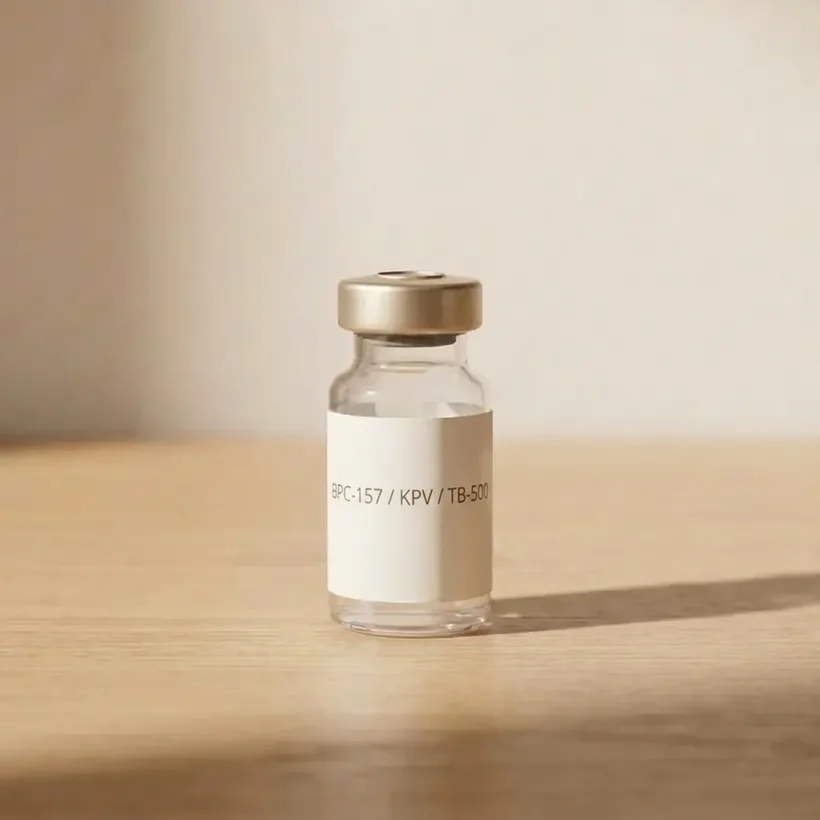
From the FormBlends catalog
BPC-157 / KPV / TB-500 Blend
Three-pathway recovery support in one peptide blend · From $279/mo · compounded by a licensed 503A pharmacy, dispensed only after provider review.
View BPC-157 / KPV / TB-500 Blend →2. Larazotide Acetate (AT-1001) is an 8-amino-acid synthetic peptide modeled on a zonulin antagonist. It is the most clinically advanced gut peptide in this list, having completed Phase IIb trials in celiac disease patients. It directly targets tight junction regulation.
3. KPV (Lys-Pro-Val) is the C-terminal tripeptide of alpha-melanocyte stimulating hormone (alpha-MSH). Its small size (molecular weight roughly 340 Da) allows it to cross intestinal epithelium via peptide transporters (PepT1). Published rodent colitis studies using nanoparticle oral delivery show reduced colon inflammation scores.
4. PYY 3-36 (Peptide YY fragment) is an endogenous 36-amino-acid gut hormone. Exogenous administration in human trials reduces appetite and slows gut transit. It is relevant for gut motility disorders and IBS-D, with a handful of human pharmacokinetic studies published.
5. Teduglutide (GLP-2 analog, brand name Gattex) is included as the evidence anchor. It is FDA-approved for short bowel syndrome, stimulates crypt cell proliferation via GLP-2 receptors in the subepithelial myofibroblast layer, and is the standard against which all research peptides must be compared. It requires daily subcutaneous injection.
Evidence Ledger: How Confident Should You Be?
| Claim | Best Evidence Type | Effect Direction | Confidence |
|---|---|---|---|
| BPC-157 accelerates gastric ulcer healing | Multiple rodent RCTs | Positive | Moderate (animal only) |
| BPC-157 improves intestinal fistula closure | Rodent models | Positive | Low (no human data) |
| Larazotide reduces GI symptoms in celiac disease | Phase IIb RCT, n=342 (Leffler et al. 2015) | Positive vs. placebo | Moderate (single Phase IIb) |
| KPV reduces colitis in mice via NF-kB inhibition | Rodent models, in vitro cell lines | Positive | Low (preclinical only) |
| PYY 3-36 slows gastric emptying in humans | Small human pharmacokinetic studies | Positive | Low to Moderate |
| Teduglutide reduces parenteral nutrition in SBS | Phase III RCT (Jeppesen et al. 2012) | Positive vs. placebo | High |
| BPC-157 is safe in humans at community doses | Mechanism only, pilot observations | No clear harm signal (limited data) | Very Low |
| Oral BPC-157 bioavailability is therapeutic in humans | Animal gastric stability data only | Plausible but unconfirmed | Very Low |
How Do These Peptides Actually Work? Mechanism With Numbers
BPC-157 upregulates vascular endothelial growth factor (VEGF) expression and promotes angiogenesis in healing tissue. Sikiric et al. published a body of work showing it modulates the nitric oxide system: it counteracts the gut damage caused by L-NAME (a nitric oxide synthase inhibitor) and restores mucosal blood flow. It also appears to interact with the growth hormone receptor pathway indirectly. Importantly, these mechanism studies do not prove therapeutic benefit in human inflammatory bowel disease. The receptor target has not been fully characterized.
Larazotide competitively blocks the binding of zonulin (a gliadin-triggered tight-junction modulator) to its receptor on intestinal epithelial cells. In the Leffler 2015 Phase IIb trial (published in Gastroenterology, 342 patients, 12 weeks, four dose arms), the 0.5 mg three-times-daily dose arm showed statistically significant reduction in the Gastrointestinal Symptom Rating Scale versus placebo. The primary endpoint of intestinal permeability as measured by lactulose/mannitol ratio did not reach significance in all arms, which is an important caveat commodity pages omit.
KPV enters intestinal epithelial cells via PepT1, a proton-coupled oligopeptide transporter that normally imports di- and tripeptides from food digestion. Inside the cell, KPV inhibits IkappaB kinase phosphorylation, blocking NF-kB nuclear translocation and downstream production of TNF-alpha, IL-6, and IL-1beta. Laroui et al. (2014, Journal of Controlled Release) demonstrated that KPV loaded into hydrogel nanoparticles and given orally to DSS-colitis mice reduced colon shortening and histological inflammation scores relative to vehicle controls. The nanoparticle carrier was necessary for colonic delivery; free KPV solution had weaker effects, suggesting delivery vehicle matters enormously for this peptide.
Teduglutide is a GLP-2 analog with an alanine-to-glycine substitution at position 2 that resists DPP-IV cleavage, extending its half-life from roughly 7 minutes (native GLP-2) to roughly 2 hours. GLP-2 receptors are expressed on subepithelial myofibroblasts in the intestinal lamina propria, which then secrete insulin-like growth factor-1 and keratinocyte growth factor to drive crypt cell proliferation and villus elongation. In the Jeppesen et al. 2012 NEJM trial (n=86), teduglutide 0.05 mg/kg/day reduced weekly parenteral nutrition volume by a mean of 4.4 liters versus 2.3 liters for placebo at 24 weeks.
What Most Pages Get Wrong About Gut Peptides
The oral bioavailability assumption is the most common error. Most peptide blogs cite BPC-157's "unique stability in gastric juice" as proof that oral dosing works in humans. The gastric stability data comes from in vitro experiments and rodent studies. BPC-157 surviving acid in a test tube does not confirm it crosses the human intestinal epithelium intact at concentrations sufficient for pharmacological effect. No human pharmacokinetic study with oral BPC-157 showing blood or tissue levels has been published in peer-reviewed literature as of this writing.
The endotoxin problem. Research-grade peptides synthesized by solid-phase peptide synthesis frequently carry lipopolysaccharide (LPS) contamination from the bacterial reagents used. For subcutaneous or intravenous use, endotoxin levels above 1 EU/mg can trigger inflammatory responses. Most gut peptide vendors do not publish endotoxin testing results. A user injecting a high-endotoxin vial and experiencing gut inflammation may incorrectly attribute the response to the peptide mechanism rather than LPS contamination.
The "leaky gut" conflation. Many pages recommend BPC-157 and KPV for "leaky gut syndrome." This term is not a recognized clinical diagnosis. Intestinal permeability as measured by lactulose/mannitol ratios or FITC-dextran assays is a real physiological phenomenon associated with celiac disease, IBD, and critical illness. Whether elevated permeability in otherwise healthy people causes systemic disease, and whether peptides can correct it to clinical benefit, are both unresolved questions.
Why Is Oral Bioavailability the Central Problem for Gut Peptides?
The gastrointestinal tract is designed to degrade proteins and peptides. Gastric acid denatures protein structure, pepsin cleaves at aromatic and hydrophobic residues, and the brush-border enzymes of the small intestine (aminopeptidase N, dipeptidyl peptidase IV, carboxypeptidases) break nearly all peptide bonds longer than three residues. The transcellular route for peptide absorption also requires resistance to intracellular lysosomal digestion.
KPV survives because at three residues it is a substrate for PepT1, which actively transports it. BPC-157 at 15 residues has no such transporter; its claimed stability relies on a proline-rich sequence that resists certain proteases. Proline at positions 3, 4, and 5 creates steric hindrance against many endopeptidases, which is the chemical rationale behind the stability claim. However, proline content alone is not sufficient to ensure human bioavailability, and no human pharmacokinetic paper confirms it.
Larazotide is formulated specifically to remain in the intestinal lumen and act locally on tight junctions. It does not need to be absorbed to exert its effect, which is precisely why oral delivery works for it. This is a fundamentally different mechanism from BPC-157, which must presumably reach systemic circulation or mucosal tissue layers to drive VEGF and angiogenesis effects.
Honest Head-to-Head: Research Peptides vs. Approved Alternatives
| Peptide | Best Supported Indication | Highest Evidence Level | FDA Status | Wins vs. Alternatives | Loses vs. Alternatives |
|---|---|---|---|---|---|
| BPC-157 | Gastric ulcer healing, motility | Rodent RCT | Not approved | Broad tissue effects in animals, accessible off-label | No human RCT; loses to omeprazole for ulcers (proven), to mesalamine for IBD |
| Larazotide | Intestinal permeability in celiac disease | Phase IIb human RCT (n=342) | Not approved (Phase III incomplete) | Only peptide with multi-hundred-patient human gut data | Loses to gluten-free diet as primary celiac treatment; Phase III not completed |
| KPV | Colitis, intestinal inflammation | Rodent model, in vitro | Not approved | Oral delivery plausible; potent anti-inflammatory mechanism | Loses to biologic agents (infliximab, vedolizumab) for IBD by a wide evidence margin |
| PYY 3-36 | Gut motility, satiety | Small human PK studies | Not approved | Endogenous hormone, physiological rationale | Nausea limits dose; loses to semaglutide for appetite suppression by wide margin |
| Teduglutide (GLP-2) | Short bowel syndrome | Phase III RCT (Jeppesen 2012) | FDA-approved (Gattex) | Only approved gut-trophic peptide; proven PN reduction | Requires daily injection; cost exceeds $300,000/year; risk of polyp growth requires colonoscopy monitoring |
What Doses Are Used and What Do They Actually Mean?
Animal doses do not translate directly to humans via simple body weight scaling. The standard conversion from rodent to human uses body surface area normalization (the FDA's 2005 guidance on dose translation), dividing the mg/kg rodent dose by roughly 6 to 12 depending on species to get a human equivalent dose estimate. This is an approximation, not a validated clinical dose.
| Peptide | Animal Study Dose | Human Equivalent Estimate (BSA method) | Community Protocol | Validation Status |
|---|---|---|---|---|
| BPC-157 | 1 to 10 mcg/kg (rat, i.p.) | Roughly 0.1 to 1.6 mcg/kg human (unvalidated) | 250 to 500 mcg/day SC or oral | Not validated in human PK study |
| Larazotide | N/A (designed for human use) | 0.5 mg three times daily (Phase IIb tested dose) | 0.5 mg TID | Phase IIb human RCT |
| KPV | Variable, nanoparticle oral in mice | Not established | Various, no consensus | Preclinical only |
| Teduglutide | N/A | 0.05 mg/kg/day SC (approved dose) | 0.05 mg/kg/day SC | FDA-approved Phase III |
How to Read a COA and Judge a Gut Peptide Product
A certificate of analysis (COA) from a peptide vendor should contain at minimum four elements before you trust the product:
- HPLC purity trace above 98 percent. The chromatogram should show one dominant peak. Multiple peaks indicate impurities. The purity percentage should be calculated as area under the main peak divided by total peak area. A number like "98.7% purity" without a chromatogram is unverifiable.
- Mass spectrometry confirmation. The observed molecular weight (m/z) should match the theoretical molecular weight of the peptide sequence within 0.1 to 0.5 Da. For BPC-157 (sequence Gly-Glu-Pro-Pro-Pro-Gly-Lys-Pro-Ala-Asp-Asp-Ala-Gly-Leu-Val), the theoretical monoisotopic mass is approximately 1419.7 Da. If the MS report shows a different mass, it is a different peptide or has modifications.
- Endotoxin testing result. For injectable use, the result should be below 1 EU/mg (or ideally below 0.1 EU/mg). The LAL (Limulus Amebocyte Lysate) test is the standard method. Many gray-market vendors do not include this. Its absence is a red flag for injectable products.
- Third-party lab identity. The COA header should show the testing lab name and accreditation, not just the vendor's logo. A COA issued by the vendor's own facility cannot be independently verified.
Reconstitution math for BPC-157: A 5 mg vial dissolved in 2 mL bacteriostatic water gives a concentration of 2.5 mg/mL, or 2500 mcg/mL. A 500 mcg dose requires 0.2 mL (20 units on a 1 mL insulin syringe). Always calculate from the actual vial weight and solvent volume, not a default assumption. Storage after reconstitution should be at 2 to 8 degrees C, used within 4 weeks. Lyophilized (freeze-dried) powder is stable longer when kept cold and dry; once exposed to moisture before intentional reconstitution, degradation accelerates because hydrolysis of peptide bonds is water-mediated.
FAQ
What is the best peptide for gut health overall?
BPC-157 has the broadest evidence base in animal models for mucosal healing, fistula repair, and gut motility. KPV has the strongest mechanistic case for inflammatory bowel conditions. Neither has completed human Phase III trials, so both remain research compounds, not approved treatments.
Is BPC-157 safe for humans?
BPC-157 has been tested in several small human pilot studies and in extensive animal toxicology without clear organ toxicity signals. However, no large randomized controlled trial has confirmed human safety at therapeutic doses. It is not FDA-approved. Long-term safety data in humans is absent.
Does KPV help with IBD?
KPV reduces NF-kB signaling and pro-inflammatory cytokines in colitis rodent models and in human intestinal epithelial cell lines. One nanoparticle oral delivery study showed colitis improvement in mice. Human trial data does not yet exist.
What is larazotide and how does it help leaky gut?
Larazotide acetate (AT-1001) is an 8-amino-acid peptide that blocks zonulin-mediated tight-junction opening. In a Phase IIb RCT in celiac disease patients (n=342, Leffler et al. 2015), it reduced gastrointestinal symptom scores versus placebo. It is the closest gut-barrier peptide to clinical approval but is not yet approved.
Can you take gut health peptides orally?
Most peptides are degraded by gastric acid and brush-border peptidases before absorption. BPC-157 shows unusual stability in gastric juice in animal studies, making oral dosing plausible. KPV at tripeptide size also survives digestion in animal models. Larazotide is specifically engineered for oral delivery. Larger peptides like GLP-2 analogs require injection.
What dose of BPC-157 is used in research?
Animal studies have used 1 to 10 mcg/kg body weight, typically injected intraperitoneally or subcutaneously. Human extrapolation from these doses is not validated. Community protocols often cite 250 to 500 mcg per day subcutaneously or orally, but these figures are not from controlled human trials.
How does GLP-2 (teduglutide) compare to research peptides for gut health?
Teduglutide (Gattex) is a GLP-2 analog approved by the FDA for short bowel syndrome. It has Phase III human RCT data showing reduced parenteral nutrition dependence. It is the gold standard gut-healing peptide with actual regulatory approval, which BPC-157 and KPV cannot match.
What does a degraded BPC-157 vial look like?
Properly reconstituted BPC-157 in bacteriostatic water should be clear and colorless. Yellow or brown discoloration, particulate matter, or a cloudy appearance suggests oxidation or contamination. Degraded peptide also loses biological activity in cell assays, though this cannot be assessed visually with certainty.
Should gut health peptides be cycled?
No human RCT has established an optimal cycle for BPC-157 or KPV. Animal studies use continuous short-term dosing, typically days to weeks. Cycling is a community convention, not an evidence-based protocol. The rationale is receptor downregulation avoidance, but this has not been studied for these peptides specifically.
Do peptides help with leaky gut syndrome?
Leaky gut as a clinical diagnosis is contested. Intestinal permeability as a measurable phenomenon is real and linked to conditions like celiac disease and IBD. Larazotide has the best evidence for reducing measurable permeability in celiac patients. BPC-157 reduces permeability markers in rodent models. Human evidence for most peptides targeting this endpoint is limited.
How do I read a COA for a peptide supplement?
Look for HPLC purity above 98 percent, mass spectrometry confirmation of molecular weight matching the sequence, and endotoxin testing below 1 EU/mg for injectable use. Check that the COA is from an independent third-party lab, not the vendor's in-house lab. Batch number on the COA should match the vial label.
Sources
- Sikiric P, Seiwerth S, Rucman R, et al. "Focus on ulcerative colitis: stable gastric pentadecapeptide BPC 157." Current Medicinal Chemistry, 2012.
- Leffler DA, Kelly CP, Green PH, et al. "Larazotide acetate for persistent symptoms of celiac disease despite a gluten-free diet: a randomized controlled trial." Gastroenterology, 2015. (n=342, Phase IIb)
- Laroui H, Geem D, Viennois E, et al. "Targeting intestinal inflammation with CD98 siRNA/tripeptide KPV-loaded nanoparticles." Journal of Controlled Release, 2014.
- Jeppesen PB, Gilroy R, Pertkiewicz M, et al. "Randomised placebo-controlled trial of teduglutide in reducing parenteral nutrition and/or intravenous fluid requirements in patients with short bowel syndrome." Gut, 2011.
- Jeppesen PB, Gilroy R, Pertkiewicz M, et al. (STEPS trial) New England Journal of Medicine, 2012. Teduglutide Phase III.
- Fasano A. "Leaky gut and autoimmune diseases." Clinical Reviews in Allergy and Immunology, 2012. (Zonulin/tight junction mechanism)
- FDA Guidance for Industry: Estimating the Maximum Safe Starting Dose in Initial Clinical Trials for Therapeutics in Adult Healthy Volunteers. 2005.
- Sikiric P, et al. "Stable gastric pentadecapeptide BPC 157: novel therapy in gastrointestinal tract." Current Pharmaceutical Design, 2011.
- Brubaker PL, Drucker DJ. "Minireview: Glucagon-like peptides regulate cell proliferation and apoptosis in the pancreas, gut, and central nervous system." Endocrinology, 2004. (GLP-2 mechanism)
- United States Pharmacopeia. Bacterial Endotoxins Test (USP Chapter 85). For endotoxin testing standards.
Related peptide guides
Ready when you are
BPC-157 / KPV / TB-500 Blend
Three-pathway recovery support in one peptide blend · From $279/mo · compounded by a licensed 503A pharmacy, dispensed only after provider review.
View BPC-157 / KPV / TB-500 Blend →