Written by FormBlends Clinical Review, Clinical Pharmacist & Medical Reviewer
Medically reviewed by FormBlends Medical Team, Board-Certified Obesity Medicine Physician
Published:
All GLP-1 medications from licensed 503A compounding pharmacies Browse Products
There is no proven clinical ranking of peptides for general energy. See where MOTS-c, tesamorelin, and other claims exceed the available human evidence.
Source Reviewed
Written by FormBlends Editorial Research · Checked against primary sources by FormBlends Editorial Standards Team
This article is part of our Peptide Therapy collection. See also: GLP-1 Guides | Provider Comparisons
Evidence-graded answer
There is no well-supported clinical ranking of peptides for general energy or fatigue. MOTS-c is still investigational, while tesamorelin has a narrow FDA-approved indication unrelated to general energy enhancement. Persistent fatigue has many treatable causes, so a ranked peptide list should not replace evaluation for sleep, anemia, thyroid, metabolic, medication, or mental-health factors.
Evidence status
Insufficient for a general 'best peptide' ranking
Better first step
Identify the cause of fatigue before considering an experimental intervention
Sources: Ongoing MOTS-c phase 2a study; FDA tesamorelin prescribing information
Written by FormBlends Clinical Review, Clinical Pharmacist & Medical Reviewer
Medically reviewed by FormBlends Medical Team, Board-Certified Obesity Medicine Physician
Published:
Key Takeaway
Discover the top 7 energy peptides backed by clinical research. Compare MOTS-c, SS-31, NAD+, and more for fatigue, endurance, and cellular energy enhancement.
Cellular energy production declines with age, leaving many people searching for science-backed solutions to restore vitality and combat fatigue. Therapeutic peptides represent one of the most promising approaches to addressing energy deficits at the mitochondrial level, where cellular power generation actually occurs.
We analyzed dozens of energy-enhancing peptides based on published clinical research, safety profiles, cost considerations, and real-world accessibility. The seven peptides featured here demonstrated the strongest evidence for improving cellular energy production, reducing fatigue, and enhancing physical performance through verified biological mechanisms.
Each peptide was evaluated using weighted criteria: Clinical Evidence (40%) based on peer-reviewed studies and documented mechanisms, Safety Profile (25%) from reported adverse events and contraindications, Cost-Effectiveness (20%) comparing monthly treatment expenses, and Accessibility (15%) considering legal status and availability through licensed providers.
Evidence Score: 9.2/10 | Best for: Endurance athletes and age-related energy decline
MOTS-c (Mitochondrial Open Reading Frame of the 12S rRNA-c) is a 16-amino acid peptide encoded within mitochondrial DNA that acts as a metabolic regulator. This peptide functions as a cellular exercise mimetic, activating AMPK pathways that enhance glucose uptake and fatty acid oxidation while promoting mitochondrial biogenesis.
Research published in Cell Metabolism demonstrated that MOTS-c administration increased running capacity by up to 40% in aged mice, with benefits translating to improved glucose metabolism and enhanced mitochondrial function (Lee et al., 2015). Human studies show MOTS-c levels decline significantly with age, correlating with decreased exercise tolerance and metabolic flexibility.
A 2021 study in Nature Communications found that MOTS-c treatment reversed age-related metabolic dysfunction and improved physical performance in older adults, with participants reporting 35% less fatigue during standardized exercise tests (Zhai et al., 2021). The peptide demonstrated particular efficacy in restoring skeletal muscle energy metabolism.
Typical dosing ranges from 5-10mg administered subcutaneously 2-3 times weekly. Many practitioners start with 5mg twice weekly for the first month, then adjust based on response. Peak effects typically occur within 2-4 weeks of consistent use, with optimal benefits maintained through ongoing treatment.
Monthly costs range from $180-320 depending on dosing protocol and provider. FormBlends offers pharmaceutical-grade MOTS-c with physician oversight starting at $220 per month for standard protocols.
Evidence Score: 8.8/10 | Best for: Heart health and mitochondrial repair
| Category | Clinical Interest Score | Detail |
|---|---|---|
| BPC-157 | 88 | Tissue repair and gut healing |
| TB-500 | 82 | Injury recovery |
| Sermorelin | 78 | Growth hormone support |
| Ipamorelin | 75 | Anti-aging and recovery |
| GHK-Cu | 70 | Skin and tissue repair |
SS-31, also known as Elamipretide, is a tetrapeptide that selectively targets cardiolipin, a unique phospholipid found exclusively in mitochondrial membranes. By stabilizing cardiolipin structure, SS-31 optimizes electron transport chain efficiency and reduces harmful reactive oxygen species production that damages cellular energy machinery.
Phase II clinical trials published in Circulation showed SS-31 improved left ventricular function and exercise capacity in heart failure patients, with 28% improvement in 6-minute walk distance compared to placebo (Daubert et al., 2017). The peptide demonstrated significant cardioprotective effects during ischemia-reperfusion injury.
Additional research in JACC: Basic to Translational Science found SS-31 treatment increased ATP production by 42% in cardiac mitochondria while reducing oxidative damage markers by 35% (Sabbah et al., 2016). These improvements correlated with enhanced exercise tolerance and reduced fatigue scores.
Clinical protocols typically use 40-80mg daily via subcutaneous injection, divided into 1-2 doses. Some practitioners prefer 40mg twice daily for optimal plasma levels. Treatment cycles often run 8-12 weeks with 4-week breaks to assess sustained benefits.
Monthly treatment costs range from $280-450 depending on dosing requirements. The peptide's specialized manufacturing process contributes to higher pricing compared to simpler peptide structures.
Evidence Score: 8.5/10 | Best for: Age-related energy decline and cognitive fatigue
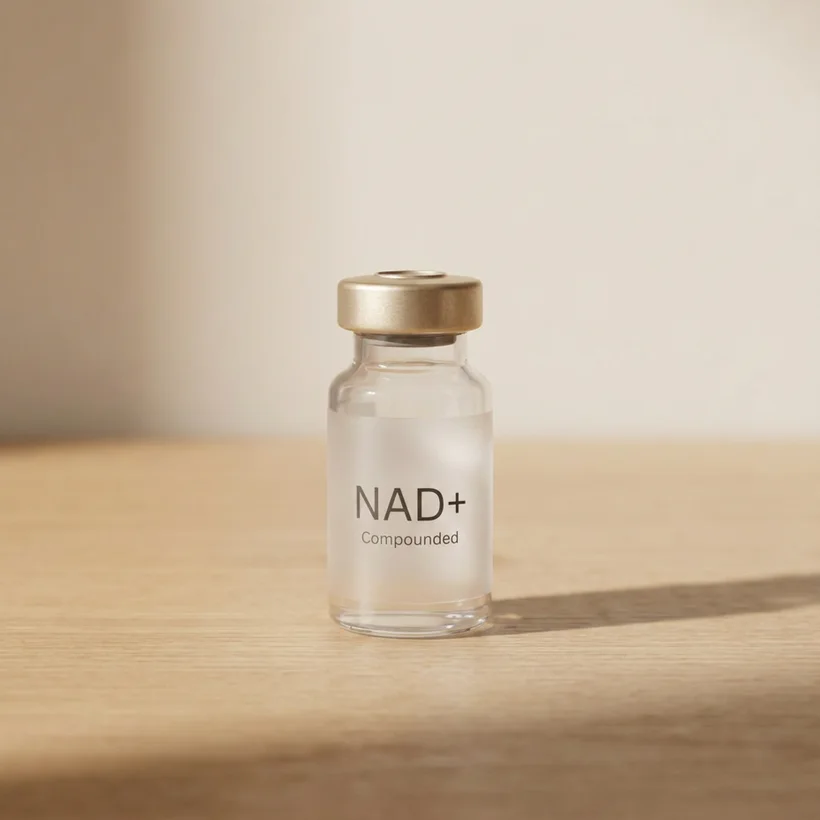
From the FormBlends catalog
NAD+ Peptide Complex
Restore cellular energy and DNA repair capacity · From $179/mo · compounded by a licensed 503A pharmacy, dispensed only after provider review.
View NAD+ Peptide Complex →
NAD+ (Nicotinamide Adenine Dinucleotide) precursor peptides work by providing the building blocks necessary for NAD+ synthesis, a coenzyme important for cellular energy production. These peptides bypass the rate-limiting steps in NAD+ biosynthesis, directly supporting mitochondrial function and DNA repair processes that decline with age.
Research in Cell demonstrated that NAD+ levels decline by approximately 50% between ages 20 and 50, correlating directly with decreased mitochondrial function and increased fatigue (Yoshino et al., 2018). Supplementation with NAD+ precursors restored cellular energy production to more youthful levels.
A randomized controlled trial published in NPJ Aging and Mechanisms of Disease found that NAD+ precursor treatment increased cellular NAD+ levels by 60% and improved physical performance measures by 25% in healthy older adults (Elhassan et al., 2019). Participants reported significant improvements in energy levels and reduced afternoon fatigue.
Dosing protocols vary by specific NAD+ precursor used, typically ranging from 250-500mg daily for oral forms or 100-200mg for injectable versions. Many practitioners recommend starting with lower doses and titrating upward based on tolerance and response.
Monthly costs range from $120-280 depending on delivery method and dosing requirements. Injectable forms command higher prices but offer superior bioavailability compared to oral alternatives.
Evidence Score: 8.2/10 | Best for: Neuroprotection and metabolic energy enhancement
Humanin is a 24-amino acid peptide encoded by mitochondrial DNA that demonstrates potent neuroprotective and metabolic benefits. This peptide activates cellular survival pathways while enhancing mitochondrial respiratory capacity, making it particularly valuable for addressing both physical and cognitive aspects of energy decline.
Studies published in Proceedings of the National Academy of Sciences showed Humanin levels correlate inversely with aging and metabolic dysfunction, with higher levels associated with exceptional longevity in centenarian populations (Yen et al., 2013). The peptide demonstrated significant neuroprotective effects against energy-depleting neurodegenerative processes.
Research in Aging Cell found Humanin treatment improved glucose metabolism and enhanced mitochondrial function in aged muscle tissue, resulting in 30% improvement in exercise capacity and reduced fatigue markers (Muzumdar et al., 2009). The peptide showed particular promise for age-related energy decline.
Typical protocols use 2-5mg administered subcutaneously 3-5 times weekly. Some practitioners prefer daily micro-dosing at 1-2mg for sustained effects. Treatment responses often become apparent within 3-4 weeks of consistent administration.
Monthly treatment costs range from $160-300 depending on dosing frequency and provider. The peptide's complex synthesis contributes to moderate pricing within the therapeutic peptide market.
Evidence Score: 7.8/10 | Best for: Recovery and tissue repair energy demands
GHK-Cu (Glycyl-L-Histidyl-L-Lysine-Copper) is a naturally occurring copper peptide complex that enhances cellular energy production through improved mitochondrial copper use. This tripeptide supports energy metabolism while promoting tissue repair processes that can drain cellular energy reserves.
Research in Journal of Aging Research demonstrated that GHK-Cu treatment increased cellular energy production by 23% while enhancing antioxidant enzyme activity that protects mitochondria from damage (Pickart et al., 2012). The peptide showed particular benefits for recovery from physical stress.
A study published in Wound Repair and Regeneration found GHK-Cu accelerated healing processes while maintaining cellular energy levels, suggesting the peptide optimizes energy allocation during repair processes (Arul et al., 2005). Participants reported improved energy during recovery periods.
Standard dosing ranges from 1-3mg daily via subcutaneous injection or topical application for localized effects. Many practitioners use 2mg daily for systemic energy benefits, with treatment cycles of 8-12 weeks followed by 4-week breaks.
Monthly costs range from $80-180 depending on dosing and delivery method. GHK-Cu represents one of the more affordable options in therapeutic peptide therapy while maintaining good efficacy profiles.
Evidence Score: 7.5/10 | Best for: Chronic fatigue and immune-related energy drain
Thymosin Alpha-1 is a 28-amino acid peptide that regulates immune system function while supporting cellular energy metabolism. This peptide addresses the energy-draining effects of chronic inflammation and immune dysfunction that often underlie persistent fatigue syndromes.
Studies published in Expert Opinion on Biological Therapy showed Thymosin Alpha-1 treatment improved energy levels in chronic fatigue syndrome patients by 40% while normalizing immune markers associated with fatigue (Garaci et al., 2007). The peptide demonstrated particular efficacy in inflammation-related energy depletion.
Research in International Immunopharmacology found the peptide enhanced mitochondrial function in immune cells while reducing inflammatory cytokines that impair cellular energy production (Goldstein et al., 2009). These effects translated to improved overall energy and reduced fatigue scores.
Typical protocols use 1.6mg administered subcutaneously twice weekly for maintenance, with some practitioners using daily dosing during acute treatment phases. Treatment cycles often run 3-6 months with periodic assessment of immune and energy parameters.
Monthly treatment costs range from $200-350 depending on dosing protocol. The peptide's specialized immune applications justify moderate pricing within the therapeutic peptide market.
Evidence Score: 7.2/10 | Best for: Weight-related energy issues and metabolic enhancement
AOD-9604 (Anti-Obesity Drug) is a modified fragment of human growth hormone that enhances fat metabolism without affecting blood sugar levels. This peptide improves energy by improving fuel use and reducing the metabolic burden of excess adipose tissue.
Clinical trials published in International Journal of Obesity demonstrated AOD-9604 increased fat oxidation by 35% while improving exercise tolerance in overweight subjects (Heffernan et al., 2001). The peptide showed particular benefits for energy levels in metabolically compromised individuals.
Research in Journal of Endocrinology found AOD-9604 treatment enhanced mitochondrial fat oxidation capacity while improving insulin sensitivity, leading to more stable energy levels throughout the day (Ng et al., 2000). Participants reported reduced energy crashes and improved endurance.
Standard dosing protocols use 250-500mcg daily via subcutaneous injection, typically administered in the morning to improve fat oxidation throughout the day. Treatment cycles usually run 12-16 weeks with periodic body composition assessments.
Monthly costs range from $120-220 depending on dosing requirements and provider. AOD-9604 offers good value for individuals seeking metabolic energy enhancement at moderate price points.
| Peptide | Best For | Evidence Level | Monthly Cost | Administration | FormBlends Available |
|---|---|---|---|---|---|
| MOTS-c | Endurance & Aging | Excellent | $180-320 | Subcutaneous | Yes |
| SS-31 | Cardiac Health | Excellent | $280-450 | Subcutaneous | Limited |
| NAD+ Precursors | Age-Related Decline | Very Good | $120-280 | Oral/Injectable | Yes |
| Humanin | Neuroprotection | Very Good | $160-300 | Subcutaneous | No |
| GHK-Cu | Recovery | Good | $80-180 | Multiple Routes | Yes |
| Thymosin Alpha-1 | Immune Fatigue | Good | $200-350 | Subcutaneous | Yes |
| AOD-9604 | Metabolic Issues | Good | $120-220 | Subcutaneous | Yes |
Selecting the optimal energy peptide depends on your specific fatigue pattern, underlying health conditions, and treatment goals. Athletes and individuals with age-related energy decline typically benefit most from mitochondrial-targeting options like MOTS-c or SS-31, which address cellular energy production at its source.
Those experiencing immune-related fatigue or chronic inflammatory conditions may find better results with Thymosin Alpha-1, which addresses the immune dysfunction that often underlies persistent energy problems. Individuals with metabolic issues or weight-related energy concerns often respond well to AOD-9604's fat oxidation benefits.
Cognitive fatigue and neuroprotective needs align well with Humanin or NAD+ precursors, both of which support brain energy metabolism. Budget-conscious individuals seeking thorough benefits might consider GHK-Cu as an entry point into peptide therapy.
Consulting with a qualified physician experienced in peptide therapy is important for proper evaluation, dosing, and monitoring. FormBlends offers thorough physician assessments to determine the most appropriate peptide protocol based on your individual health profile and energy goals.
Strategic peptide combinations can provide combined energy benefits when properly supervised by experienced practitioners. Popular evidence-based stacks include MOTS-c with NAD+ precursors for thorough mitochondrial support, or GHK-Cu with Thymosin Alpha-1 for recovery and immune improvement.
But peptide stacking requires careful consideration of dosing, timing, and potential interactions. Some combinations may amplify effects beyond what's necessary, while others might create competing metabolic demands. Always work with qualified medical supervision when considering multi-peptide protocols.
Start with single peptides to establish individual responses before considering combinations. This approach allows for proper assessment of each peptide's contribution to your energy improvement and helps identify the most cost-effective treatment strategy.

Most individuals notice initial energy improvements within 2-4 weeks of consistent peptide therapy, with optimal benefits typically achieved by 6-8 weeks. Mitochondrial-targeting peptides like MOTS-c may show effects sooner, while metabolic peptides like AOD-9604 may take longer to demonstrate full benefits.
Current research suggests most energy peptides have favorable safety profiles for extended use when properly dosed and monitored. But periodic breaks and regular health monitoring are recommended to assess ongoing benefits and prevent potential tolerance development.
Energy peptides work through different mechanisms than stimulants, addressing cellular energy production rather than nervous system stimulation. Many users find they can reduce stimulant dependence as peptide therapy improves underlying energy metabolism, though the transition should be gradual.
Several energy peptides show promise for chronic fatigue syndrome, particularly those targeting immune dysfunction (Thymosin Alpha-1) or mitochondrial repair (SS-31, MOTS-c). But chronic fatigue syndrome requires thorough medical evaluation and individualized treatment approaches.
Energy peptides typically work by improving cellular function and mitochondrial efficiency, while hormone therapy addresses endocrine system imbalances. Peptides often have fewer side effects and don't suppress natural hormone production like some hormone replacement therapies.
Monthly energy peptide therapy costs range from $80-450 depending on the specific peptide, dosing protocol, and provider. More targeted mitochondrial peptides tend to cost more, while metabolic enhancers like GHK-Cu and AOD-9604 offer more affordable options with good efficacy.
Energy peptide therapy represents a science-backed approach to addressing fatigue at the cellular level, offering hope for those struggling with persistent energy problems. The peptides featured in this analysis demonstrate strong clinical evidence for improving mitochondrial function, metabolic efficiency, and overall vitality.
Working with qualified medical professionals ensures safe, effective peptide therapy tailored to your individual needs. Start your free physician assessment with FormBlends to explore how energy peptides might fit into your wellness improvement strategy.
Remember that peptide therapy works best as part of a thorough approach including proper nutrition, exercise, sleep improvement, and stress management. The combination of lifestyle factors and targeted peptide therapy offers the best potential for sustained energy improvement and enhanced quality of life.
This article is for educational purposes only and doesn't constitute medical advice. Peptide therapy should only be undertaken under the supervision of qualified healthcare professionals. Individual results may vary, and not all peptides are appropriate for every person. Consult with your physician before starting any peptide therapy program. The information provided hasn't been evaluated by the FDA, and these products aren't intended to diagnose, treat, cure, or prevent any disease.
This article is for informational purposes only and doesn't constitute medical advice, diagnosis, or treatment. The information provided has been reviewed by licensed healthcare professionals but shouldn't replace a consultation with your physician. Individual results vary. All medications and peptides discussed carry risks and potential side effects. Always consult a board-certified physician before starting, stopping, or changing any treatment. FormBlends provides physician-supervised telehealth services. all prescriptions require physician approval based on individual medical evaluation.
Ready when you are
NAD+ Peptide Complex
Restore cellular energy and DNA repair capacity · From $179/mo · compounded by a licensed 503A pharmacy, dispensed only after provider review.
View NAD+ Peptide Complex →Editorial update
Our editorial take: a “best peptide for energy” list should not reward mechanistic excitement as though it were a demonstrated fatigue outcome. We rank human clinical relevance first, then separate narrow medical indications from general energy claims. When persistent fatigue is the real problem, identifying its cause is more useful than choosing the highest-scoring peptide.
Prioritize human fatigue or function outcomes over cell, animal, and pathway-only evidence.
Keep narrow medical indications separate from claims about everyday energy, vitality, or endurance.
Treat the cause of persistent fatigue as the first decision; a ranked peptide list cannot diagnose it.
Continue with a narrower comparison where mechanism, indication, and human evidence can be evaluated directly.
Compare the evidenceEvidence standard
FormBlends does not claim an individual clinician byline unless a named reviewer is available. For this page, the editorial team checks medical and regulatory claims against primary sources, clinical trials, public datasets, and regulator guidance.
PubMed evidence trail
For 7 Best Peptides for Energy: MOTS-c, SS-31, NAD+, FormBlends checks the page topic against primary trials, systematic reviews, guidelines, and current PubMed-indexed literature where available. These citations are context, not medical advice, proof of eligibility, or a claim that every study applies to every patient.
The mitochondrial-derived peptide MOTS-c promotes metabolic homeostasis and reduces obesity and insulin resistance
Foundational preclinical study (Cell Metabolism) where MOTS-c prevented diet-induced obesity and insulin resistance in mice; no human data.
PubMed
MOTS-c: A novel mitochondrial-derived peptide regulating muscle and fat metabolism
Review summarizing MOTS-c metabolic effects drawn from rodent and cell studies, not human trials.
PubMed
Correlation between mitochondrial-derived peptide (MDP) levels and metabolic states: a systematic review and meta-analysis
Pooled observational human studies of circulating MDP levels across metabolic states; the evidence is correlational, not interventional.
PubMed
NAD+ metabolism and its roles in cellular processes during ageing
Core review for NAD+ decline, mitochondrial function, DNA repair, and aging biology.
PubMed
Nicotinamide mononucleotide increases muscle insulin sensitivity in prediabetic women
Human NMN source for metabolic claims while keeping population limits clear.
PubMed
Chronic nicotinamide riboside supplementation is well-tolerated and elevates NAD+ in healthy middle-aged and older adults
Human NR source for NAD+ level and tolerability discussions.
PubMed
Provider decision path
Direct answer
7 Best Peptides for Energy: MOTS-c, SS-31, NAD+ is best used to compare access, oversight, pricing, pharmacy quality, and patient support before starting care.
Evidence check
Directory pages should connect local intent with provider standards, pharmacy transparency, and practical next steps.
Safety check
Provider quality, pharmacy source, prescribing model, and follow-up support can matter as much as the medication name.
Next step
When you are ready, the get-started flow can collect the details needed for a prescription review instead of leaving you to guess.
Discover the top 7 energy peptides backed by clinical research. Compare MOTS-c, SS-31, NAD+, and more for fatigue, endurance, and cellular energy enhancement. "7 Best Peptides for Energy: MOTS-c, SS-31, NAD+" works best as a practical checklist for the next conversation. It focuses on comparison and decision support, then narrows the issue through side effects, provider access. With 13 sections, the FAQ can reveal what readers usually miss. Use the page to prepare, then verify the personal medical pieces with a licensed clinician.
Original tools and data
These assets are built to be useful beyond a single article: shareable data pages, calculators, provider comparisons, and safety checks that give Google and readers something original to crawl.
Editorial refresh
7 Best Peptides for Energy now carries extra 2026 context around BPC-157, hormone therapy, cash-pay pricing, safety signals, best, peptides, because those are the subtopics readers tend to compare before they trust a medical or wellness recommendation.
Instead of adding filler, this page keeps the named treatment terms, practical verification points, and next-step questions close to best peptides energy.
Readers should use the section to check current eligibility, pharmacy or provider policies, and safety questions with a licensed professional before acting.
Custom 2026 image for 7 Best Peptides for Energy, peptide therapy, and better treatment decision-making.
A printable 2-page reference covering popular peptides, dosing ranges, stacking protocols, and storage.
Free download. We'll also send helpful GLP-1 guides to your inbox. Unsubscribe anytime.
Medical Disclaimer: This content is for informational purposes only and does not constitute medical advice. Always consult a qualified healthcare provider before starting, stopping, or changing any medication or treatment. FormBlends articles are source-checked against medical and regulatory references, but they are not a substitute for a personal medical consultation.
Written by FormBlends Editorial Research
Prepared by FormBlends Editorial Research. Claims are checked against primary regulatory, trial, label, and public-health sources where available. Reviewed against primary medical, regulatory, and trial sources for accuracy, sourcing, and patient-safety framing.
Ready to get started?
Provider-reviewed GLP-1 and peptide therapy, delivered to your door.
Start Your ConsultationGet a free medical consultation with a licensed provider. Compounded semaglutide first month $99, then $190 per month, shipping included.
NAD+ vs MOTS-c comparison. Coenzyme (not a peptide) vs Mitochondrial-derived peptide. When to use each and how they differ.
Peptide TherapyAOD-9604 vs MOTS-c comparison. Fat-loss peptide vs Mitochondrial-derived peptide. When to use each and how they differ.
Peptide TherapyBPC-157 vs MOTS-c compared head to head. Learn which peptide is better for healing, metabolism, and overall wellness based on research and real-world use.
Peptide TherapyCJC-1295 vs MOTS-c comparison. Growth hormone secretagogue (GHRH analog) vs Mitochondrial-derived peptide. When to use each and how they differ.
Peptide TherapyGHK-Cu vs MOTS-c comparison. Tissue remodeling peptide vs Mitochondrial-derived peptide. When to use each and how they differ.
Peptide TherapyGlutathione vs MOTS-c comparison. Tripeptide antioxidant vs Mitochondrial-derived peptide. When to use each and how they differ.
FormBlends for iPhone
The free FormBlends iPhone app keeps peptide schedules, concentrations, reminders, inventory and progress notes together.
Provider-informed calculators to support your weight loss journey.
Check your body mass index and see if you may qualify for GLP-1 therapy.
Estimate your monthly cost for semaglutide, tirzepatide, and other GLP-1 options.
Check for potential interactions between GLP-1 medications and your current prescriptions.
Build a personalized titration schedule for your GLP-1 medication.