Compounded medications are not FDA-approved Browse Products

Glutathione vs MOTS-c: Which Is Better?

Glutathione vs MOTS-c comparison. Tripeptide antioxidant vs Mitochondrial-derived peptide. When to use each and how they differ.

By FormBlends Editorial Research|Editorial research; no named clinician review documented||
In This Article

This article is part of our Peptide Therapy collection. See also: GLP-1 Guides | Provider Comparisons

Key Takeaway

Glutathione vs MOTS-c comparison. Tripeptide antioxidant vs Mitochondrial-derived peptide. When to use each and how they differ.

Quick Answer: Glutathione vs MOTS-c compares a tripeptide antioxidant with a mitochondrial-derived peptide. Glutathione is used for antioxidant defense, detoxification. MOTS-c is used for metabolic improvement, exercise enhancement. These compounds serve different purposes and your choice depends on your primary health goal. They can often be used together since they work through independent mechanisms .

Glutathione vs MOTS-c: category, role and mechanism

Glutathione vs MOTS-c
FactorGlutathioneMOTS-c
CategoryTripeptide antioxidantMitochondrial-derived peptide
Primary roleAntioxidant defense, detoxificationMetabolic improvement, exercise enhancement
MechanismFree radical neutralization, Phase II liver detoxAMPK activation, glucose metabolism regulation
Best forLiver support, skin brightening, immune defense, detoxInsulin sensitivity, exercise capacity, metabolic health
AdministrationIV push, SC injection, oral (liposomal)SC injection
EvidenceExtensive biochemical and clinicalEmerging preclinical + early clinical

Is glutathione the better fit for liver and skin goals?

  • Liver support is your primary goal
  • You want antioxidant defense, detoxification
  • Liver support, skin brightening, immune defense, detox are your focus areas

Is MOTS-c the better fit for insulin sensitivity?

  • Insulin sensitivity is your primary goal
  • You want metabolic improvement, exercise enhancement
  • Insulin sensitivity, exercise capacity, metabolic health are your focus areas

Is it safe to combine glutathione with MOTS-c?

Yes. Glutathione and MOTS-c work through independent mechanisms and don't interfere with each other. They can be combined when your health goals span both antioxidant defense and metabolic improvement. Your physician can design a protocol that incorporates both compounds with appropriate timing and dosing.
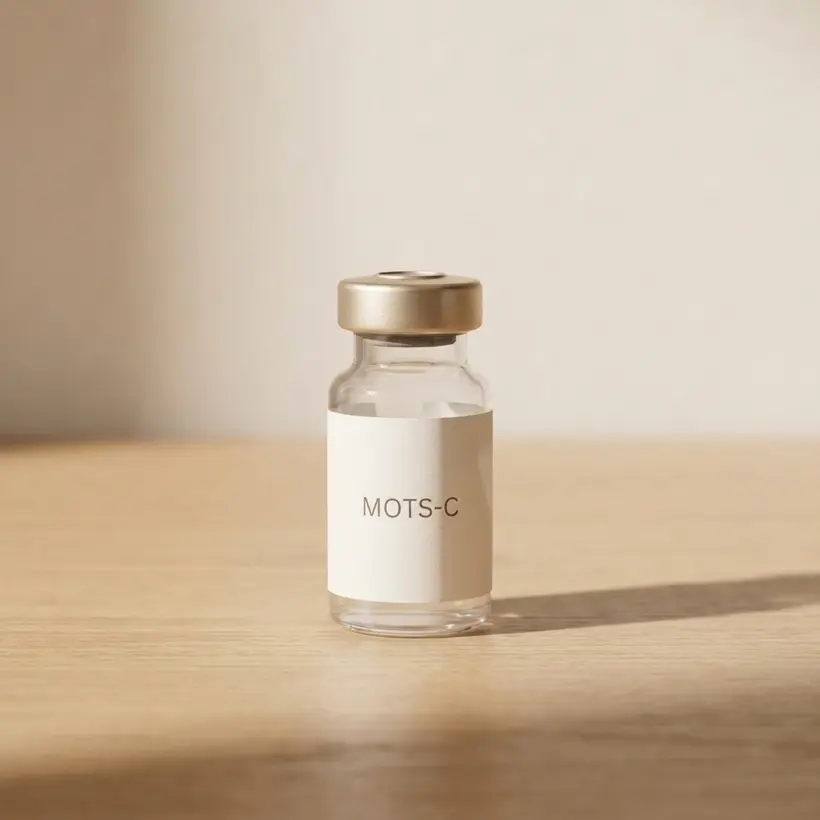
MOTS-c

From the FormBlends catalog

MOTS-c

Compounded product information and independent clinical review · From $249/mo · prescription review required; compounded medications are not FDA-approved.

View MOTS-c →

Glutathione vs MOTS-c: scientist in gloves examines row of vials in laboratory

Is glutathione or MOTS-c better supported by research?

Glutathione has extensive biochemical and clinical. MOTS-c has emerging preclinical + early clinical. The strength of evidence depends on the specific application you're considering.

Should you begin with glutathione or MOTS-c first?

Start with whichever addresses your most pressing health concern. If you need antioxidant defense, start with Glutathione. If you need metabolic improvement, start with MOTS-c. A physician can help you prioritize.

Get a physician's view on glutathione or MOTS-c

At FormBlends, our physicians evaluate your health goals and recommend the most effective approach, whether single compounds or strategic combinations.

Schedule Your Free Consultation

Disclaimer: This article is for informational purposes only and doesn't constitute medical advice. Always consult with a licensed healthcare provider. Individual results may vary.

MOTS-c

Ready when you are

MOTS-c

Compounded product information and independent clinical review · From $249/mo · prescription review required; compounded medications are not FDA-approved.

View MOTS-c →
Browse the full catalog →

Glutathione and MOTS-c clinical research volume

Trial registries and biomedical databases show the scale of published human studies and randomized trials for each compound.

Registered studiesWith posted resultsHuman studies on PubMedRandomized trials on PubMed
Glutathione2773361,4561887
MOTS-c501584

Counts from ClinicalTrials.gov and PubMed searches on each name, read 2026-11-16. PubMed tags are applied by indexers and some papers are reviews or case reports, so treat these as a measure of how much research exists, not of whether it works.

Sources: ClinicalTrials.gov data API (accessed 2026-11-16); PubMed, humans[mh] and randomized controlled trial[pt] filters (accessed 2026-11-16)

Adverse events reported for glutathione

Adverse reactions submitted to the FAERS database highlight common event categories filed under glutathione.

All reportsOff label useNauseaFatigueHepatic function abnormalHeadache
Glutathione2,215148 (6.7%)135 (6.1%)116 (5.2%)111 (5.0%)101 (4.6%)

openFDA data updated 2026-10-28. A report means someone linked a symptom to a drug, not that the drug caused it, and report counts cannot give a rate among all users. Terms are MedDRA preferred terms.

Source: openFDA drug adverse event endpoint (FAERS), patient.drug.openfda.generic_name and reactionmeddrapt.exact counts (accessed 2026-11-16)

Comparing glutathione and MOTS-c evidence

Clinical trial registries and adverse event databases provide recorded data on glutathione and MOTS-c.

How does the clinical research for glutathione compare to MOTS-c?

Glutathione has 277 clinical trials registered on ClinicalTrials.gov, with 33 posting results and 28 in phase 3. PubMed indexes 1,887 randomized controlled trials for it. In comparison, MOTS-c has 5 registered trials, zero phase 3 trials, zero posted results, and 4 randomized controlled trials on PubMed.

What adverse events have been reported for glutathione?

The FDA adverse event reporting system includes 2,215 reports naming glutathione. Off-label use is noted in 148 reports (6.7%). Reported terms include nausea in 135 reports (6.1%), fatigue in 116 reports (5.2%), abnormal hepatic function in 111 reports (5.0%), and headache in 101 reports (4.6%).

Sources: openFDA drug adverse event endpoint (FAERS), patient.drug.openfda.generic_name and reactionmeddrapt.exact counts (accessed 2026-11-16); ClinicalTrials.gov and PubMed counts (accessed 2026-11-16)

Glutathione vs MOTS-c: Which Is Better?
FormBlends guide cover for Glutathione vs MOTS-c: Which Is Better?.

Research Snapshot

Head-to-head comparison

Entities covered

Page type
Head-to-head comparison
Page metadata
Page updated
2026-04-01
Page metadata
FormBlends official source
Official source
Before you buy
Confirm current pricing, medication availability, pharmacy sourcing, and cancellation terms directly with the provider.
Check before ordering

Provider pricing, medication availability, pharmacy partners, insurance support, and cancellation rules can change quickly. This snapshot is designed to make verification easier, not to replace checking the official source before making a medical or purchase decision. Page updated: 2026-04-01.

Comparison decision path

Use this comparison to narrow the provider review question

Related treatment context

Glutathione vs MOTS-c: Which Is Better? should help you decide which option deserves a clinical review, not force a one-size answer.

Evidence check

A strong comparison should connect mechanism, evidence strength, safety, access, and cost instead of only naming a winner.

Safety check

The right choice can change based on history, medication interactions, side effects, budget, and availability.

Next step

Compare available products and select the relevant treatment page for its specific next step.

FormBlends Editorial Context

  • Confirm whether the page is discussing an FDA-approved use, a compounded option, or research-only context.
  • Ask a licensed clinician how the evidence applies to your health history, medications, labs, and side-effect risk.
  • Check the latest label, trial update, pharmacy policy, or state rule when the article touches medication access.

Original tools and data

Use FormBlends tools and data

Compare provider prices, explore local access and check calculations using FormBlends tools and data.

Download the Peptide Quick Reference Card

A printable 2-page reference covering popular peptides, dosing ranges, stacking protocols, and storage.

Free download. We'll also send helpful GLP-1 guides to your inbox. Unsubscribe anytime.

Medical Disclaimer: This content is for informational purposes only and does not constitute medical advice. Always consult a qualified healthcare provider before starting, stopping, or changing any medication or treatment. FormBlends articles are source-checked against medical and regulatory references, but they are not a substitute for a personal medical consultation.

Written by FormBlends Editorial Research

Prepared by FormBlends Editorial Research.

Ready to get started?

Provider-reviewed GLP-1 and peptide therapy, delivered to your door.

Start Your Consultation

Ready to Start Your Weight Loss Journey?

Get a free medical consultation with a licensed provider. Compounded semaglutide first month $99, then $190 per month, shipping included.

Next Best Reads

Peptide Therapy

NAD+ vs MOTS-c: Which Is Better?

NAD+ vs MOTS-c comparison. Coenzyme (not a peptide) vs Mitochondrial-derived peptide. When to use each and how they differ.

Peptide Therapy

Sermorelin vs MOTS-c: Which Is Better?

Sermorelin vs MOTS-c comparison. Growth hormone secretagogue (GHRH analog) vs Mitochondrial-derived peptide. When to use each and how they differ.

Peptide Therapy

Ipamorelin vs MOTS-c: Which Is Better?

Ipamorelin vs MOTS-c comparison. Growth hormone secretagogue (ghrelin mimetic) vs Mitochondrial-derived peptide. When to use each and how they differ.

Peptide Therapy

GHK-Cu vs MOTS-c: Which Is Better?

GHK-Cu vs MOTS-c comparison. Tissue remodeling peptide vs Mitochondrial-derived peptide. When to use each and how they differ.

Peptide Therapy

TB-500 vs MOTS-c: Which Is Better?

TB-500 vs MOTS-c comparison. Tissue repair peptide vs mitochondrial-derived metabolic peptide. Different mechanisms, different benefits.

Peptide Therapy

CJC-1295 vs MOTS-c: Which Is Better?

CJC-1295 vs MOTS-c comparison. Growth hormone secretagogue (GHRH analog) vs Mitochondrial-derived peptide. When to use each and how they differ.

Peptide Therapy

AOD-9604 vs MOTS-c: Which Is Better?

AOD-9604 vs MOTS-c comparison. Fat-loss peptide vs Mitochondrial-derived peptide. When to use each and how they differ.

Peptide Therapy

PT-141 vs MOTS-c: Which Is Better?

PT-141 vs MOTS-c comparison. Sexual function peptide vs Mitochondrial-derived peptide. When to use each and how they differ.

Peptide Therapy

Thymosin Alpha-1 vs MOTS-c: Which Is Better?

Thymosin Alpha-1 vs MOTS-c comparison. Immune-modulating peptide vs Mitochondrial-derived peptide. When to use each and how they differ.

FormBlends for iPhone

Reconstitution math, dose schedules and logs in one place

The free FormBlends iPhone app keeps peptide schedules, concentrations, reminders, inventory and progress notes together.

Free Tools

Calculators to support your weight loss journey.