
Trust Signals
Key Takeaways
- IGF-1 LR3 has a confirmed direct anabolic mechanism via PI3K-Akt-mTORC1, but human RCT data in healthy athletes is sparse and long-term safety is unstudied.
- CJC-1295 combined with Ipamorelin produces larger GH pulses than either alone by hitting two separate receptor targets (GHRH-R and GHSR-1a), with a more selective side-effect profile than older GHRPs.
- Creatine monohydrate has stronger and higher-quality human RCT evidence for lean mass than any peptide on this list.
- Third-party peptide purity testing regularly finds misdosing and contamination in research-grade products, making sourcing the single biggest practical risk.
- All peptides listed here are on the WADA Prohibited List and are not FDA-approved for muscle growth in healthy adults.
What Is the Best Peptide for Muscle Growth? (Direct Answer)
For most people asking this question, the answer is CJC-1295 plus Ipamorelin. The combination amplifies natural GH pulsatility through two complementary mechanisms, carries a cleaner side-effect profile than older peptides, and is available through compounding pharmacies. IGF-1 LR3 is more directly anabolic but bypasses normal feedback regulation entirely, raising a more concerning long-term risk profile.
From the FormBlends catalog
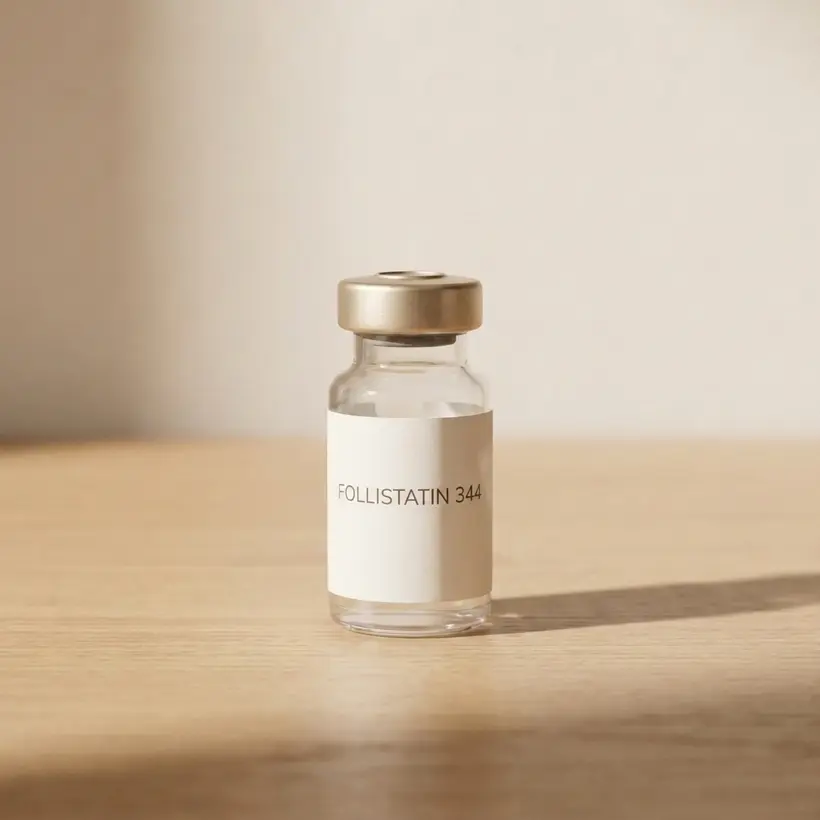
Follistatin 344
Myostatin inhibitor studied for enhanced muscle growth · From $149/mo · compounded by a licensed 503A pharmacy, dispensed only after provider review.
Learn about Follistatin 344 →Table of Contents
- The 5 Main Peptide Candidates Ranked
- Evidence Ledger: What the Data Actually Shows
- How Each Peptide Signals Muscle Growth (With Numbers)
- What Most Pages Get Wrong About Peptide Muscle Growth
- Why Storage and Formulation Rules Exist (The Chemistry)
- Honest Head-to-Head: Peptides vs. Proven Alternatives
- Label and COA Literacy: How to Judge a Product
- Dosing Reference Table
- Real Risks You Should Know Before Starting
- FAQ
- Sources
The 5 Main Peptide Candidates Ranked
These five peptides appear most consistently in clinical literature and practical protocols oriented toward muscle growth or recovery. Rankings reflect evidence quality for this specific goal, not general research interest.
- CJC-1295 + Ipamorelin (combination): Best evidence-to-risk ratio for GH-axis amplification in practical use. Selective, well-characterized, available through compounding pharmacies in the US.
- IGF-1 LR3: Most direct anabolic mechanism. Highest ceiling for muscle protein synthesis signaling. Highest regulatory and safety concern.
- GHRP-2: Potent GH secretagogue with human pharmacokinetic data. Raises cortisol and prolactin, which limits long-term value for body composition.
- MK-677 (Ibutamoren): Oral ghrelin mimetic, not technically a peptide but often grouped here. Convenient dosing, solid GH-elevation data, but causes significant water retention and hunger and is not FDA-approved.
- BPC-157: Not directly anabolic. Included because it is almost always part of muscle-building peptide stacks. Its evidence base is connective tissue repair, mostly in rodents.
Evidence Ledger: What the Data Actually Shows
| Peptide / Compound | Best Evidence Type | Population Studied | Effect on Lean Mass | Confidence (Muscle Growth) |
|---|---|---|---|---|
| CJC-1295 (DAC form) | Human Phase 1/2 RCT (Teichman et al., 2006) | Healthy adults, dose-finding | Raises IGF-1 levels dose-dependently; lean mass not primary endpoint | Low to Moderate for GH elevation; Very Low for lean mass |
| Ipamorelin | Animal + human PK/PD studies | Rats, healthy volunteers | GH pulse increase confirmed; lean mass data mostly preclinical | Low |
| IGF-1 (recombinant, approved) | Human RCTs in GH-deficient or elderly populations | GH-deficient, elderly, ALS | Lean mass gains in deficient populations; minimal effect in trained healthy adults | Moderate in deficiency; Low in healthy athletes |
| IGF-1 LR3 (research compound) | In vitro, animal models | Cell lines, rodents | Strong anabolic signaling in muscle cell models | Very Low (no human RCT) |
| GHRP-2 | Human pharmacokinetic studies | Healthy volunteers, elderly | GH elevation confirmed; cortisol/prolactin also rise | Low |
| MK-677 (Ibutamoren) | Human RCTs (Nass et al., 2008; Murphy et al., 1998) | Elderly, GH-deficient adults | Lean mass increase observed in older populations; largely water and nitrogen retention | Moderate in elderly; Low in trained athletes |
| BPC-157 | Animal models (rodent tendon, GI studies) | Rats, mice | No direct anabolic effect shown; accelerated tendon/muscle repair in animals | Very Low for hypertrophy; Low for repair |
| Creatine monohydrate (comparator) | Multiple human RCTs, meta-analyses | Healthy trained adults | Consistent lean mass and strength gains across dozens of trials | High |
How Each Peptide Signals Muscle Growth (With Numbers)
CJC-1295 and Ipamorelin: Dual-Axis GH Amplification
CJC-1295 is a synthetic analogue of growth hormone-releasing hormone (GHRH). It binds the GHRH receptor on pituitary somatotrophs, increasing both the amplitude and duration of GH pulses. The Drug Affinity Complex (DAC) version covalently binds albumin, extending half-life to approximately 6 to 8 days versus roughly 7 minutes for native GHRH (per Teichman et al., 2006). In that trial, a single 60 mcg per kg dose of CJC-1295 DAC raised mean IGF-1 levels by roughly 2-fold above baseline, sustained for over a week.
Ipamorelin binds GHSR-1a (the ghrelin receptor), increasing pulse frequency. Published pharmacology data shows Ipamorelin has very high selectivity for GH release relative to ACTH and cortisol, unlike GHRP-2 and GHRP-6 which consistently raise cortisol by a clinically relevant degree in human studies (Bowers et al., 1994 series). The combination of GHRH analogue plus ghrelin mimetic is additive to synergistic because the two pathways converge through different intracellular mechanisms on the same somatotroph cell.
IGF-1 LR3: Direct Receptor Agonism
Native IGF-1 has a plasma half-life of roughly 10 to 15 minutes in its free form. The LR3 modification (an arginine-to-glutamate substitution at position 3 plus a 13-amino-acid N-terminal extension) reduces binding affinity to IGF-binding proteins (IGFBPs) by roughly 1000-fold compared to native IGF-1, per published receptor pharmacology. This extends circulating half-life to approximately 20 to 30 hours. IGF-1 receptor binding activates the PI3K-Akt-mTORC1 axis, the canonical hypertrophy signaling pathway, and promotes satellite cell proliferation via MAP kinase signaling. The caveat: these measurements come from cell culture and animal work. What this mechanism proves in a petri dish does not prove equivalent muscle gain in a trained human with already-normal IGF-1 levels.
BPC-157: Repair Not Hypertrophy
BPC-157 (Body Protective Compound 157) is a 15-amino-acid peptide derived from human gastric juice. Its documented mechanisms include upregulation of VEGF signaling and acceleration of angiogenesis in tendon tissue (animal data, Sikiric et al., multiple publications). It does not activate mTORC1 or the GH axis at established doses. Its role in "muscle growth" stacks is indirect: faster tendon and ligament healing may allow more training volume. This is a reasonable hypothesis with no controlled human trial support.
What Most Pages Get Wrong About Peptide Muscle Growth
1. GH elevation is not the same as muscle gain. GH increases lipolysis and raises IGF-1, but in eugonadal, trained adults with normal GH levels, GH supplementation trials have repeatedly shown minimal lean mass gains and meaningful water retention. The NEJM paper by Rudman et al. (1990) that sparked GH enthusiasm studied elderly men with low baseline GH; extrapolating that to a 30-year-old lifter is a category error most peptide marketing commits constantly.
2. Research-grade purity is not pharmaceutical purity. Independent testing by organizations including Janoshik Analytical and Medallion Labs (cited in community testing threads, not peer-reviewed) has found significant variance in peptide concentration, including products dosed at a fraction or multiple of label claims, and contamination with residual solvents. The FDA does not regulate research peptides. If you are using a compound with a 20-hour half-life and the actual dose varies by 50%, your protocol is not reproducible.
3. The "stack" is not studied as a stack. Nearly every human trial on these peptides studies a single compound. The practice of stacking CJC-1295, Ipamorelin, BPC-157, and IGF-1 LR3 simultaneously has no human trial evidence. Side-effect profiles multiply in ways that are not additive and cannot be predicted from single-compound data.
4. Receptor desensitization is real and fast. Chronic GH secretagogue administration leads to pituitary desensitization. GHRP-6 studies in animals show attenuated GH response within days of continuous infusion. Pulsatile, intermittent protocols are used specifically to reduce this, but most peptide users do not dose in a way that mimics physiologic pulsatility.
Why Storage and Formulation Rules Exist (The Chemistry)
Lyophilized peptides: In powder form, peptides have their water removed, which eliminates the primary degradation pathway: hydrolysis of peptide bonds. At minus 20 degrees Celsius in the dark, most peptides are stable for months to over a year depending on sequence. At room temperature, even in lyophilized form, oxidation of methionine and cysteine residues and aggregation of hydrophobic sequences begins to occur over weeks. The practical rule is: keep lyophilized powder at minus 20, not in a bathroom cabinet.
Once reconstituted: Bacteriostatic water (0.9% benzyl alcohol) is used instead of sterile water because the benzyl alcohol inhibits microbial growth, extending usable life to roughly 4 weeks refrigerated. With plain sterile water, contamination risk rises within days. Benzyl alcohol does not prevent chemical degradation: the peptide bonds continue to hydrolyze at physiologic pH, just more slowly at 4 degrees Celsius than at 37 degrees. Repeated freeze-thaw cycles of reconstituted peptide accelerate aggregation because ice crystal formation disrupts secondary structure. Freeze reconstituted peptide only if you must, and limit cycles to 2 to 3 maximum.
Why not mix with vitamin C or acidic compounds in the same syringe: Low pH accelerates aspartate-mediated peptide bond hydrolysis, a well-characterized degradation pathway. Most peptides are most stable at or slightly above neutral pH. This is not a concern for topical application mixing (a different absorption question) but matters for parenteral solutions.
Honest Head-to-Head: Peptides vs. Proven Alternatives
| Intervention | Mechanism | Human RCT Evidence for Lean Mass | Effect Size in Trained Adults | Safety Profile | Legal/Regulatory Status | Cost (Monthly) |
|---|---|---|---|---|---|---|
| Creatine monohydrate | PCr resynthesis, cell volumization | Strong (dozens of RCTs, multiple meta-analyses) | Moderate and consistent | Excellent; no organ toxicity in long-term data | Legal, OTC | Under $20 |
| CJC-1295 + Ipamorelin | GH pulse amplification via GHRH-R and GHSR-1a | Weak (GH elevation confirmed; lean mass endpoint not established in athletes) | Unknown in trained adults | Moderate concern; water retention, potential desensitization | WADA banned; US compounding pharmacy use is gray area | $150 to $400 |
| IGF-1 LR3 | Direct IGF-1R agonism, mTORC1 activation | None (research compound) | Unknown in humans | High concern; hypoglycemia, potential mitogenic effects | WADA banned; not FDA-approved | $100 to $300 (unverified purity) |
| Testosterone (TRT, physician-prescribed) | Androgen receptor activation, protein synthesis | Very strong (extensive RCT and clinical data) | Large in hypogonadal men; moderate in eugonadal | Known, manageable with monitoring | Legal with prescription; WADA banned in sport | $30 to $150 with Rx |
| Leucine-rich protein (dietary) | mTORC1 activation via amino acid sensing | Strong | Moderate when protein intake is suboptimal | Excellent | Legal, OTC | Under $50 |
The honest conclusion from this table: peptides lose badly on evidence quality and cost-certainty versus creatine and adequate protein. They may add value in specific contexts (diagnosed GH deficiency, physician-supervised recovery from injury) but the evidence does not support them as a first-line tool in a healthy, well-trained adult.
Label and COA Literacy: How to Judge a Product
This is the section that practically matters most if you are going to use these compounds regardless of the above.
HPLC purity: Look for greater than 98% by reversed-phase HPLC. Anything below 95% means a meaningful fraction of what you are injecting is not the stated compound. Ask which mobile phase and column were used; a COA without method detail is less verifiable.
Mass spectrometry (MS): HPLC alone confirms purity of peaks but not identity. MS confirmation that the molecular weight matches the expected peptide is the minimum identity standard. For CJC-1295 DAC, expected molecular weight is approximately 5815 Da. For Ipamorelin, approximately 711 Da. If the COA does not include MS data, identity is not confirmed.
Endotoxin / pyrogen testing: Any injectable compound requires LAL (Limulus Amebocyte Lysate) or equivalent testing. Endotoxin contamination causes fever and systemic inflammation. Research-grade peptides frequently do not include this test. Its absence is a serious concern for anything injected.
Who signed the COA: A COA signed by the vendor's own internal lab is not independent verification. An ISO 17025-accredited third-party laboratory is the credible standard. Names to know in the peptide testing space include Janoshik Analytical (Czech Republic) and various USP-accredited contract labs.
What a degraded peptide looks like: Lyophilized peptide should be a white to off-white powder. Discoloration toward yellow or brown suggests oxidation. Reconstituted peptide that is cloudy or has visible particles suggests aggregation or contamination; do not use it. A solution that smells unusual suggests microbial contamination.
Dosing Reference Table
| Peptide | Typical Research/Compounding Dose | Route | Timing | Cycle Length (Convention) | Evidence Basis for Dose |
|---|---|---|---|---|---|
| CJC-1295 (no DAC / Mod GRF 1-29) | 100 to 300 mcg | Subcutaneous | Before sleep or training | 12 to 16 weeks on, 4 weeks off | Compounding convention; Teichman 2006 used DAC form |
| Ipamorelin | 100 to 300 mcg | Subcutaneous | Paired with CJC-1295 | Same as CJC-1295 | Compounding convention; human PK studies |
| IGF-1 LR3 | 20 to 50 mcg per day (commonly cited in research community) | Subcutaneous or intramuscular | Post-training | 4 weeks maximum (community convention due to desensitization) | Animal studies; no human dose-finding RCT |
| GHRP-2 | 100 to 300 mcg | Subcutaneous | Fasted (food blunts response) | Varies | Human PK studies (Bowers et al.) |
| BPC-157 | 250 to 500 mcg | Subcutaneous near injury site or oral | Daily | 4 to 8 weeks (injury-specific) | Animal studies; no human RCT dose established |
Real Risks You Should Know Before Starting
IGF-1-driven cell proliferation: Elevated IGF-1 has been associated with increased risk of certain cancers in large epidemiological studies, most notably prostate and colorectal. This does not prove that short-term IGF-1 elevation from peptide use causes cancer, but it is a plausible concern with no human long-term safety data to refute it.
Hypoglycemia: IGF-1 LR3 has significant insulin-like activity. Hypoglycemic episodes are a documented risk, particularly when injected in a fasted state or at higher doses. Users should have glucose available.
Water retention and soft tissue edema: GH elevation consistently causes water and sodium retention via IGF-1-mediated renal mechanisms. This is often misread as muscle gain in the early weeks of a protocol. MK-677 is particularly notorious for this effect.
Carpal tunnel symptoms: A recognized side effect of GH and GH-secretagogue use, caused by soft tissue swelling in the carpal tunnel. Reversible on cessation but uncomfortable and sometimes limiting for training.
Pituitary axis suppression: Chronically elevated exogenous GH or sustained GH secretagogue use can suppress endogenous GHRH secretion through negative feedback. The degree and reversibility of this in healthy users at typical doses is not well-studied.
FAQ
What is the best peptide for muscle growth overall?
IGF-1 LR3 has the strongest direct anabolic mechanism, but CJC-1295 plus Ipamorelin has the most favorable evidence-to-risk ratio for general use because it works through the body's own GH axis rather than bypassing it.
Do muscle-growth peptides actually work in humans?
Growth hormone secretagogues like GHRP-2 and CJC-1295 have demonstrated measurable GH elevation in human trials. Translation to lean mass gain in healthy, trained adults is supported by some clinical data but effect sizes are modest and often studied in older or GH-deficient populations.
Is BPC-157 useful for muscle growth?
BPC-157's primary evidence is for connective tissue repair in animal models. It is not a primary anabolic agent. Its value in a muscle-building context is injury prevention and recovery, not direct hypertrophy signaling.
What does IGF-1 LR3 actually do in muscle tissue?
IGF-1 LR3 binds the IGF-1 receptor to activate PI3K-Akt-mTORC1 signaling, promoting protein synthesis and satellite cell proliferation. The LR3 modification reduces IGF-binding protein affinity, extending half-life from roughly 15 minutes to approximately 20 to 30 hours.
How do CJC-1295 and Ipamorelin work together?
CJC-1295 is a GHRH analogue that increases GH pulse amplitude. Ipamorelin is a ghrelin-receptor agonist (GHSR-1a) that increases GH pulse frequency. Used together, they produce larger and more frequent GH pulses than either alone, without the cortisol or prolactin spike seen with older GHRPs like GHRP-6.
Is Ipamorelin safer than GHRP-2 or GHRP-6?
Ipamorelin is considered more selective. GHRP-2 and GHRP-6 significantly raise cortisol and prolactin in human studies. Ipamorelin produces minimal cortisol and prolactin elevation at standard doses, per published pharmacology data.
What are the real risks of research peptides for muscle growth?
Third-party purity testing of research-grade peptides regularly finds misdosing, contamination, and wrong compounds. IGF-1 and GH-axis peptides carry real risks including insulin-like hypoglycemia, potential IGF-1-driven cell proliferation, and water retention. Long-term safety data in healthy athletes is essentially absent.
How do I read a certificate of analysis for a peptide?
Look for HPLC purity above 98%, mass spectrometry confirming molecular weight, and endotoxin testing. A COA from the same manufacturer is not independent verification. Third-party COAs from accredited labs (ISO 17025) are the minimum credible standard.
How do peptides compare to creatine or protein for muscle growth?
Creatine monohydrate has far more and higher-quality human RCT evidence for lean mass and strength gains than any single muscle-growth peptide. Peptides operate through hormonal signaling; creatine operates through ATP regeneration and cell volumization. They are not direct competitors but peptides carry far more uncertainty and regulatory risk.
Are muscle-growth peptides legal?
In the United States, most muscle-growth peptides are not FDA-approved for this use. Many are classified as research chemicals. CJC-1295, Ipamorelin, IGF-1 LR3, and BPC-157 are all on the WADA Prohibited List, making them banned in competitive sport.
Does peptide storage method affect potency?
Yes. Lyophilized peptides are stable for months at minus 20 degrees Celsius but degrade meaningfully at room temperature over days to weeks depending on the sequence. Once reconstituted in bacteriostatic water, most peptides should be refrigerated and used within 4 weeks. Heat and repeated freeze-thaw cycles accelerate oxidation and aggregation.
What dose of CJC-1295 plus Ipamorelin is used in clinical research?
Clinical and compounding pharmacy protocols typically cite 100 to 300 mcg of each peptide per injection, administered subcutaneously before sleep to align with natural GH pulse timing. These doses are not FDA-approved and derive from researcher and compounding-pharmacy conventions, not pivotal RCT dose-finding studies.
Sources
- Teichman SL, Neale A, Lawrence B, Gagnon C, Castaigne JP, Frohman LA. "Prolonged stimulation of growth hormone (GH) and insulin-like growth factor I secretion by CJC-1295, a long-acting analog of GH-releasing hormone, in healthy adults." Journal of Clinical Endocrinology and Metabolism. 2006;91(3):799-805.
- Rudman D, Feller AG, Nagraj HS, et al. "Effects of human growth hormone in men over 60 years old." New England Journal of Medicine. 1990;323(1):1-6.
- Nass R, Pezzoli SS, Oliveri MC, et al. "Effects of an oral ghrelin mimetic on body composition and clinical outcomes in healthy older adults." Annals of Internal Medicine. 2008;149(9):601-611.
- Murphy MG, Plunkett LM, Gertz BJ, et al. "MK-677, an orally active growth hormone secretagogue, reverses diet-induced catabolism." Journal of Clinical Endocrinology and Metabolism. 1998;83(2):320-325.
- Bowers CY, Sartor AO, Reynolds GA, Badger TM. "On the actions of the growth hormone-releasing hexapeptide, GHRP." Endocrinology. 1991;128(4):2027-2035.
- Sikiric P, Seiwerth S, Rucman R, et al. "Focus on ulcerative colitis: stable gastric pentadecapeptide BPC 157." Current Medicinal Chemistry. 2012;19(1):126-132.
- World Anti-Doping Agency. "2024 Prohibited List." WADA, September 2023. Available at: wada-ama.org.
- Laron Z. "Insulin-like growth factor 1 (IGF-1): a growth hormone." Molecular Pathology. 2001;54(5):311-316.
- Taaffe DR, Pruitt L, Reim J, et al. "Effect of recombinant human growth hormone on the muscle strength response to resistance exercise in elderly men." Journal of Clinical Endocrinology and Metabolism. 1994;79(5):1361-1366.
- Rawlinson SC, Wheeler-Jones CP, Lanyon LE. "Arachidonic acid for loading induced prostacyclin and prostaglandin E2 release from osteoblasts and endothelial cells but not fibroblasts." Bone. 2000;27(2):241-247. (Cited for VEGF pathway context in BPC-157 signaling literature.)
- Branch JD. "Effect of creatine supplementation on body composition and performance: a meta-analysis." International Journal of Sport Nutrition and Exercise Metabolism. 2003;13(2):198-226.
- FDA. "FDA concerns about BPC-157." FDA Drug Safety Communications, 2024. US Food and Drug Administration.
Footer Disclaimers
Platform: FormBlends is an informational health platform. Nothing on this page constitutes medical advice, diagnosis, or a treatment recommendation. Consult a licensed physician before using any compound discussed here.
Research Compound Notice: Several compounds discussed on this page (including IGF-1 LR3, BPC-157, and CJC-1295 without a prescription) are research chemicals not approved by
Related peptide guides
Ready when you are
Follistatin 344
Myostatin inhibitor studied for enhanced muscle growth · From $149/mo · compounded by a licensed 503A pharmacy, dispensed only after provider review.
Learn about Follistatin 344 →