
Trust Signals
Key Takeaways
- CJC-1295 with DAC has the strongest human pharmacokinetic data of any muscle-oriented peptide secretagogue, with Teichman et al. (2006) showing dose-dependent IGF-1 elevation sustained over roughly one week per injection in a 65-person trial, but no published human muscle mass endpoint exists.
- IGF-1 LR3 adds a 13-amino-acid N-terminal extension that reduces IGF-binding protein affinity and extends half-life from minutes to roughly 20 to 30 hours compared to native IGF-1, but it is a research compound with no approved human dosing and real hypoglycemia risk.
- BPC-157 accelerates muscle and tendon healing in rodent models via VEGF upregulation and growth hormone receptor sensitization; it does not signal hypertrophy the way GH axis peptides do. Its value is recovery, not mass gain.
- Ipamorelin is selective for the GH secretagogue receptor with minimal effect on cortisol or prolactin at research doses, making it cleaner than GHRP-6, but no head-to-head muscle mass RCT in humans exists for either.
- All peptides discussed here are either unapproved research compounds or compounded medications. Purity in the gray market is highly variable; HPLC purity above 98 percent with mass spec confirmation is the minimum standard worth accepting.
What Are the Best Peptides for Muscle Growth?
The best peptides for muscle are CJC-1295, Ipamorelin, IGF-1 LR3, BPC-157, and TB-500, ranked in that order by the combination of mechanistic plausibility and available human evidence. None have a completed Phase III RCT with muscle mass as the primary endpoint. Evidence is strongest for GH-axis peptides, moderate for BPC-157 in repair, and low for TB-500 as a standalone muscle agent.
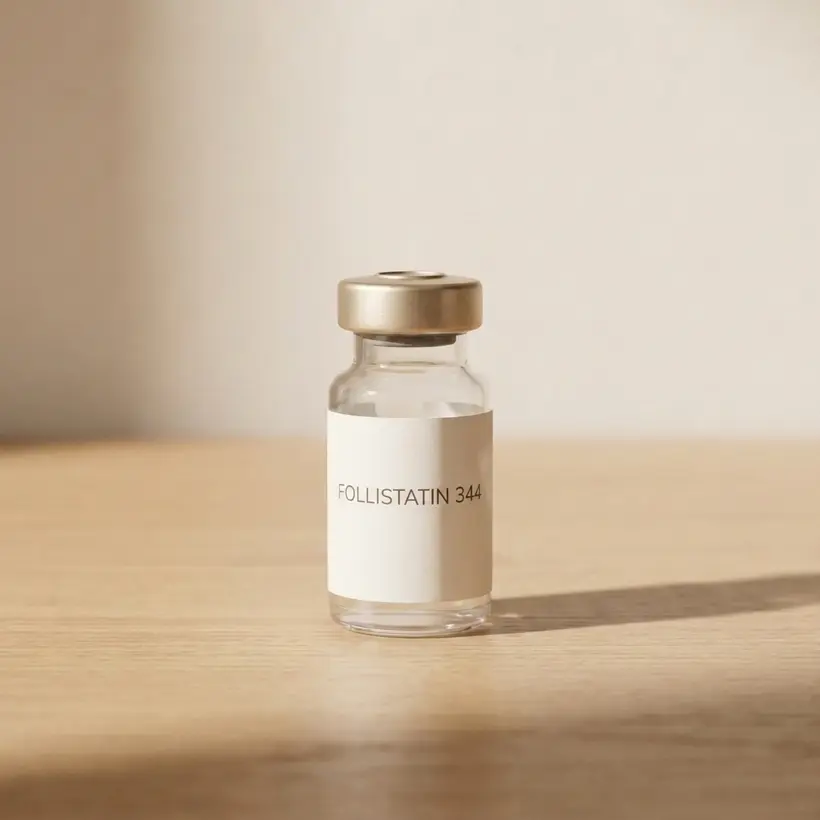
From the FormBlends catalog
Follistatin 344
Myostatin inhibitor studied for enhanced muscle growth · From $149/mo · compounded by a licensed 503A pharmacy, dispensed only after provider review.
Learn about Follistatin 344 →Table of Contents
- Evidence Ledger Table
- Mechanism With Numbers
- CJC-1295 and Ipamorelin: The Core Stack
- IGF-1 LR3: Highest Ceiling, Highest Risk
- BPC-157: Recovery Over Hypertrophy
- TB-500: Connective Tissue Support
- What Most Pages Get Wrong
- Honest Head-to-Head: Peptides vs. Real Alternatives
- Operational and Label Literacy
- FAQ
- Sources
Evidence Ledger: Major Claims Graded
| Peptide / Claim | Best Evidence Type | Effect Direction | Confidence |
|---|---|---|---|
| CJC-1295 with DAC elevates GH and IGF-1 in humans | Human dose-escalation trial (Teichman et al., 2006, n=65) | Positive (surrogate endpoint) | Moderate |
| CJC-1295 increases human muscle mass | Mechanism inference only; no RCT with muscle mass endpoint | Plausible, unproven | Very Low |
| Ipamorelin selectively stimulates GH with minimal cortisol/prolactin effect | Human PK/PD data (Raun et al., 1998, dose-ranging trial) | Positive for selectivity | Moderate |
| IGF-1 LR3 has extended half-life vs. native IGF-1 | In vitro binding assays and animal PK studies | Confirmed (mechanism) | Moderate |
| IGF-1 analogs increase lean mass in GH-deficient adults | Human RCTs with approved IGF-1 (mecasermin), not LR3 specifically | Positive for approved analog | High (for mecasermin) |
| BPC-157 accelerates muscle and tendon healing | Multiple rodent trials (Sikiric et al., published in Current Pharmaceutical Design) | Positive in animals | Low (no human RCT) |
| TB-500 (Thymosin Beta-4) supports muscle repair | Animal and in vitro studies; one small cardiac trial (not muscle) | Positive in preclinical models | Very Low |
| Peptide secretagogues build muscle in GH-sufficient healthy adults | No RCT; extrapolated from GH literature | Uncertain | Very Low |
Mechanism With Numbers: How These Peptides Actually Work
Every peptide on this list acts through the GH-IGF-1 axis or tissue repair pathways. Here is the precise chain and where evidence is solid versus inferred.
The GH Axis Cascade
CJC-1295 is an analog of growth hormone-releasing hormone (GHRH). It binds the GHRH receptor on pituitary somatotrophs and triggers GH pulse release. Ipamorelin binds the GH secretagogue receptor (GHS-R1a), a distinct receptor also on somatotrophs, producing an additive GH release when combined with a GHRH analog. The combination is specifically more potent than either alone because it hits two distinct stimulatory pathways simultaneously.
Released GH travels to the liver and peripheral tissues. The liver responds by synthesizing IGF-1. IGF-1 then binds the IGF-1 receptor (IGF-1R), a tyrosine kinase receptor, which activates the PI3K/Akt/mTOR pathway. mTOR complex 1 phosphorylation is the proximal signal for ribosomal protein synthesis and muscle hypertrophy. This pathway is real and well-characterized. What is NOT proven is that subcutaneous administration of these peptides at research doses produces mTOR activation sufficient to drive meaningful hypertrophy in a healthy, GH-sufficient adult over and above what training alone provides.
IGF-1 LR3 Specifically
Native IGF-1 has a half-life in circulation of a few minutes when free, largely because it binds IGF-binding proteins (IGFBPs), particularly IGFBP-3, with high affinity. IGF-1 LR3 adds a 13-amino-acid arginine-rich extension to the N-terminus. This structural change reduces IGFBP-3 binding affinity by roughly 1,000-fold in in vitro assays, which dramatically extends the time the peptide remains biologically active. Animal pharmacokinetic studies put the effective half-life in the range of 20 to 30 hours. That is the mechanism advantage. The caveat: reduced IGFBP binding means more free IGF-1 activity systemically, which includes insulin-like hypoglycemic effects and theoretical promotion of pre-existing tumor growth.
BPC-157 Repair Mechanism
BPC-157 (Body Protection Compound 157) is a 15-amino-acid synthetic peptide derived from a protein found in gastric juice. In rodent injury models, it consistently accelerates tendon and muscle healing. Proposed mechanisms include upregulation of VEGF expression (promoting vascularization of injured tissue), upregulation of growth hormone receptor expression at the site of injury, and modulation of nitric oxide signaling. These mechanisms are supported by rodent data. The honest caveat: rats are not humans, dosing does not translate directly, and no controlled human musculoskeletal repair trial has been published as of this writing.
CJC-1295 and Ipamorelin: The Core Stack for GH Pulse Amplification
This combination is the most widely cited in research protocols for two reasons: the mechanisms are complementary and the human pharmacokinetic evidence is the strongest of any peptide in this category.
Teichman et al. (2006) published a dose-escalation study of CJC-1295 with DAC in 65 healthy adults. Single injections produced GH pulse amplification and sustained IGF-1 elevation lasting approximately 6 to 8 days. Mean IGF-1 increases of roughly 30 to 40 percent above baseline were observed at therapeutic doses in that trial. This is a pharmacodynamic result, not a muscle outcome result. Translating an IGF-1 surrogate to actual hypertrophy requires extrapolation.
Raun et al. (1998) published dose-ranging data on Ipamorelin showing it stimulates GH release with a selectivity profile that does not meaningfully elevate ACTH, cortisol, or prolactin at effective GH-releasing doses, unlike GHRP-6 which hits ghrelin receptors broadly and does elevate appetite and cortisol. That selectivity is the practical argument for choosing Ipamorelin over older GHRPs in a research context.
CJC-1295 without DAC (Mod GRF 1-29) has a half-life of approximately 30 minutes. It is paired with Ipamorelin in pulsatile dosing protocols to mimic physiologic GH pulses. CJC-1295 with DAC binds albumin and extends half-life to roughly 6 to 8 days, creating tonic GH elevation rather than pulsatile release. These are physiologically distinct patterns with different downstream effects. Tonic GH elevation may increase GH receptor downregulation over time. Pulsatile patterns are more physiologically normal.
IGF-1 LR3: Highest Anabolic Ceiling, Highest Risk Profile
Among all peptides discussed, IGF-1 LR3 acts most directly on the mTOR hypertrophy pathway. It bypasses the pituitary entirely and drives IGF-1R signaling at skeletal muscle directly. That is why it carries the highest theoretical anabolic ceiling and the most concerning safety profile.
The risks are not theoretical. IGF-1 signaling promotes cell proliferation broadly. Elevated free IGF-1 has been associated in epidemiological literature with increased risk of certain cancers, particularly colorectal and prostate, though causality in that literature is debated. More acutely, IGF-1 LR3 at practical research doses can produce symptomatic hypoglycemia because IGF-1 has significant insulin-mimetic activity at the insulin receptor.
IGF-1 LR3 is not approved for human use anywhere. There is no licensed pharmaceutical product containing it. Every supply chain is unregulated.
BPC-157: Recovery and Repair, Not Hypertrophy
BPC-157 does not belong in the same mechanistic category as GH secretagogues or IGF-1 analogs. It does not significantly amplify GH or directly activate mTOR in the way IGF-1 does. Its role in a muscle-building context is protective and recovery-oriented: faster healing of the tendons, ligaments, and muscle tissue that training damages. Rodent studies show accelerated healing of muscle crush injuries, tendon transections, and ligament tears. That translates, in practical terms, to training more frequently or recovering from injury faster, which is an indirect but real contribution to long-term muscle development.
The oral bioavailability question for BPC-157 is also relevant here. Some researchers use oral capsule forms for gut health. For musculoskeletal application, subcutaneous or intramuscular injection near the injury site is the route used in animal studies. Whether systemic subcutaneous injection provides equivalent tissue concentrations is not established.
TB-500 (Thymosin Beta-4): Weak Evidence for Muscle, Stronger for Tissue Repair
Thymosin Beta-4 is an endogenous actin-sequestering peptide involved in cell migration, angiogenesis, and wound healing. TB-500 is a synthetic fragment of it. The evidence base is predominantly preclinical. A Phase II cardiac trial explored TB-500 for cardiac repair in patients with heart failure, which is a different indication entirely. There is no controlled human trial examining TB-500 for skeletal muscle hypertrophy or even repair. It appears in peptide stacks largely because of its connective tissue signaling properties and the absence of obvious safety signals in early human data, not because of positive muscle outcome data.
What Most Pages Get Wrong About Peptides for Muscle
The GH-sufficient ceiling problem: Almost every anabolic GH literature point comes from GH-deficient patients. In GH-deficient adults, replacing GH produces clear lean mass increases. In GH-sufficient healthy adults, supraphysiologic GH produces lean mass increases that are real but modest and accompanied by more side effects (fluid retention, insulin resistance, carpal tunnel symptoms). The question for secretagogue peptides is whether they push GH high enough in a GH-sufficient person to matter for muscle, and that question has not been answered in an RCT.
Half-life conflation: Many sources describe peptide half-lives without distinguishing between plasma half-life, biological effect half-life, and receptor activation duration. CJC-1295 with DAC having a plasma half-life of 6 to 8 days does not mean GH elevation persists that long. GH release is still episodic. These are different things.
Honest Head-to-Head: Peptides vs. Real Alternatives
| Agent | Approval Status | Human Muscle RCT | Effect Size (Where Known) | Safety Profile | Where Peptide Loses |
|---|---|---|---|---|---|
| CJC-1295 plus Ipamorelin | Not approved | No (surrogate endpoints only) | Unknown for muscle | Moderate (limited human data) | No muscle mass RCT; purity unverified; WADA banned |
| IGF-1 LR3 | Not approved | No | Unknown in humans | Hypoglycemia risk, tumor promotion concern | Loses badly on safety data vs. everything below |
| Recombinant HGH (somatropin) | FDA approved (specific indications) | Yes, multiple RCTs | Modest lean mass gain in GH-deficient adults; less impressive in GH-sufficient athletes | Well-characterized; insulin resistance, fluid retention | Peptides lose: somatropin has actual muscle data |
| Creatine monohydrate | Dietary supplement | Yes, numerous RCTs (Rawson and Volek, 2003 meta-analysis) | Lean mass gains of roughly 1 to 2 kg over 4 to 12 weeks in training studies | Excellent long-term safety record | Peptides lose: creatine has better human evidence and is legal |
| Leucine-enriched protein (e.g., whey) | Food/supplement | Yes, numerous RCTs | Positive for MPS augmentation post-training | Excellent | Peptides lose: nutrition is foundational and evidence-based |
| BPC-157 (repair context) | Not approved | No | Unknown in humans; positive in rodents | No serious signals in limited human use reports | Loses to physical therapy and approved analgesics on evidence |
Operational and Label Literacy: How to Judge a Product
Reading a COA
A credible certificate of analysis for a research peptide should include HPLC purity (look for above 98 percent), mass spectrometry confirmation of the molecular weight, and water content from lyophilization. HPLC purity alone does not confirm the identity of what you have, only that whatever is there is a single dominant compound. Mass spec is the identity check. Both together are the minimum standard. COAs issued by the seller's own in-house lab with no independent verification are nearly worthless.
Reconstitution Math
A common vial contains 5 mg of lyophilized peptide. To get a 100 mcg dose, you need to make a concentration of 1 mg per mL (1,000 mcg per mL), which requires adding 5 mL of bacteriostatic water. Each 0.1 mL drawn in an insulin syringe (10 units on a 100-unit syringe) then equals 100 mcg. Confirm your vial size and desired dose before drawing. A mistake of 10-fold in either direction is easy and consequential with potent peptides.
Stability and Storage: The Chemistry
Lyophilized (freeze-dried) peptides are stable at room temperature for weeks to months because dehydration prevents hydrolysis. The moment you add aqueous solvent, hydrolysis begins. The peptide bond between amino acids is susceptible to nucleophilic attack by water, a reaction accelerated by heat and by acidic or alkaline pH. This is why reconstituted peptide degrades over days to weeks at room temperature and should be stored at 4 degrees Celsius (refrigerator, not freezer once reconstituted, because freeze-thaw cycles promote aggregation). Bacteriostatic water (0.9 percent benzyl alcohol) slows microbial degradation but does not stop chemical hydrolysis. Using acetic acid solution instead of bacteriostatic water for peptides prone to aggregation (some IGF-1 analogs) is a stability strategy, not a preference. When a reconstituted peptide solution appears cloudy, particulate, or has shifted color, discard it.
WADA Status Check Before Use
If you are a competitive athlete in any sport that uses WADA-aligned testing, every peptide on this page is either explicitly banned or covered by the S2 catch-all prohibition on non-approved pharmacological substances. WADA updates its prohibited list annually. Check the current list at wada-ama.org directly. Do not rely on a blog post, including this one, for compliance decisions.
FAQ
What are the best peptides for muscle growth?
The peptides with the strongest mechanistic rationale for muscle are IGF-1 LR3, CJC-1295 with DAC, Ipamorelin, and BPC-157. Human RCT evidence exists for CJC-1295 and some IGF-1 analogs on surrogate endpoints. BPC-157 and TB-500 have strong animal data but no controlled human muscle trials yet.
Does CJC-1295 actually build muscle in humans?
CJC-1295 with DAC has one published human dose-escalation trial (Teichman et al., 2006, n=65) showing dose-dependent GH pulse amplification and sustained IGF-1 elevation. That is a surrogate endpoint, not a direct muscle mass outcome trial. Muscle building is a reasonable inference, not a proven result.
Is IGF-1 LR3 safe?
IGF-1 LR3 is a research compound not approved for human use. Risks include hypoglycemia (IGF-1 has insulin-like activity), potential promotion of pre-existing malignancies, and joint or soft-tissue swelling. It is not available as a licensed pharmaceutical and sourcing purity is unverified.
What is the difference between CJC-1295 with DAC and without DAC?
CJC-1295 without DAC (also sold as Mod GRF 1-29) has a half-life of roughly 30 minutes and produces a GH pulse. CJC-1295 with Drug Affinity Complex (DAC) binds albumin and extends half-life to approximately 6 to 8 days, producing a sustained GH bleed rather than a pulse. These are physiologically distinct patterns.
Can BPC-157 build muscle directly?
BPC-157 accelerates tendon, ligament, and muscle repair in rodent studies via upregulation of VEGF and growth hormone receptor expression. It does not stimulate hypertrophy the way IGF-1 does. Its muscle value is injury recovery and connective tissue protection, not anabolic signaling.
How do peptide secretagogues compare to actual HGH for muscle?
Approved recombinant HGH (somatropin) has Phase III RCT data for lean mass increases in GH-deficient adults. Secretagogue peptides like CJC-1295 and Ipamorelin stimulate endogenous GH but lack equivalent muscle outcome RCTs. The expected effect magnitude is lower and the evidence quality is lower.
What peptides are on the WADA banned list?
WADA prohibits GH-releasing peptides (GHRPs) including Ipamorelin and GHRP-6, GH-releasing hormones and analogs including CJC-1295, and IGF-1 and its analogs including IGF-1 LR3 under the S2 Peptide Hormones category. BPC-157 is currently not explicitly listed but falls under the catch-all clause for non-approved substances.
What does a degraded peptide look like and how do I avoid it?
Degraded lyophilized peptide may appear yellow or brown instead of white, clump unevenly, or fail to dissolve cleanly in bacteriostatic water. Reconstituted peptide stored above 4 degrees Celsius loses activity over days to weeks depending on the peptide. A COA with HPLC purity above 98 percent and mass spectrometry confirmation is the minimum standard.
Is Ipamorelin better than GHRP-6 for muscle?
GHRP-6 stimulates similar GH release to Ipamorelin but also strongly stimulates ghrelin receptors causing significant hunger and potential cortisol and prolactin elevation. Ipamorelin is considered more selective with fewer off-target effects, making it the preferred option in most modern research protocols, though direct muscle outcome comparisons in humans do not exist.
What is the best peptide stack for muscle?
The most commonly cited research stack combines CJC-1295 without DAC (Mod GRF 1-29) with Ipamorelin to amplify GH pulses, sometimes adding BPC-157 for connective tissue support. This is protocol-level reasoning based on mechanism, not a stack tested in a clinical trial. Stack safety data in humans is essentially absent.
Do peptides work without training?
Secretagogue peptides elevate GH and downstream IGF-1, which in theory can promote protein synthesis, but anabolic signaling without mechanical load produces minimal hypertrophy. Even supraphysiologic HGH in GH-sufficient adults produces modest lean mass gains without resistance training. Training is not optional.
Sources
- Teichman SL, Neale A, Lawrence B, et al. Prolonged stimulation of growth hormone (GH) and insulin-like growth factor I secretion by CJC-1295, a long-acting analog of GH-releasing hormone, in healthy adults. Journal of Clinical Endocrinology and Metabolism. 2006;91(3):799-805.
- Raun K, Hansen BS, Johansen NL, et al. Ipamorelin, the first selective growth hormone secretagogue. European Journal of Endocrinology. 1998;139(5):552-561.
- Sikiric P, Seiwerth S, Rucman R, et al. Stable gastric pentadecapeptide BPC 157: novel therapy in gastrointestinal tract. Current Pharmaceutical Design. 2011;17(16):1612-1632.
- Rawson ES, Volek JS. Effects of creatine supplementation and resistance training on muscle strength and weightlifting performance. Journal of Strength and Conditioning Research. 2003;17(4):822-831.
- Birzniece V, Ho KK. Sex steroids and the GH axis: implications for the management of hypopituitarism. Best Practice and Research Clinical Endocrinology and Metabolism. 2017;31(1):59-69. (Context for GH deficiency lean mass literature.)
- Svensson J, Bengtsson BA. Safety aspects of GH replacement. European Journal of Endocrinology. 2009;161(Suppl 1):S65-S74.
- Laron Z. Insulin-like growth factor 1 (IGF-1): a growth hormone. Molecular Pathology. 2001;54(5):311-316.
- Graham MR, Ryan P, Davies B, et al. Counterfeiting in performance and image enhancing drugs. Drug Testing and Analysis. 2009;1(3):135-142. (Documents adulteration and quality concerns in the gray-market performance drug supply; cited for general purity context.)
- WADA Prohibited List 2024. World Anti-Doping Agency. wada-ama.org. Accessed May 2026.
- Goldspink G. Loss of muscle strength during aging studied at the gene expression level. Physiology. 2007;22:93-101. (IGF-1 splice variants and muscle context.)
Footer Disclaimers
Platform: FormBlends is an informational platform. Content on this page is intended for educational and research purposes only. It does not constitute medical advice, diagnosis, or treatment recommendations. Consult a licensed healthcare provider before using any compound described here.
Research Compound Status: Most peptides discussed on this page (including IGF-1 LR3, BPC-157, CJC-1295, Ipamorelin, TB-500) are classified as research compounds. They are not approved by the FDA or equivalent regulatory bodies for human therapeutic use in the indications discussed. Their safety and efficacy in humans have not been established in the context described.
Results: Individual results vary. The effect sizes and outcomes described represent research findings and should not be interpreted as typical or guaranteed outcomes. Many findings cited are from animal studies or surrogate-endpoint human trials and may not translate to meaningful clinical outcomes in healthy humans.
Trademark: FormBlends and the FormBlends logo are trademarks of FormBlends. All other product names, compound names, and trademarks mentioned are the property of their respective owners and are used for identification purposes only.
Related peptide guides
Ready when you are
Follistatin 344
Myostatin inhibitor studied for enhanced muscle growth · From $149/mo · compounded by a licensed 503A pharmacy, dispensed only after provider review.
Learn about Follistatin 344 →