All GLP-1 medications from licensed 503A compounding pharmacies Browse Products

Cerebrolysin Dosage Guide: Complete Guide

Cerebrolysin dosage guide for cognitive health, stroke recovery, and neuroprotection. Evidence-based protocols and administration schedules.

By Emily Rodriguez, RDN, CSSD|Source reviewed by FormBlends Medical Team||

Source Reviewed

Written by Emily Rodriguez, RDN, CSSD · Checked against primary sources by FormBlends Medical Team

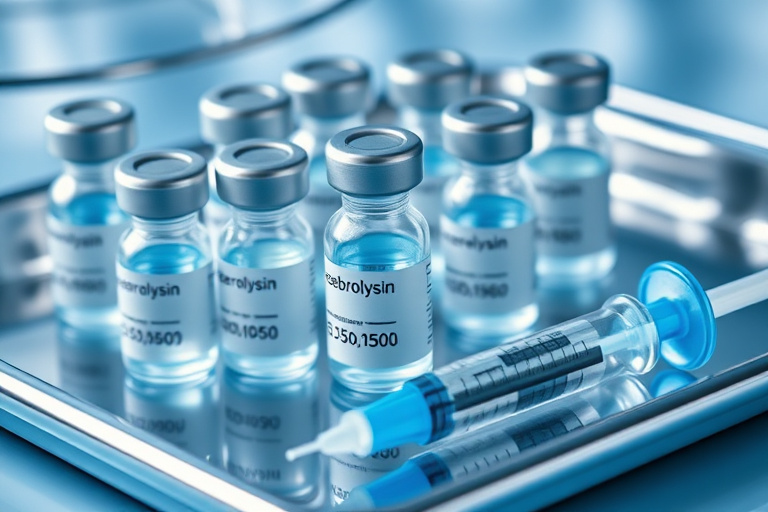
Cerebrolysin Dosage Guide: Complete Guide custom 2026 header image for Peptide Therapy
Custom header image for Cerebrolysin Dosage Guide: Complete Guide, Peptide Therapy, and better treatment decision-making.
In This Article

This article is part of our Peptide Therapy collection. See also: GLP-1 Guides | Provider Comparisons

Search and AI answer brief

Practical answer: Cerebrolysin Dosage Guide: Complete Guide

Cerebrolysin dosage guide for cognitive health, stroke recovery, and neuroprotection. Evidence-based protocols and administration schedules.

Short answer

Cerebrolysin dosage guide for cognitive health, stroke recovery, and neuroprotection. Evidence-based protocols and administration schedules.

Search intent

This page answers a specific Peptide Therapy question rather than a generic overview.

What to verify

peptide evidence quality, safety and contraindications

How to use it

Use this information to prepare sharper questions for a licensed provider.

Key Takeaway

See your personalized options in about 2 minutes. Free and private. See my options →

Cerebrolysin dosage guide for cognitive health, stroke recovery, and neuroprotection. Evidence-based protocols and administration schedules.

Quick Answer: Cerebrolysin dosage guide depends on the clinical indication. For cognitive enhancement and age-related decline, typical doses range from 5-10 mL given intramuscularly (IM) daily for 10-20 consecutive days. For stroke recovery and TBI, clinical trials have used 30-50 mL intravenously (IV) daily for 10-21 days. Lower IM doses of 2-5 mL are sometimes used for maintenance or milder cognitive concerns. All dosing should be determined by a physician based on your specific condition .

Dosing by Indication

Cerebrolysin Dosing Protocols
IndicationRouteDaily DoseDurationCycles
Cognitive improvementIM5 mL10 days1-2 per year
Age-related cognitive declineIM5-10 mL20 days2-4 per year
Alzheimer's diseaseIV infusion30 mL20 daysRepeated courses
Acute strokeIV infusion30-50 mL10-21 daysStarted within 72 hours
Traumatic brain injuryIV infusion30-50 mL10-21 daysAs directed
Maintenance/preventionIM2-5 mL10 daysEvery 3-6 months

Route of Administration

Intramuscular (IM)

Used for doses up to 10 mL. This is the most common route for outpatient cognitive health protocols. The injection goes into a large muscle (gluteal or deltoid). Doses above 5 mL are typically split between two injection sites to improve comfort.
Popular Therapeutic Peptides by Use Case Clinical Interest Score 0 22 44 66 88 88 82 78 75 70 BPC-157 TB-500 Sermorelin Ipamorelin GHK-Cu Based on published peptide research literature
Popular Therapeutic Peptides by Use Case. Based on published peptide research literature.
View data table
Bar chart showing popular therapeutic peptides by use case: BPC-157 (88), TB-500 (82), Sermorelin (78), Ipamorelin (75), GHK-Cu (70)
CategoryClinical Interest ScoreDetail
BPC-15788Tissue repair and gut healing
TB-50082Injury recovery
Sermorelin78Growth hormone support
Ipamorelin75Anti-aging and recovery
GHK-Cu70Skin and tissue repair
Illustration for Cerebrolysin Dosage Guide: Complete Guide

Intravenous (IV) Infusion

Required for doses above 10 mL. The higher doses used in stroke and TBI protocols (30-50 mL) must be diluted in 100-250 mL of normal saline and infused over 15-60 minutes. IV administration is performed in a clinical setting .

Subcutaneous

Not a standard route for Cerebrolysin. The volume of typical doses makes subcutaneous injection impractical. IM is preferred for self-administered protocols.

Treatment Course Structure

Cerebrolysin is given in treatment courses rather than continuously:

Check your GLP-1 eligibility

Use our free BMI Calculator to see if you may qualify for provider-reviewed GLP-1 therapy.

Try the BMI Calculator →
  • Active phase: Daily injections for 10-20 consecutive days
  • Rest phase: No injections for 1-3 months
  • Repeat: Another course if benefit was observed

This cycling approach is based on how neurotrophic factors work. They trigger lasting changes in neuronal structure and function that persist beyond the active treatment period. Continuous dosing isn't necessary and may not add additional benefit.

Frequently Asked Questions

What dose should beginners start with?

For cognitive improvement in otherwise healthy adults, most physicians start with 5 mL IM daily for 10 days. This lower dose and shorter course allows you to assess tolerance before committing to larger protocols.

Can I inject Cerebrolysin at home?

IM injections of 5 mL or less can be self-administered at home with proper instruction. Higher doses requiring IV infusion must be done in a clinical setting. Your physician will determine which approach is appropriate for your protocol.

How many treatment courses are typical?

For cognitive health maintenance, 2-4 courses per year is common. For neurodegenerative conditions, courses may be repeated more frequently based on clinical response. Each course should be followed by a rest period to allow neurotrophic effects to consolidate.

Get Your Cerebrolysin Protocol

At FormBlends, our physicians design Cerebrolysin dosing protocols tailored to your cognitive health goals and medical history.

Schedule Your Free Consultation

Disclaimer: This article is for informational purposes only and doesn't constitute medical advice. Always consult with a licensed healthcare provider. Individual results may vary.

See your options in about 2 minutes

Take the free quiz and see what fits you. Quick, private, and no commitment to continue.

See my options →

Evidence standard

How this page was source-checked

Editorial policy

FormBlends does not claim an individual clinician byline unless a named reviewer is available. For this page, the editorial team checks medical and regulatory claims against primary sources, clinical trials, public datasets, and regulator guidance.

PubMed evidence trail

Research sources used to frame this page

For Cerebrolysin Dosage Guide: Complete Guide, FormBlends checks the page topic against primary trials, systematic reviews, guidelines, and current PubMed-indexed literature where available. These citations are context, not medical advice, proof of eligibility, or a claim that every study applies to every patient.

Peptide decision path

Move from research interest to supervised review

Direct answer

Cerebrolysin Dosage Guide: Complete Guide should be evaluated through research status, legal access, source quality, safety context, and clinician oversight rather than a shortcut purchase decision.

Evidence check

Useful peptide pages should separate human data, animal research, mechanistic evidence, and marketing claims.

Safety check

Peptides can vary by legal status, compounding pathway, purity testing, patient history, and interaction risk.

Next step

If the topic still fits your goal after reading, the get-started flow should collect the clinical context needed for provider review.

FormBlends Editorial Context

Reviewed May 14, 2026

Cerebrolysin dosage guide for cognitive health, stroke recovery, and neuroprotection. Evidence-based protocols and administration schedules. "Cerebrolysin Dosage Guide: Complete Guide" is meant to make a complicated topic easier to discuss, not to flatten it into a one-size answer. FormBlends frames it around dosing literacy and clinician follow-up, with extra attention to dosing. Because this article has 5 major sections, scan the headings first and then use the FAQ or summary sections to pressure-test the answer. If the next step affects treatment or sourcing, use the article to prepare questions for a licensed clinician.

  • Confirm whether the page is discussing an FDA-approved use, a compounded option, or research-only context.
  • Ask a licensed clinician how the evidence applies to your health history, medications, labs, and side-effect risk.
  • Check the latest label, trial update, pharmacy policy, or state rule when the article touches medication access.

Original tools and data

Use the FormBlends research stack

These assets are built to be useful beyond a single article: shareable data pages, calculators, provider comparisons, and safety checks that give Google and readers something original to crawl.

Editorial refresh

Practical 2026 note for Cerebrolysin Dosage Guide

This update makes Cerebrolysin Dosage Guide more specific by tying BPC-157, safety signals, cerebrolysin, dosage, complete to the page's original clinical, cost, access, or comparison angle.

The goal is to make the article more useful for people who already know the headline question and need page-level specifics, not another interchangeable peptide therapy summary.

For 2026 review, the content emphasizes current verification, treatment fit, and patient-safety questions that can be discussed with a qualified provider.

Cerebrolysin Dosage Guide custom 2026 image for peptide therapy on FormBlends

Custom 2026 image for Cerebrolysin Dosage Guide, peptide therapy, and better treatment decision-making.

Image description: Unique image for this page covering Cerebrolysin Dosage Guide, peptide therapy, safety, cost, provider selection, and patient decision-making.

Download the Peptide Quick Reference Card

A printable 2-page reference covering popular peptides, dosing ranges, stacking protocols, and storage.

Free download. We'll also send helpful GLP-1 guides to your inbox. Unsubscribe anytime.

Medical Disclaimer: This content is for informational purposes only and does not constitute medical advice. Always consult a qualified healthcare provider before starting, stopping, or changing any medication or treatment. FormBlends articles are source-checked against medical and regulatory references, but they are not a substitute for a personal medical consultation.

Written by Emily Rodriguez, RDN, CSSD

Registered Dietitian. This article was researched against primary regulatory, trial, prescribing, and manufacturer sources where available. Reviewed by FormBlends Medical Team for medical accuracy, sourcing, and patient-safety framing.

Ready to get started?

Provider-reviewed GLP-1 and peptide therapy, delivered to your door.

Start Your Consultation

Ready to Start Your Weight Loss Journey?

Get a free medical consultation with a licensed provider. Compounded GLP-1 medications starting at $99/month with free shipping.

Next Best Reads

Free Tools

Provider-informed calculators to support your weight loss journey.