Key Takeaway
Learn how to properly inject CJC-1295 with this step-by-step guide. Covers reconstitution calculator, injection technique, site rotation, and safety tips for subcutaneous peptide administration.
Quick Answer: CJC-1295 is administered via subcutaneous injection, typically into the abdominal area, thigh, or upper arm. The peptide must first be reconstituted from a lyophilized powder using bacteriostatic water. Proper technique, sterile handling, and site rotation are important for safety and effectiveness. Your prescribing physician or pharmacy will provide specific instructions for your protocol.
What Is CJC-1295?
CJC-1295 is a synthetic peptide that acts as a growth hormone-releasing hormone (GHRH) analog. It stimulates the pituitary gland to increase its natural production and release of growth hormone (GH). The peptide is available in two forms: CJC-1295 with DAC (Drug Affinity Complex), which has a longer half-life and is dosed less frequently, and CJC-1295 without DAC (Modified GRF 1-29), which requires more frequent administration.
Both forms are administered by subcutaneous injection, a straightforward technique that most patients can learn to perform safely at home after proper instruction from their healthcare provider.
What You Will Need
Before preparing your injection, gather the following supplies:

- CJC-1295 vial (lyophilized powder or pre-reconstituted, as dispensed by your pharmacy)
- Bacteriostatic water (for reconstitution, if your peptide hasn't been pre-mixed)
- Insulin syringes (typically 0.5 mL or 1.0 mL with a 29 to 31 gauge needle)
- Alcohol swabs (for cleaning vial stoppers and injection sites)
- Sharps container (for safe disposal of used needles)
All supplies should be obtained from your prescribing pharmacy or a reputable medical supply source. Never reuse needles or syringes.
Step 1[1]: Reconstitution
If your CJC-1295 arrives as a lyophilized (freeze-dried) powder, it must be reconstituted with bacteriostatic water before injection. Follow these steps carefully:
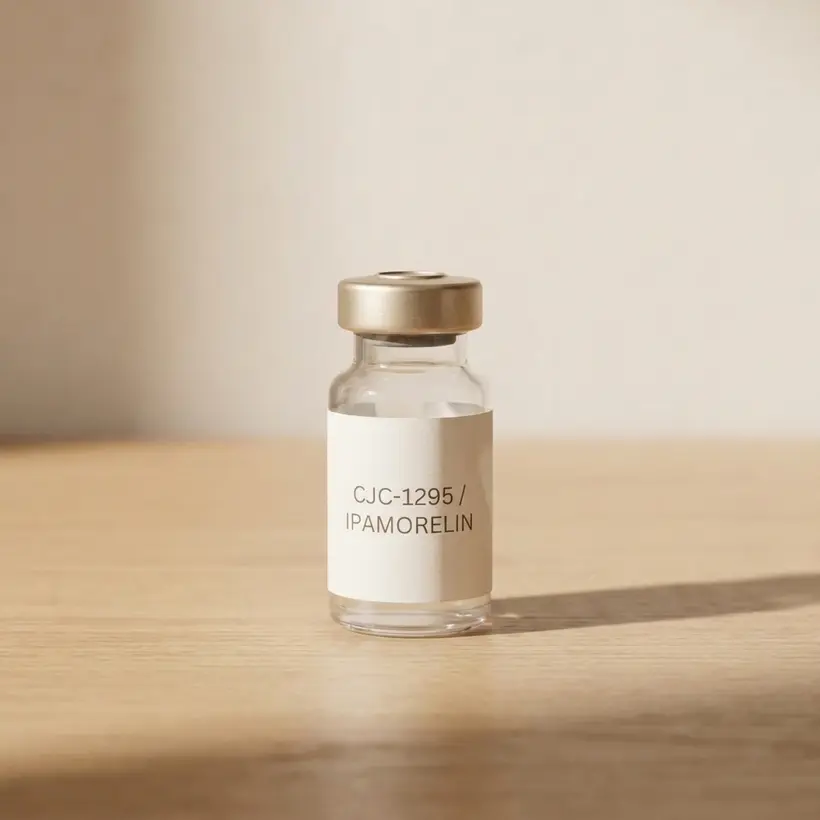
From the FormBlends catalog
CJC-1295 / Ipamorelin Blend
The gold standard growth hormone secretagogue stack · From $69/mo · compounded by a licensed 503A pharmacy, dispensed only after provider review.
Learn about CJC-1295 / Ipamorelin Blend →- Wash your hands thoroughly with soap and water. Dry with a clean towel.
- Clean the stoppers of both the CJC-1295 vial and the bacteriostatic water vial with separate alcohol swabs. Allow them to air dry.
- Draw bacteriostatic water into an insulin syringe. The amount you add determines the concentration of your solution. Your physician or pharmacy will specify the exact volume (commonly 1 mL or 2 mL per vial).
- Insert the needle into the CJC-1295 vial at an angle, with the tip aimed at the inside wall of the vial (not directly at the powder).
- Slowly depress the plunger to allow the water to run down the inside wall of the vial. Don't squirt water directly onto the powder, as this can damage the peptide.
- Gently swirl or roll the vial between your palms until the powder is fully dissolved. The solution should be clear. Don't shake the vial, as vigorous agitation can denature the peptide.
- Label the vial with the reconstitution date. Store it in the refrigerator at 2 to 8 degrees Celsius (36 to 46 degrees Fahrenheit).
Step 2: Calculating Your Dose
The dose you draw depends on the concentration of your reconstituted solution. Here is a simple calculation method:
If your vial contains 2,000 mcg (2 mg) of CJC-1295 and you added 2 mL of bacteriostatic water, the concentration is 1,000 mcg per mL (or 100 mcg per 0.1 mL, which equals 10 units on an insulin syringe).
For a 200 mcg dose at this concentration, you would draw 0.2 mL, which is 20 units on a standard 100-unit insulin syringe.
Your pharmacy or physician will provide a dosing chart specific to your vial size and reconstitution volume. Always double-check your math before drawing your dose.
Step 3: Drawing the Peptide
- Clean the vial stopper with a fresh alcohol swab.
- Using a new insulin syringe, pull back the plunger to draw in a volume of air equal to the amount of peptide you plan to withdraw.
- Insert the needle into the vial stopper and inject the air into the vial. This equalizes pressure and makes it easier to draw the solution.
- Invert the vial so the stopper faces downward.
- Pull the plunger back slowly to draw the prescribed dose into the syringe.
- Check for air bubbles. If bubbles are present, gently tap the syringe barrel with your finger to move them to the top, then push the plunger slightly to expel the air. Adjust the volume to your exact dose.
- Remove the needle from the vial and set the syringe down on a clean surface with the cap on, if needed, while you prepare your injection site.
Step 4: Preparing the Injection Site
CJC-1295 is administered subcutaneously, meaning the needle is inserted into the fatty tissue just beneath the skin. The most common injection sites include:
- Abdomen: The area around the navel, at least 2 inches away from the navel itself. This is the most popular site due to ease of access and consistent subcutaneous fat.
- Thigh: The front or outer aspect of the upper thigh.
- Upper arm: The back or outer area of the upper arm (this may require assistance).
Clean the chosen site with an alcohol swab using a circular motion, working outward from the center. Allow the area to air dry completely before injecting. Injecting into wet skin can cause stinging.
Step 5: Performing the Injection
- Pinch a fold of skin at the cleaned injection site between your thumb and forefinger. This lifts the subcutaneous tissue away from the underlying muscle.
- Insert the needle at a 45 to 90 degree angle, depending on the amount of subcutaneous fat at the site. For most people, a 90 degree angle works well with a short insulin needle. Leaner individuals may prefer 45 degrees to ensure the needle stays in subcutaneous tissue rather than reaching muscle.
- Depress the plunger slowly and steadily to inject the full dose. There's no need to aspirate (pull back the plunger to check for blood) with subcutaneous injections using short insulin needles.
- Hold the needle in place for 5 to 10 seconds after the plunger is fully depressed. This allows the peptide solution to disperse into the tissue and reduces leakage.
- Withdraw the needle smoothly at the same angle you inserted it.
- Release the skin fold.
- If a small drop of blood appears, apply gentle pressure with a clean cotton ball or gauze. Don't rub the injection site.
Step 6: Disposal and Storage
- Immediately dispose of the used syringe in a sharps container. Never recap a needle by pushing the cap toward the needle tip. If you must recap, use the one-handed scoop technique.
- Return the reconstituted vial to the refrigerator promptly.
- Record your injection in a log that includes the date, time, dose, and injection site. This helps with site rotation and gives your physician useful data during follow-up consultations.
Injection Site Rotation
Rotating your injection site is important for preventing lipodystrophy (changes in the fat tissue at the injection site), reducing discomfort, and ensuring consistent absorption. A simple rotation pattern might look like this:
- Day 1: Right side of abdomen
- Day 2: Left side of abdomen
- Day 3: Right thigh
- Day 4: Left thigh
Avoid injecting into the same spot repeatedly. Each injection should be at least 1 inch away from the previous site in the same area.
Tips for a Comfortable Injection
- Allow the vial to warm slightly. Injecting cold solution can cause more discomfort. Remove the vial from the refrigerator 5 to 10 minutes before your injection.
- Relax the injection area. Tense muscles can make injections more uncomfortable, even for subcutaneous shots.
- Use a new needle every time. Reused needles become dull and cause more pain and tissue damage.
- Insert the needle quickly and confidently. A hesitant, slow insertion tends to cause more discomfort than a swift one.
- Inject slowly. Rapid injection of the solution can cause local pressure and stinging.
- Ice the area beforehand if you're particularly sensitive. Applying an ice cube for 30 to 60 seconds can temporarily numb the skin.
Common Mistakes to Avoid
- Shaking the vial during reconstitution. This can denature the peptide and reduce its effectiveness.
- Using sterile water instead of bacteriostatic water for multi-dose vials. Bacteriostatic water contains a preservative (benzyl alcohol) that inhibits bacterial growth. Sterile water is only appropriate for single-use reconstitution.
- Injecting through clothing. Always inject into clean, bare skin.
- Storing reconstituted peptide at room temperature. Once mixed, CJC-1295 must be refrigerated and used within the timeframe specified by your pharmacy (typically 3 to 4 weeks).
- Injecting into bruised, scarred, or irritated skin. Choose a site with healthy, intact tissue.
- Forgetting to check for air bubbles. Air bubbles reduce the accuracy of your dose. While small air bubbles in a subcutaneous injection aren't dangerous, they do mean you're receiving less peptide than intended.
Safety Considerations
Proper injection technique is a critical component of safe peptide therapy. Contamination from unsterile handling is the most preventable risk associated with injectable peptides. Always wash your hands, use alcohol swabs, and never share needles or vials.
If you experience persistent redness, swelling, warmth, or discharge at an injection site, contact your physician immediately, as these may be signs of infection.
Your prescribing physician or pharmacy should provide hands-on or video instruction on injection technique before you begin self-administering. If you're unsure about any step, ask before proceeding.
How FormBlends Can Help
FormBlends provides everything you need to inject CJC-1295 safely and confidently. When you begin a peptide therapy program, your physician prescribes the specific formulation and dose, and your pharmacy ships your peptide along with all necessary supplies, including syringes, alcohol swabs, and bacteriostatic water.
Your care team provides clear reconstitution and injection instructions tailored to your specific vial size and protocol. If you have questions at any point during treatment, your FormBlends physician and support team are available to help.
Frequently Asked Questions
Does injecting CJC-1295 hurt?
Most patients describe the injection as a brief pinch. Insulin syringes use very fine needles (29 to 31 gauge) that are designed for comfort. With proper technique, discomfort is minimal.
Can I inject CJC-1295 intramuscularly instead of subcutaneously?
CJC-1295 is designed for subcutaneous administration. Intramuscular injection isn't part of standard protocols and may alter the absorption profile. Follow your physician's instructions for route of administration.
What if I see blood after the injection?
A small amount of blood at the injection site is normal and results from nicking a tiny capillary. Apply gentle pressure with a clean cotton ball. This doesn't affect the efficacy of the injection.
Can I travel with my CJC-1295?
Yes, but reconstituted CJC-1295 must be kept refrigerated. Use an insulated travel case with ice packs. Carry your prescription documentation when traveling, especially when flying. Syringes and injectable medications are permitted through airport security with proper documentation.
How long can I use a reconstituted vial?
Most compounding pharmacies recommend using a reconstituted vial within 3 to 4 weeks when stored properly in the refrigerator. Check with your pharmacy for their specific guidance, and discard any unused solution after the recommended period.
Medical References
- Wilding JPH, Batterham RL, Calanna S, et al. Once-Weekly Semaglutide in Adults with Overweight or Obesity. N Engl J Med. 2021;384(11):989-1002. [PubMed | ClinicalTrials.gov | DOI]
- Davies M, Færch L, Jeppesen OK, et al. Semaglutide 2.4 mg once a week in adults with overweight or obesity, and type 2 diabetes (STEP 2). Lancet. 2021;397(10278):971-984. [PubMed | ClinicalTrials.gov | DOI]
- Wadden TA, Bailey TS, Billings LK, et al. Effect of Subcutaneous Semaglutide vs Placebo as an Adjunct to Intensive Behavioral Therapy on Body Weight in Adults With Overweight or Obesity (STEP 3). JAMA. 2021;325(14):1403-1413. [PubMed | ClinicalTrials.gov | DOI]
- Rubino D, Abrahamsson N, Davies M, et al. Effect of Continued Weekly Subcutaneous Semaglutide vs Placebo on Weight Loss Maintenance in Adults With Overweight or Obesity (STEP 4). JAMA. 2021;325(14):1414-1425. [PubMed | ClinicalTrials.gov | DOI]
- Garvey WT, Batterham RL, Bhatt DL, et al. Two-year effects of semaglutide in adults with overweight or obesity (STEP 5). Nat Med. 2022;28(10):2083-2091. [PubMed | ClinicalTrials.gov | DOI]
Ready to Get Started?
FormBlends makes peptide therapy straightforward. From your initial physician consultation through your first injection and beyond, your care team is with you at every step. Start with a consultation to find out if CJC-1295 is right for you.
Disclaimer: This article is for informational purposes only and doesn't constitute medical advice. CJC-1295 isn't FDA-approved and should only be used under the supervision of a licensed healthcare provider. Always follow your physician's specific injection instructions. Nothing in this article should be interpreted as a claim that CJC-1295 prevents, treats, or cures any disease.
Ready when you are
CJC-1295 / Ipamorelin Blend
The gold standard growth hormone secretagogue stack · From $69/mo · compounded by a licensed 503A pharmacy, dispensed only after provider review.
Learn about CJC-1295 / Ipamorelin Blend →