Key Takeaway
Learn how to inject AOD-9604 safely and correctly. This step-by-step guide covers reconstitution calculator, injection technique, site rotation, and storage for physician-prescribed peptide therapy.
Quick Answer: AOD-9604 is administered via subcutaneous injection into the fatty tissue beneath the skin. The process involves reconstituting the lyophilized peptide with bacteriostatic water, drawing the prescribed dose into an insulin syringe, and injecting into the lower abdomen, thigh, or upper arm. Proper technique minimizes discomfort and ensures accurate dosing.
What Is AOD-9604?
AOD-9604 is a synthetic peptide fragment (amino acids 177-191) of human growth hormone, developed to retain fat-metabolizing properties without the broader hormonal effects of full-length hGH. When prescribed as part of a physician-supervised peptide therapy protocol, it arrives as a lyophilized powder that must be reconstituted and injected subcutaneously.
While self-injection may seem intimidating at first, subcutaneous peptide injections are straightforward once you understand the proper technique. Millions of people self-inject medications daily (insulin being the most common example), and the same principles apply to AOD-9604.
What You Will Need
Before beginning, gather all necessary supplies in a clean, well-lit area:
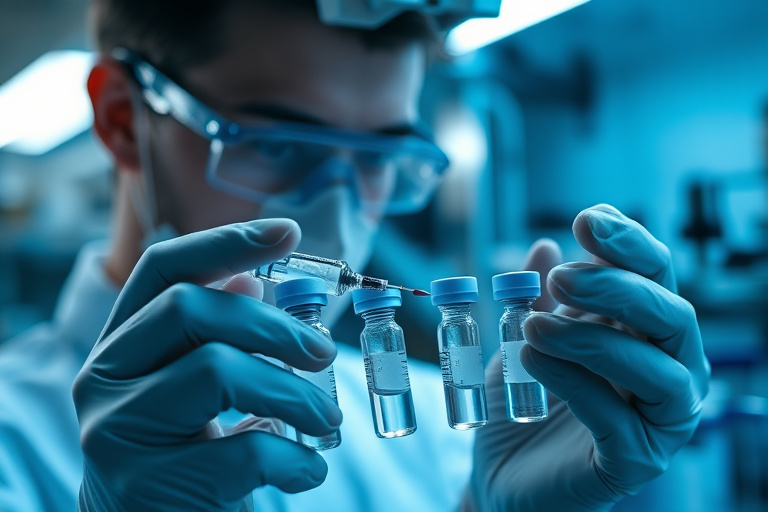
- AOD-9604 vial: The lyophilized (freeze-dried) peptide powder from your compounding pharmacy
- Bacteriostatic water: Sterile water containing 0.9% benzyl alcohol as a preservative, which allows for multiple uses from a single vial
- Insulin syringes: 29-gauge or 31-gauge, 0.5 mL or 1 mL capacity. These thin needles are specifically designed for subcutaneous injection and cause minimal discomfort
- Alcohol swabs: For cleaning vial tops and injection sites
- Sharps disposal container: A designated puncture-resistant container for used syringes
Your pharmacy and prescribing physician will specify exact supplies and may include them with your prescription.
Step 1[1]: Reconstitution
Reconstitution is the process of dissolving the freeze-dried peptide powder into an injectable solution. This step only needs to be done once per vial.
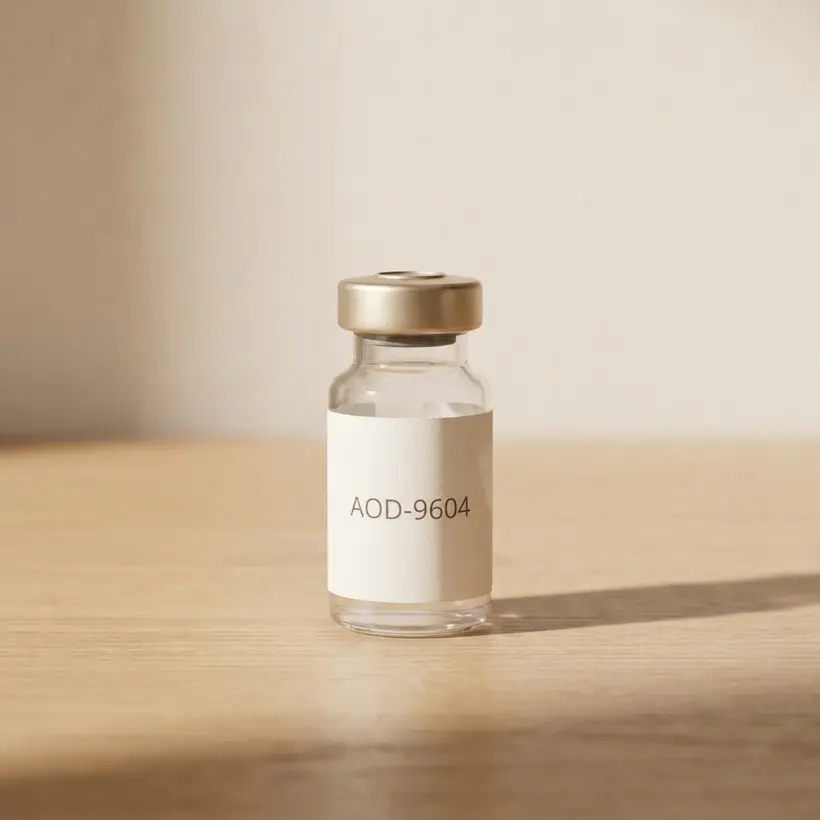
From the FormBlends catalog
AOD-9604
Fat-targeting fragment without growth hormone side effects · From $199/mo · compounded by a licensed 503A pharmacy, dispensed only after provider review.
View AOD-9604 →- Wash your hands thoroughly with soap and water for at least 20 seconds.
- Clean both vial tops (the AOD-9604 vial and the bacteriostatic water vial) with alcohol swabs. Allow them to air dry for a few seconds.
- Draw bacteriostatic water into a syringe. The volume depends on your prescribed concentration. A common reconstitution volume is 2 mL of bacteriostatic water, but follow your pharmacy's specific instructions.
- Insert the needle into the AOD-9604 vial at a slight angle, with the needle tip pointed toward the inner wall of the vial.
- Slowly depress the plunger, allowing the water to trickle down the glass wall of the vial. Don't spray the water directly onto the powder, as the force can damage the peptide structure.
- Gently swirl the vial in a circular motion to dissolve the powder. Don't shake vigorously. The solution should become clear within 1 to 2 minutes. If small particles remain, continue gently swirling until fully dissolved.
- Label the vial with the reconstitution date. Reconstituted AOD-9604 should be stored in the refrigerator and used within 28 to 30 days (or as directed by your pharmacy).
Calculating Your Dose
After reconstitution, you need to know how many units on your insulin syringe correspond to your prescribed dose. The calculation depends on the amount of peptide in the vial and the volume of water used.
For example, if your vial contains 5 mg of AOD-9604 and you add 2 mL of bacteriostatic water, the concentration is 2.5 mg per mL (or 2,500 mcg per mL). On a standard 100-unit insulin syringe, 1 mL equals 100 units, so:
- 250 mcg dose = 10 units on the syringe
- 300 mcg dose = 12 units
- 500 mcg dose = 20 units
Your prescribing physician or pharmacy will provide the exact calculation for your specific vial concentration and prescribed dose. If you're unsure about the math, ask before injecting.
Step 2: Preparing the Injection
- Remove the vial from the refrigerator and allow it to sit at room temperature for 5 to 10 minutes. Cold injections can cause more discomfort at the site.
- Wash your hands again if you have touched anything since your initial handwash.
- Clean the vial top with a fresh alcohol swab.
- Draw air into the syringe equal to the volume of your dose. Insert the needle into the vial and push the air in. This equalizes pressure inside the vial and makes it easier to draw liquid.
- Invert the vial (turn it upside down) and pull the plunger back to draw your prescribed dose into the syringe.
- Check for air bubbles. If present, gently tap the syringe barrel with your finger to move the bubbles to the top, then slowly push the plunger until a tiny drop appears at the needle tip. Small air bubbles in a subcutaneous injection aren't dangerous, but removing them ensures accurate dosing.
Step 3: Choosing and Preparing the Injection Site
Recommended Injection Sites
The three most common subcutaneous injection sites for AOD-9604 are:
- Lower abdomen: The area below the navel and above the hip bones, at least 2 inches away from the belly button. This is the most popular site due to the ample subcutaneous fat layer and ease of access.
- Outer thigh: The front or outer portion of the upper thigh, roughly halfway between the knee and hip. Avoid the inner thigh.
- Back of the upper arm: The fleshy area on the back of the arm between the shoulder and elbow. This site may require assistance from another person.
Site Rotation
Rotate your injection site with each dose. Don't inject into the same exact spot repeatedly. A simple rotation pattern might alternate between left abdomen, right abdomen, left thigh, and right thigh. Keep at least 1 inch between consecutive injection points in the same general area.
Consistent rotation prevents lipodystrophy (changes in the subcutaneous fat tissue) and reduces the likelihood of localized irritation.
Preparing the Site
Clean the chosen injection site with an alcohol swab using a circular motion, starting at the center and moving outward. Allow the alcohol to dry completely before injecting, as injecting through wet alcohol can cause stinging.
Step 4: Performing the Injection
- Pinch the skin at your chosen injection site between your thumb and index finger, creating a fold of tissue approximately 1 to 2 inches wide.
- Insert the needle at a 45- to 90-degree angle into the pinched skin fold. With the short, thin needles used for subcutaneous injection (29- or 31-gauge insulin syringes), a 90-degree angle is typically appropriate. For very lean individuals with minimal subcutaneous fat, a 45-degree angle may be better to avoid injecting into muscle.
- Depress the plunger slowly and steadily until all the medication has been delivered. Rushing the injection can increase discomfort.
- Wait 5 to 10 seconds after fully depressing the plunger before withdrawing the needle. This allows the solution to disperse in the tissue and prevents leakage.
- Withdraw the needle at the same angle it was inserted.
- Release the skin fold.
- Apply gentle pressure with a clean cotton ball or gauze if there's any minor bleeding. Don't rub the injection site, as this can cause bruising and may disperse the peptide unevenly.
Step 5: Post-Injection
- Dispose of the used syringe immediately in your sharps container. Never recap needles, as this increases the risk of needlestick injury.
- Return the AOD-9604 vial to the refrigerator promptly.
- Note the injection site and date in a simple log. This helps you maintain a consistent rotation schedule.
- Wait at least 20 to 30 minutes before eating if you injected in the morning. If injecting before bed, ensure at least 2 to 3 hours have passed since your last meal.
Storage and Handling
Before Reconstitution
Unreconstituted (lyophilized) AOD-9604 can be stored in the refrigerator or at room temperature, depending on your pharmacy's instructions. Many peptides are stable at room temperature for short periods but last longer when refrigerated. Avoid exposure to direct sunlight or heat.
After Reconstitution
Once reconstituted with bacteriostatic water, AOD-9604 must be stored in the refrigerator at 2 to 8 degrees Celsius (36 to 46 degrees Fahrenheit). Use the solution within 28 to 30 days of reconstitution. Never freeze reconstituted peptide solution, as the freeze-thaw cycle can damage the molecular structure.
Signs of Degradation
Don't use the reconstituted solution if it appears cloudy, contains visible particles that don't dissolve with gentle swirling, or has changed color. These signs may indicate degradation or contamination.
Tips for Reducing Injection Discomfort
- Allow the solution to reach room temperature before injecting
- Let the alcohol prep dry completely before inserting the needle
- Use a fresh syringe for each injection (re-used needles become dull and cause more pain)
- Insert the needle in one smooth, confident motion rather than pressing slowly
- Depress the plunger slowly and steadily
- Relax the muscles around the injection site
- Apply an ice cube to the injection site for 30 seconds before injecting to numb the area (optional)
Safety Considerations
Proper injection technique is important for both safety and effectiveness. Key safety principles include:
- Never share syringes, needles, or vials with another person
- Always use a new, sterile syringe for each injection
- Maintain strict hand hygiene and site cleaning protocols
- Store and dispose of sharps according to local regulations
- Don't inject into areas with visible infection, inflammation, rashes, or moles
- Contact your physician if you notice signs of infection at an injection site (increasing redness, warmth, swelling, or discharge)
AOD-9604 itself has a well-established safety profile at therapeutic doses. The most commonly reported side effects are mild injection site reactions and occasional headache, both of which are generally transient.
How FormBlends Can Help
FormBlends provides thorough support for patients new to self-injection. When you receive your AOD-9604 prescription, your care team will walk you through reconstitution, dosing calculations, and injection technique during your consultation.
Patients receive detailed written instructions specific to their prescribed vial concentration and dose. If questions arise between appointments, the FormBlends care team is available to provide guidance on technique, storage, and troubleshooting.
All peptides are sourced from licensed compounding pharmacies that meet rigorous purity and sterility standards, so patients can be confident in the quality of their medication.
Frequently Asked Questions
Does injecting AOD-9604 hurt?
Most patients describe the injection as a brief pinch or mild sting that lasts only a second or two. The insulin syringes used for subcutaneous injection have very fine needles (29- to 31-gauge) that are designed for minimal discomfort. Many patients report that the anticipation is worse than the actual injection.
Where is the best place to inject AOD-9604?
The lower abdomen is the most popular injection site due to its accessibility and subcutaneous fat layer. The outer thigh and back of the upper arm are also appropriate. Rotate between sites to prevent tissue changes from repeated use of one location.
Can I inject AOD-9604 into muscle?
AOD-9604 is designed for subcutaneous (under the skin) injection, not intramuscular injection. Subcutaneous administration provides the appropriate absorption rate for this peptide. Intramuscular injection may alter the pharmacokinetics and isn't part of standard protocols.
How do I know if I injected correctly?
If the full dose was delivered (the plunger is fully depressed), the needle was in the subcutaneous tissue (not too shallow or too deep), and no significant amount of liquid leaked from the injection site, the injection was performed correctly. A small drop of blood at the site is normal and doesn't indicate a problem.
What should I do if I see blood after injecting?
A small amount of bleeding at the injection site is completely normal and simply means the needle passed through a tiny blood vessel. Apply gentle pressure with a cotton ball for 30 seconds. This doesn't affect the medication's effectiveness.
Medical References
- Wilding JPH, Batterham RL, Calanna S, et al. Once-Weekly Semaglutide in Adults with Overweight or Obesity. N Engl J Med. 2021;384(11):989-1002. [PubMed | ClinicalTrials.gov | DOI]
- Davies M, Færch L, Jeppesen OK, et al. Semaglutide 2.4 mg once a week in adults with overweight or obesity, and type 2 diabetes (STEP 2). Lancet. 2021;397(10278):971-984. [PubMed | ClinicalTrials.gov | DOI]
- Wadden TA, Bailey TS, Billings LK, et al. Effect of Subcutaneous Semaglutide vs Placebo as an Adjunct to Intensive Behavioral Therapy on Body Weight in Adults With Overweight or Obesity (STEP 3). JAMA. 2021;325(14):1403-1413. [PubMed | ClinicalTrials.gov | DOI]
- Rubino D, Abrahamsson N, Davies M, et al. Effect of Continued Weekly Subcutaneous Semaglutide vs Placebo on Weight Loss Maintenance in Adults With Overweight or Obesity (STEP 4). JAMA. 2021;325(14):1414-1425. [PubMed | ClinicalTrials.gov | DOI]
- Garvey WT, Batterham RL, Bhatt DL, et al. Two-year effects of semaglutide in adults with overweight or obesity (STEP 5). Nat Med. 2022;28(10):2083-2091. [PubMed | ClinicalTrials.gov | DOI]
Get Guided Support for Your AOD-9604 Therapy
Self-injection is a skill that gets easier with practice. FormBlends physicians provide hands-on guidance, clear instructions, and ongoing support so you feel confident from your very first dose. Schedule your telehealth consultation today.
Ready when you are
AOD-9604
Fat-targeting fragment without growth hormone side effects · From $199/mo · compounded by a licensed 503A pharmacy, dispensed only after provider review.
View AOD-9604 →