Key Takeaway
What does the research say about CJC-1295? A full review of clinical studies, pharmacokinetic data, and scientific evidence behind this GHRH peptide.
Quick Answer: The CJC-1295 research review reveals a peptide with solid pharmacokinetic data demonstrating sustained GH and IGF-1 elevation, a favorable safety profile across multiple clinical studies, and strong mechanistic support from broader GHRH research. Key findings include dose-dependent GH release lasting up to 6 days with a single injection, 2 to 10-fold increases in GH levels, and significant IGF-1 elevation sustained over weeks of therapy. The research base is smaller than that for older GHRH analogs like sermorelin but growing.
What Is CJC-1295?
CJC-1295 is a synthetic analog of growth hormone-releasing hormone (GHRH). Developed by ConjuChem Biotechnologies, it was designed with a Drug Affinity Complex (DAC) modification that extends its biological half-life from minutes (as with natural GHRH) to approximately 6 to 8 days. This was a significant pharmaceutical advancement because it meant that a single injection could sustain GH-releasing activity for nearly a week.
The version without DAC, often called Mod GRF 1-29 or CJC-1295 no DAC, retains the modified amino acid sequence for improved stability but lacks the albumin-binding DAC component, resulting in a much shorter half-life. Both versions have been subjects of research, though the with-DAC form has the most published clinical data.
Key Published Studies
The Foundational Pharmacokinetic Study (2006)
The most cited research on CJC-1295 is the Phase I/II clinical study published by Teichman et al. in the Journal of Clinical Endocrinology and Metabolism (2006). This study examined CJC-1295 with DAC in healthy adult subjects and established several critical findings:

- Sustained GH release: A single subcutaneous injection of CJC-1295 with DAC produced dose-dependent increases in GH levels lasting 6 or more days.
- IGF-1 elevation: Mean IGF-1 levels increased 1.5 to 3-fold above baseline and remained improved for up to 28 days after dosing.
- Dose-dependent response: Higher doses produced greater and more sustained GH and IGF-1 elevations.
- Pulsatile GH preservation: The peptide maintained the natural pulsatile pattern of GH release rather than producing a flat, continuous elevation. This is pharmacologically significant because pulsatile release is how the body normally uses GH.
- Good tolerability: Side effects were generally mild and included injection site reactions, headache, and diarrhea. No serious adverse events were attributed to the peptide.
Multiple-Dose Study
Follow-up research examined repeated dosing of CJC-1295 over multiple weeks. Key findings from this work:
- Accumulative effect: With weekly dosing, GH and IGF-1 levels showed a cumulative increase, reaching peak levels after 2 to 4 weeks of treatment.
- Sustained elevation: IGF-1 levels remained improved throughout the treatment period, suggesting consistent pituitary responsiveness without rapid desensitization.
- No antibody formation: Subjects did not develop antibodies to CJC-1295, which is important for long-term use because antibody formation can neutralize a peptide's effects over time.
GH Secretion Pattern Analysis
Detailed analysis of GH secretion patterns during CJC-1295 therapy showed that the peptide increased both the amplitude (height) and frequency of GH pulses while preserving the overall secretory pattern. This is a notable distinction from exogenous GH injection, which creates a single, non-physiologic spike followed by a trough.
Related GHRH Research
CJC-1295 doesn't exist in a research vacuum. It belongs to the GHRH analog family, which includes sermorelin and tesamorelin. Research on these related peptides provides additional context for understanding CJC-1295's likely effects.
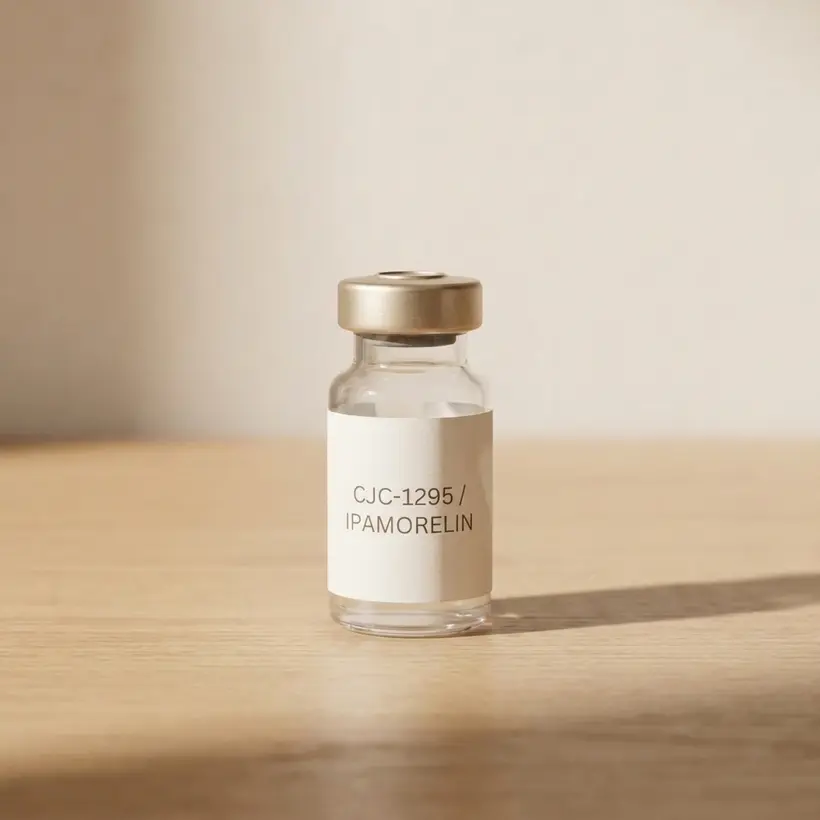
From the FormBlends catalog
CJC-1295 / Ipamorelin Blend
The gold standard growth hormone secretagogue stack · From $69/mo · compounded by a licensed 503A pharmacy, dispensed only after provider review.
Learn about CJC-1295 / Ipamorelin Blend →GHRH and Body Composition
Multiple clinical studies on GHRH analogs have demonstrated improvements in body composition in both GH-deficient and healthy aging adults. A study published in the Annals of Internal Medicine examined GHRH analog administration in older adults and found significant reductions in visceral fat, increases in lean body mass, and improvements in physical performance markers over 6 months.
GHRH and Sleep
Research on GHRH and sleep is extensive. Studies by Steiger and colleagues have demonstrated that GHRH administration increases slow-wave sleep duration in a dose-dependent manner, independent of its effects on GH release. This suggests that GHRH analogs, including CJC-1295, have intrinsic sleep-promoting properties.
GHRH and Cognitive Function
Research on GH and cognitive function in GH-deficient adults consistently shows cognitive impairment that improves with GH restoration. While no study has tested CJC-1295 specifically for cognitive outcomes, the mechanistic pathway through GH and IGF-1 is well-established. IGF-1 crosses the blood-brain barrier and supports hippocampal neurogenesis, synaptic plasticity, and neuronal survival.
Tesamorelin Studies
Tesamorelin, an FDA-approved GHRH analog (approved for HIV-related lipodystrophy), provides the closest clinical parallel to CJC-1295. Large-scale clinical trials on tesamorelin demonstrated significant reductions in visceral fat, improvements in lipid profiles, and favorable safety data. While tesamorelin and CJC-1295 aren't identical molecules, their shared GHRH mechanism makes tesamorelin data relevant to understanding what CJC-1295 can likely do.
Safety Data Review
Across published studies, CJC-1295 has demonstrated a favorable safety profile:
Common Adverse Events
- Injection site reactions (redness, swelling, pain): the most frequently reported side effect
- Headache: mild and transient
- Diarrhea: reported in some subjects, particularly at higher doses
- Flushing: transient warmth or redness
- Dizziness: occasional and brief
Serious Adverse Events
One serious adverse event in the early clinical development program, a death that occurred in a subject during a study, drew attention. But the death was determined to be related to a pre-existing cardiac condition exacerbated by concomitant medication use rather than directly caused by CJC-1295. This event led to increased caution and more stringent screening criteria in subsequent studies.
No Pituitary Suppression
An important safety finding: CJC-1295 doesn't suppress pituitary function. Unlike exogenous GH, which can cause negative feedback suppression of the pituitary over time, CJC-1295 works through the pituitary rather than replacing it. When therapy is discontinued, pituitary function returns to baseline without rebound suppression.
Metabolic Effects
Consistent with all GH-stimulating therapies, CJC-1295 can affect glucose metabolism. Studies noted mild changes in fasting glucose levels in some subjects, reinforcing the need for metabolic monitoring during therapy.
Limitations of Current Research
Transparency about what we don't know is as important as summarizing what we do know:
- No FDA approval: CJC-1295 hasn't completed the FDA approval process for any indication. The published studies represent Phase I/II data, not the large Phase III trials required for drug approval.
- Limited long-term data: Most published studies span weeks to months. Data on multi-year use comes primarily from clinical practice rather than controlled trials.
- Small sample sizes: Published studies have involved relatively small numbers of subjects (dozens, not thousands).
- Healthy volunteer bias: Most studies were conducted in healthy adults. Data on CJC-1295 in specific patient populations (elderly, metabolically compromised, post-surgical) is limited.
- Mod GRF 1-29 data gap: The without-DAC version, which is widely used clinically, has less published data than the with-DAC version. Much of the evidence supporting its use is extrapolated from the DAC form and from broader GHRH research.
How to Interpret the Research
For patients and practitioners evaluating CJC-1295, a balanced interpretation of the evidence looks like this:
- Strong evidence: CJC-1295 reliably raises GH and IGF-1 levels in a dose-dependent, sustained manner. This is well-established in published pharmacokinetic studies.
- Strong mechanistic support: The downstream effects of improved GH and IGF-1 (improved body composition, sleep, recovery, tissue repair) are extensively documented in the broader GH literature, even if not tested specifically with CJC-1295 in every case.
- Favorable safety signal: Published data and extensive clinical use suggest that CJC-1295 is well-tolerated at clinical doses under medical supervision.
- Gaps remain: Large-scale, long-term controlled trials are lacking. Specific clinical applications (hair growth, tendon repair, cognitive enhancement) are supported by mechanism rather than direct CJC-1295 studies.
Who Is a Good Candidate?
Based on the available research, CJC-1295 may be appropriate for:
- Adults with symptoms consistent with age-related GH decline (confirmed by IGF-1 testing)
- Patients interested in evidence-based peptide therapy with established pharmacokinetic data
- Individuals who want GH improvement through a physiologic, pituitary-stimulating approach rather than exogenous GH
- Those willing to work with a physician who monitors their response through lab work
Frequently Asked Questions
Is CJC-1295 supported by clinical evidence?
CJC-1295 has Phase I/II clinical data demonstrating that it effectively raises GH and IGF-1 levels with a favorable safety profile. It hasn't completed Phase III trials or received FDA approval. The clinical evidence supports its pharmacological activity, while broader GH research supports the downstream benefits of that activity.
How does CJC-1295 research compare to sermorelin research?
Sermorelin has a longer research history and was FDA-approved (though the branded product was discontinued). CJC-1295 has more modern pharmacokinetic data and a longer half-life. Both target the same receptor (GHRH-R) and produce similar downstream effects, so their research bases are complementary.
Are there ongoing clinical trials for CJC-1295?
As of this writing, CJC-1295 isn't actively progressing through new FDA clinical trials. The peptide is used clinically through compounding pharmacy channels. Research interest continues in academic settings, particularly around GHRH analogs and aging.
Where can I read the original studies?
The primary pharmacokinetic study by Teichman et al. is published in the Journal of Clinical Endocrinology and Metabolism and is available through PubMed. Related GHRH research can be found by searching PubMed for "growth hormone releasing hormone analog" or "tesamorelin clinical trial."
Get Evidence-Based Peptide Therapy with Physician Guidance
FormBlends builds its protocols on published research and clinical evidence. Our physicians stay current on the science and translate it into safe, effective treatment plans for each patient. If you want peptide therapy grounded in real data, we can help.
Disclaimer: This article is for informational purposes only and doesn't constitute medical advice. CJC-1295 isn't FDA-approved for any medical condition. The research summarized here includes Phase I/II clinical data and related GHRH studies. This article doesn't represent a systematic review or meta-analysis. Always consult with a licensed healthcare provider before beginning any peptide therapy. Individual results may vary. FormBlends doesn't claim that CJC-1295 cures, treats, or prevents any disease.
Ready when you are
CJC-1295 / Ipamorelin Blend
The gold standard growth hormone secretagogue stack · From $69/mo · compounded by a licensed 503A pharmacy, dispensed only after provider review.
Learn about CJC-1295 / Ipamorelin Blend →