Key Takeaway
How to store CJC-1295 properly before and after reconstitution calculator. Learn temperature requirements, shelf life, travel tips, and signs of degraded peptide.
Quick Answer: CJC-1295 storage instructions differ depending on whether the peptide is in lyophilized (freeze-dried powder) or reconstituted (mixed with water) form. Unreconstituted CJC-1295 should be stored in a refrigerator at 2 to 8 degrees Celsius (36 to 46 degrees Fahrenheit) and can remain stable for months. Once reconstituted with bacteriostatic water, it must be refrigerated and used within 28 days. Never freeze reconstituted CJC-1295, and avoid heat, direct light, and repeated temperature fluctuations.
What Is CJC-1295?
CJC-1295 is a synthetic growth hormone-releasing hormone (GHRH) analog that stimulates the pituitary gland to produce growth hormone naturally. It arrives from compounding pharmacies as a lyophilized powder in a sealed, sterile vial. Before use, this powder is reconstituted with bacteriostatic water to create an injectable solution.
Proper storage isn't optional. Peptides are proteins, and proteins degrade when exposed to heat, light, moisture, or contamination. Degraded CJC-1295 may lose potency or become completely inactive, meaning you wouldn't get the therapeutic benefit you're paying for.
Storage Before Reconstitution (Lyophilized Powder)
Unreconstituted CJC-1295 is the most stable form of the peptide. The lyophilization (freeze-drying) process removes water from the peptide, dramatically slowing degradation reactions.

Recommended Conditions
- Temperature: 2 to 8 degrees Celsius (36 to 46 degrees Fahrenheit). A standard household refrigerator is ideal.
- Light: Store in the original packaging or wrap in foil. Peptides can degrade when exposed to direct light, especially ultraviolet light.
- Moisture: Keep the vial sealed until ready for reconstitution. Lyophilized peptides absorb moisture from the air, which can initiate degradation.
- Position: Store upright to keep the powder at the bottom of the vial.
Shelf Life
Lyophilized CJC-1295 stored properly in the refrigerator is typically stable for 12 to 24 months from the date of compounding. Your pharmacy will provide an expiration date on the vial. Don't use the peptide past its expiration date.
Can You Freeze Unreconstituted CJC-1295?
Yes. For long-term storage beyond a few months, unreconstituted (lyophilized) CJC-1295 can be stored in a freezer at -20 degrees Celsius (-4 degrees Fahrenheit). Freezing extends stability significantly. When ready to use, allow the vial to come to refrigerator temperature gradually before reconstituting. Avoid repeated freeze-thaw cycles.
Room Temperature Tolerance
Lyophilized CJC-1295 can tolerate brief periods at room temperature (during shipping, for example) without significant degradation. But extended storage at room temperature (days to weeks) will reduce potency over time. Refrigerate as soon as possible after receiving your shipment.
Storage After Reconstitution
Once you have added bacteriostatic water to the lyophilized powder, the rules change significantly. Reconstituted CJC-1295 is much less stable than the dry powder form.
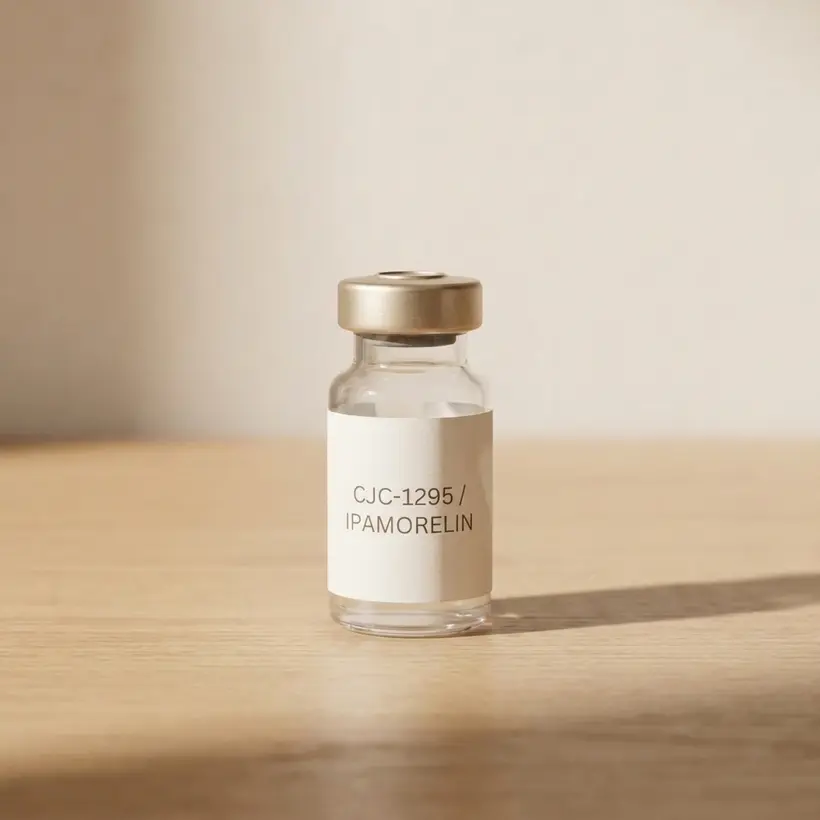
From the FormBlends catalog
CJC-1295 / Ipamorelin Blend
The gold standard growth hormone secretagogue stack · From $69/mo · compounded by a licensed 503A pharmacy, dispensed only after provider review.
Learn about CJC-1295 / Ipamorelin Blend →Recommended Conditions
- Temperature: 2 to 8 degrees Celsius (36 to 46 degrees Fahrenheit). Refrigerate immediately after reconstitution.
- Light: Store in the box or wrap the vial in foil to protect from light exposure.
- Position: Store upright in the refrigerator. Avoid placing near the back wall where temperatures may approach freezing.
- Contamination prevention: Always swab the vial top with an alcohol pad before each use. Use a new, sterile syringe each time you draw a dose.
Shelf Life After Reconstitution
Reconstituted CJC-1295 in bacteriostatic water is generally considered stable for up to 28 days when properly refrigerated. After 28 days, discard any remaining solution and reconstitute a fresh vial.
If reconstituted with sterile water for injection (which lacks the benzyl alcohol preservative), the solution should be used within 24 hours due to the absence of antimicrobial protection. This is why bacteriostatic water is strongly preferred for multi-dose vials.
Never Freeze Reconstituted CJC-1295
Unlike the lyophilized powder, reconstituted CJC-1295 should never be frozen. Freezing a protein solution can cause ice crystal formation that damages the peptide's three-dimensional structure (denaturation). Even if the solution appears normal after thawing, the peptide may have lost significant biological activity.
Signs of Degraded CJC-1295
You should inspect your CJC-1295 before each use. Don't inject a solution that shows any of the following signs:
- Cloudiness or turbidity: A properly reconstituted CJC-1295 solution should be clear. Cloudiness suggests protein aggregation or bacterial contamination.
- Visible particles: Floating particles, flakes, or precipitates indicate degradation. Don't attempt to filter or dissolve these.
- Discoloration: CJC-1295 solution should be colorless. Any yellow, brown, or other discoloration suggests chemical degradation.
- Unusual odor: A foul or unusual smell when opening the vial may indicate bacterial contamination.
- Foam that doesn't resolve: While minor bubbles are normal, persistent heavy foam may indicate protein denaturation from improper handling.
If you observe any of these signs, discard the vial and reconstitute a fresh one. Using degraded peptide is at best ineffective and at worst potentially harmful.
Refrigerator Placement Tips
Where you place CJC-1295 in your refrigerator matters more than you might think:
- Avoid the back wall: The rear of many refrigerators is the coldest zone and may approach or reach freezing temperature, especially in older models. This can freeze and damage reconstituted peptide.
- Avoid the door: The door is the warmest and most temperature-variable part of the refrigerator, with fluctuations each time the door opens. This isn't ideal for temperature-sensitive medications.
- Best location: A middle shelf, toward the center of the refrigerator. This provides the most consistent temperature.
- Use a small box or container: Placing your vials in a small, labeled container protects them from being knocked over and reminds household members that the contents are medication.
Travel Storage
Traveling with CJC-1295 requires maintaining the cold chain. Here is how to travel safely with your peptide:
Short Trips (Under 24 Hours)
- Use an insulated lunch bag or small cooler with a cold pack.
- Wrap the vial in a cloth or paper towel to prevent direct contact with the ice pack (which could freeze the solution).
- Refrigerate as soon as you reach your destination.
Air Travel
- Carry your peptide in your carry-on bag, not checked luggage. Cargo holds can expose contents to extreme temperature variations.
- Use a medical travel cooler designed for temperature-sensitive medications.
- Carry a copy of your prescription or a letter from your physician. TSA allows medically necessary liquids and syringes.
- Syringes should be in their original packaging when possible.
Extended Travel
- If traveling for more than a few days, bring unreconstituted (lyophilized) vials and bacteriostatic water to reconstitute at your destination. Dry powder is more stable during travel than reconstituted solution.
- Ensure you'll have refrigerator access at your destination.
- Request a hotel room with a mini-fridge if one isn't standard.
Bacteriostatic Water Storage
Your bacteriostatic water also requires proper storage:
- Unopened: Can be stored at room temperature. Check the expiration date on the vial.
- After first use: Refrigerate and use within 28 days. The benzyl alcohol preservative prevents bacterial growth, but it isn't indefinitely effective once the seal has been pierced.
- Always swab the top with an alcohol pad before drawing from the vial.
Side Effects and Safety
Improper storage doesn't typically cause new side effects beyond those associated with normal CJC-1295 use. But using degraded peptide can result in:
- Reduced or absent therapeutic effect (the peptide no longer works as intended)
- Increased injection site irritation from degradation products
- Potential infection risk if bacterial contamination has occurred
Standard CJC-1295 side effects (injection site reactions, mild headache, facial flushing, water retention) aren't affected by storage when the peptide is handled properly. See our CJC-1295 side effects guide for complete safety information.
Frequently Asked Questions
I left my CJC-1295 out of the fridge overnight. Is it still good?
A single night at room temperature is unlikely to render the peptide completely inactive, especially if reconstituted with bacteriostatic water. But some potency loss may have occurred. Inspect the solution for clarity and absence of particles. If it looks normal, you may continue using it, but note that its remaining shelf life may be shortened. If in doubt, reconstitute a fresh vial.
Can I store CJC-1295 in a wine cooler or mini-fridge?
Yes, as long as the temperature stays within the 2 to 8 degree Celsius range. Use a thermometer to verify. Some mini-fridges run warmer than standard refrigerators, which would shorten the peptide's usable life.
How do I know if my peptide has lost potency?
Visual inspection (clarity, color, particles) catches gross degradation but can't detect subtle potency loss. The most reliable way to assess effectiveness is through blood work. If your IGF-1 levels drop unexpectedly, degraded peptide is one possible explanation, along with dosing issues or injection technique problems.
Should I keep the peptide in its original box?
Yes. The box provides light protection and physical protection from being knocked around in the refrigerator. If the box is no longer available, wrap the vial in foil to block light.
Can I use a peptide vial that was shipped without cold packing?
Lyophilized (unreconstituted) CJC-1295 tolerates brief temperature excursions during shipping better than reconstituted product. If the powder appears normal (dry, intact cake or powder at the bottom of the vial), it's likely fine. Reconstituted product shipped without cold packing should generally be discarded.
Get Properly Sourced, Properly Handled Peptide Therapy
FormBlends sources CJC-1295 from licensed compounding pharmacies that follow strict quality and cold-chain protocols. Our medical team provides complete storage and handling instructions with every prescription.
Disclaimer: This article is for informational purposes only and doesn't constitute medical advice. CJC-1295 isn't FDA-approved for any medical condition. Always follow the specific storage instructions provided by your compounding pharmacy and prescribing physician. Consult with a licensed healthcare provider before beginning any peptide therapy. FormBlends doesn't claim that CJC-1295 cures, treats, or prevents any disease.
Ready when you are
CJC-1295 / Ipamorelin Blend
The gold standard growth hormone secretagogue stack · From $69/mo · compounded by a licensed 503A pharmacy, dispensed only after provider review.
Learn about CJC-1295 / Ipamorelin Blend →