
Trust Signals
Every major claim in the evidence ledger below is tagged with its best evidence type and a plain confidence rating. We distinguish what is proven from what is speculative. This is not a substitute for clinical care.
Key Takeaways
- A BNP below 100 pg/mL makes heart failure an unlikely cause of acute dyspnea, with roughly 96% negative predictive value in the landmark Maisel et al. Breathing Not Properly trial (n=1586).
- BNP values above 400 pg/mL in a dyspneic patient strongly support heart failure; the 100 to 400 pg/mL range is a diagnostic grey zone requiring echocardiography and clinical correlation.
- Obesity lowers measured BNP through clearance-receptor upregulation in adipose tissue, meaning a "normal" result can occur despite real cardiac stress in obese patients.
- BNP has a plasma half-life of approximately 20 minutes, making it biologically responsive to treatment within hours, though serial-BNP-guided therapy has shown inconsistent mortality benefit in randomized trials.
- NT-proBNP cut-offs (e.g., 125 pg/mL rule-out under age 75) are 4 to 10 times higher than BNP cut-offs numerically; the two biomarkers are not interchangeable across serial measurements.
What Are Normal Brain Natriuretic Peptide Results?
A brain natriuretic peptide result below 100 pg/mL is the most widely used threshold to consider heart failure unlikely in a patient presenting with shortness of breath. Values above 400 pg/mL are strongly associated with decompensated heart failure. The 100 to 400 pg/mL range is a grey zone requiring additional workup, and results must always be interpreted alongside age, weight, kidney function, and clinical symptoms.
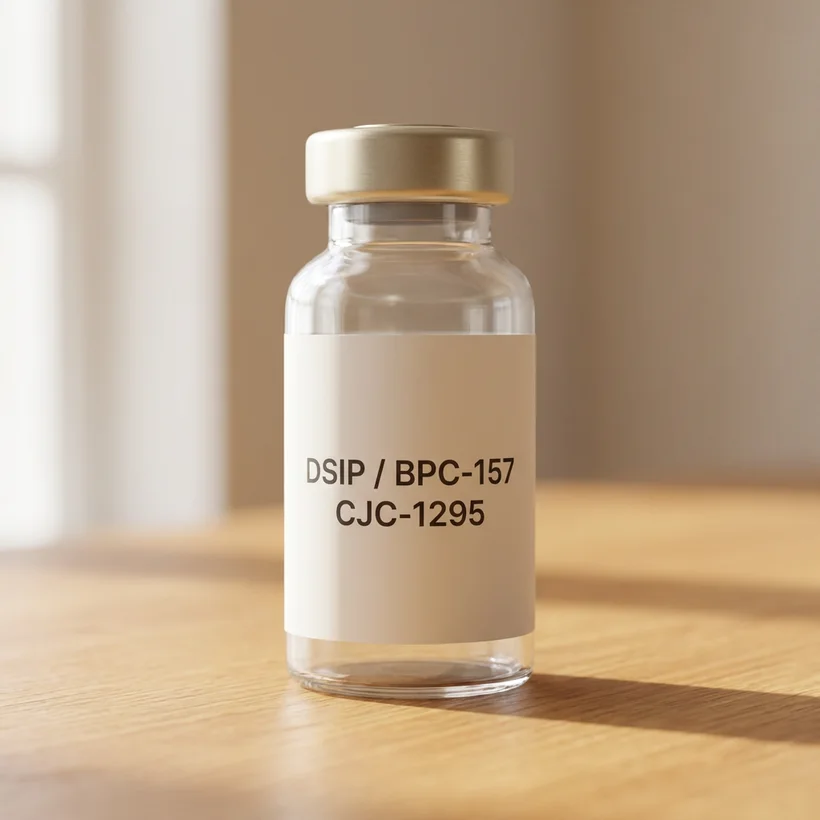
From the FormBlends catalog
Sleep + Recovery Stack
Sleep and repair support with DSIP, BPC-157, and CJC · From $299/mo · compounded by a licensed 503A pharmacy, dispensed only after provider review.
View Sleep + Recovery Stack →Table of Contents
- Normal BNP ranges and reference cut-offs
- What BNP actually measures: mechanism with specific numbers
- Evidence ledger: graded claims for BNP test results
- What most pages get wrong: confounders that shift your result
- Why the half-life matters: the biology behind serial testing rules
- BNP vs. NT-proBNP: honest head-to-head comparison
- Label and report literacy: reading your BNP result yourself
- What to do if your result is in the grey zone
- Frequently asked questions
- Sources
What Are the Normal Ranges for Brain Natriuretic Peptide Results?
The diagnostic cut-offs most widely cited in cardiology come from prospective trials of acute dyspnea, not from healthy-population reference intervals. The two numbers that matter clinically are:
| BNP Level (pg/mL) | Interpretation | Action |
|---|---|---|
| Below 100 | Heart failure as cause of dyspnea is unlikely | Investigate alternative diagnoses |
| 100 to 400 | Grey zone: possible mild, compensated, or non-cardiac cause | Echocardiogram, clinical reassessment, renal function check |
| Above 400 | Heart failure is probable | Urgent cardiology evaluation; initiate or escalate therapy |
These thresholds come primarily from Maisel et al. (2002), published in the New England Journal of Medicine, which remains the most cited single source for BNP diagnostic cut-offs. Age- and sex-adjusted values are used by some institutions but no single universal adjusted table has replaced the 100 pg/mL threshold in emergency settings.
Important: Reference ranges vary by laboratory platform (Beckman Coulter Triage assay, Abbott ARCHITECT, Siemens ADVIA Centaur). Always compare your result to the specific reference interval printed on your laboratory report, not a generic number found online.
What Does BNP Actually Measure: Mechanism with Specific Numbers
BNP (B-type natriuretic peptide, also called brain natriuretic peptide from its original identification in porcine brain tissue) is a 32-amino-acid hormone synthesized primarily in ventricular cardiomyocytes. It is cleaved from a 108-amino-acid prohormone called proBNP. The cleavage produces two fragments: the active 32-amino-acid BNP (amino acids 77 to 108 of proBNP) and the inactive 76-amino-acid N-terminal fragment NT-proBNP.
The trigger for synthesis is mechanical stretch of the ventricular wall, elevated filling pressure, or increased wall tension, all of which activate the proBNP gene (NPPB gene, chromosome 1p36.2). BNP acts through the natriuretic peptide receptor-A (NPR-A) to:
- Increase renal sodium and water excretion (natriuresis and diuresis)
- Cause vasodilation by elevating cyclic GMP in vascular smooth muscle
- Inhibit the renin-angiotensin-aldosterone system
- Reduce sympathetic tone centrally
These actions are a physiologic compensatory response to volume overload, not a disease marker in isolation. When BNP rises on a test, it reflects the heart signaling that wall stress has exceeded baseline. The honest caveat: a single BNP number tells you about ventricular wall stress at the moment of the draw; it does not specify the cause, the ejection fraction, or whether the patient is symptomatic. Preserved-ejection-fraction heart failure (HFpEF) can produce modestly elevated BNP even when systolic function is normal.
Evidence Ledger: How Strong Is the Evidence Behind BNP Test Result Claims?
| Claim | Best Evidence Type | Key Source | Effect Direction | Confidence |
|---|---|---|---|---|
| BNP above 100 pg/mL diagnoses heart failure in acute dyspnea | Prospective multicenter RCT-equivalent (n=1586) | Maisel et al., NEJM 2002 | Positive, ~90% sensitivity, 76% specificity | High |
| BNP below 100 pg/mL rules out heart failure as cause of dyspnea | Same prospective trial, negative predictive value analysis | Maisel et al., NEJM 2002 | Negative predictive value ~96% | High |
| Obesity lowers measured BNP via clearance receptor upregulation | Multiple observational cohorts, mechanistic studies | Wang et al., JACC 2004; Das et al. | Inverse, BMI independently predicts lower BNP | High |
| BNP-guided therapy reduces hospitalizations for heart failure | Multiple RCTs with heterogeneous results | SIGNAL-HF, PRIMA, GUIDE-IT trials | Modest or neutral; mortality benefit inconsistent | Moderate |
| BNP plasma half-life is approximately 20 minutes | Pharmacokinetic studies (intravenous nesiritide data) | Colucci et al., NEJM 2000 (nesiritide) | Rapid clearance confirmed | High |
| Renal impairment (eGFR below 60) elevates BNP independent of cardiac cause | Observational cohorts, cross-sectional studies | Multiple nephrology-cardiology overlap studies | Positive, dose-response with declining GFR | High |
| Acute intense exercise transiently elevates BNP in healthy individuals | Small exercise physiology studies | Multiple, small sample sizes | Transient rise, normalizes within hours | Moderate |
| Atrial fibrillation elevates BNP independent of heart failure | Observational, cross-sectional | Multiple cardiology studies | Positive effect on BNP levels | Moderate |
| BNP supplementation or exogenous BNP therapy normalizes heart failure biomarkers | Mechanistic/pharmacology only (nesiritide trials showed no mortality benefit) | ASCEND-HF trial, NEJM 2011 | Neutral on mortality and rehospitalization | Low for benefit |
What Most Pages Get Wrong: Confounders That Shift Your BNP Result
Commodity pages list "normal is below 100" and stop there. The clinically important information is what pushes a result into a misleading range.
Obesity suppresses BNP (not just modestly). Adipose tissue expresses natriuretic peptide clearance receptors (NPR-C) at high density. These receptors internalize and degrade circulating BNP. In large observational data, obese patients with confirmed heart failure have BNP values that fall into the normal range in a meaningful minority of cases. This is a true false-negative risk, not a theoretical one.
Renal failure inflates BNP. The kidney clears BNP partly via filtration and partly via enzymatic degradation by neprilysin. When GFR falls, BNP accumulates. A patient with stage 3 CKD and no cardiac disease may have a BNP of 200 to 300 pg/mL, landing in the grey zone without any heart failure whatsoever.
Sex and age shift the baseline. Women have on average higher BNP than men at the same age and cardiac status, likely driven by estrogen's effect on NPPB gene expression. BNP rises with age independent of cardiac disease. Some institutions apply age-stratified cut-offs, particularly for NT-proBNP.
Sepsis and critical illness elevate BNP. Non-cardiac critical illness including severe sepsis, pulmonary embolism, and pulmonary hypertension can push BNP into the hundreds without primary cardiac dysfunction. A BNP of 350 pg/mL in an ICU patient has a different differential than the same value in an outpatient with ankle edema.
Thyroid disease. Both hypothyroidism and hyperthyroidism alter cardiac hemodynamics and can shift BNP away from the expected range for a patient's cardiac status.
Why the Half-Life Matters: The Biology Behind Serial Testing Rules
BNP has a measured plasma half-life of approximately 20 minutes. This is determined by two clearance mechanisms: binding to NPR-C (clearance receptors) and enzymatic degradation by neutral endopeptidase (neprilysin). NT-proBNP, by contrast, has no known receptor-mediated clearance and is eliminated almost entirely by the kidney, giving it a half-life of 60 to 120 minutes in patients with normal renal function, and potentially many hours in renal failure.
What this means practically for your test results:
- A BNP drawn in the emergency department reflects ventricular stress from the previous hour or two, not a stable chronic state. Values can fall rapidly with diuresis or treatment.
- Because BNP clears so quickly, a result drawn shortly after aggressive diuresis may underestimate the baseline burden. Context of when the draw was taken relative to treatment matters.
- NT-proBNP persists longer in the bloodstream, making it slightly more stable across a clinical shift but harder to interpret in the setting of acute renal deterioration.
- Neprilysin inhibitors (sacubitril, part of sacubitril/valsartan, brand name Entresto) block BNP degradation. Patients on this drug will have measurably higher BNP levels but lower NT-proBNP. This is not a worsening; it is a pharmacologic effect. Clinicians monitoring heart failure patients on sacubitril/valsartan must use NT-proBNP, not BNP, for serial monitoring.
BNP vs. NT-proBNP: Honest Head-to-Head Comparison
| Feature | BNP | NT-proBNP |
|---|---|---|
| Biological activity | Active hormone | Inactive fragment |
| Plasma half-life | ~20 minutes | 60 to 120 minutes (longer in renal failure) |
| Primary clearance | NPR-C receptors plus neprilysin | Renal filtration |
| Rule-out cut-off (under 75) | 100 pg/mL | 125 pg/mL |
| Rule-out cut-off (over 75) | Less consensus; ~100 still commonly used | 1800 pg/mL (ESC guidelines) |
| Affected by sacubitril/valsartan? | Yes, elevated (cannot use for monitoring) | No, can be used for monitoring |
| Affected by obesity? | Suppressed (false normal risk) | Also suppressed, but less studied |
| Affected by renal failure? | Moderately elevated | More substantially elevated |
| Diagnostic accuracy for acute HF | Comparable, High | Comparable, High |
| Best use case | Acute ED setting, rapid serial monitoring | Outpatient monitoring, patients on neprilysin inhibitors |
| Where the biomarker loses | Cannot be used in patients on sacubitril/valsartan | Harder to interpret acutely in CKD patients |
Neither biomarker is clearly superior for initial diagnosis. The choice should be driven by the clinical setting, the patient's medications, and which assay your laboratory has validated.
Label and Report Literacy: Reading Your BNP Test Result Yourself
When your laboratory report arrives, here is how to parse it without relying entirely on a one-line interpretation:
1. Identify the assay platform. The report should name the analyzer (e.g., Triage BNP assay, Beckman Coulter; or ARCHITECT BNP, Abbott). Cut-off values can differ slightly between platforms, and the laboratory's own reference interval, not a textbook number, is the standard to use.
2. Note the units. BNP is reported in pg/mL or ng/L, which are numerically identical. Do not confuse this with NT-proBNP, which uses the same units but has different cut-offs. Confirm which biomarker was ordered.
3. Check if a reference interval is printed. Most reports print the laboratory-specific reference range. Compare your result to that range, not to a value you read online.
4. Look for flags. Results flagged "H" (high) or "Critical" indicate the laboratory has exceeded a pre-set threshold. A critical BNP is typically above 1000 pg/mL on most platforms and should prompt same-day clinical communication.
5. Consider what medications you are on. If you take sacubitril/valsartan (Entresto), your BNP result is pharmacologically elevated and should not be used to assess heart failure status. Ask your clinician to order NT-proBNP instead.
6. Trend matters more than a single value. A BNP of 280 pg/mL is more reassuring if it was 450 pg/mL one month ago than if it was 90 pg/mL. Ask your provider for the prior values to put the current result in context.
What Should You Do if Your BNP Result Is in the Grey Zone?
A BNP between 100 and 400 pg/mL is a common and genuinely ambiguous finding. Here is a structured approach:
- Get a renal function panel (BMP or CMP). An eGFR below 60 mL/min/1.73m2 substantially raises the probability that elevated BNP is at least partly non-cardiac.
- Request an echocardiogram. A transthoracic echo provides direct information about ejection fraction, wall motion, diastolic function, and valve disease that a blood test cannot give.
- Assess for atrial fibrillation. An ECG will identify AF, which independently elevates BNP.
- Repeat the BNP in context. If the test was drawn during or after acute exercise, illness, or fluid loading, a repeat draw in a resting, clinically stable state may be informative.
- Do not self-treat based on this number alone. No supplement, peptide formulation, or over-the-counter product has demonstrated clinically meaningful reduction of pathologically elevated BNP. Intravenous nesiritide (recombinant BNP) was studied extensively and the ASCEND-HF trial (NEJM 2011, n=7141) found no mortality or rehospitalization benefit over standard care.
Frequently Asked Questions
What is a normal brain natriuretic peptide result?
A BNP below 100 pg/mL is widely used as the threshold to make heart failure unlikely in a patient presenting with dyspnea. Many labs report a reference range below 100 pg/mL for adults under 75, though some use age- and sex-adjusted cut-offs.
What BNP level indicates heart failure?
In the Maisel et al. Breathing Not Properly trial (n=1586), a BNP above 100 pg/mL diagnosed heart failure with roughly 90% sensitivity and 76% specificity. Values above 400 pg/mL are considered strongly supportive of heart failure. The grey zone is 100 to 400 pg/mL and requires clinical correlation.
What does a high BNP test result mean?
Elevated BNP reflects increased ventricular wall stress. Causes include heart failure, pulmonary embolism, pulmonary hypertension, renal failure, atrial fibrillation, and sepsis. The number alone does not diagnose heart failure; clinical context is required.
How does BNP differ from NT-proBNP on a test result?
NT-proBNP is the inactive N-terminal fragment cleaved from the same prohormone. Its reference cut-offs are roughly 4 to 10 times higher than BNP cut-offs (e.g., 125 pg/mL vs 100 pg/mL for ruling out heart failure under age 75). The two tests are not interchangeable on the same patient over time.
Can obesity cause a falsely low BNP result?
Yes. Multiple studies show BNP levels are significantly lower in obese patients even with confirmed heart failure. Adipose tissue expresses natriuretic peptide clearance receptors that accelerate BNP removal, lowering measured plasma concentrations. A normal BNP in an obese patient with symptoms still warrants clinical evaluation.
Does kidney disease affect BNP results?
Yes. Reduced renal clearance elevates BNP independent of cardiac status. Patients with an eGFR below 60 mL/min/1.73m2 frequently have BNP values above the 100 pg/mL cut-off without overt heart failure. Clinicians should interpret results alongside renal function markers.
What is the BNP grey zone and what should I do if my result is in it?
The BNP grey zone of 100 to 400 pg/mL indicates an intermediate probability of heart failure. It can reflect mild or compensated heart failure, pulmonary disease, renal impairment, or atrial fibrillation. An echocardiogram and further clinical assessment are typically needed to clarify the diagnosis.
How quickly do BNP levels change with treatment?
BNP has a plasma half-life of roughly 20 minutes, making it biologically responsive. In practice, levels in successfully treated acute decompensated heart failure typically fall within 24 to 72 hours. Serial measurements are used by some clinicians to guide therapy, though BNP-guided therapy trials show mixed mortality benefit.
Do age and sex affect normal BNP test result ranges?
Yes. BNP increases with age and is on average higher in women than in men. Some institutions use sex- and age-adjusted reference intervals. At minimum, the ESC guidelines recommend higher rule-out cut-offs for NT-proBNP in patients over 75. Always compare your result to the specific reference range your laboratory provides.
Can a low BNP result rule out heart failure completely?
A BNP below 100 pg/mL has high negative predictive value for heart failure as the cause of acute dyspnea (approximately 96% in the Breathing Not Properly trial). However, it does not rule out non-acute or preserved-ejection-fraction heart failure in all settings, and obesity can suppress BNP into the normal range.
Is BNP tested in a blood or urine sample?
BNP is measured from a venous blood draw (plasma or serum depending on the assay). Urine BNP testing is not standard clinical practice. Results are reported in picograms per milliliter (pg/mL) or nanograms per liter (ng/L), which are numerically equivalent.
What lifestyle or supplement factors influence BNP test results?
Intense acute exercise transiently raises BNP. Chronic exercise training in healthy individuals is associated with lower resting BNP. Sodium intake and hydration status influence ventricular filling pressure and can shift BNP. There is no established supplement or peptide product that reliably normalizes pathologically elevated BNP.
Sources
- Maisel AS, Krishnaswamy P, Nowak RM, et al. Rapid measurement of B-type natriuretic peptide in the emergency diagnosis of heart failure. New England Journal of Medicine. 2002;347(3):161-167.
- Colucci WS, Elkayam U, Horton DP, et al. Intravenous nesiritide, a natriuretic peptide, in the treatment of decompensated congestive heart failure. New England Journal of Medicine. 2000;343(4):246-253. (Source for BNP half-life pharmacokinetics.)
- O'Connor CM, Starling RC, Hernandez AF, et al. Effect of nesiritide in patients with acute decompensated heart failure (ASCEND-HF). New England Journal of Medicine. 2011;365(1):32-43.
- Wang TJ, Larson MG, Levy D, et al. Impact of obesity on plasma natriuretic peptide levels. Circulation. 2004;109(5):594-600.
- McDonagh TA, Metra M, Adamo M, et al. 2021 ESC Guidelines for the diagnosis and treatment of acute and chronic heart failure. European Heart Journal. 2021;42(36):3599-3726. (Source for NT-proBNP age-adjusted cut-offs and ESC diagnostic thresholds.)
- Bhalla V, Willis S, Maisel AS. B-type natriuretic peptide: the many faces of a simple, rapid, and accurate test. Reviews in Cardiovascular Medicine. 2004;5(suppl 1):S13-S19.
- Yancy CW, Jessup M, Bozkurt B, et al. 2017 ACC/AHA/HFSA Focused Update of the 2013 ACCF/AHA Guideline for the Management of Heart Failure. Circulation. 2017;136(6):e137-e161.
- Packer M, McMurray JJ, Desai AS, et al. Angiotensin receptor neprilysin inhibition compared with enalapril on the risk of clinical progression in surviving patients with heart failure (PARADIGM-HF). New England Journal of Medicine. 2014;371(11):993-1004. (Background on sacubitril/valsartan and BNP elevation.)
- Januzzi JL Jr, van Kimmenade R, Lainchbury J, et al. NT-proBNP testing for diagnosis and short-term prognosis in acute destabilized heart failure: an international pooled analysis of 1256 patients. European Heart Journal. 2006;27(3):330-337.
- Pfisterer M, Buser P, Rickli H, et al. BNP-guided vs symptom-guided heart failure therapy: the Trial of Intensified vs Standard Medical Therapy in Elderly Patients With Congestive Heart Failure (TIME-CHF) randomized trial. JAMA. 2009;301(4):383-392.
Related peptide guides
Ready when you are
Sleep + Recovery Stack
Sleep and repair support with DSIP, BPC-157, and CJC · From $299/mo · compounded by a licensed 503A pharmacy, dispensed only after provider review.
View Sleep + Recovery Stack →