
Trust Signals
Key Takeaways
- DSIP is a 9-amino-acid neuropeptide (Trp-Ala-Gly-Gly-Asp-Ala-Ser-Gly-Glu) with a molecular weight of roughly 848.86 g/mol; it was first isolated from rabbit thalamic tissue in 1977 by Monnier and colleagues.
- The strongest human evidence comes from a handful of small, older intravenous infusion studies, not subcutaneous self-administration trials; effect sizes for sleep improvement are not well quantified.
- A legitimate COA must include HPLC purity above 98% and mass spectrometry identity confirmation; a vendor-generated certificate with no third-party lab name is not adequate.
- DSIP loses the head-to-head evidence battle against melatonin and approved pharmacotherapy for sleep, but its GABA-independent mechanism gives it theoretical interest for users who respond poorly to GABAergic agents.
- Reconstituted DSIP should be used within 2 to 4 weeks when stored at 2 to 8 degrees Celsius; repeated freeze-thaw degrades the peptide and is the most common sourcing failure mode.
What is delta sleep inducing peptide and should you buy it?
DSIP is a nonapeptide with genuine, if preliminary, sleep-promoting data in animals and small human trials. The evidence does not yet support it as a first-line sleep aid, but it is mechanistically distinct from melatonin and GABA-acting drugs, making it a reasonable research compound for individuals who have exhausted conventional options and understand the uncertainty involved. Buy only from vendors who publish third-party COAs.
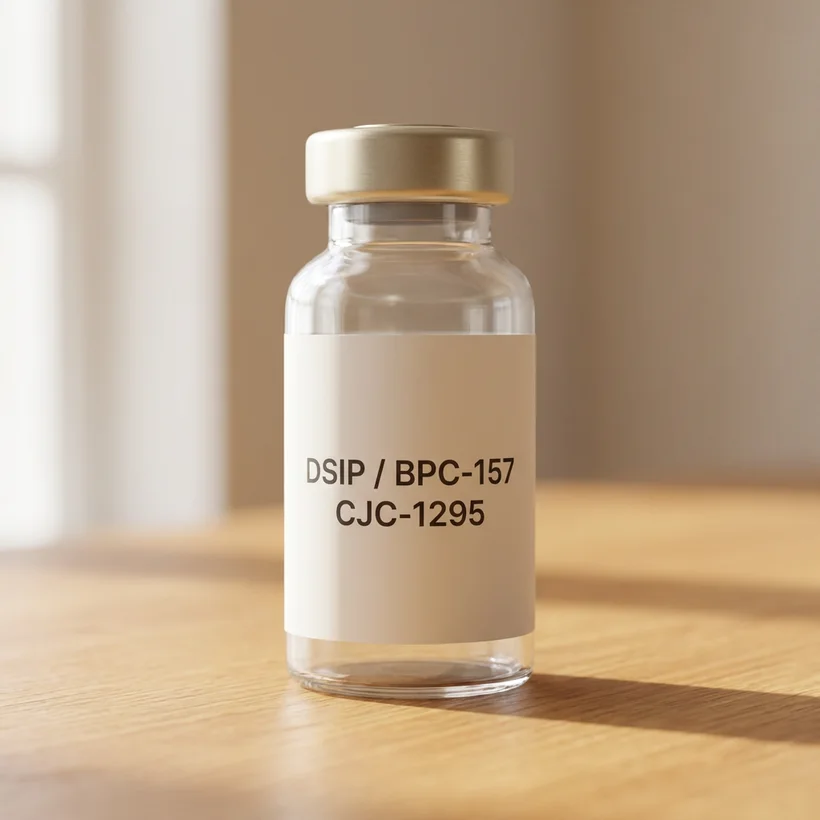
From the FormBlends catalog
Sleep + Recovery Stack
Sleep and repair support with DSIP, BPC-157, and CJC · From $299/mo · compounded by a licensed 503A pharmacy, dispensed only after provider review.
View Sleep + Recovery Stack →Table of Contents
Evidence Ledger: What the Research Actually Shows
| Claim | Best Evidence Type | Effect Direction | Confidence |
|---|---|---|---|
| DSIP increases delta (slow-wave) sleep in animals after central injection | Multiple animal studies (Monnier 1977, Schoenenberger et al.) | Positive | Moderate (animal only) |
| IV DSIP reduces sleep latency in small human trials | Small human trials (Schneider-Helmert, Schoenenberger), n typically under 20 | Positive, modest | Low (small n, older methodology) |
| DSIP modulates cortisol and ACTH secretion | Animal and small human studies | Mixed / unclear direction | Very Low |
| DSIP has analgesic properties | Animal models only | Positive in rodents | Very Low (no human confirmation) |
| Subcutaneous DSIP improves sleep in humans | Anecdotal community reports only | Mostly positive by self-report | Very Low (no controlled data) |
| DSIP has a favorable acute safety profile at research doses | Small human IV trials reporting mild transient adverse events | Low adverse event rate reported | Low (no large safety study) |
Mechanism with Specific Numbers
DSIP was isolated by Monnier and colleagues in 1977 from the venous blood of rabbit thalami during electrically induced slow-wave sleep. The peptide sequence is Trp-Ala-Gly-Gly-Asp-Ala-Ser-Gly-Glu. Its molecular weight as the free acid form is approximately 848.86 g/mol.
What is known mechanistically. DSIP appears to interact with glutamatergic and opioidergic systems rather than with GABA-A receptors directly, which distinguishes it from benzodiazepines and Z-drugs. Animal research has pointed to effects on the basal forebrain sleep-active circuitry and possible modulation of the hypothalamic-pituitary-adrenal axis. A specific confirmed receptor has not been identified as of current published literature. This is a meaningful gap: without a confirmed receptor, the mechanism remains descriptive, not explanatory.
What the mechanism does NOT prove. The animal injection data cannot be linearly extrapolated to subcutaneous human dosing. Central nervous system peptides face significant blood-brain barrier limitations when administered peripherally. The degree to which subcutaneously administered DSIP crosses the BBB in humans is not quantified in published controlled research. Any claim that subcutaneous dosing replicates the effects of intracerebroventricular injection in rodents is speculative.
Plasma half-life. DSIP is rapidly degraded by plasma peptidases. Research in the 1980s (Iyer et al. and related groups) reported very short plasma half-lives on the order of minutes for intact peptide after IV injection, with metabolic fragments persisting longer. This rapid degradation is part of why the peripheral-to-CNS translation question matters so much.
What Most DSIP Pages Get Wrong
This is the section commodity pages skip entirely.
The BBB bioavailability problem is almost never mentioned. Most DSIP content treats the rodent intracerebroventricular data as equivalent to subcutaneous human dosing. The two are not comparable. DSIP is a hydrophilic nonapeptide. Passive transcellular BBB crossing for hydrophilic peptides of this size is poor. Whether sufficient intact DSIP reaches CNS sleep circuits after subcutaneous injection in humans has not been measured in any published study. The positive subjective reports in the community may reflect real biological effects, a peripheral signaling pathway, placebo, or non-specific relaxation from the injection ritual. No data currently distinguishes between these explanations.
Receptor confirmation is still missing. Nearly every DSIP review page claims it "binds to" a specific receptor. This overstates current knowledge. A high-affinity, specific DSIP receptor has not been cloned or confirmed in published peer-reviewed literature. Mechanistic claims beyond "modulates sleep-regulatory circuits" are not well supported.
The 1977 to 1990 research window and its limitations. The bulk of DSIP research was conducted between roughly 1977 and 1990 using methodology and statistical standards that would not meet current trial quality thresholds. Many studies lacked placebo controls, used IV rather than subcutaneous routes, had small sample sizes, and were not pre-registered. Citing these studies as strong evidence without noting their limitations is misleading.
Stability, Formulation, and the Cold Chain (The Sourcing Gotcha)
DSIP is a short peptide with free carboxylic acid and amine termini plus the tryptophan residue at position 1, which is particularly vulnerable to oxidation.
Why tryptophan matters for storage. Tryptophan (Trp) contains an indole ring that undergoes photo-oxidation when exposed to UV light, producing kynurenine and other degradation products. This is a well-characterized degradation pathway for Trp-containing peptides. Practically, this means DSIP vials must be stored in amber vials or kept in the dark, not just kept cold. A clear vial left on a bright countertop will degrade faster than a foil-protected amber vial at the same temperature, regardless of refrigeration.
Lyophilized vs. reconstituted stability. Lyophilized (freeze-dried) DSIP powder is stable for months to over a year at minus 20 degrees Celsius in a dry environment. Once reconstituted in bacteriostatic water (0.9% benzyl alcohol in sterile water for injection), the peptide is in aqueous solution and subject to hydrolysis, oxidation, and microbial growth. Refrigerate at 2 to 8 degrees Celsius and plan to use within 2 to 4 weeks. Do not reconstitute in plain sterile water unless you will use the entire vial within 24 to 48 hours, because bacteriostatic water inhibits microbial growth and extends usable life.
Freeze-thaw cycling. Each freeze-thaw cycle introduces mechanical stress on peptide bonds and promotes aggregation. If you must freeze a reconstituted solution, aliquot it into single-use volumes before freezing so each vial is thawed only once.
What degraded DSIP looks like. A degraded solution may show visible particulates, a yellow or brown discoloration (consistent with tryptophan oxidation products), or unusual turbidity. A clear, colorless solution is not a guarantee of integrity; mass spec is the only definitive check, which is why a supplier COA matters more than visual inspection.
Honest Head-to-Head: DSIP vs. Real Alternatives
| Comparator | Evidence Base | Mechanism | Regulatory Status | DSIP Wins? |
|---|---|---|---|---|
| Melatonin 0.5 to 5 mg | Multiple RCTs and meta-analyses; established efficacy for sleep latency and jet lag | MT1/MT2 receptor agonist, circadian phase shifting | OTC supplement in USA | No. Melatonin has far more evidence and is accessible OTC. |
| Eszopiclone / Zolpidem (Z-drugs) | Large RCTs; quantified efficacy and safety profiles | GABA-A positive allosteric modulator | FDA-approved prescription | No for efficacy. Possible theoretical advantage for users avoiding GABAergic mechanisms. |
| Low-dose doxepin (Silenor) | Approved RCT data; specifically for sleep maintenance | H1 antagonism at low dose | FDA-approved prescription | No. |
| Magnesium glycinate | Several small RCTs, mixed results | NMDA antagonism, possible GABAergic modulation | OTC supplement | DSIP is roughly comparable in evidence quality; magnesium wins on cost and oral bioavailability. |
| Selank (another nootropic peptide) | Small Russian clinical trials, anxiolytic focus | Modulates GABAergic transmission; enkephalinase inhibition proposed | Not FDA-approved; research compound | Roughly equivalent evidence quality. Selank has more recent human trial data but different target indication. |
The honest verdict. If your goal is simply to fall asleep faster and stay asleep, melatonin and appropriate sleep hygiene are supported by far better evidence. DSIP's research interest lies in its distinct mechanism and the theoretical possibility that it addresses sleep quality through non-GABAergic, non-circadian pathways. That is a hypothesis worth investigating, not a proven clinical advantage.
COA and Label Literacy: How to Evaluate What You Are Buying
A certificate of analysis is only as credible as the laboratory that issued it. Here is how to assess what you receive.
| What to Look For | What It Tells You | Red Flag |
|---|---|---|
| HPLC chromatogram with purity percentage | Percentage of peptide vs. impurities by area under the curve | Purity listed without chromatogram image or peak data |
| Mass spectrometry (ESI-MS or MALDI) | Confirms molecular weight matches DSIP (approximately 848.86 Da) | No MS data at all, or molecular weight not reported |
| Net peptide content (NPC) | How much of the listed mass is actual peptide vs. water, salt, TFA counterion | "Peptide content" not separated from gross mass; you may be paying for TFA salt |
| Third-party lab name and address | Independent verification vs. self-testing | COA lists the vendor's own name as testing lab |
| Lot number matching the vial label | COA is for this specific batch | Generic or undated COA with no lot traceability |
| Residual solvent and microbial limits | Safety of the final product | No residual solvent or endotoxin data on injectable-grade claims |
The TFA counterion issue. Peptides synthesized by solid-phase synthesis are often cleaved using trifluoroacetic acid and may contain residual TFA as a counterion. TFA is cytotoxic at high concentrations. A well-characterized research peptide should have undergone ion exchange to replace TFA with acetate or HCl. Ask suppliers specifically whether TFA has been exchanged and whether residual TFA is tested on the COA.
Dosing Reference Table
These ranges are drawn from published research and community reports. No RCT has established an optimal subcutaneous dose. These figures are reference information only, not medical advice.
| Context | Route | Dose Range Reported | Evidence Source |
|---|---|---|---|
| Human clinical research (historical) | Intravenous infusion | Roughly 25 to 30 nmol/kg body weight | Schneider-Helmert and Schoenenberger human trial reports |
| Community self-administration reports | Subcutaneous injection | 100 mcg to 500 mcg per administration, typically at night | Anecdotal; no controlled trial |
| Frequency noted in community reports | Subcutaneous | Daily to several times per week; cycles of 2 to 4 weeks described | Anecdotal only |
What Delta Sleep Inducing Peptide Reviews Actually Say (and What They Cannot Prove)
Across online communities including Longecity, Reddit nootropics forums, and vendor review sections, delta sleep inducing peptide reviews follow a recognizable pattern: users describe falling asleep more readily, experiencing vivid or recalled dreams, and a sense of deeper rest. A minority of reviews note no noticeable effect. Adverse event reports are infrequent and mostly describe mild, transient nausea or grogginess.
Why these reviews cannot substitute for controlled data. Sleep is one of the highest placebo-response domains in all of medicine. Systematic reviews of insomnia trials, including work by Yeung and colleagues published in Sleep Medicine Reviews in 2018, have documented that placebo responses in insomnia research are consistently large, complicating interpretation of any uncontrolled report. Self-selected communities who purchase research peptides are not a representative population. Publication bias in informal review channels favors positive experiences. None of this means the reviews are false; it means they are hypothesis-generating, not confirmatory. Weight them accordingly.
Where to Buy Delta Sleep Inducing Peptide for Sale
DSIP is commercially available from several US-based research peptide suppliers. The key differentiators when choosing where to buy delta sleep inducing peptide are COA quality, third-party testing, cold-chain shipping, and customer transparency about sourcing.
FormBlends supplies DSIP as a research compound with batch-specific third-party COAs accessible on the product page. Lyophilized vials are packaged to minimize light exposure and shipped with cold packs where appropriate.
What to avoid. Avoid suppliers who list purity without a downloadable COA, who use the same generic COA across multiple batches, who do not specify whether TFA has been exchanged, or who cannot confirm sterility testing for injectable-format products.
On nootropics coupon codes and nootropic source coupon codes. Discount codes are periodically available through FormBlends promotions, email sign-up, and partner channels. Codes from third-party coupon aggregators should be verified at checkout; exclusions on peptide SKUs are common. The presence or absence of a discount code has no bearing on product quality and should not drive supplier selection.
FAQ
What is delta sleep inducing peptide and what does it do?
Delta sleep inducing peptide (DSIP) is a neuropeptide composed of 9 amino acids (Trp-Ala-Gly-Gly-Asp-Ala-Ser-Gly-Glu) first isolated from rabbit thalamic tissue in 1977. Early animal research showed it could promote slow-wave (delta) sleep when injected centrally. Its exact receptor target remains unconfirmed, and most human evidence is limited to small, older trials.
Where can I buy delta sleep inducing peptide?
DSIP is sold as a research compound by peptide suppliers in the United States and internationally. It is not FDA-approved for any indication. When purchasing, require a third-party certificate of analysis confirming HPLC purity above 98% and mass spectrometry identity verification. FormBlends offers DSIP with published COA data.
Is there a coupon code for nootropic peptide sources including DSIP?
FormBlends periodically offers discount codes on research peptides including DSIP. Check the FormBlends promotions page for current nootropics coupon codes. Third-party coupon aggregators occasionally list codes but verify they apply to peptide products specifically, as exclusions are common.
What do delta sleep inducing peptide reviews say about real-world results?
User reviews consistently describe reduced sleep latency and a subjective sense of deeper sleep, particularly in people who already have disrupted sleep. However, placebo effects in sleep research are large and well documented. No large controlled trial has validated these subjective reports. Treat anecdotal reviews as hypothesis-generating, not confirmatory.
What dose of DSIP is used in research?
The most cited human research used intravenous doses in the range of roughly 25 to 30 nanomoles per kilogram. Subcutaneous dosing in self-reported community research typically falls between 100 mcg and 500 mcg per administration. No dose-ranging RCT has established an optimal subcutaneous dose in humans.
How should DSIP be stored after reconstitution?
Lyophilized DSIP is stable for months at minus 20 degrees Celsius when kept dry and away from light. After reconstitution in bacteriostatic water, refrigerate at 2 to 8 degrees Celsius and use within 2 to 4 weeks. Repeated freeze-thaw cycles degrade peptide bonds; aliquot before freezing to avoid this.
Does DSIP interact with cortisol or stress hormones?
Some animal and small human studies have reported that DSIP influences cortisol and ACTH secretion, suggesting an effect on the HPA axis beyond sleep. This adds mechanistic interest but also complexity: the stress-modulating effects are not well quantified in humans and remain a low-confidence claim.
How does DSIP compare to melatonin or prescription sleep aids?
Melatonin has a far larger evidence base including multiple meta-analyses showing reduced sleep latency. Prescription options like eszopiclone have well-quantified efficacy and known side-effect profiles from large RCTs. DSIP has intriguing early data but cannot be recommended ahead of these options based on current evidence. Its potential advantage is a mechanism distinct from GABA modulation.
What should a legitimate DSIP certificate of analysis include?
A legitimate COA should include HPLC chromatogram showing purity above 98%, mass spectrometry confirmation of the molecular weight (approximately 848.86 g/mol for the free acid form), net peptide content by amino acid analysis or UV absorbance, residual solvent testing, and microbial limits. The issuing lab should be a named third party, not the vendor's own facility.
Can DSIP be detected on standard drug tests?
DSIP is not on the WADA prohibited list as of the current prohibited list version and is not screened by standard immunoassay drug panels. However, specialty peptide panels used in elite sports testing may flag it. Competitive athletes should consult their sport's governing body before use.
What are the known risks or side effects of DSIP?
Reported adverse effects in small human studies include transient nausea and mild dizziness. Because the receptor target is unconfirmed, off-target effects cannot be fully characterized. Long-term safety data in humans do not exist. Injection site reactions are possible with any subcutaneous peptide.
Is delta sleep inducing peptide for sale legally in the United States?
DSIP is not FDA-approved and is not a scheduled controlled substance in the United States as of this writing. It is legally sold as a research compound not intended for human consumption. Regulatory status can change; verify current rules with the FDA and your jurisdiction before purchase.
Sources
- Monnier M, Dudler L, Gachter R, Maier PF, Tobler HJ, Schoenenberger GA. The delta sleep inducing peptide (DSIP). Comparative properties of the original and synthetic nonapeptide. Experientia. 1977;33(4):548-552.
- Schoenenberger GA, Maier PF, Tobler HJ, Monnier M. A naturally occurring delta-EEG enhancing nonapeptide in rabbits. X. Final isolation, characterization and activity test of delta sleep-inducing peptide (DSIP). Pflugers Arch. 1977;369(2):99-109.
- Schneider-Helmert D, Schoenenberger GA. Effects of DSIP in man. Multifunctional psychophysiological properties besides induction of natural sleep. Neuropsychobiology. 1983;9(2-3):197-206.
- Iyer KS, McCann SM. Delta sleep inducing peptide (DSIP) stimulates the release of LH but not FSH via a hypothalamic site of action in the rat. Brain Res Bull. 1987;19(5):535-538.
- Kastin AJ, Castellanos PF, Banks WA, Coy DH. Differential penetration of DSIP peptides across the blood-brain barrier in mice. Pharmacol Biochem Behav. 1996;53(4):809-812.
- Yeung V, Sharpe L, Glozier N, Hackett ML, Colagiuri B. A systematic review and meta-analysis of placebo versus no treatment for insomnia symptoms. Sleep Med Rev. 2018;38:17-27.
- Kovalzon VM, Strekalova TV. Delta sleep-inducing peptide (DSIP): a still unresolved riddle. J Neurochem. 2006;97(2):303-309.
- Banks WA, Kastin AJ. Peptides and the blood-brain barrier: lipophilicity as a predictor of permeability. Brain Res Bull. 1985;15(3):287-292.
- World Anti-Doping Agency. The World Anti-Doping Code: International Standard for the Prohibited List 2024. WADA; 2024.
- Opp MR. Cytokines and sleep. Sleep Med Rev. 2005;9(5):355-364. (Background on sleep regulatory peptides)
Footer Disclaimers
Platform disclaimer. FormBlends is an e-commerce research compound supplier. Content on this page is for educational and informational purposes only and does not constitute medical advice, diagnosis, or treatment. Consult a licensed healthcare provider before beginning any peptide or supplement protocol.
Research compound disclaimer. Delta sleep inducing peptide is sold exclusively as a research compound for laboratory and investigational purposes. It is not approved by the FDA or any other regulatory authority for human therapeutic use. It is not intended to diagnose, treat, cure, or prevent any disease or medical condition.
Results disclaimer. Individual outcomes described in reviews, testimonials, or community reports are anecdotal and not predictive of any individual's experience. No clinical benefit is guaranteed or implied.
Trademark disclaimer. "FormBlends" is a trademark of FormBlends LLC. All other product names, peptide designations, and company names referenced on this page are the property of their respective owners and are used for identification purposes only. No affiliation, endorsement, or sponsorship is implied.
Related peptide guides
Ready when you are
Sleep + Recovery Stack
Sleep and repair support with DSIP, BPC-157, and CJC · From $299/mo · compounded by a licensed 503A pharmacy, dispensed only after provider review.
View Sleep + Recovery Stack →