Key Takeaway
Understanding GH peptide side effects helps you use these compounds safely and confidently. Growth hormone peptides like CJC-1295, Ipamorelin, Sermorelin, and MK-677 generally have favorable safety profiles. But they aren't side-effect-free, and knowing what to watch for keeps you safe.
Understanding GH peptide side effects helps you use these compounds safely and confidently. Growth hormone peptides like CJC-1295, Ipamorelin, Sermorelin, and MK-677 generally have favorable safety profiles. But they aren't side-effect-free, and knowing what to watch for keeps you safe.
Key Takeaways: - Common Side Effects Across All GH Peptides - Peptide-Specific Side Effects - When to Contact Your Provider - Minimizing Side Effects
This guide covers side effects by peptide type, when to contact your provider, and how to minimize risks.
Common Side Effects Across All GH Peptides
These effects are shared by most GH-stimulating peptides and are related to the increase in growth hormone itself.
Water retention: Mild fluid retention is one of the most common early effects. GH promotes sodium retention, which pulls water into tissues. You may notice puffiness in your hands, feet, or face. This typically resolves within 2-4 weeks as your body adjusts.
Tingling or numbness: Often felt in the fingers, hands, or feet. This is a direct sign of improved GH activity and usually resolves with continued use. If it's persistent or severe, your dose may need adjustment.
Joint stiffness: Related to water retention and tissue changes from GH. Usually mild and temporary. More common at higher doses.
"The conversation about obesity needs to shift from willpower to biology. These medications work because obesity is a neuroendocrine disease, not a character flaw.") Dr. Fatima Cody Stanford, MD, MPH, Massachusetts General Hospital
Increased hunger: Particularly pronounced with MK-677 and GHRP-6 due to ghrelin receptor activation. Less common with Ipamorelin and not typical with CJC-1295 or Sermorelin.
Vivid dreams: Deeper sleep architecture from GH enhancement produces more vivid, memorable dreams. Generally considered neutral or positive.
Free Download: Protocol Planner Includes a side effect tracking log to share with your provider for protocol improvement. Get yours free (we'll email it to you instantly. [Download Your Free Protocol Planner]
Injection site reactions: Mild redness, swelling, or itching at the injection site. Rotate injection sites to minimize this. Usually resolves within hours.
Headache: Occasionally reported during the first week. Typically mild and self-limiting. Adequate hydration can help prevent this.
Learn about to keep side effects minimal.
Peptide-Specific Side Effects
Each GH peptide has unique characteristics that affect its side effect profile.

CJC-1295 (no DAC): Generally well-tolerated. Main side effects are water retention and injection site reactions. The short half-life means effects resolve quickly between doses. Combined with Ipamorelin, the side effect profile remains favorable.
CJC-1295 with DAC: The extended half-life (6-8 days) creates sustained GH elevation. This can produce more pronounced water retention, tingling, and joint effects compared to the no-DAC version. Some users find it less comfortable than pulsatile dosing.
Ipamorelin: One of the cleanest GH peptides. Minimal impact on cortisol or prolactin. May cause mild appetite increase but significantly less than GHRP-6 or MK-677. Side effects are generally the mildest of all GH secretagogues.
MK-677 (Ibutamoren): Significant appetite increase is the most common complaint. Can cause meaningful water retention, particularly during the first month. Important: can reduce insulin sensitivity and raise fasting blood sugar. Requires glucose monitoring. More side effects than injectable peptides but offers oral convenience.
Sermorelin: Well-established safety profile with decades of use. Similar side effects to CJC-1295 but potentially milder due to shorter half-life and lower per-dose GH stimulation.
GHRP-6: Strong appetite stimulation due to ghrelin receptor activation. Can increase cortisol and prolactin levels. More side effects than Ipamorelin, which is why most providers now prefer Ipamorelin.
GHRP-2: Moderate appetite stimulation (between Ipamorelin and GHRP-6). Some cortisol and prolactin elevation. More potent GH stimulation than Ipamorelin but with a broader hormonal impact.
When to Contact Your Provider
Most side effects are mild and self-limiting. Contact your provider if you experience:
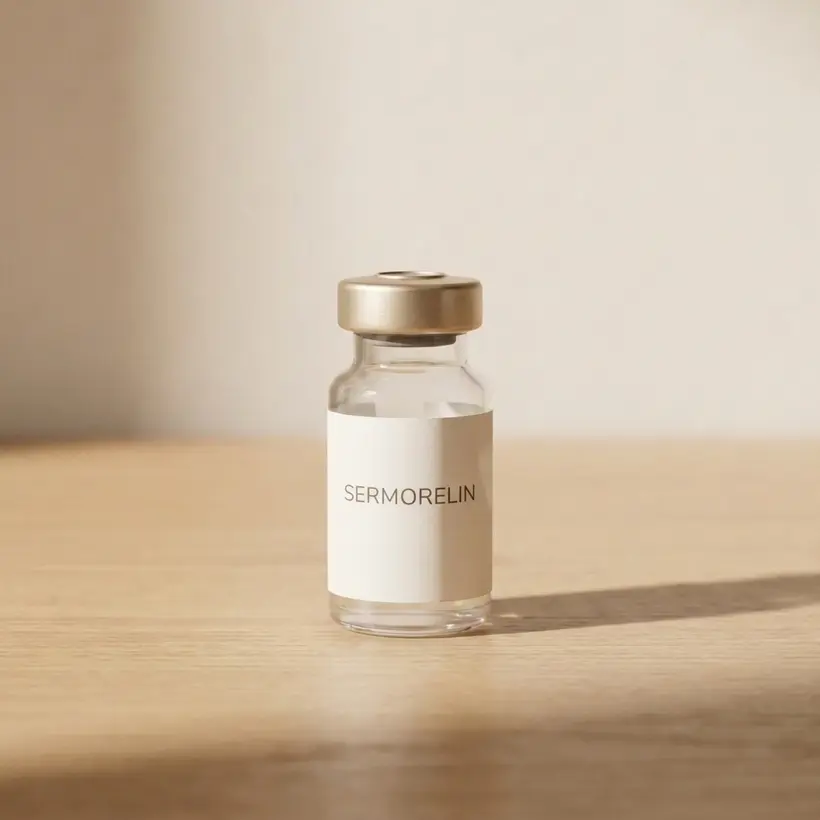
From the FormBlends catalog
Sermorelin
Bioidentical GHRH analog for natural growth hormone pulsatility · From $175/mo · compounded by a licensed 503A pharmacy, dispensed only after provider review.
View Sermorelin →- Persistent severe headaches
- Significant carpal tunnel symptoms (numbness, weakness in hands)
- Marked swelling in extremities
- Changes in blood sugar (excessive thirst, frequent urination)
- Joint pain that interferes with daily activities
- Any symptoms that feel unusual or concerning
Your can adjust your dose, switch peptides, or modify your protocol based on your side effect experience. Track symptoms in the .
Minimizing Side Effects
Start low, go slow. Begin at the lower end of the dosing range and increase gradually. This gives your body time to adjust to higher GH levels.
Stay hydrated. Adequate water intake helps manage water retention and reduces headache risk. Aim for half your body weight in ounces daily.
Time injections consistently. Irregular dosing can produce inconsistent GH levels, which may worsen side effects. Stick to the same time each day.
Monitor labs regularly. IGF-1, fasting glucose, and metabolic panels every 3 months catch problems early before they become serious.
Use cycling protocols. Periodic breaks (1 month off after 3 months on) prevent receptor desensitization and may reduce cumulative side effect risk.
Choose the right peptide. If one peptide causes bothersome side effects, alternatives exist. Ipamorelin has the cleanest profile. CJC-1295 without DAC offers pulsatile dosing. Switching peptides under provider guidance is always an option.
Read about to minimize injection-site reactions.
Frequently Asked Questions
Are GH peptide side effects permanent?
No. Side effects from GH peptides are temporary and resolve after dose reduction or discontinuation. Water retention, tingling, and joint stiffness all resolve once GH levels normalize.
Are GH peptides safer than HGH injections?
Generally yes. GH peptides stimulate your own pulsatile GH production, which is self-regulated by feedback mechanisms. Direct HGH injections provide flat, supraphysiological GH levels with a higher risk of side effects including insulin resistance, acromegaly-like symptoms, and fluid retention.
Can GH peptides cause cancer?
This is a complex question. GH and IGF-1 promote cell growth, which has theoretical implications for cancer risk. Epidemiological studies show mixed results. The key is maintaining IGF-1 in the normal range, not supraphysiological levels. Anyone with active cancer shouldn't use GH peptides. Discuss cancer risk factors with your provider.
Will side effects get worse over time?
Most side effects improve over time as your body adapts. Persistent or worsening side effects may indicate a need for dose adjustment. Long-term side effects from GH peptides at appropriate doses are uncommon when monitored properly.
What's Your Next Move?
You have the information. Now let a licensed provider help you put it into action. FormBlends makes it simple) answer a few questions and get a personalized recommendation.
Sources &. References
- Ionescu M, Frohman LA. Pulsatile secretion of growth hormone (GH) persists during continuous stimulation by CJC-1295, a long-acting GH-releasing hormone analog. J Clin Endocrinol Metab. 2006;91(12):4792-4797. Doi:10.1210/jc.2006-1702
The information in this article is intended for educational use only and shouldn't be considered medical advice. Consult a qualified healthcare provider before making any changes to your medication or supplement regimen. FormBlends helps with connections with licensed providers for personalized medical guidance.
Last updated: 2026-03-24
Ready when you are
Sermorelin
Bioidentical GHRH analog for natural growth hormone pulsatility · From $175/mo · compounded by a licensed 503A pharmacy, dispensed only after provider review.
View Sermorelin →