Key Takeaway
A beginner-friendly guide to the GHK-Cu and BPC-157 skin repair stack. Learn what copper peptides and BPC-157 do for skin, how to start safely, and what results to expect.
The GHK-Cu and BPC-157 skin repair stack is a peptide-based approach to skin rejuvenation that stimulates your body's own collagen production and tissue repair mechanisms, offering a regenerative alternative to purely cosmetic skin treatments. If you're new to peptide skincare, this guide explains what each component does, how to get started, and what realistic results look like.
What Is GHK-Cu?
GHK-Cu (glycyl-L-histidyl-L-lysine copper) is a small, naturally occurring peptide bound to a copper ion. Your body produces it on its own, but levels drop significantly as you age. By your 60s, GHK-Cu levels may be only one-third of what they were at age 20.
What GHK-Cu Does for Skin
- Stimulates collagen and elastin production: The structural proteins that keep skin firm and elastic
- Promotes glycosaminoglycan synthesis: Including hyaluronic acid, which keeps skin hydrated and plump
- Remodels scar tissue: Helps reorganize disorganized collagen in scars into more normal patterns
- Acts as an antioxidant: Protects skin cells from free radical damage
- Modulates gene expression: Shifts gene activity patterns in skin toward a younger profile
- Supports hair growth: Stimulates hair follicles and extends the growth phase of the hair cycle
GHK-Cu is available both as an injectable peptide and as a topical skincare ingredient, making it one of the most versatile peptides for skin health. copper peptides overview
What Is BPC-157?
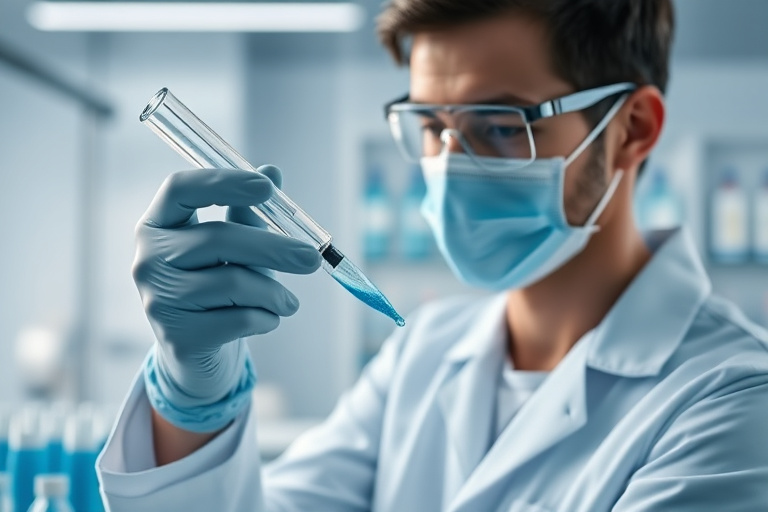
BPC-157 (Body Protection Compound-157) is a 15-amino-acid peptide derived from a protective protein in human gastric juice. While it's best known for healing muscles, tendons, and the gut, its tissue repair properties extend to skin as well.
What BPC-157 Does for Skin
- Promotes angiogenesis: Grows new blood vessels, improving blood supply to skin tissue
- Accelerates wound healing: Speeds wound closure and reduces healing time
- Reduces inflammation: Modulates the inflammatory response that contributes to skin damage and aging
- Supports post-procedure recovery: Helps skin heal faster after microneedling, laser treatments, and other procedures
Why Stack Them Together?
GHK-Cu and BPC-157 address skin health from different but complementary angles. skin repair stack combined effect

From the FormBlends catalog
GHK-Cu (Copper Peptide)
A copper peptide studied for skin and tissue support · From $179/mo · compounded by a licensed 503A pharmacy, dispensed only after provider review.
View GHK-Cu (Copper Peptide) →GHK-Cu tells your skin cells to produce more collagen, elastin, and hyaluronic acid. BPC-157 builds the blood vessel network needed to deliver nutrients to those cells and carry away waste products. Without adequate blood supply, even well-stimulated skin cells can't perform optimally. Together, you get both the production stimulus and the delivery infrastructure.
Who Should Consider This Stack?
- Adults over 30 noticing early signs of skin aging (fine lines, loss of firmness, dullness)
- Anyone with scars they want to improve (surgical, injury, or acne scars)
- People recovering from skin procedures (microneedling, laser, chemical peels)
- Individuals with slow-healing wounds or poor skin quality
- Those experiencing thinning hair who want peptide-based support
- Anyone seeking a regenerative approach to skin health beyond traditional skincare
Who Should Avoid This Stack
- Individuals with copper sensitivity or Wilson's disease (affects GHK-Cu use)
- People with active cancer (both peptides promote cell growth)
- Pregnant or breastfeeding women
Getting Started: Three Options
Option 1: Topical Only (Easiest)
If you prefer to avoid injections entirely, start with a topical GHK-Cu serum or cream. This is the simplest entry point and still provides meaningful skin benefits.
- Choose a reputable GHK-Cu product with a stated concentration
- Apply to clean skin once or twice daily
- Use before moisturizer and sunscreen
- Allow 6-12 weeks for visible results
Contact provider for current pricing
Option 2: Topical + Injectable GHK-Cu (Moderate)
Add injectable GHK-Cu for systemic collagen-stimulating benefits alongside topical application.
- Topical GHK-Cu: twice daily as above
- Injectable GHK-Cu: 200 mcg subcutaneously, once daily for 4 weeks, then 3 times per week
Option 3: Full Stack (Most thorough)
Combine topical GHK-Cu with injectable GHK-Cu and BPC-157 for the full combined protocol.
- Topical GHK-Cu: twice daily
- Injectable GHK-Cu: 200-300 mcg subcutaneously, once daily (4 weeks), then 3x/week
- Injectable BPC-157: 250 mcg subcutaneously, once daily (4 weeks), then 3x/week
Self-Injection Basics for Beginners
If you choose an injectable option, here is what you need to know:
What You Will Need
- Peptide vials (from a licensed compounding pharmacy with a prescription)
- Bacteriostatic water for reconstitution
- Insulin syringes (29-31 gauge, very thin needles)
- Alcohol swabs
- Sharps container
Reconstitution
Peptides come as freeze-dried powder. Add bacteriostatic water slowly along the vial wall, let it dissolve without shaking, and store in the refrigerator. Your provider or pharmacy can guide you through the specific water volume for your vials. peptide reconstitution calculator guide
Injection Process
- Clean the vial stopper and injection site with alcohol swabs
- Draw the calculated dose into the syringe
- Pinch a fold of skin on the abdomen (or near your target area for BPC-157)
- Insert the needle at a 45-degree angle
- Inject slowly, withdraw the needle, apply gentle pressure
The needles are very thin. Most beginners find the anticipation is worse than the actual injection, which is typically painless or mildly uncomfortable at most.
What to Expect as a Beginner
Weeks 1-2
You're establishing the routine. Visible skin changes are minimal at this stage. You may notice slightly improved skin hydration or texture, especially with topical GHK-Cu. Injection-site effects are typically absent or very mild (slight redness that fades quickly).
Weeks 3-4
Skin may begin to look slightly brighter and feel smoother. Hydration improvements become more noticeable. If treating a scar, the scar may begin to feel softer to the touch.
Weeks 4-8
This is when most beginners start seeing results that others notice. Improved skin firmness, reduced fine lines, better overall skin quality. Scars show visible improvement in texture and color. skin repair results timeline
Months 2-4
Collagen remodeling continues to deepen. Wrinkle reduction becomes more pronounced. Skin thickness and elasticity improve. Hair may appear thicker if thinning was a concern.
Common Beginner Questions and Concerns
"Will copper peptides turn my skin green?"
No. The copper in GHK-Cu is bound at the molecular level and is present in trace amounts. It doesn't cause skin discoloration. GHK-Cu solutions have a faint blue tint due to the copper, but this doesn't transfer to the skin at the concentrations used.
"Can I use this with my existing skincare routine?"
Yes. GHK-Cu is compatible with most skincare products, including hyaluronic acid, niacinamide, and moisturizers. Some practitioners suggest separating GHK-Cu and retinol applications (use one in the morning and the other at night). Vitamin C serums pair well with copper peptides.
"How is this different from regular anti-aging creams?"
Most anti-aging creams provide surface-level hydration and minor antioxidant protection. GHK-Cu actively stimulates your cells to produce more collagen, elastin, and structural proteins. BPC-157 promotes new blood vessel growth to support skin health from the inside. These are regenerative mechanisms, not just cosmetic masking.
"Is this safe long-term?"
GHK-Cu is a naturally occurring molecule in the human body with an excellent safety profile. BPC-157 has a strong safety record in available research. Long-term topical GHK-Cu use is widely considered safe. For injectable protocols, periodic breaks and provider monitoring are recommended.
Tips for Beginner Success
- Start with topical GHK-Cu if unsure about injections. You can always add injectables later.
- Wear sunscreen daily. No peptide protocol can outpace ongoing UV damage. SPF 30+ is non-negotiable.
- Take progress photos. Monthly photos in consistent lighting reveal changes you might miss day to day.
- Be patient. Collagen takes time to build. Give the protocol at least 8 weeks before evaluating results.
- Support from within. Vitamin C, zinc, adequate protein, and hydration all support collagen production.
- Source quality products. For injectables, use a licensed compounding pharmacy. For topicals, choose products that disclose GHK-Cu concentration.
Cost Expectations for Beginners
- Topical only: $30-80/month for a quality GHK-Cu serum
- Topical + injectable GHK-Cu: $100-200/month
- Full stack (topical + GHK-Cu + BPC-157 injections): $150-300/month
Contact provider for current pricing Contact provider for current pricing peptide therapy costs
Frequently Asked Questions
- Is GHK-Cu the same as the copper peptides in skincare products?
-
Yes. GHK-Cu is the specific copper peptide used in most copper peptide skincare products. Some products may use different copper peptide complexes, but GHK-Cu is the most well-researched and commonly used. When shopping for topical products, look for "GHK-Cu" or "copper tripeptide-1" in the ingredient list.
- Do I need a prescription for this stack?
-
Injectable GHK-Cu and BPC-157 require a prescription in the United States and are available through licensed compounding pharmacies. Topical GHK-Cu products are available without a prescription as over-the-counter skincare. For the full stack, working with a provider experienced in peptide therapy is recommended.
- Can men use this skin repair stack?
-
Absolutely. Skin aging, collagen loss, and tissue repair mechanisms aren't gender-specific. Men benefit equally from GHK-Cu and BPC-157 for skin quality, wound healing, scar improvement, and hair support. The stack is gender-neutral in its applications. peptide skincare for men
- How long before I see results?
-
Subtle improvements in skin texture and hydration may appear within 2-4 weeks. More significant changes in firmness, wrinkle reduction, and scar appearance typically develop over 6-12 weeks. Collagen production and remodeling are gradual biological processes that continue to improve with sustained use over several months. skin repair results timeline
Ready when you are
GHK-Cu (Copper Peptide)
A copper peptide studied for skin and tissue support · From $179/mo · compounded by a licensed 503A pharmacy, dispensed only after provider review.
View GHK-Cu (Copper Peptide) →